Understanding suffixes Building Vocabulary Worksheets for 8-Year-Olds
4 filtered results
-
From - To
Unlock your 8-year-old's full potential with our "Understanding Suffixes: Building Vocabulary Worksheets." These expertly designed printables help young learners grasp the essential concept of suffixes, enhancing their reading and writing skills. Tailored to align with their educational level, these engaging activities make mastering suffixes fun and easy. Each worksheet features vibrant illustrations and practical exercises that will captivate their imagination while expanding their vocabulary. Transform challenging lessons into enjoyable learning experiences and watch your child's confidence soar. Boost academic success with our innovative, effective worksheets today! Perfect for practicing both at home and in the classroom.
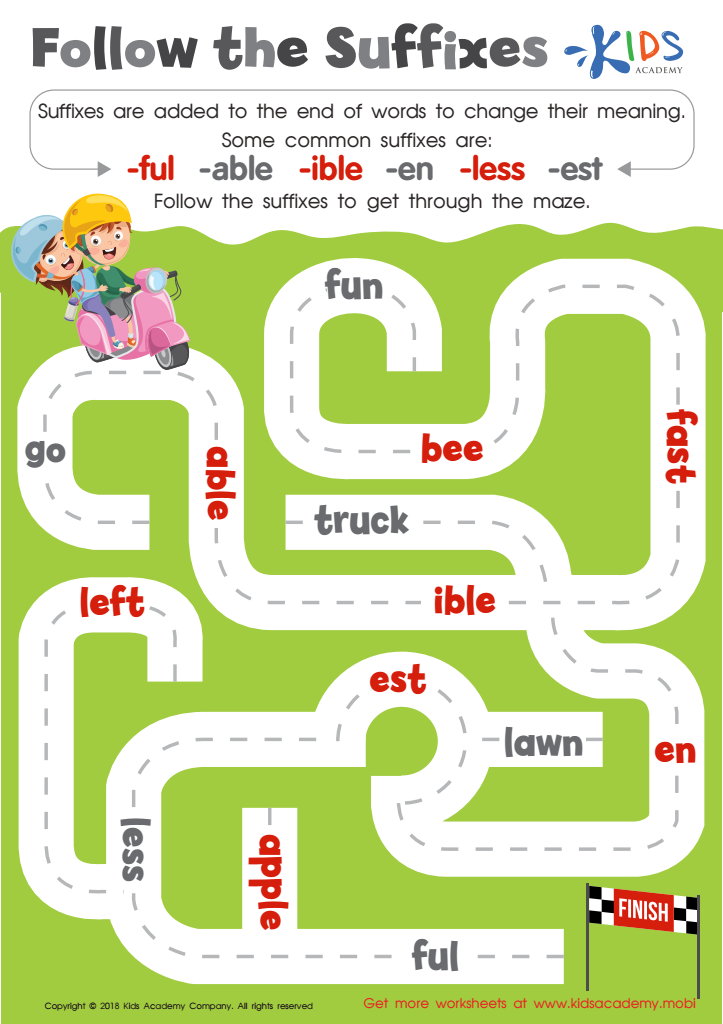
Reading: Follow the Suffixes Worksheet
 Assign to My Students











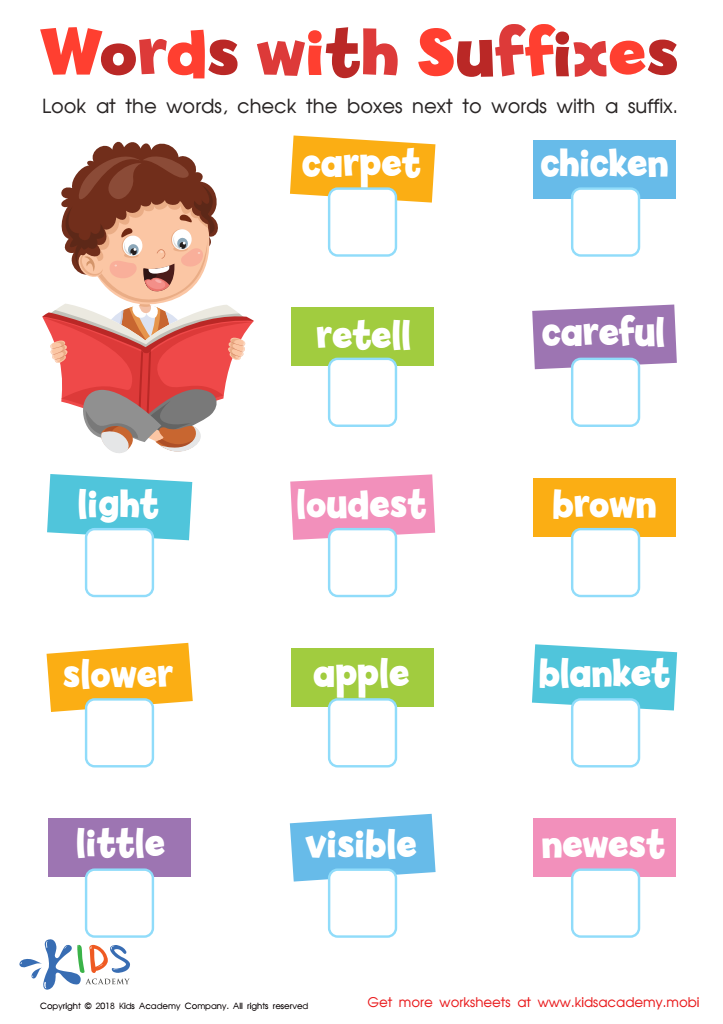
Reading: Words With Suffixes Worksheet
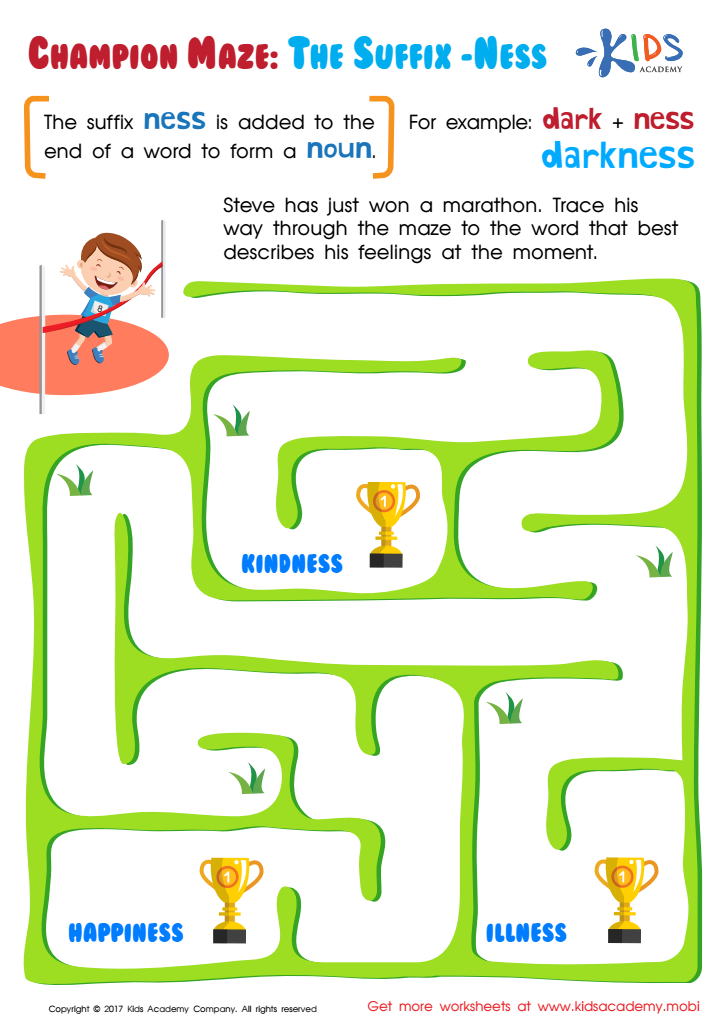
Suffix Ness Worksheet
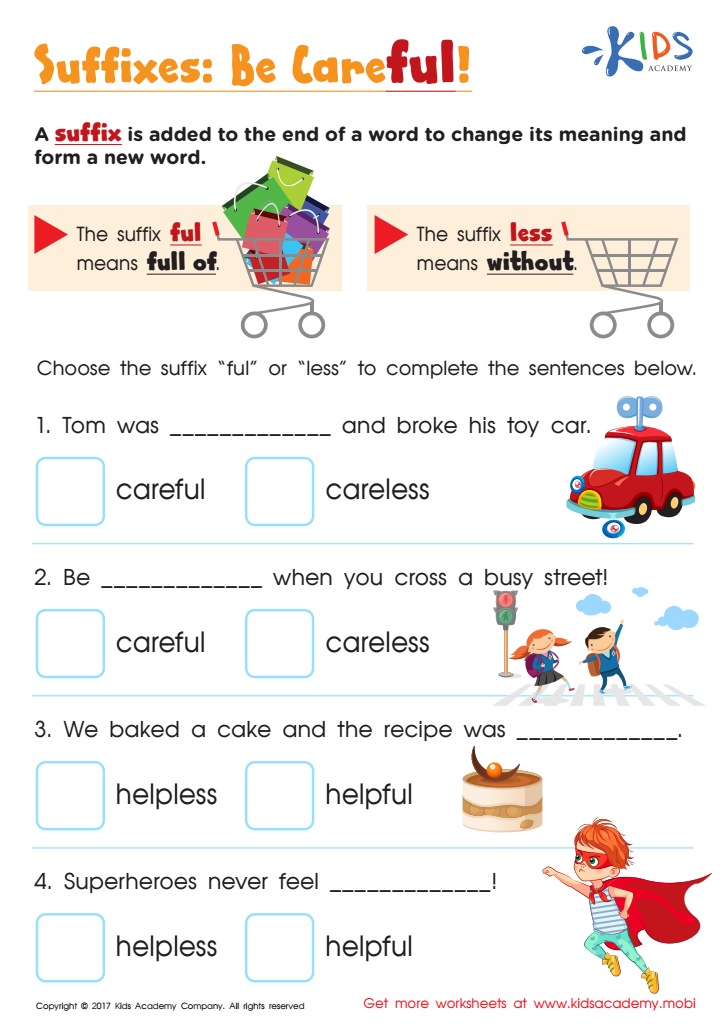
Suffixes Ful and Less Worksheet


.jpg)


.jpg)


Understanding suffixes is crucial for the vocabulary development of 8-year-olds, and it's essential that parents and teachers emphasize this aspect of learning. Suffixes, the letters added to the end of words to alter their meaning or grammatical function, serve as powerful tools for young students.
Firstly, learning suffixes boosts comprehension. When children understand common suffixes like "-ful," "-less," or "-ly," they can infer the meanings of new words more easily, thereby expanding their vocabulary. This is especially important as they encounter increasingly complex texts in various subjects.
Secondly, spelling and writing improve. By recognizing and understanding suffixes, children can spell longer words more accurately and use them effectively in sentences, enhancing their overall writing skills. Knowing suffixes also supports grammar understanding, helping students identify parts of speech and grammatical functions within a sentence.
Lastly, understanding suffixes builds confidence. As their vocabularies expand, children can express themselves more clearly and precisely. This self-assurance not only aids academic performance but also fosters a lifelong love of reading and learning.
For all these reasons, it is imperative that parents and teachers focus on suffixes when teaching vocabulary, ensuring that children have a robust foundation for their future language development.








