Understanding fractions Reading Worksheets for 8-Year-Olds
25 filtered results
-
From - To
Explore our engaging "Understanding Fractions Reading Worksheets" designed specifically for 8-year-olds! These interactive worksheets help young learners grasp the concept of fractions through fun reading exercises that combine literacy with math skills. Each worksheet focuses on colorful visuals and relatable examples, making understanding fractions easy and enjoyable. Designed to enhance critical thinking, these activities encourage kids to identify fractions in everyday contexts, helping to solidify their knowledge. Ideal for classroom or at-home learning, our worksheets support foundational math skills while fostering a love for reading. Dive into the world of fractions and watch your child thrive academically!
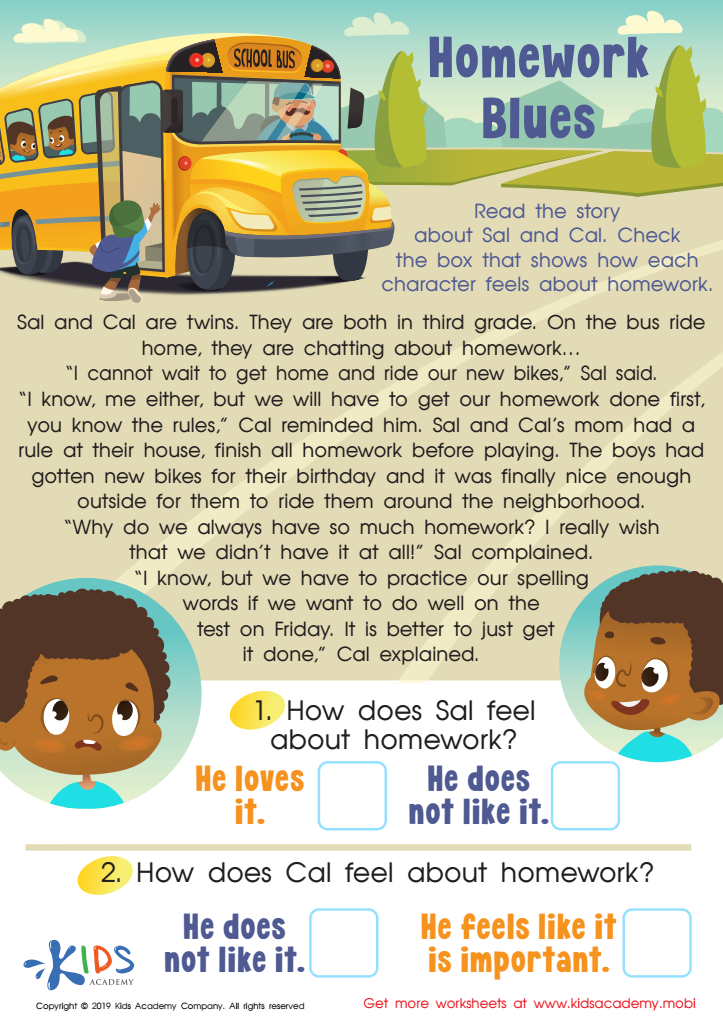
Homework Blues Worksheet
 Assign to My Students
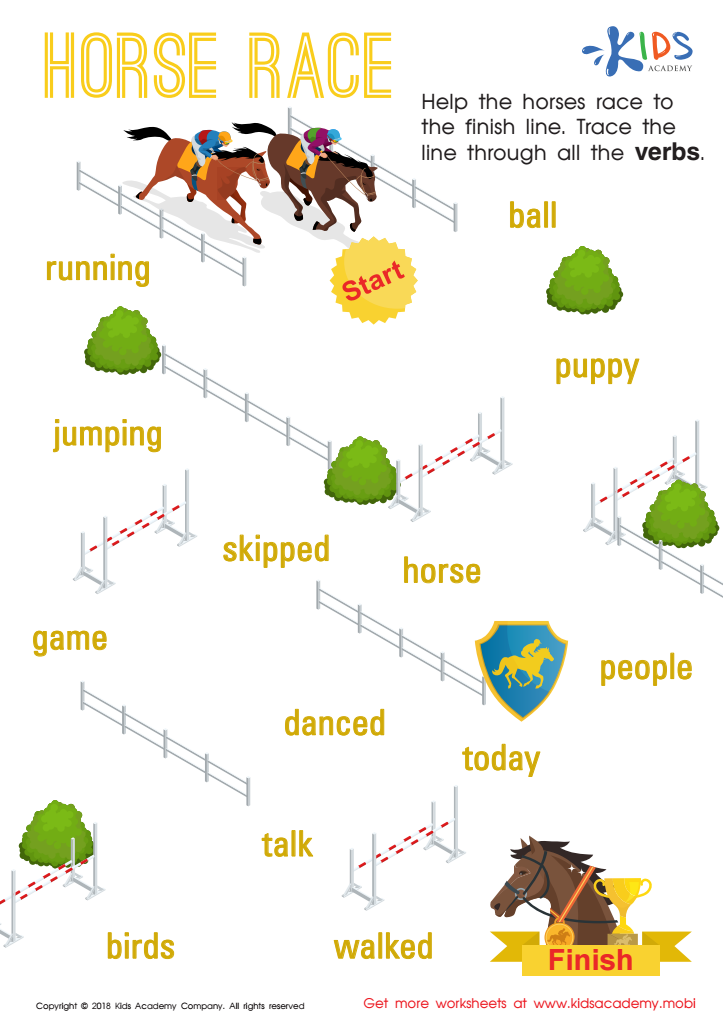
Horse Race Worksheet








Understanding fractions is a crucial milestone in a child’s mathematical development, especially for 8-year-olds who are typically in third grade. At this age, children are transitioning from concrete operations, where they manipulate physical objects, to more abstract thinking, where they begin to understand concepts like parts of a whole. This foundational knowledge is essential not just for future math, but for everyday life, as fractions are integral to cooking, measuring, and sharing.
Parents and teachers play a vital role in fostering this understanding. By creating a supportive environment rich in practical fraction experiences—such as baking or crafting—children can visualize and grasp the concept more effectively. When adults demonstrate the relevance of fractions in real-life situations, children can see their value beyond textbooks.
Moreover, understanding fractions builds critical thinking and problem-solving skills that are instrumental in other subjects, including science and economics. For educators, implementing engaging fraction activities can spark interest and curiosity, making math enjoyable. Thus, by prioritizing fraction literacy, parents and teachers play a key role in nurturing confident, capable learners who are prepared for more complex mathematical challenges in the future. In sum, a solid grasp of fractions lays the groundwork for lifelong learning and practical competence.








