Sentence construction Reading Comprehension Worksheets for 8-Year-Olds
5 filtered results
-
From - To
Enhance your 8-year-old’s reading skills with our engaging Sentence Construction Reading Comprehension Worksheets! Designed specifically for young learners, these worksheets focus on building strong sentence formation and comprehension abilities. Children will enjoy interactive exercises that encourage critical thinking and creativity while learning how to construct clear and meaningful sentences. With fun illustrations and diverse activities, these worksheets not only improve language skills but also boost confidence in reading and writing. Parents and educators can access a variety of exercises suitable for home or classroom use, fostering a love for literacy and corresponding language skills. Start exploring today for a brighter linguistic future!
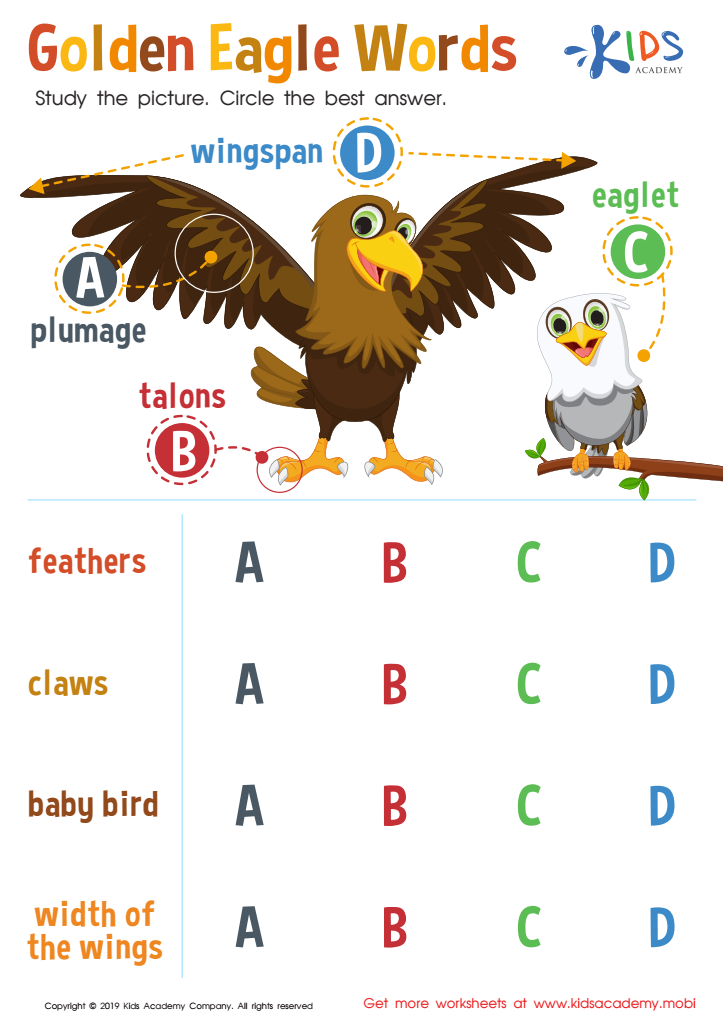
Golden Eagle Words Worksheet
 Assign to My Students
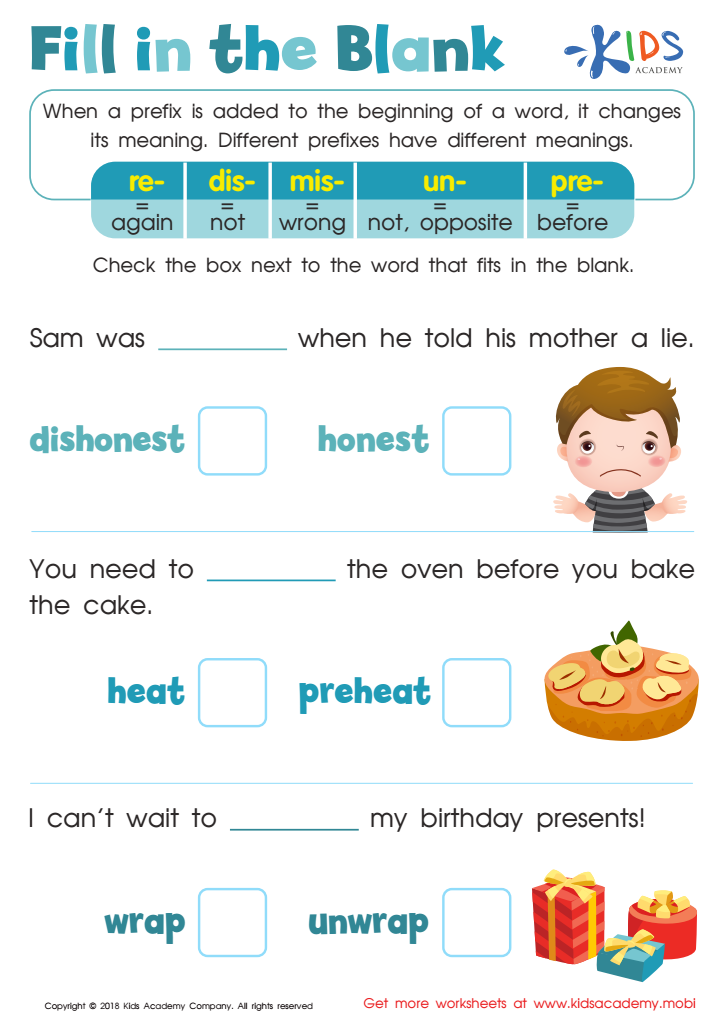
Reading: Fill in the Blank Worksheet
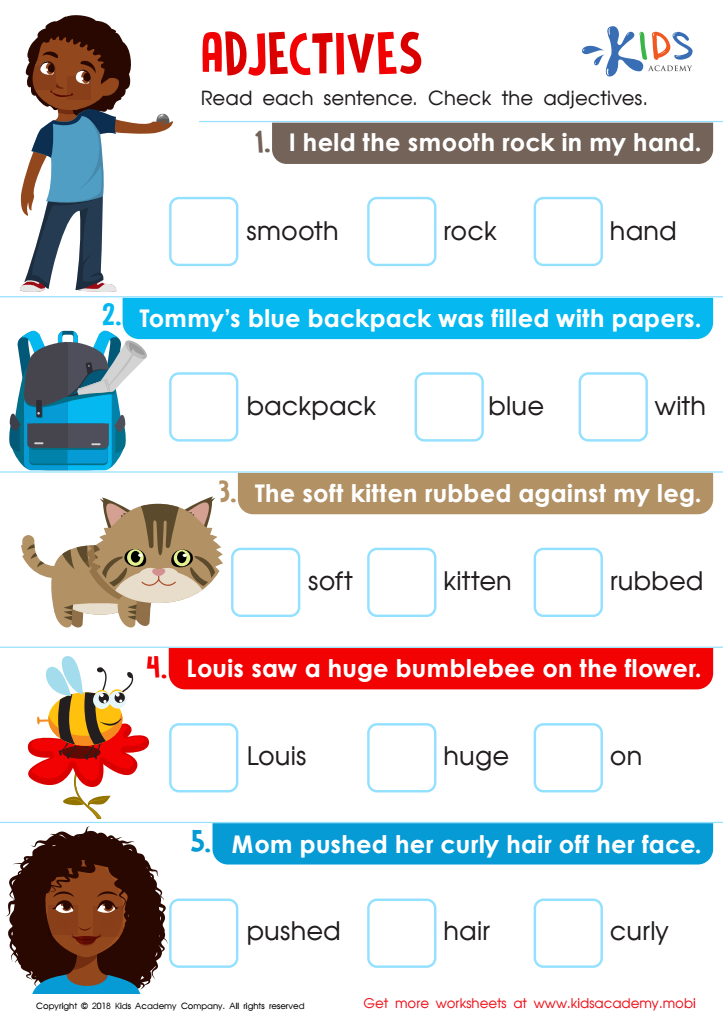
Adjectives Worksheet
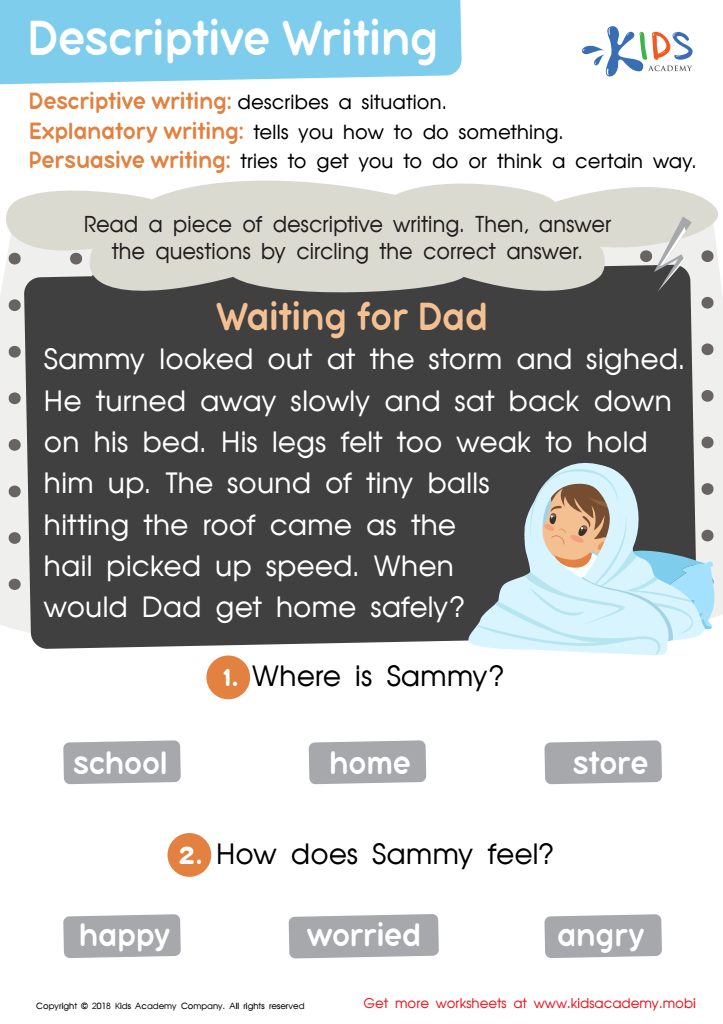
Descriptive Writing Worksheet: Part 2
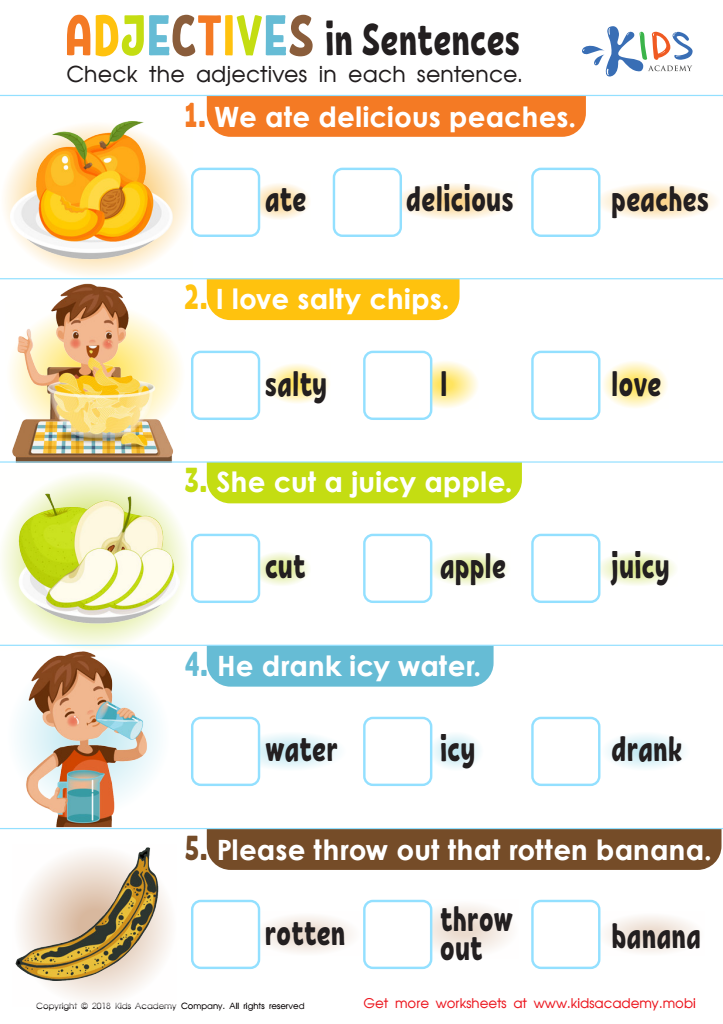
Adjectives in Sentences Worksheet






.jpg)
Parents and teachers should prioritize sentence construction and reading comprehension for 8-year-olds because these skills form the foundation for all future learning. At this age, children are transitioning from learning to read to reading to learn. Effective sentence construction enhances their ability to express thoughts clearly and engage in meaningful communication. When children grasp how to craft sentences, they can articulate their ideas more coherently, which boosts their confidence and fosters a love for writing.
Reading comprehension, on the other hand, allows children to understand and interpret texts, which is crucial for academic success. It enables them to relate new information to prior knowledge, enhancing overall understanding and retention. Mastering comprehension leads to better performance across subjects, from science to social studies.
Furthermore, these skills contribute to critical thinking. As children analyze sentences and texts, they learn to make inferences and draw conclusions, skills essential for problem-solving. By focusing on these areas now, we equip children not just for immediate academic achievements but for lifelong learning and informed citizenship. Ultimately, supporting the development of these skills in children helps cultivate motivated learners who can articulate their ideas and engage with the world around them effectively.








