Character analysis Reading Fiction Worksheets for 8-Year-Olds
3 filtered results
-
From - To
Explore our engaging "Character Analysis Reading Fiction Worksheets" tailored for 8-year-olds! These worksheets help young learners dive deep into the characters of their favorite stories, encouraging critical thinking and comprehension skills. Each activity prompts children to identify character traits, motivations, and growth throughout the narrative. As they fill out these fun and colorful worksheets, students enhance their analytical abilities while fostering a love for reading. Perfect for classroom use or at-home learning, our resources make character analysis accessible and enjoyable. Unlock your child's storytelling potential and stability in understanding characters with our expert-designed worksheets today!
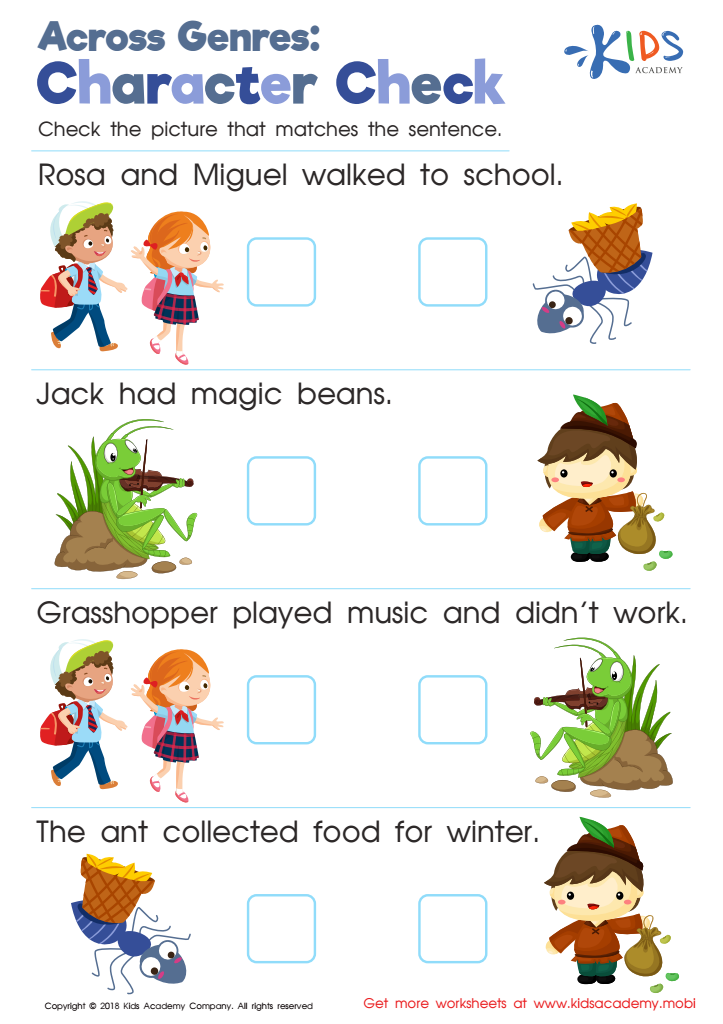
Across Genres: Character Check Worksheet
 Assign to My Students
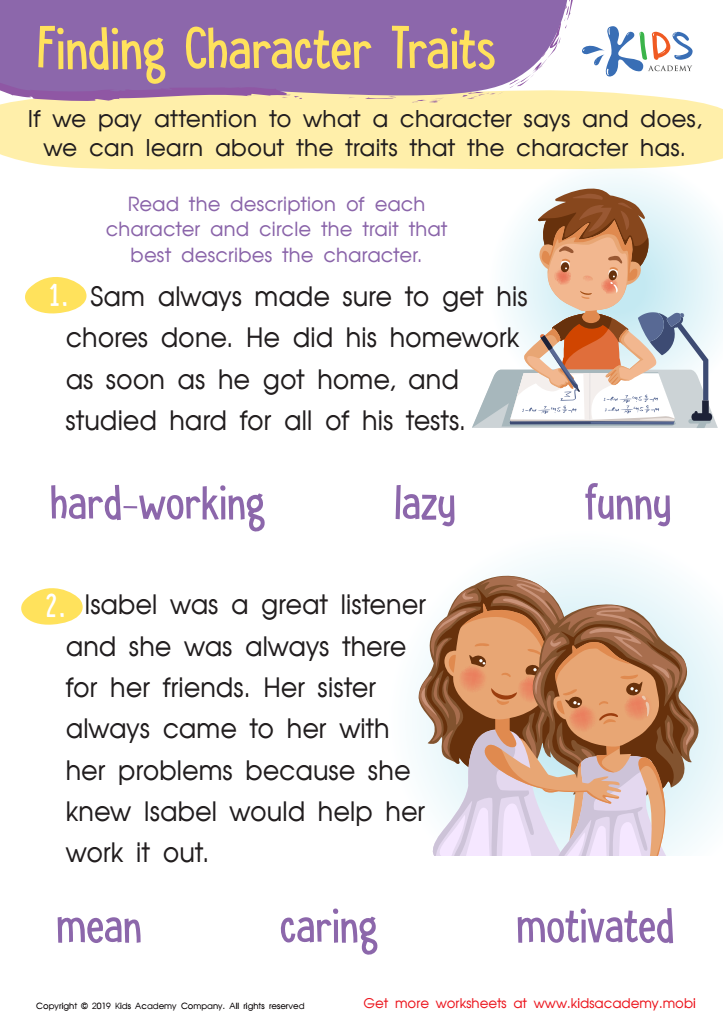
Finding Character Traits Worksheet
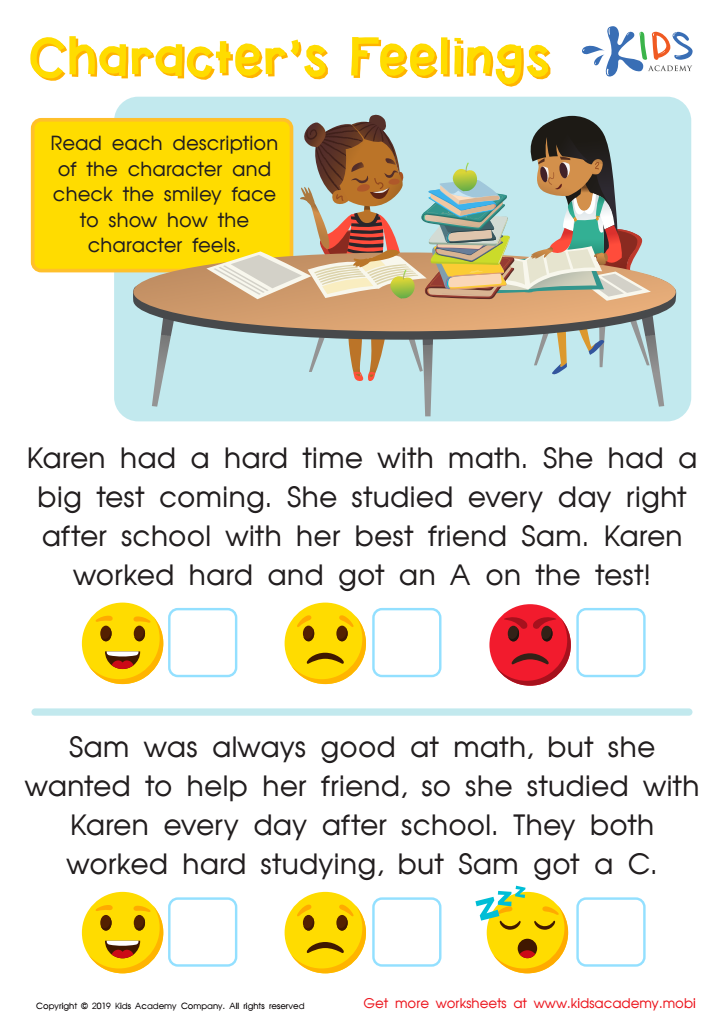
Character’s Feelings Worksheet




.jpg)



Character analysis in fiction is essential for 8-year-olds as it helps them develop critical thinking and empathy. By examining characters, children learn to identify different personality traits, motivations, and emotions, allowing them to better understand human behavior and relationships. This foundational skill not only enhances their reading comprehension but also enriches their own interpersonal skills.
Encouraging children to delve into character analysis fosters creativity and imagination as they explore what drives a character's decisions and how conflicts arise. It prompts discussions about right and wrong, teaching moral reasoning and ethical decision-making. Furthermore, when children analyze characters, they begin to make personal connections to their own lives—relating their experiences to those of fictional personas, which cultivates self-awareness and emotional intelligence.
For parents and teachers, guiding children through character analysis activities encourages a love for reading. This engagement can lead to increased confidence and motivation in literacy, paving the way for academic success. Overall, character analysis cultivates lifelong skills: discerning thought, compassion, and a deeper understanding of the world around them. Recognizing these benefits makes it clear why parents and teachers should prioritize this practice in their children’s reading experiences.








