Identifying shapes Sight Words Worksheets for 8-Year-Olds
3 filtered results
-
From - To
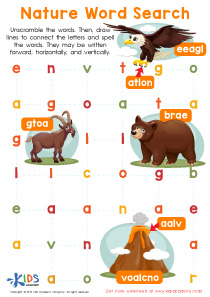
Discover our "Identifying Shapes Sight Words Worksheets" designed specifically for 8-year-olds! These engaging worksheets help young learners enhance their reading skills while familiarizing themselves with basic shapes. Each worksheet combines sight word recognition with shape identification, promoting both literacy and visual learning. Fun illustrations and interactive learning activities ensure that kids stay motivated and excited as they progress through various exercises. Ideal for homeschooling, tutoring, or classroom use, these worksheets support foundational reading skills and shape awareness. Boost your child's confidence with an engaging mix of education and play! Start exploring our printable resources today and watch your child's learning soar!
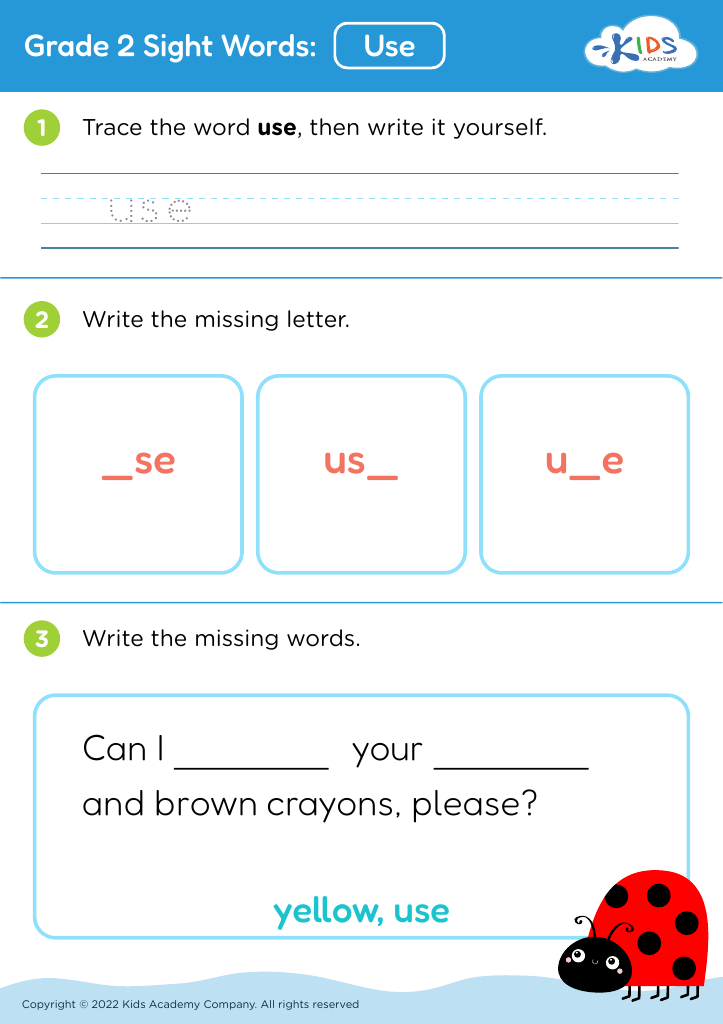







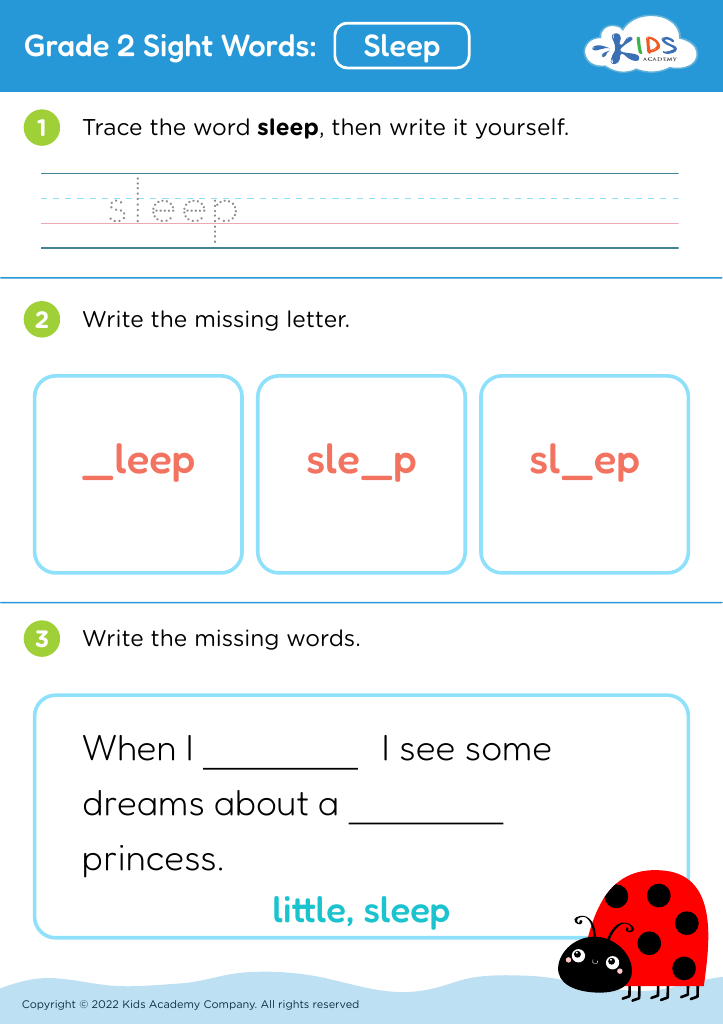
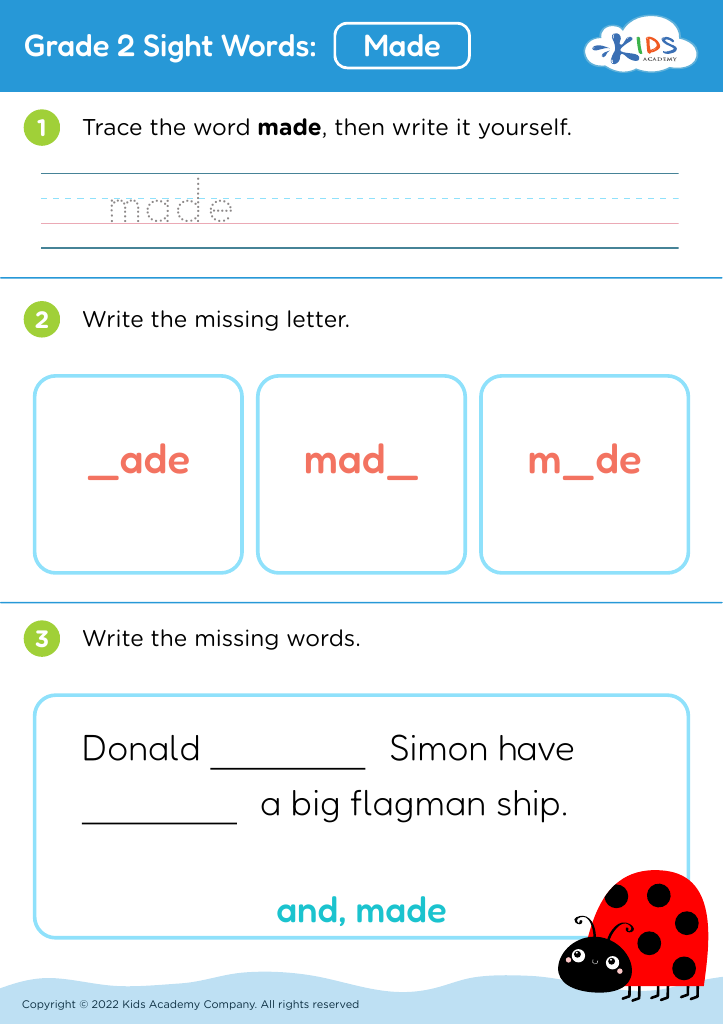








Identifying shapes and sight words are foundational skills for 8-year-olds, serving as critical building blocks for their overall educational development. Understanding shapes enhances spatial awareness and geometric reasoning, which are essential not only in math but also in everyday problem-solving. Shapes often appear in geometry, art, architecture, and environmental design, making their recognition vital across various contexts.
Moreover, sight words—integral to reading fluency—allow children to recognize common words instantly. This skill is crucial at this developmental stage, as it supports reading comprehension and promotes confidence in literacy. Children proficient in sight words can focus on understanding the text's meaning rather than getting bogged down by decoding, fostering a love for reading that can last a lifetime.
Additionally, strong spatial skills and reading abilities are linked to performance in subjects such as math and science, further influencing academic success. By emphasizing the identification of shapes and sight words, parents and teachers equip children with essential tools for holistic learning and effective communication. Supporting these areas not only benefits academic performance but also encourages curiosity and exploration, preparing children for future challenges and opportunities in learning.