Math problem-solving Sight Words Worksheets for 8-Year-Olds
5 filtered results
-
From - To
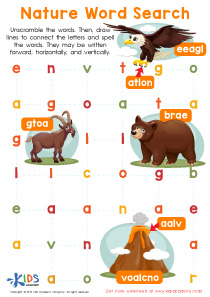
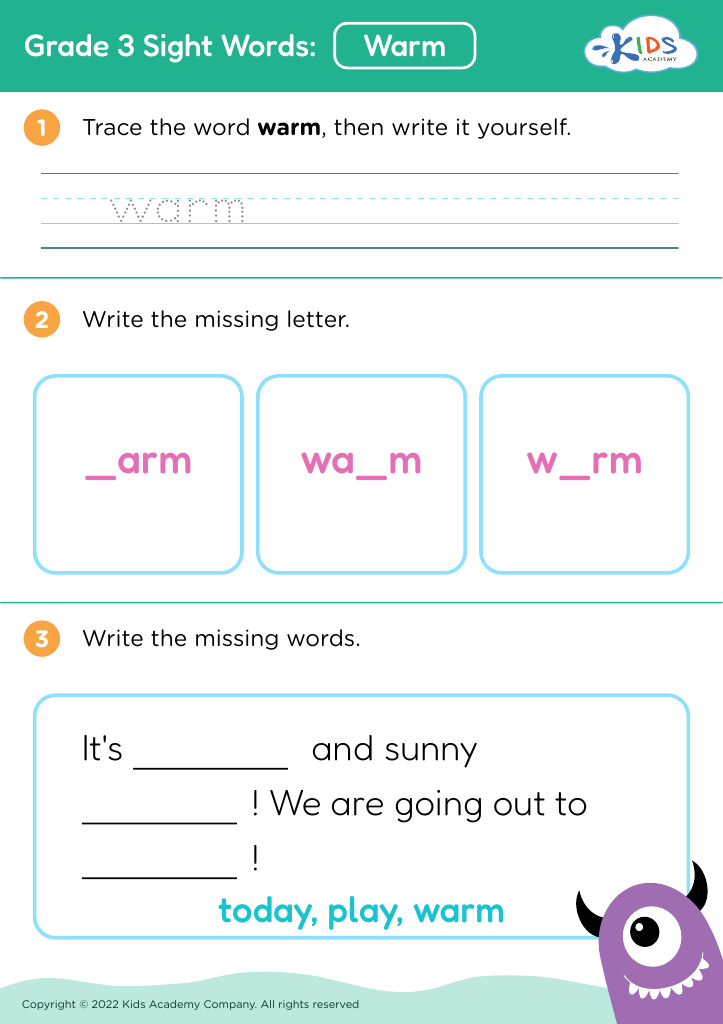
Our Math Problem-Solving Sight Words Worksheets for 8-year-olds are designed to seamlessly blend reading and math skills. Featuring a variety of engaging activities, these worksheets help children enhance their sight word vocabulary while developing critical math problem-solving abilities. Perfect for young learners, they foster a love for learning by making math both fun and accessible. Ideal for both classroom and at-home use, our worksheets boost confidence and proficiency in key academic areas. Explore our collection and watch your child excel in reading and math problem-solving through innovative and interactive practice.


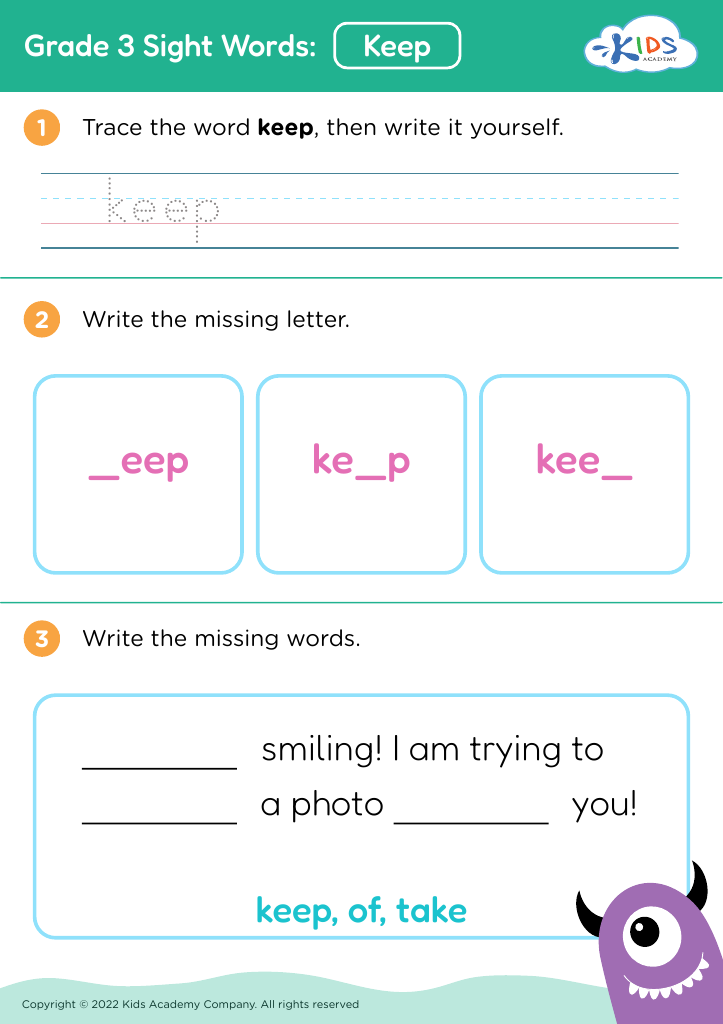
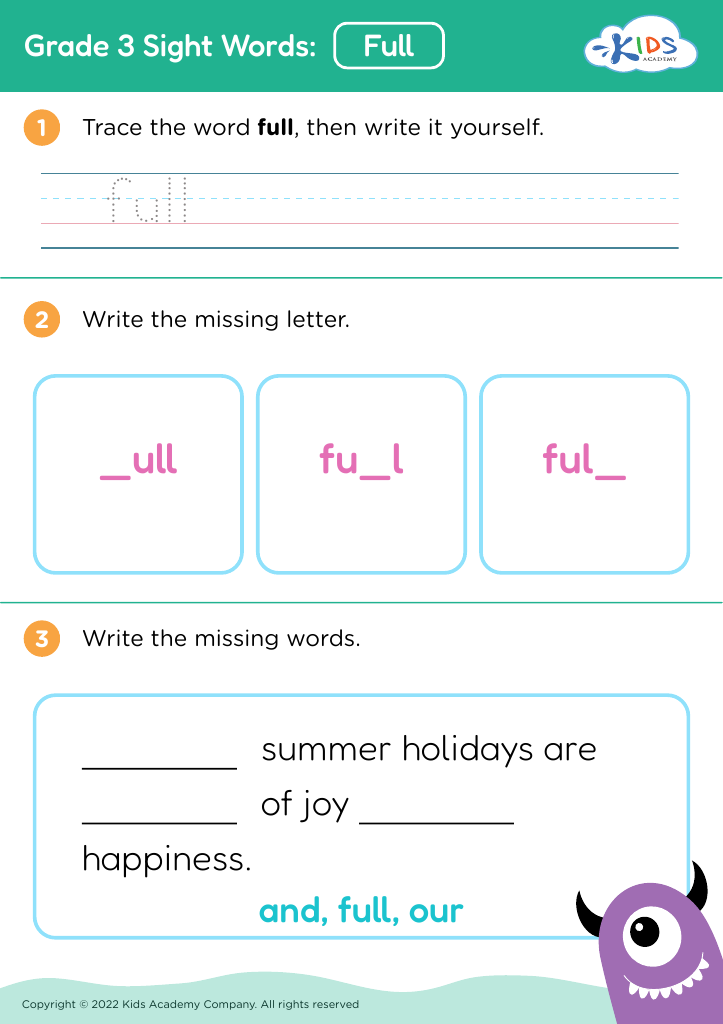
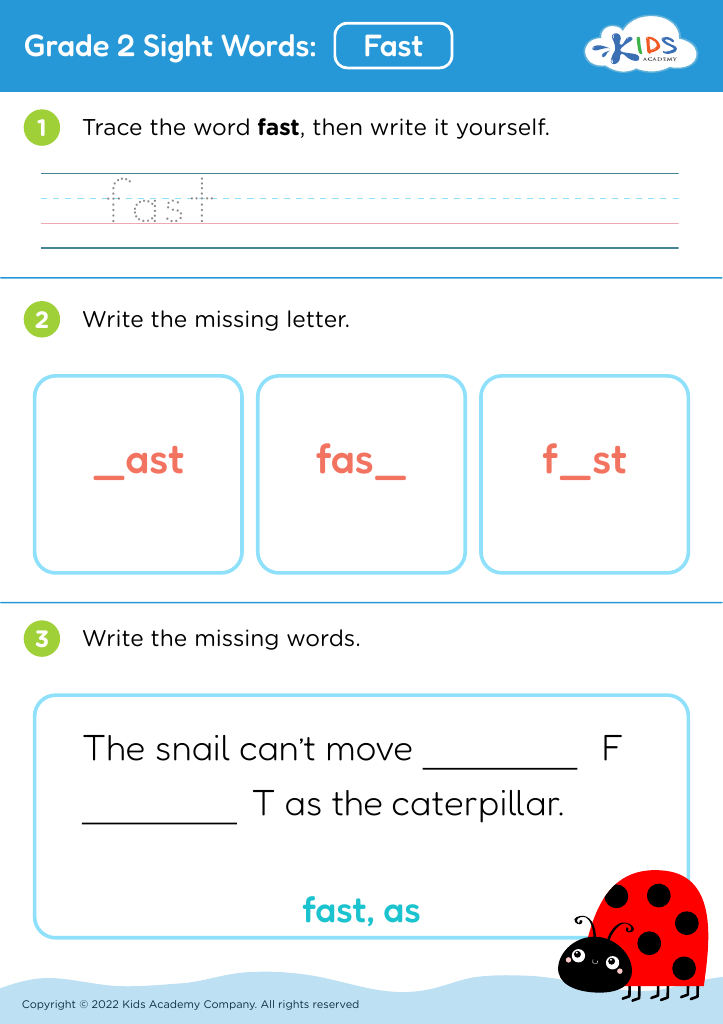
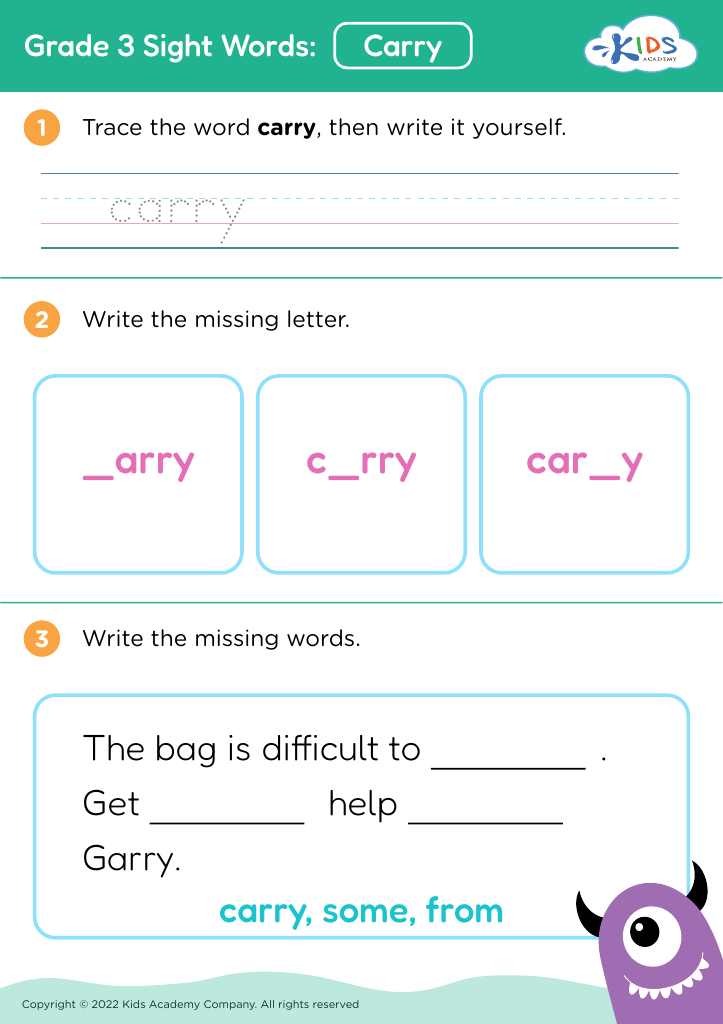








Math problem-solving sight words are essential for 8-year-olds because they form a foundational vocabulary that supports understanding and engagement with mathematical concepts. For parents and teachers, being attentive to these words helps children develop fluency in mathematical language, which in turn promotes better comprehension and problem-solving skills.
Sight words like “add,” “subtract,” “sum,” “equal,” and “greater” recur in many math problems and instructions. When children instantly recognize these words, they spend less mental energy decoding the vocabulary and can focus more on understanding and solving the actual math problems. This increases their efficiency and accuracy, which is crucial for building confidence and competence in math.
Furthermore, including sight words in early math education acts as a bridge between literacy and numeracy. Children who are fluent in the language of math are better equipped to tackle word problems, translate spoken instructions into mathematical steps, and discuss their reasoning and solutions effectively. This holistic approach assists children in meeting educational standards and achieving critical thinking skills that extend beyond mathematics.
In summary, math problem-solving sight words are pivotal. Supporting 8-year-olds in mastering these words lays the groundwork for their overall academic success and bolsters their confidence and willingness to engage with increasingly complex math concepts in the future.