Phonics recognition Grammar Worksheets for 8-Year-Olds
4 filtered results
-
From - To
Unlock your child's potential with our engaging Phonics Recognition Grammar Worksheets designed specifically for 8-year-olds! These interactive worksheets combine phonics skills with grammar practice, ensuring your child builds a strong foundation in reading and writing. Each activity encourages fun and immersive learning, helping children recognize sounds and apply them in grammar contexts. Tailored to enhance literacy skills, our worksheets cater to diverse learning styles and reinforce essential concepts. Ideal for home practice or classroom reinforcement, they're a perfect resource for young learners to boost confidence in their writing journey. Transform learning into an enjoyable experience with our phonics recognition worksheets today!
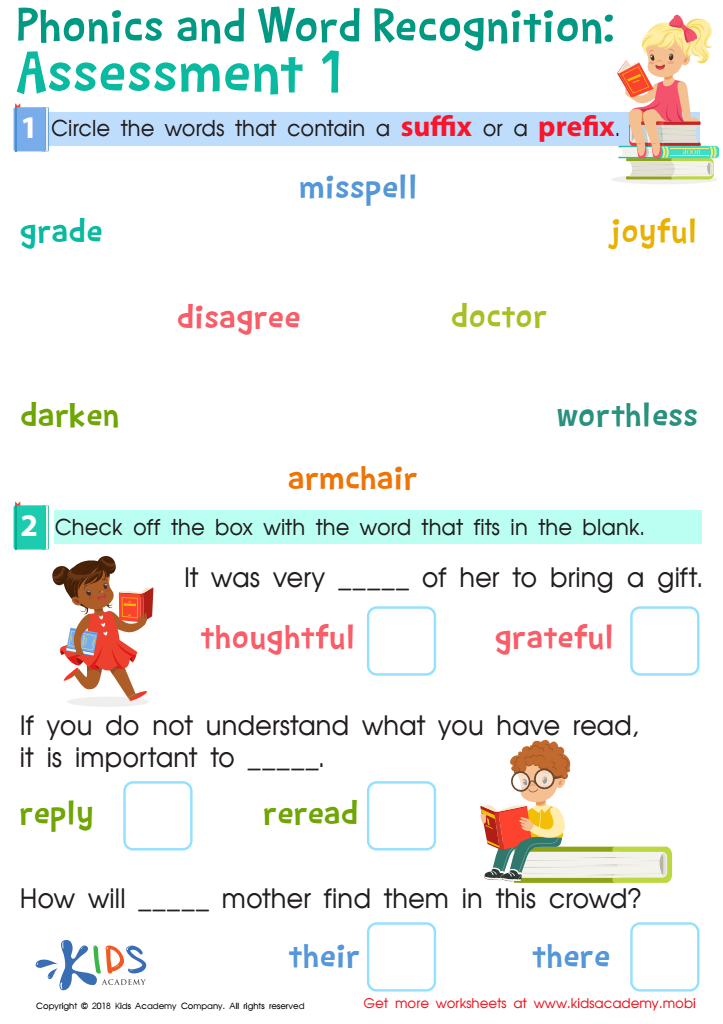
Phonics and Word Recognition: Assessment 1 Worksheet
 Assign to My Students
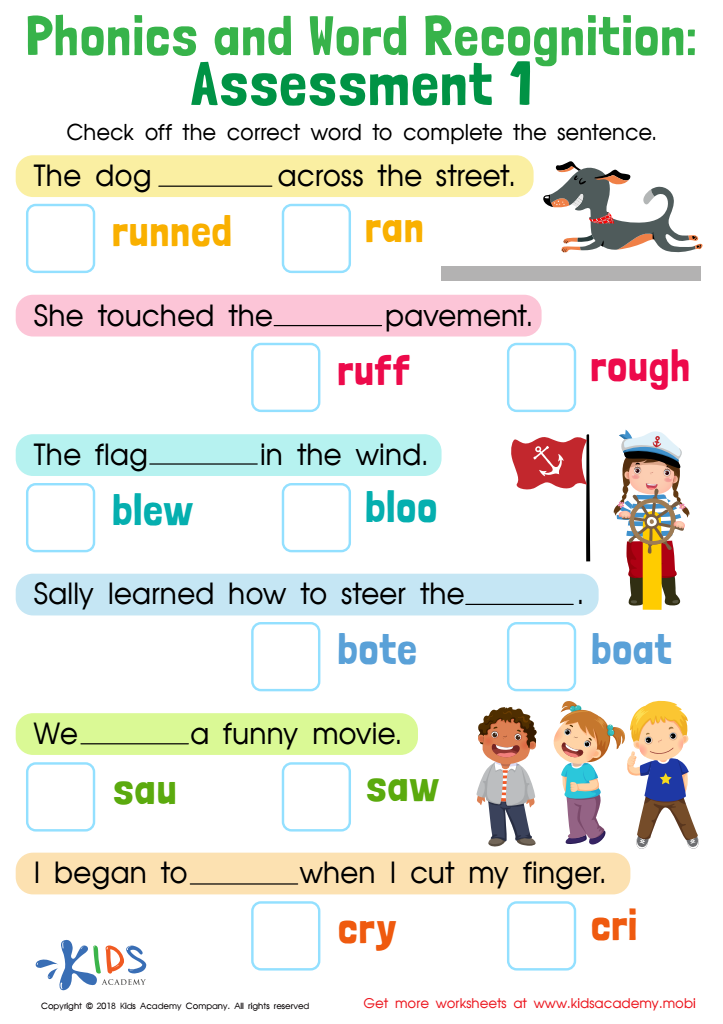
Phonics and Word Recognition: Assessment 1 Worksheet
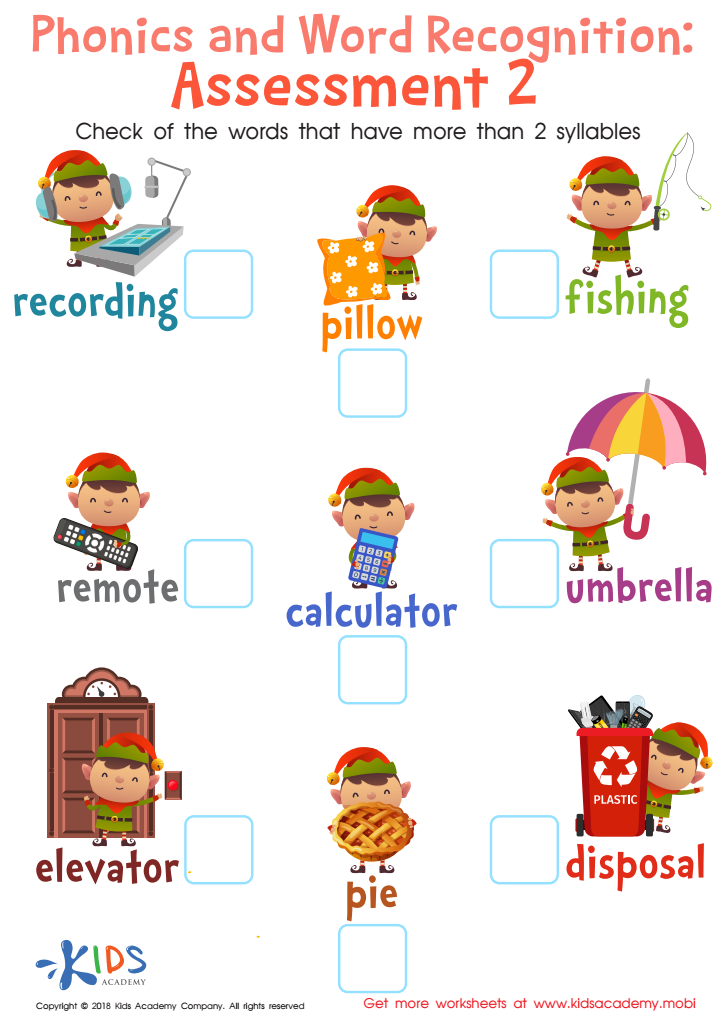
Phonics and Word Recognition: Assessment 2 Worksheet
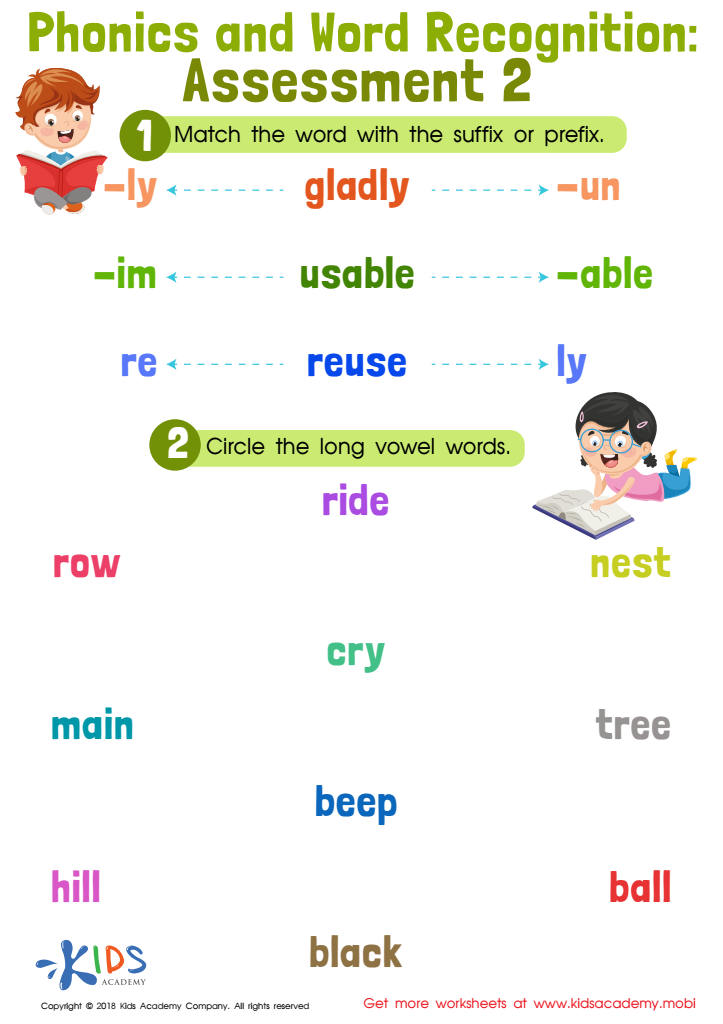
Phonics and Word Recognition: Assessment 2



.jpg)



Phonics recognition and grammar are foundational elements in the literacy development of 8-year-olds, making it crucial for parents and teachers to prioritize them. At this age, children are transitioning from learning to read to reading to learn, relying on their phonics skills to decode words fluently. Understanding the relationship between sounds and letters is vital for building vocabulary and comprehension, which supports overall academic performance.
Moreover, a solid grasp of grammar helps children construct meaningful sentences, improve their writing skills, and communicate effectively. It enables them to express thoughts and ideas clearly, fostering self-confidence in both speaking and writing. As 8-year-olds engage more with diverse texts and develop critical thinking skills, a strong background in phonics and grammar lays the groundwork for interpreting and analyzing information.
Additionally, parents and teachers play an essential role in reinforcing these skills through engaging activities and positive reinforcement. By promoting phonics and grammar in a supportive environment, they can spark a love for reading and writing, helping children become lifelong learners. Prioritizing these aspects of literacy is not just about academic success but also about equipping children with the tools they need for effective communication and self-expression in their everyday lives.








