
Develop critical thinking Worksheets for 9-Year-Olds
4 filtered results
Difficulty Level
Grade
Age
-
From - To
Subject
Activity
Standards
Unlock your child's potential with our engaging critical thinking worksheets for 9-year-olds! Designed to stimulate cognitive skills, these printable resources promote problem-solving, analysis, and creativity in a fun and interactive way. Each worksheet features age-appropriate challenges that encourage children to think critically and develop logical reasoning, preparing them for academic success. From puzzles and riddles to scenario-based questions, our thoughtfully crafted activities ignite curiosity and foster independent thinking. Dive into a treasure trove of educational content that not only enhances learning but also builds essential skills for life. Explore our collection today and watch your child's confidence soar!
Favorites
With answer key
Interactive
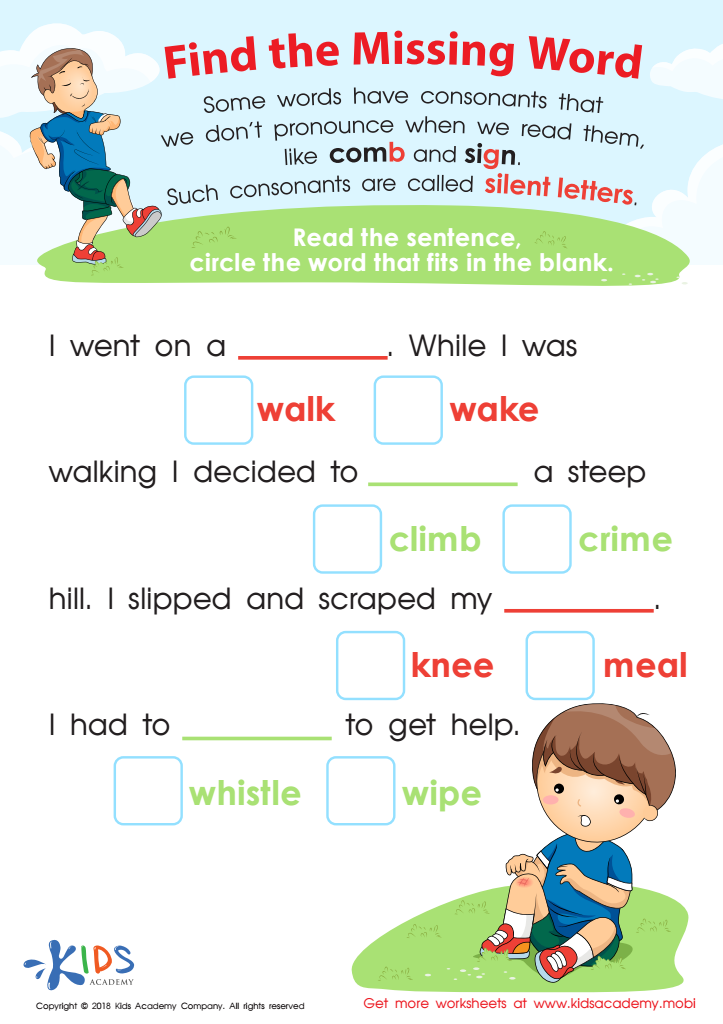
Find The Missing Word Worksheet
Master silent letters like "b" and "k" with this illustrated worksheet! Read the sentences and fill in the blanks with the correct word, checking the box. Read all the way to the bottom and review words containing silent letters. A great way to help your little learner tackle a tough topic!
 Assign to My Students
Find The Missing Word Worksheet
Worksheet
Join Kids Academy for Free
Who is primarily going to use this learning content?








Developing critical thinking skills in 9-year-olds is essential for their overall growth and future success. At this age, children are forming more advanced cognitive abilities, which allow them to analyze information, reason logically, and solve problems creatively. Parents and teachers play a crucial role in nurturing these skills, as they empower children to think independently and make informed decisions.
Critical thinking fosters curiosity and encourages children to question the world around them. By engaging in discussions, analyzing various viewpoints, and considering evidence before forming conclusions, kids learn to approach problems systematically. This skill is invaluable in academics, as it enhances their ability to understand complex subjects, carry out scientific inquiries, and tackle math challenges.
Moreover, critical thinking equips children with the tools to navigate an increasingly complex society. They can discern fact from opinion, evaluate sources, and engage in discussions about significant social issues, making them informed citizens. Furthermore, critical thinking can boost self-confidence and resilience, as children learn to embrace challenges and view mistakes as growth opportunities. Thus, parents and teachers nurturing critical thinking not only enrich a child's education but also prepare them for a dynamic and interconnected world.








