Simplifying Fractions Worksheets for 9-Year-Olds
10 filtered results
-
From - To
Welcome to our "Simplifying Fractions Worksheets for 9-Year-Olds" page! Designed to make learning a breeze, our engaging worksheets help young learners master the art of simplifying fractions. Through fun exercises and clear explanations, students will build essential math skills while enjoying their studies. Our worksheets are perfect for enhancing classroom learning or as a valuable resource for home practice. With a variety of problems catered to different learning styles, children will gain confidence while honing their fraction skills. Explore our collection today and empower your child to conquer fractions with ease and enthusiasm!
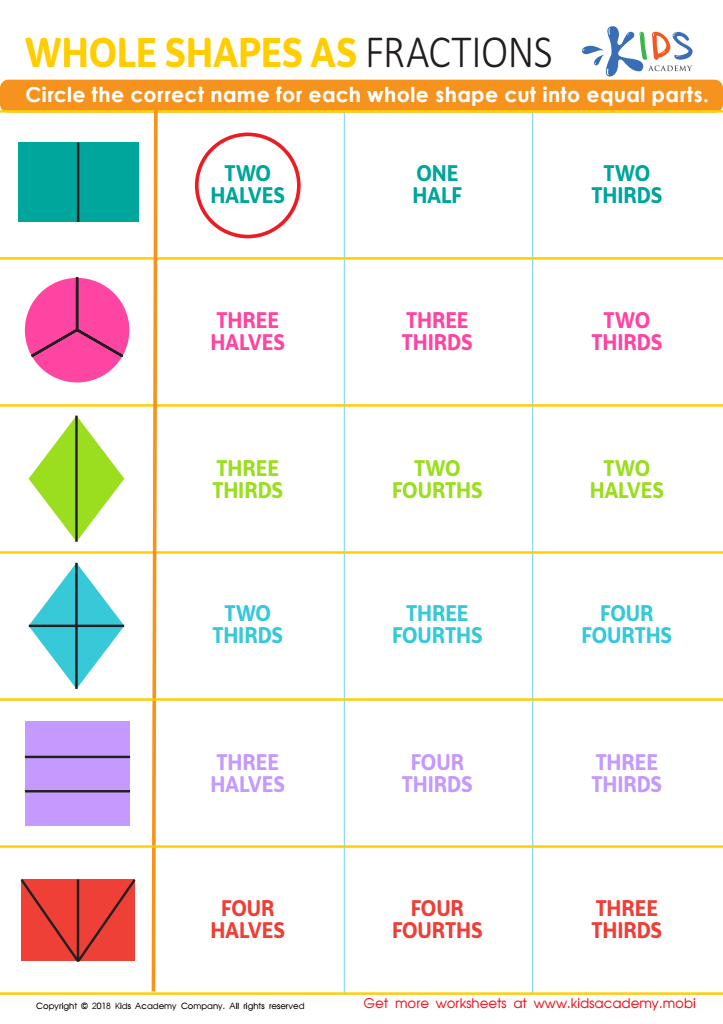
Whole Shapes as Fractions Worksheet
 Assign to My Students
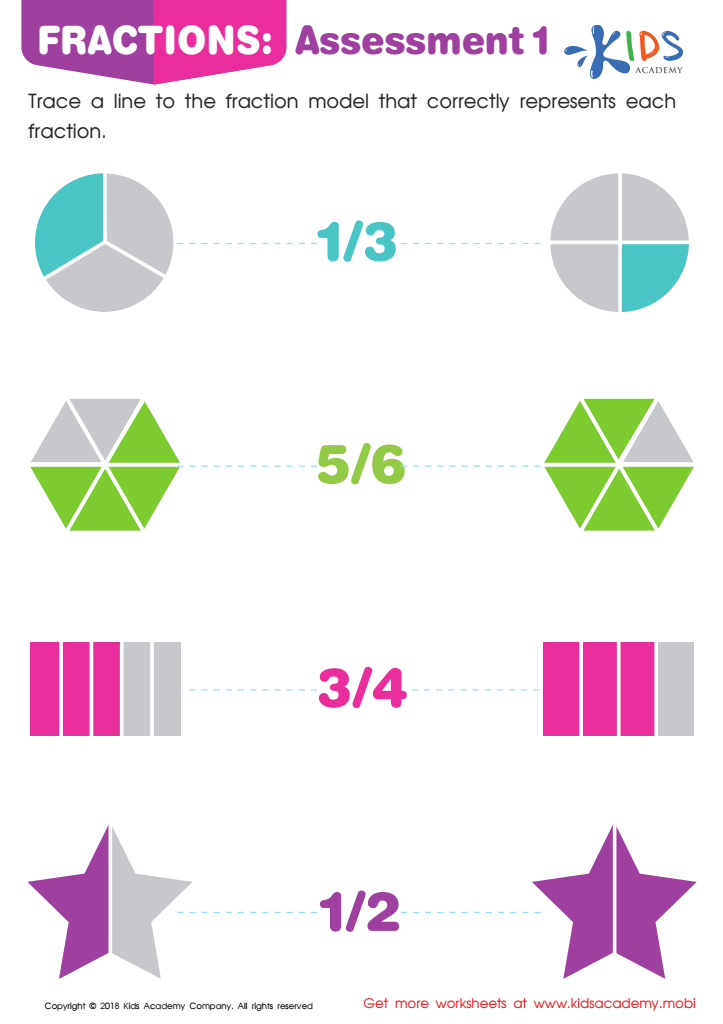
Fractions: Assessment 1 Worksheet
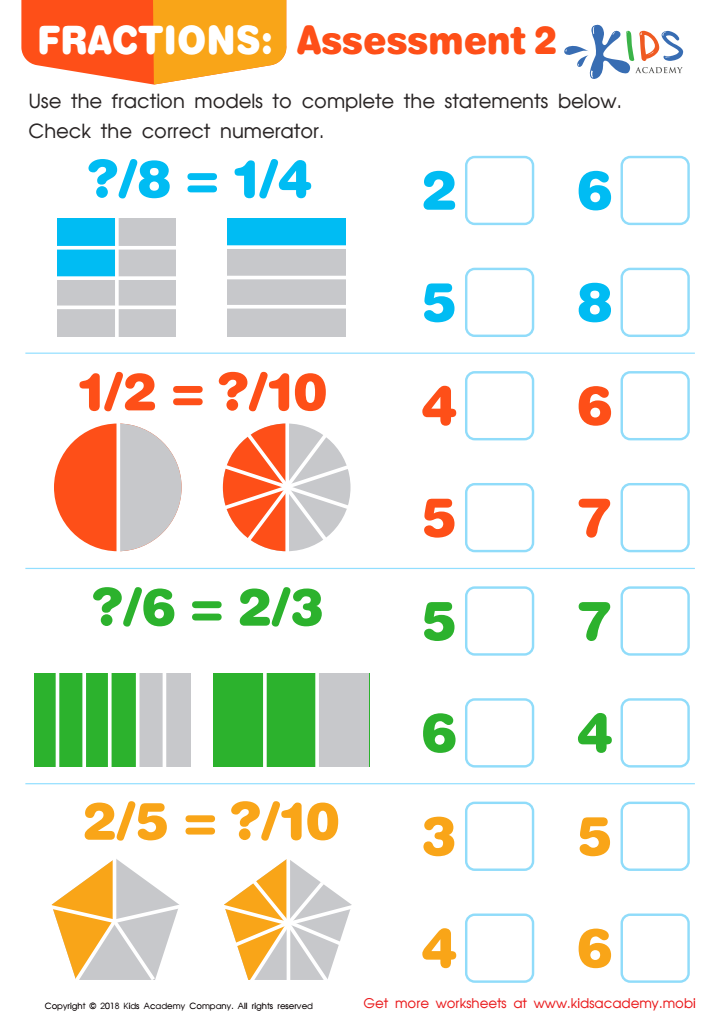
Fractions: Assessment 2 Worksheet
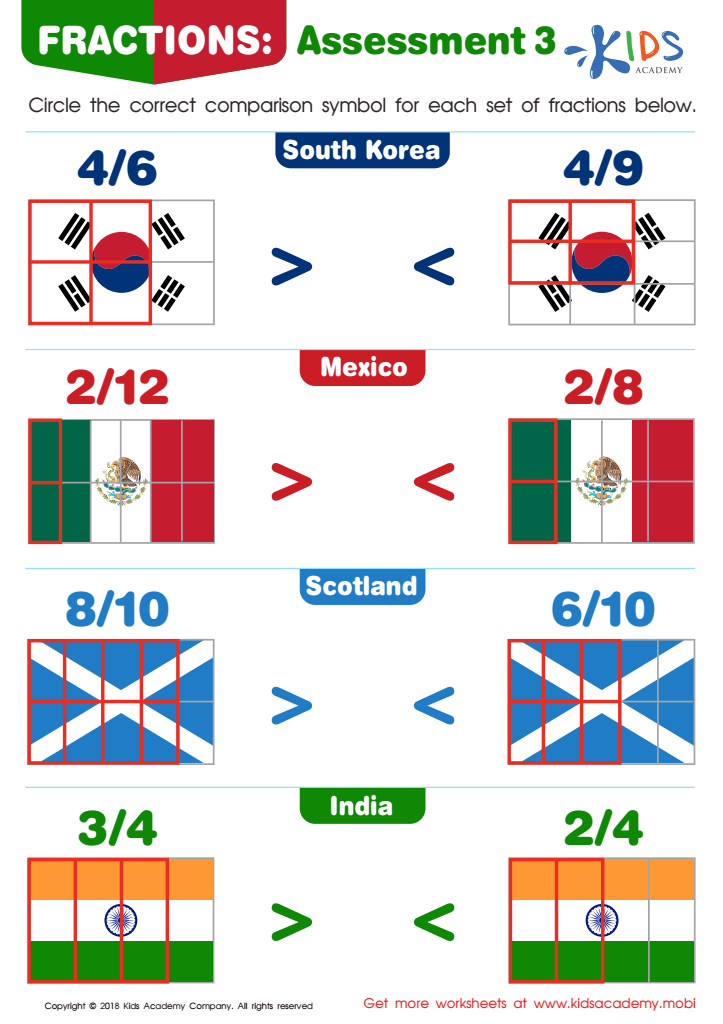
Fractions: Assessment 3 Worksheet





Simplifying fractions is a crucial mathematical skill that 9-year-olds should master, and it is important for both parents and teachers to recognize its significance. First, simplifying fractions helps children develop a deeper understanding of the relationships between numbers, enhancing their overall number sense. This lays the groundwork for more complex concepts in algebra and ratio later on.
Furthermore, mastering this skill encourages critical thinking and problem-solving abilities. When children learn to simplify fractions, they practice analyzing problems, breaking them down, and finding efficient solutions. This process fosters logical reasoning, which is valuable not just in math but across all subject areas.
Parents and teachers should also be aware that proficiency in simplifying fractions boosts confidence. When children successfully simplify fractions, they gain a sense of accomplishment, which can motivate them to tackle more challenging mathematical concepts. This newfound confidence often translates into a positive attitude towards math as a whole.
Lastly, simplified fractions have practical applications in daily life, including cooking, budgeting, and measuring. By emphasizing this skill, parents and teachers equip children with tools they will use beyond the classroom, encouraging them to see the relevance of math in their everyday lives.








