Problem-Solving Skills Addition Worksheets for 9-Year-Olds - Page 2
34 filtered results
-
From - To
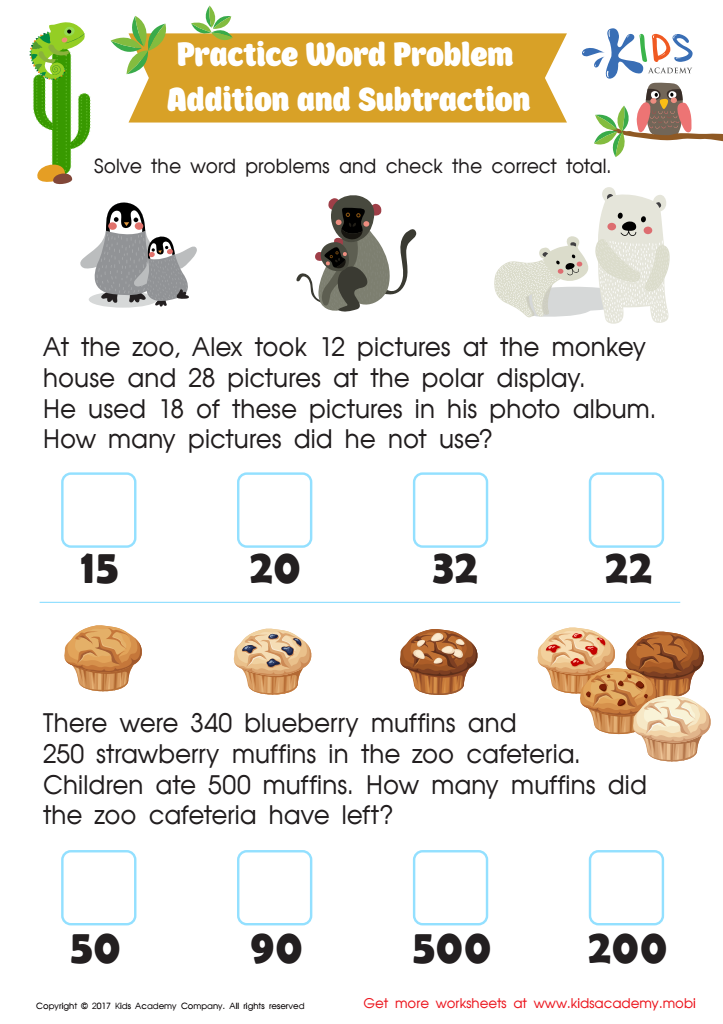
Addition and Subtraction: Word Problems Worksheet
 Assign to My Students
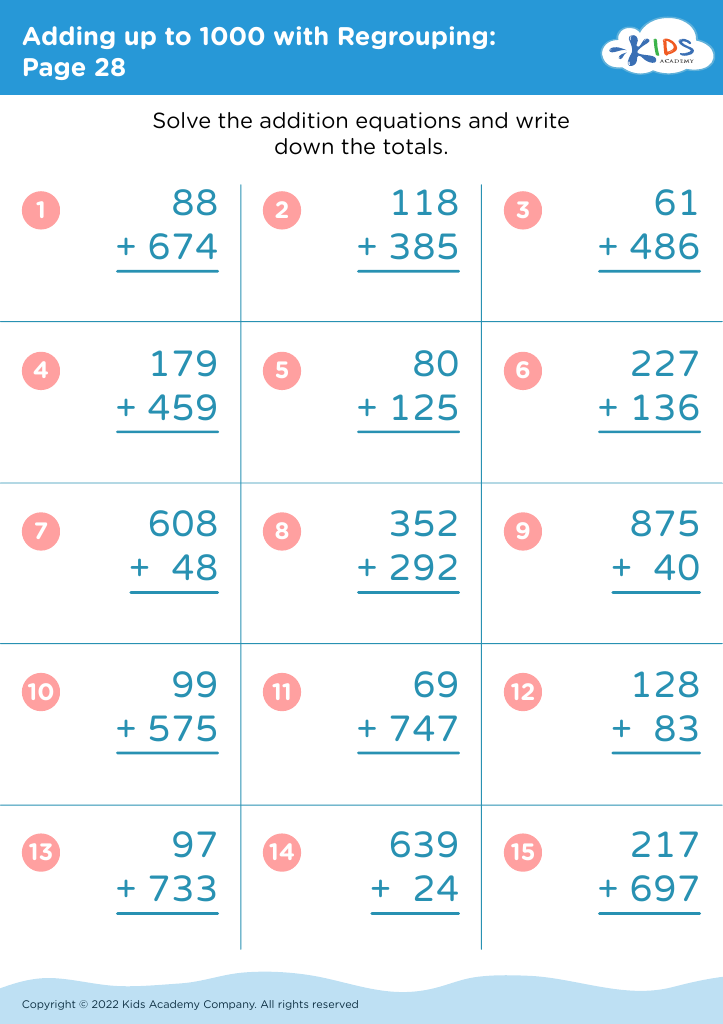
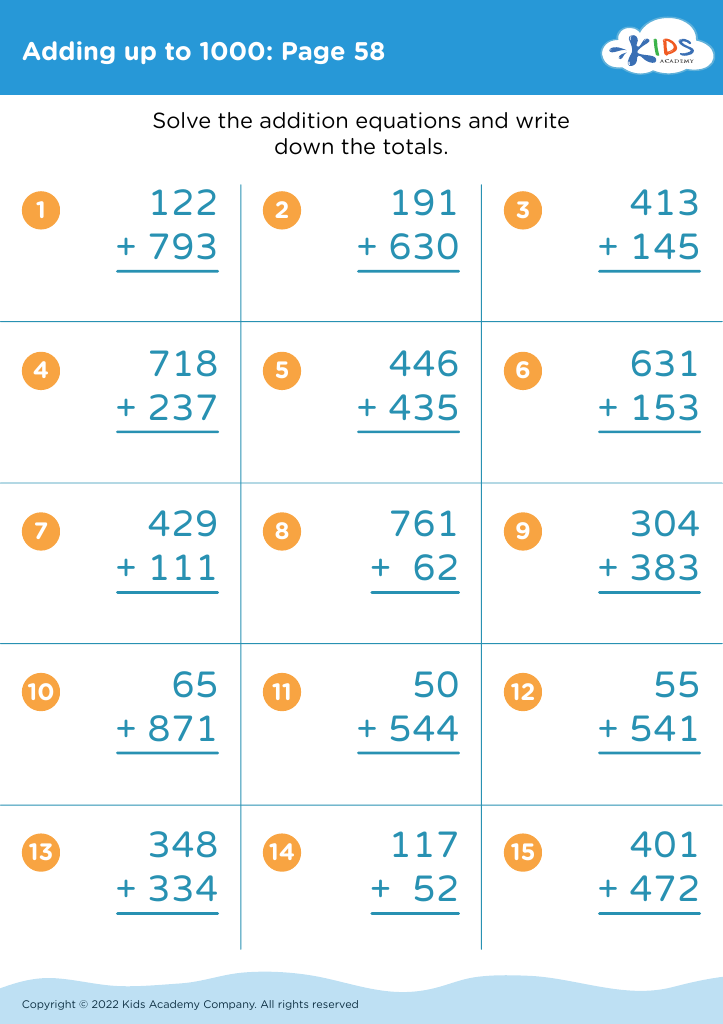
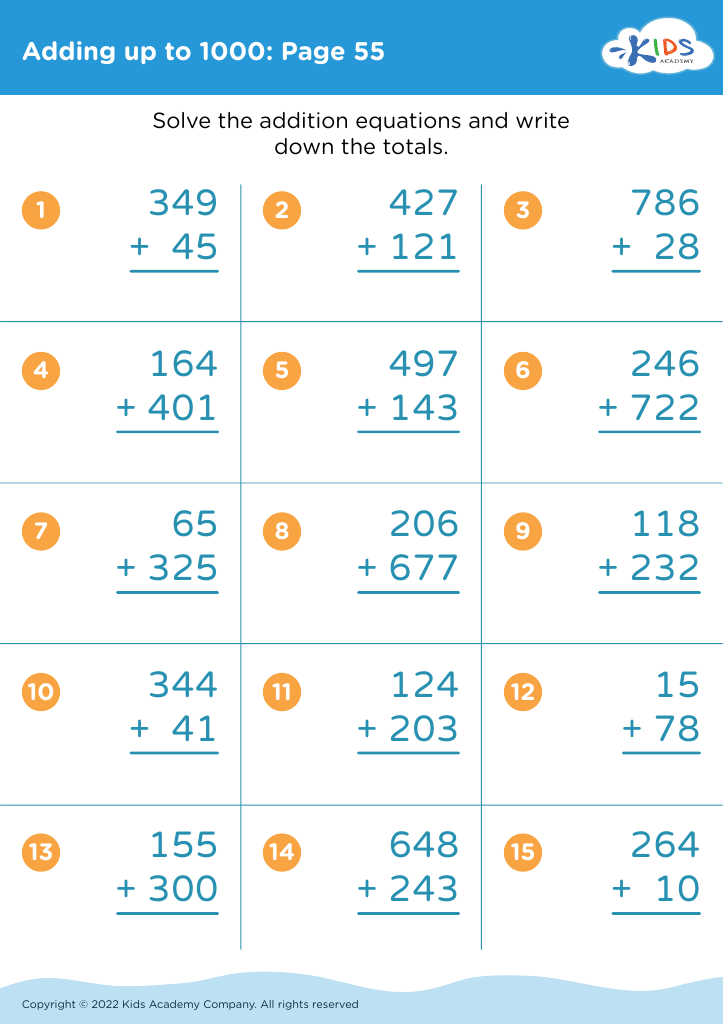
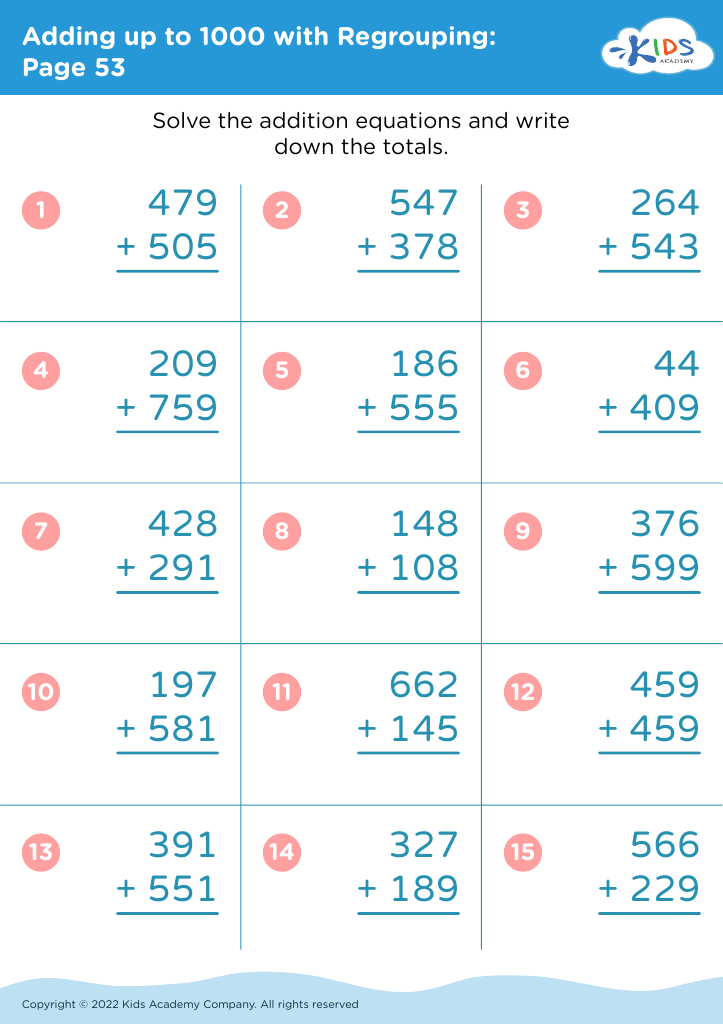
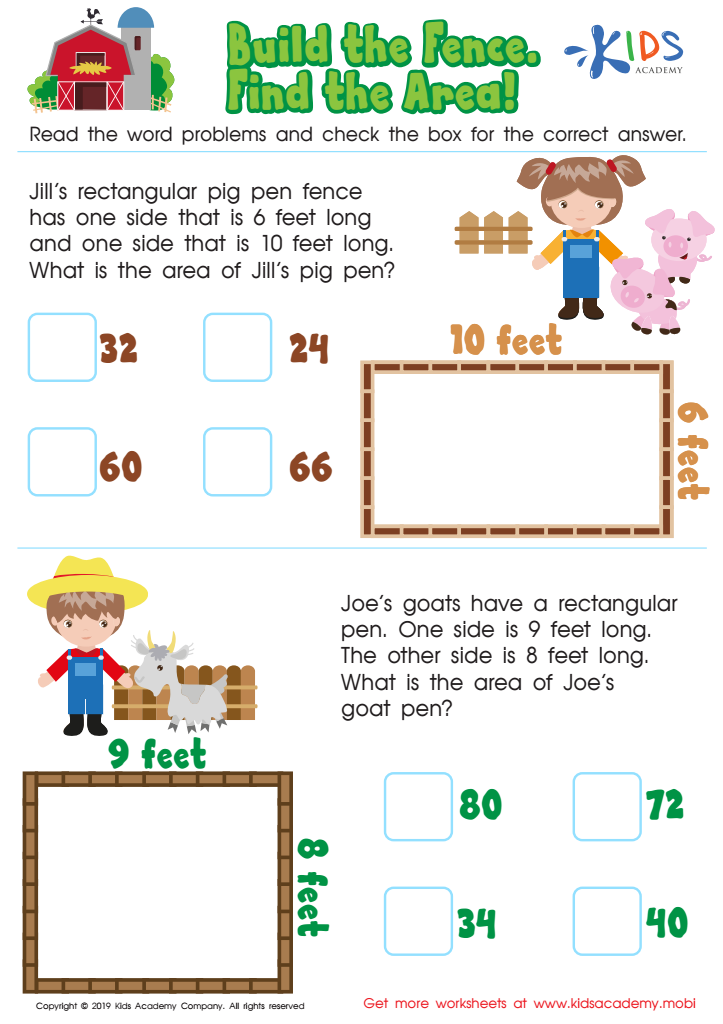
Build the Fence, Find the Area Worksheet
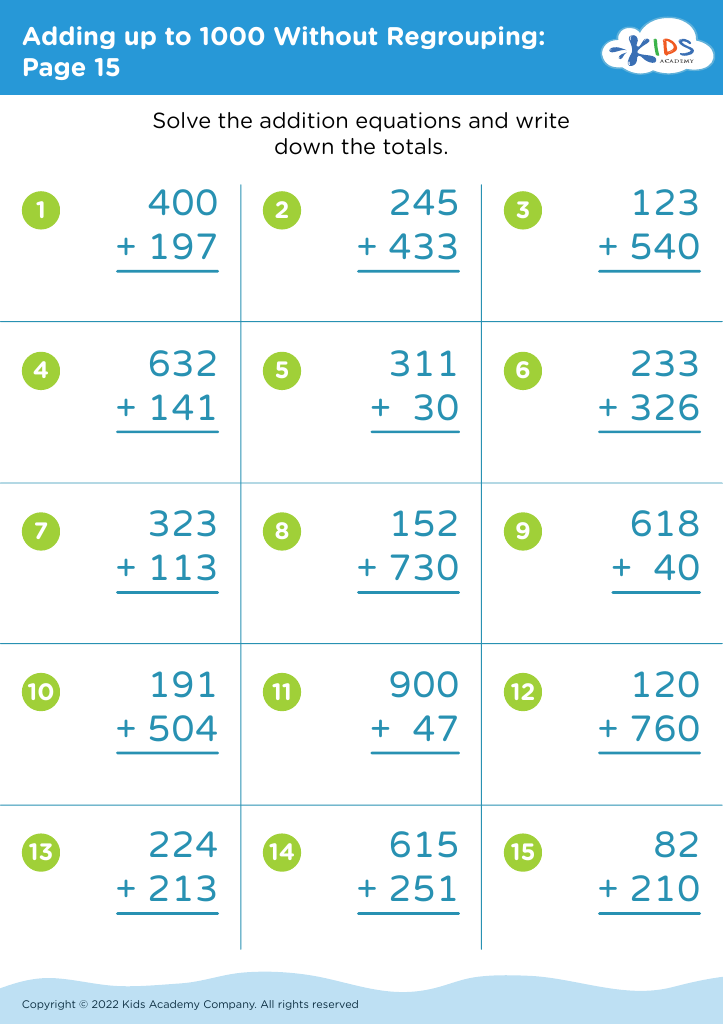








Problem-solving skills addition for 9-year-olds is crucial, and both parents and teachers should take an active role in fostering these abilities. At this age, children are naturally curious and starting to develop their cognitive abilities. Introducing them to problem-solving not only enhances their academic success but also equips them with essential life skills.
When children learn problem-solving through addition, they don't just practice math; they develop logical thinking, perseverance, and resilience. These skills enable them to approach various challenges systematically, break them down, and find solutions. For instance, if faced with a complex addition problem, a child learns to carefully analyze the numbers involved, which can translate to better decision-making in other areas of their lives.
Moreover, problem-solving skills fortify a child’s sense of autonomy and confidence. As they successfully resolve issues on their own, they build self-esteem and an “I can do it” attitude. This confidence prepares them to tackle increasingly difficult tasks, both academic and personal, with greater self-assurance.
Parents and teachers play key roles by providing problems that encourage critical thinking, guiding children through the processes, and celebrating successes. Engaging children with practical and relatable addition problems helps them see the value in what they are learning, making them more motivated and invested in their education. So, instilling problem-solving skills through addition at this impressionable age can set the foundation for academic growth and meaningful skills for lifelong success.








