Filters

13 filtered results

Clear all filters
Favorites
With answer key
Interactive

13 filtered results

Difficulty Level

Grade


Welcome to our "Reading Comprehension Addition Worksheets for 9-Year-Olds"! Our engaging worksheets are designed to help young learners enhance their reading comprehension skills while mastering addition. Each worksheet features story-based problems that require students to read carefully, extract relevant information, and apply their math knowledge to solve addition tasks. By integrating reading and math, children will develop critical thinking skills and boost their confidence in both areas. Ideal for classroom practice or at-home learning, these worksheets provide a fun and effective way for 9-year-olds to improve their abilities while enjoying the learning process. Get started today!
Check out this FREE Trial Lesson on Addition for age 9!

Match Objects that Fit Together

Favorites
With answer key
Interactive
  • 9
  • Reading comprehension
  • Addition
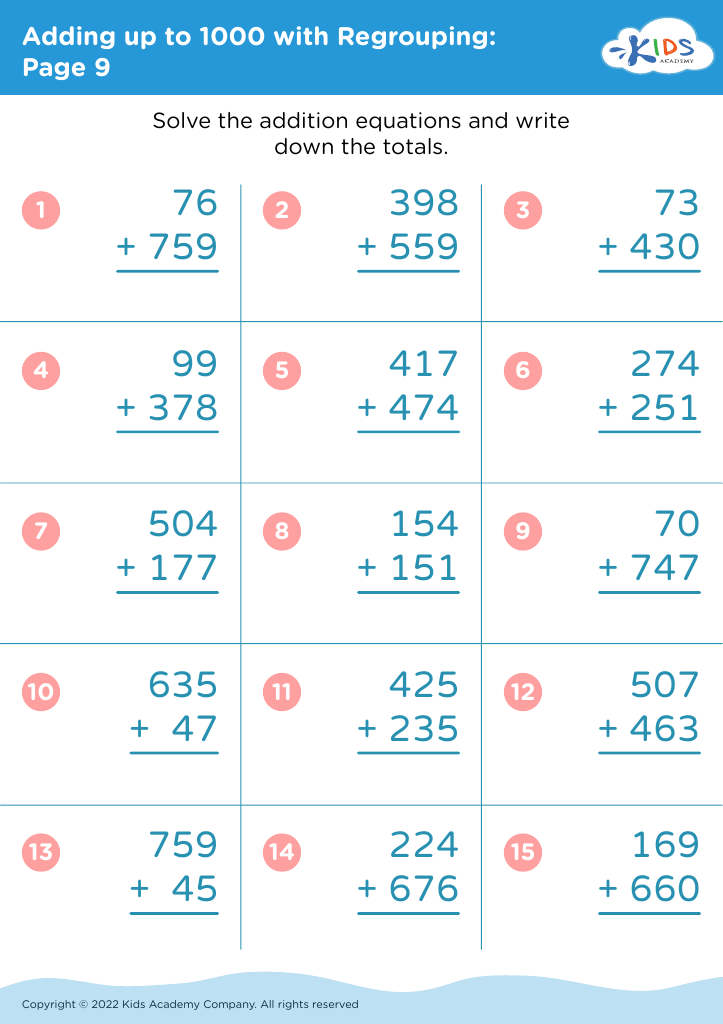
Adding up to 1000 with Regrouping: Page 9
Worksheet
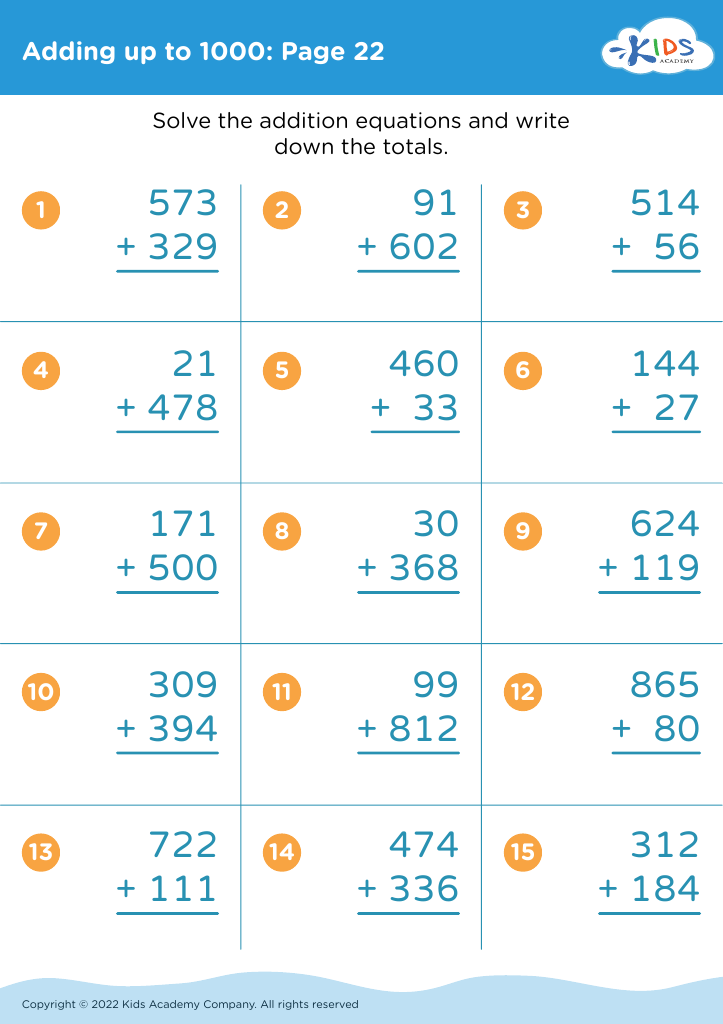
Adding up to 1000: Page 22

Adding up to 1000: Page 22

Adding up to 1000: Page 22
Worksheet
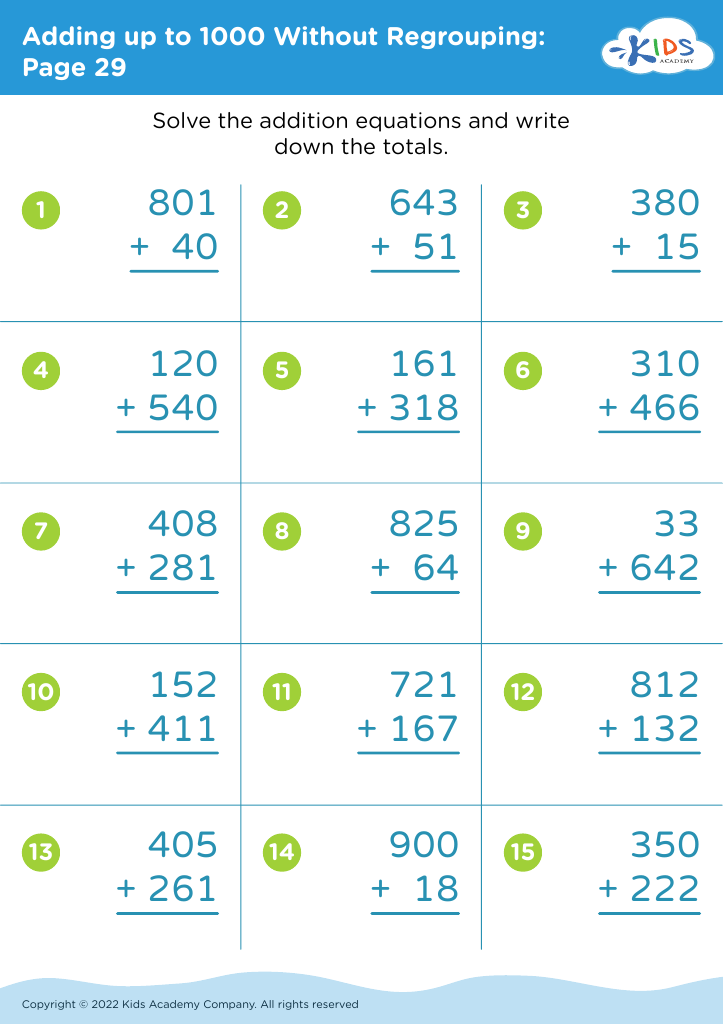
Adding up to 1000 Without Regrouping: Page 29
Worksheet
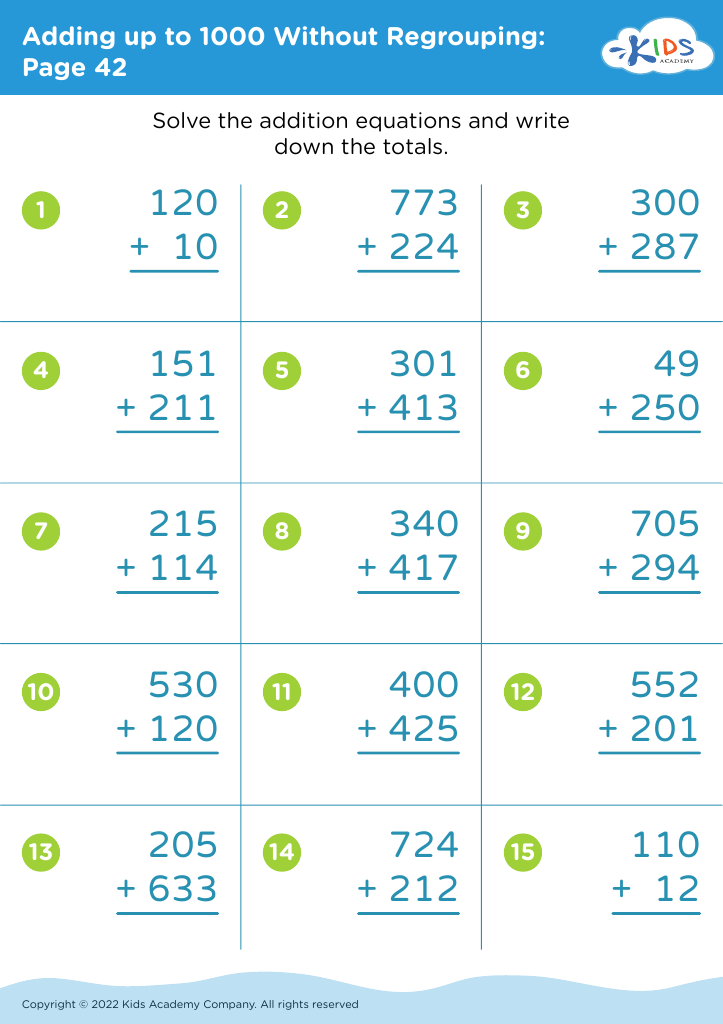
Adding up to 1000 Without Regrouping: Page 42
Worksheet
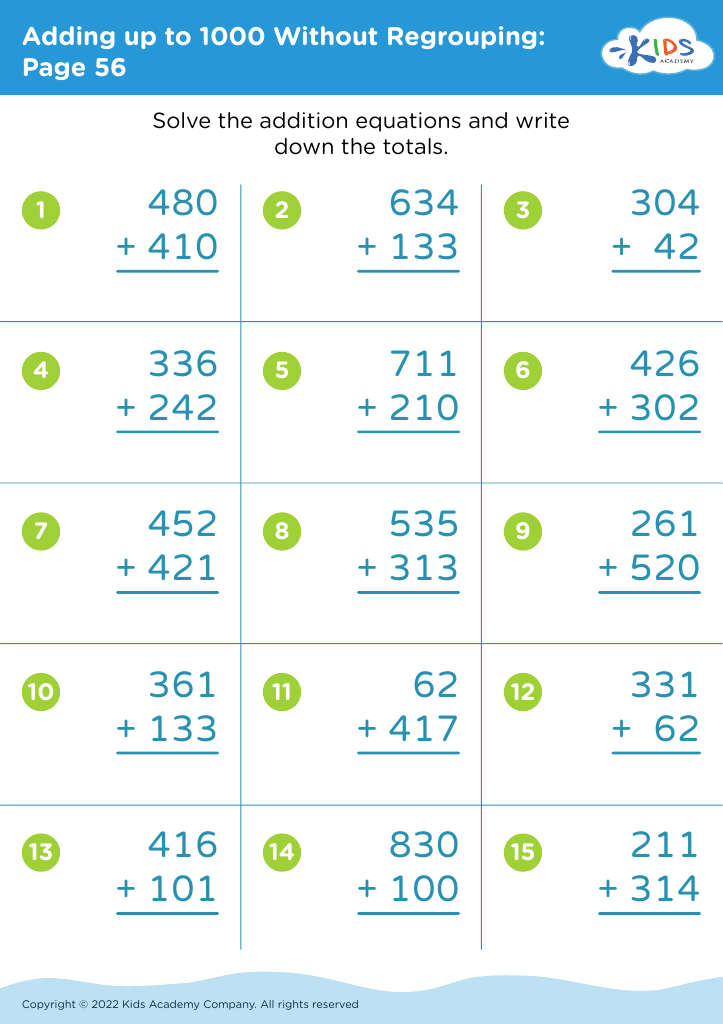
Adding up to 1000 Without Regrouping: Page 56
Worksheet
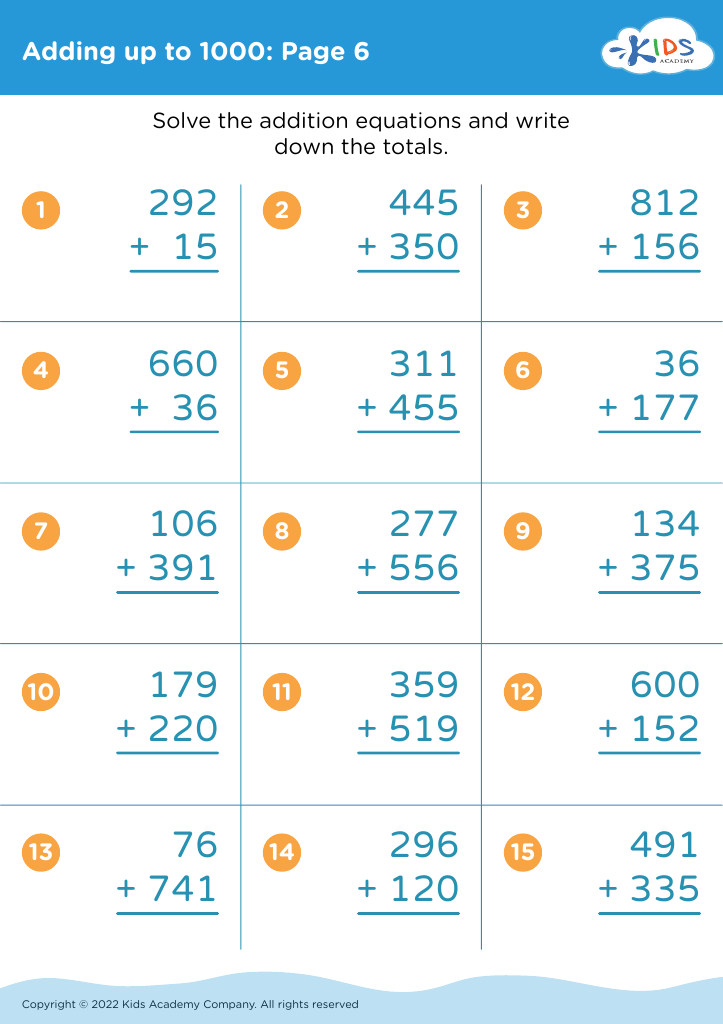
Adding up to 1000: Page 6

Adding up to 1000: Page 6

Adding up to 1000: Page 6
Worksheet
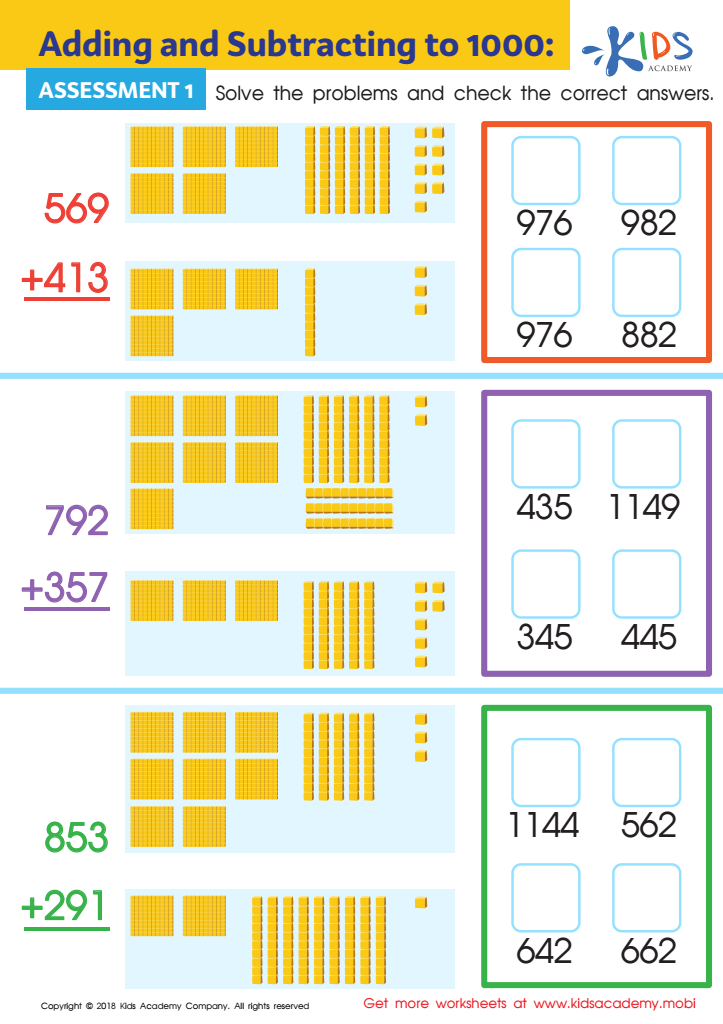
Adding and Subtracting to 1 Worksheet: Assessment 1

Adding and Subtracting to 1 Worksheet: Assessment 1

This assessment worksheet tests your child's addition skills. It has 3 3-digit problems with base ten blocks for visual aid. Encourage learners to use these visuals for better understanding. When they have solved the problems, they can check the box with the right answer. It's a quick and easy way to gauge numeracy development.
Adding and Subtracting to 1 Worksheet: Assessment 1
Worksheet
Fairytale Addition Worksheet

Fairytale Addition Worksheet

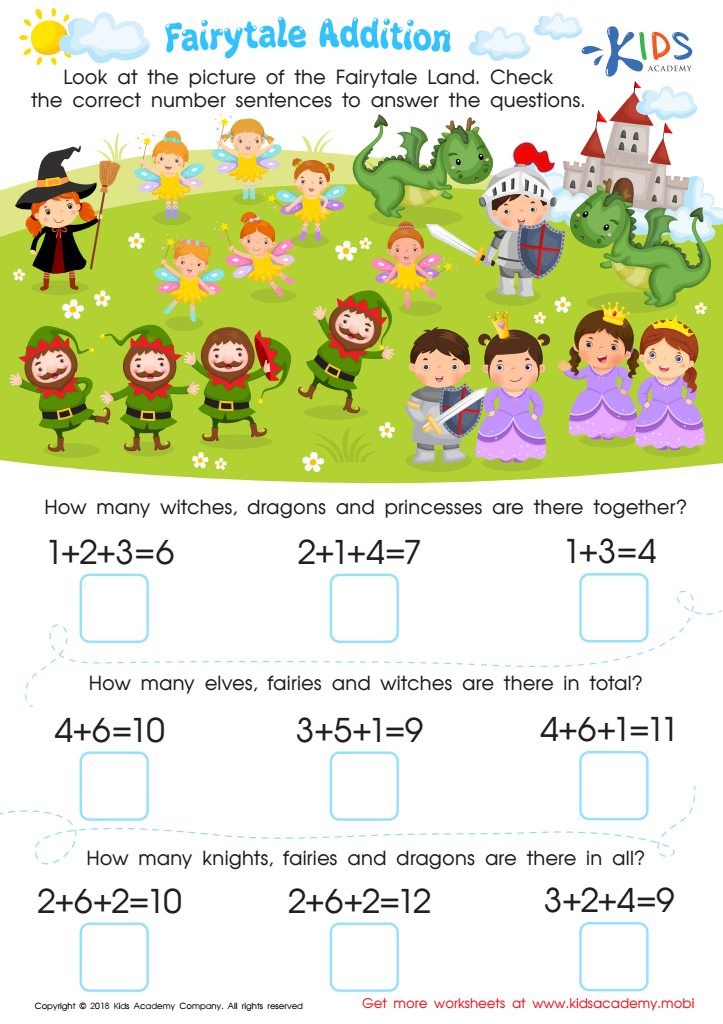
Take your kids to Fairytale Land! They'll meet witches, dragons, fairies, elves, knights, and princesses. This free worksheet adds up the fun, letting kids use three addends to solve addition equations and find the right answers. With friends like these, math won't even seem like math!
Fairytale Addition Worksheet
Worksheet
Addition and subtraction word problem worksheet for 3rd grade

Addition and Subtraction: Word Problems Worksheet
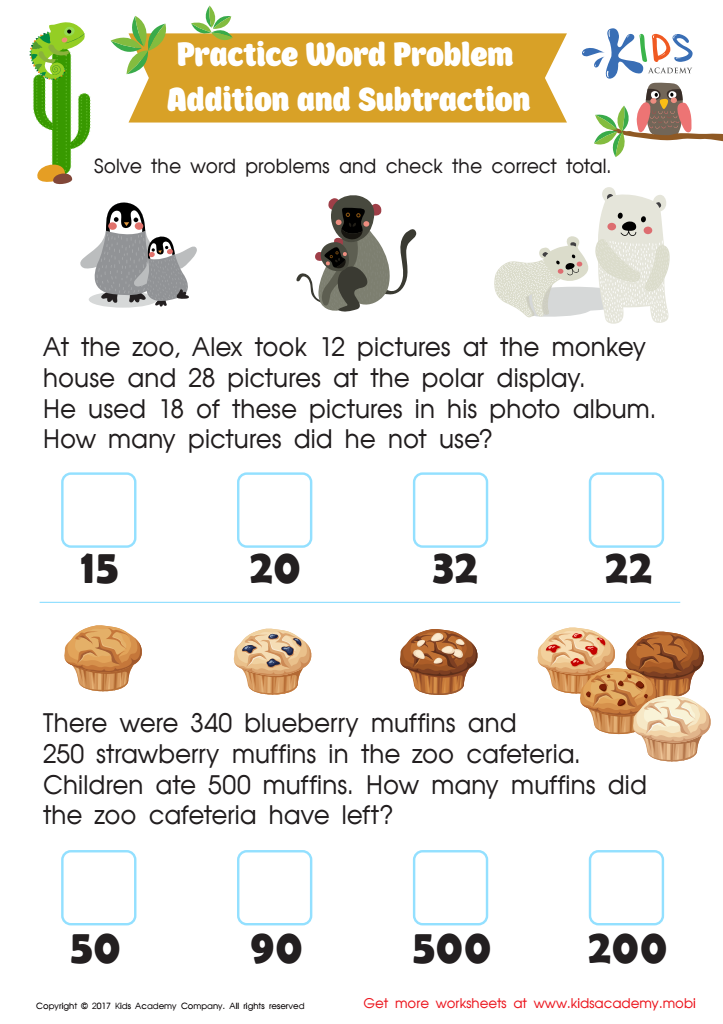
Word problems can be difficult, but they offer another way to understand math. Our 3rd grade worksheet takes your child to the zoo; two intriguing word problems will test their thinking skills and help them find the total.
Addition and Subtraction: Word Problems Worksheet
Worksheet
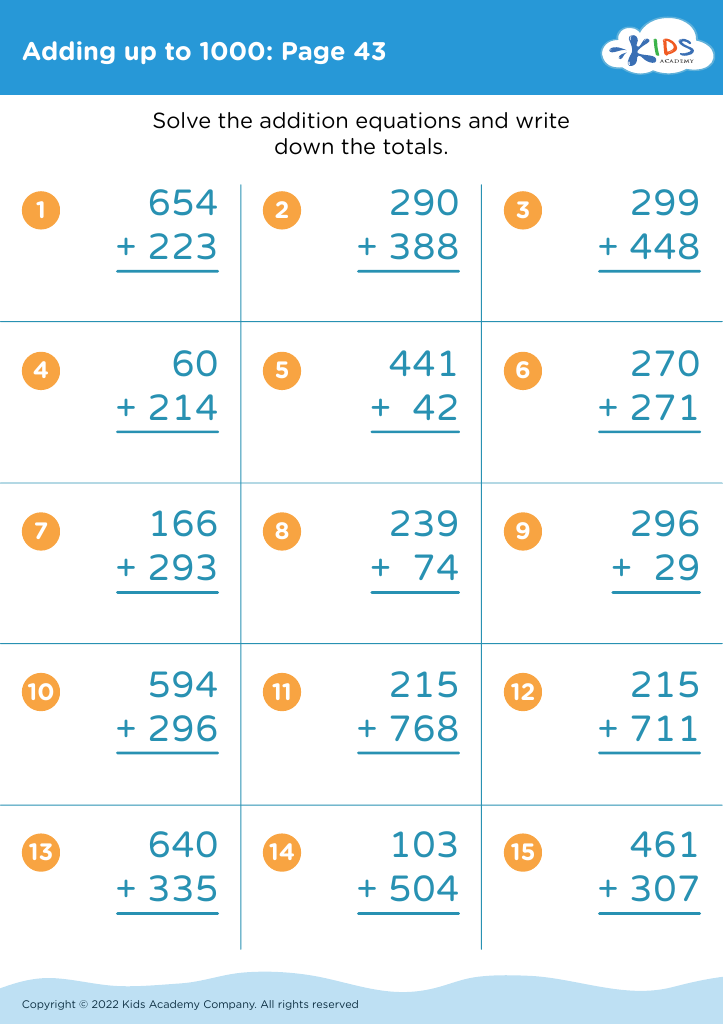
Adding up to 1000: Page 43

Adding up to 1000: Page 43

Adding up to 1000: Page 43
Worksheet
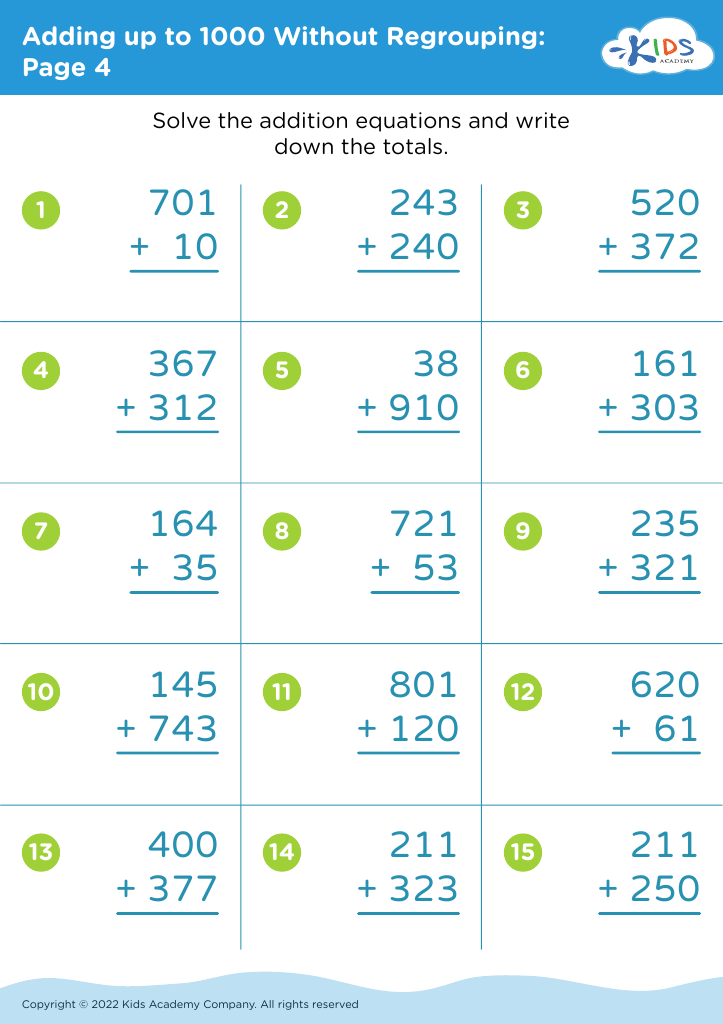
Adding up to 1000 Without Regrouping: Page 4
Worksheet
Adding up to 1000: Page 27

Adding up to 1000: Page 27

Adding up to 1000: Page 27
Worksheet
Adding up to 1000 with Regrouping: Page 36
Worksheet


Reading comprehension is a critical skill for 9-year-olds, laying the foundation for future academic success. At this age, children are expected to not only read fluently but also to understand, analyze, and interpret texts. This ability is crucial as it allows them to grasp complex concepts across subjects like science, history, and mathematics.

Teachers and parents should care about enhancing reading comprehension because it impacts a child’s confidence and love for learning. When children struggle to understand what they read, they may become frustrated and disengaged, leading to a negative attitude toward school. Furthermore, strong reading comprehension skills facilitate critical thinking, leading to better problem-solving abilities in real-world situations.

Additionally, reading comprehension exercises promote language development, vocabulary expansion, and effective communication skills, all of which are vital for collaboration and success in later academic endeavors and professional environments.

Encouraging regular reading habits and comprehension activities from an early age can also foster lifelong learning and intellectual curiosity. By supporting children in this area, parents and teachers can empower them to become thoughtful, informed individuals ready to navigate a complex world. Investing in their reading comprehension is an investment in their overall development and future.