Check out this FREE Trial Lesson on Addition for age 9!

X

Favorites
With answer key
Interactive
  • 9
  • Understanding fractions
  • Addition
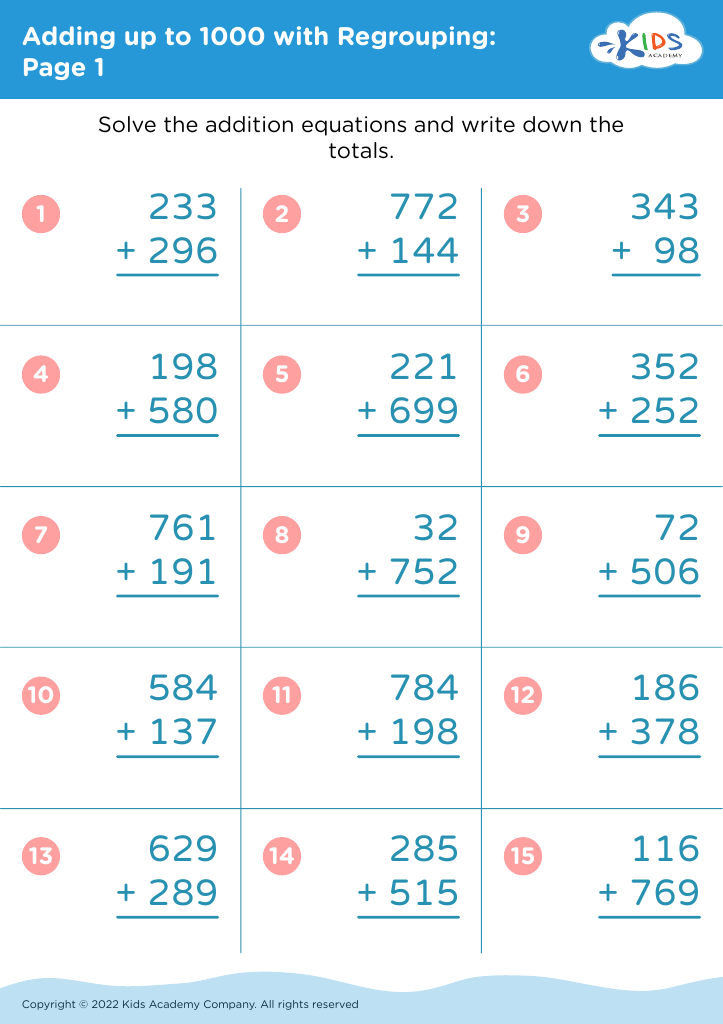
Adding up to 1000 with Regrouping: Page 1
Worksheet
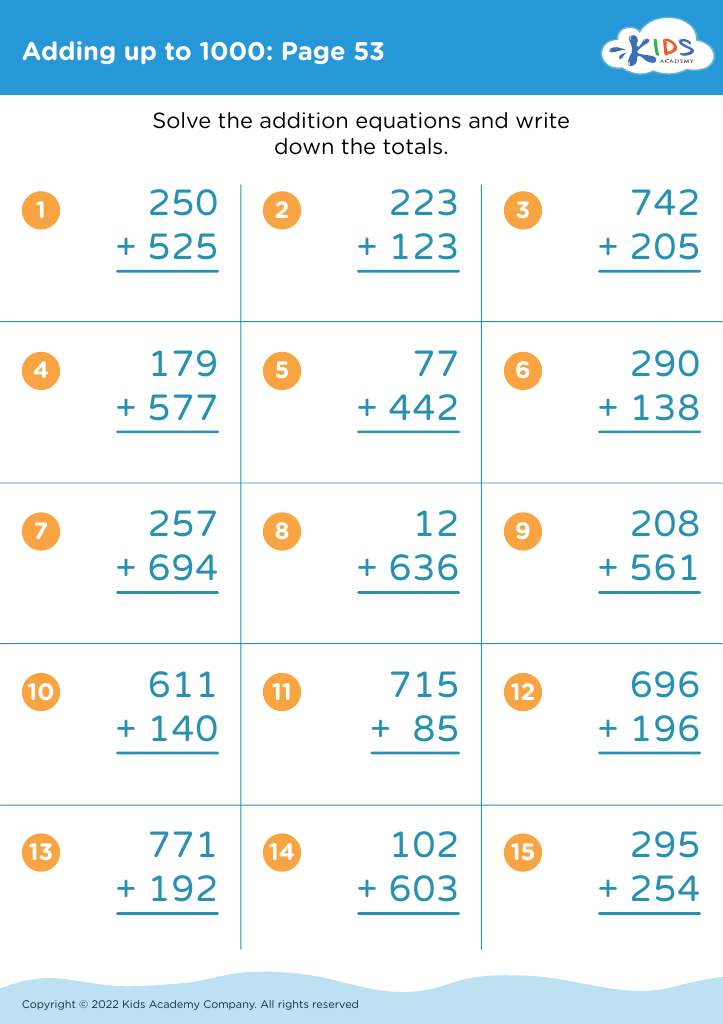
Adding up to 1000: Page 53

Adding up to 1000: Page 53

Adding up to 1000: Page 53
Worksheet
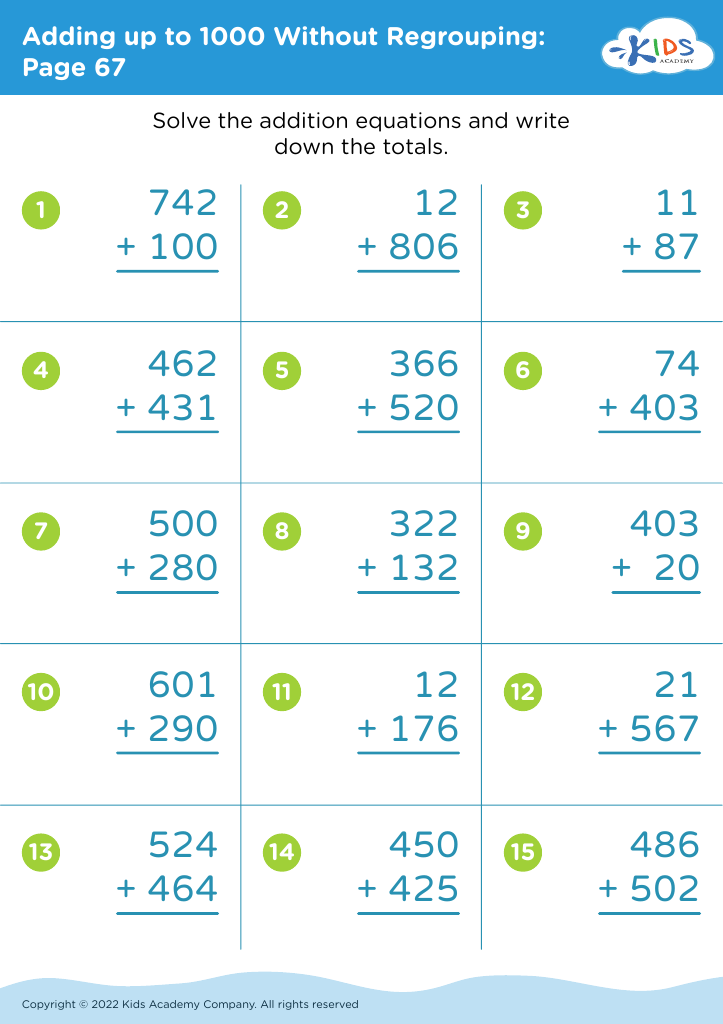
Adding up to 1000 Without Regrouping: Page 67
Worksheet
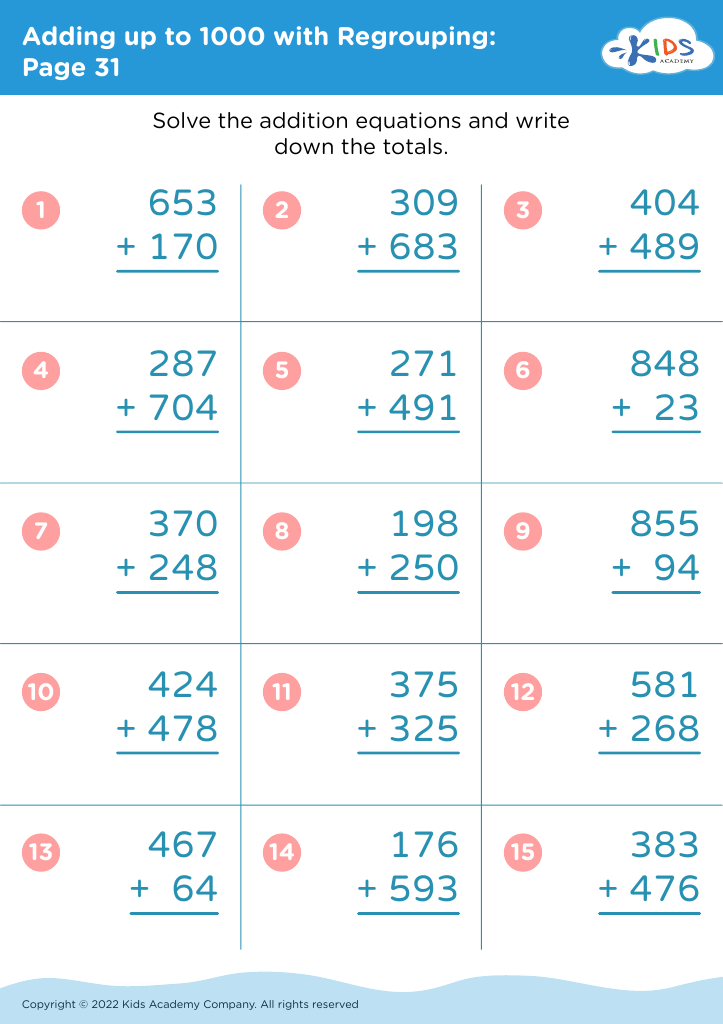
Adding up to 1000 with Regrouping: Page 31
Worksheet
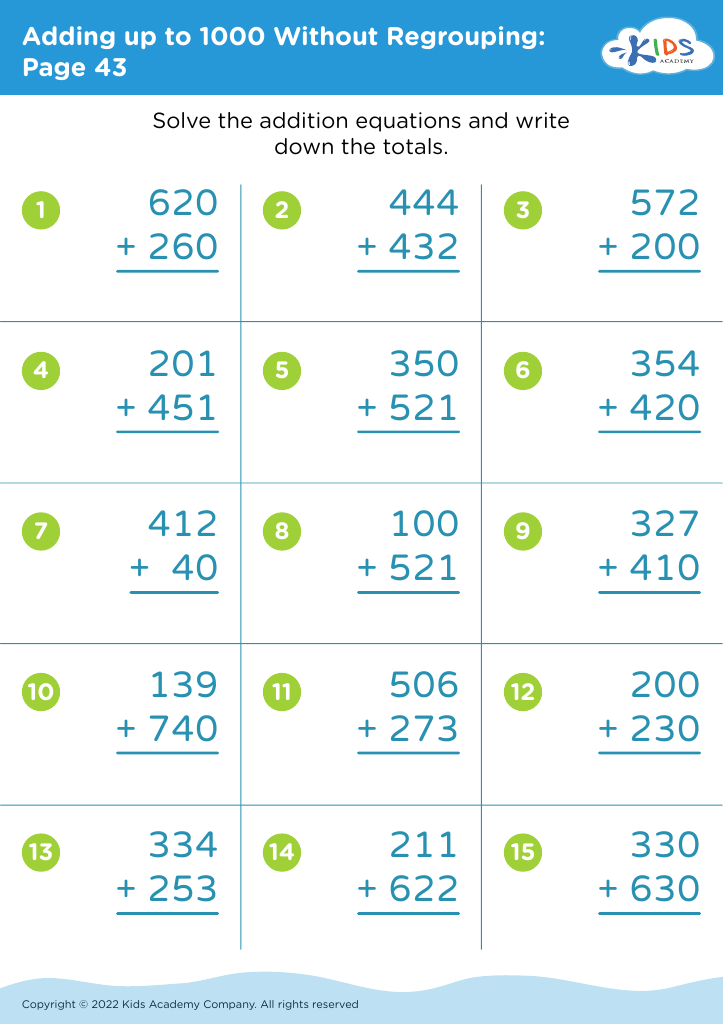
Adding up to 1000 Without Regrouping: Page 43
Worksheet
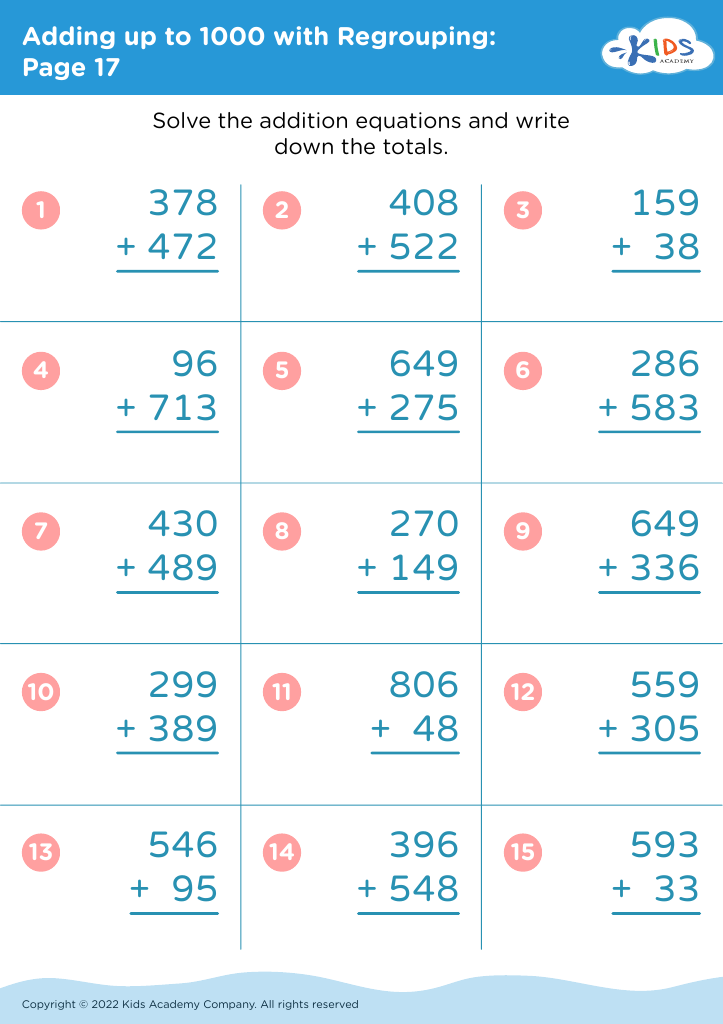
Adding up to 1000 with Regrouping: Page 17
Worksheet
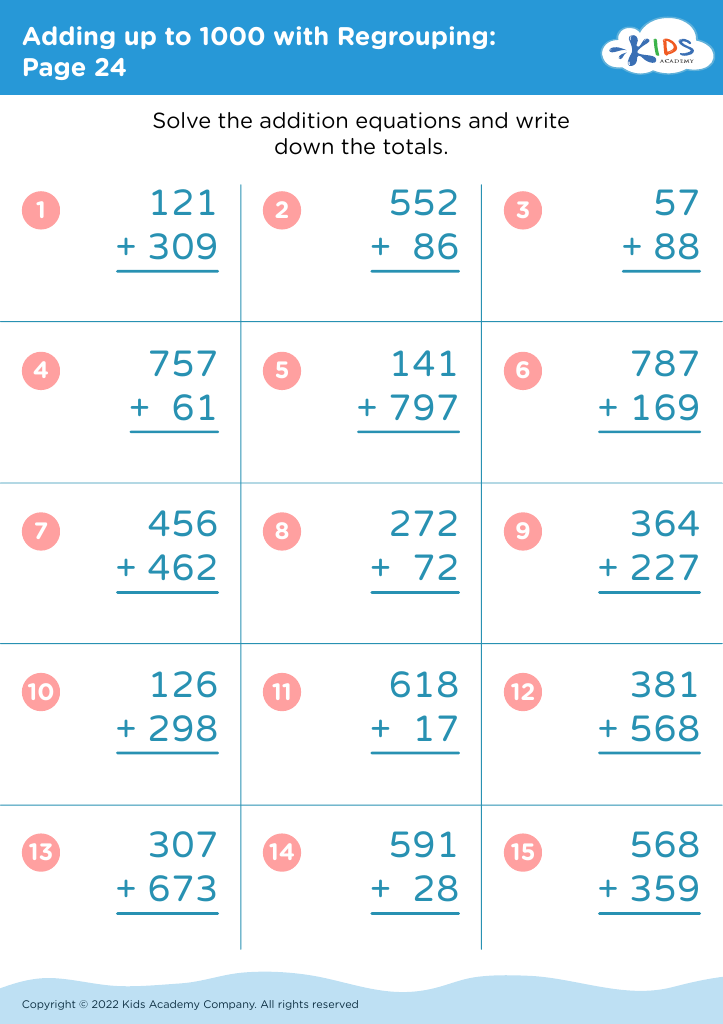
Adding up to 1000 with Regrouping: Page 24
Worksheet
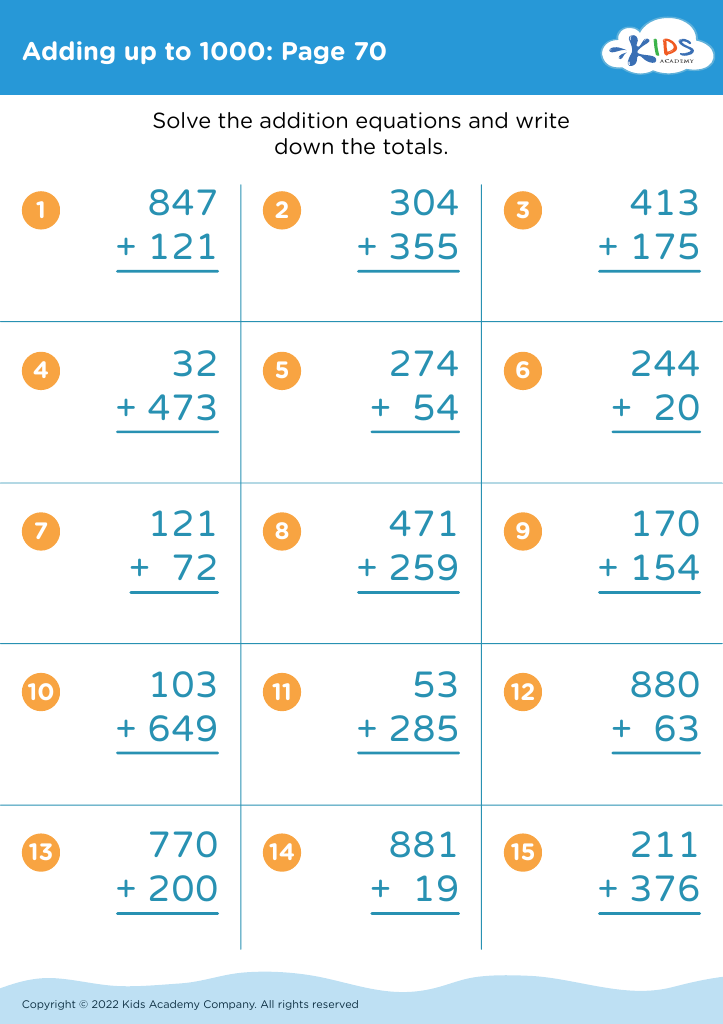
Adding up to 1000: Page 70

Adding up to 1000: Page 70

Adding up to 1000: Page 70
Worksheet
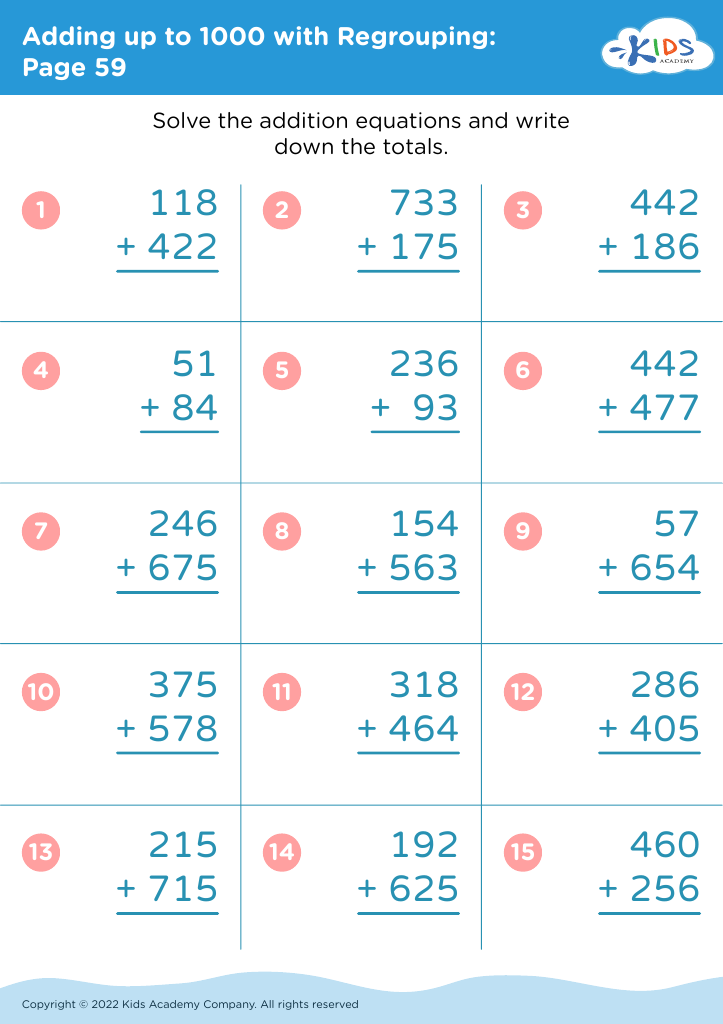
Adding up to 1000 with Regrouping: Page 59
Worksheet
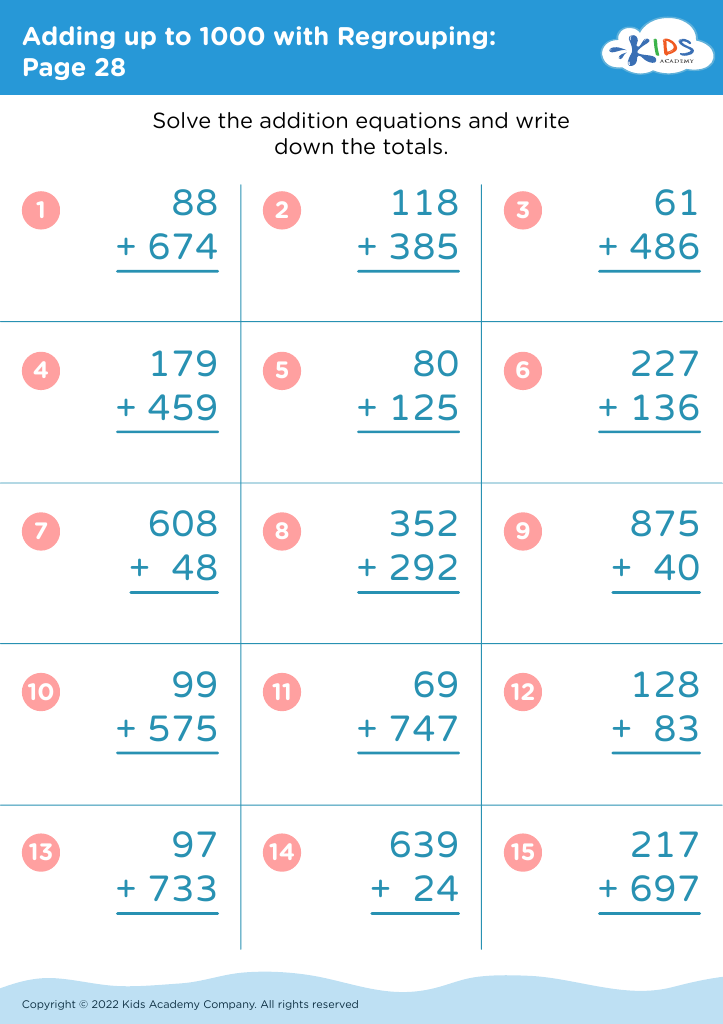
Adding up to 1000 with Regrouping: Page 28
Worksheet
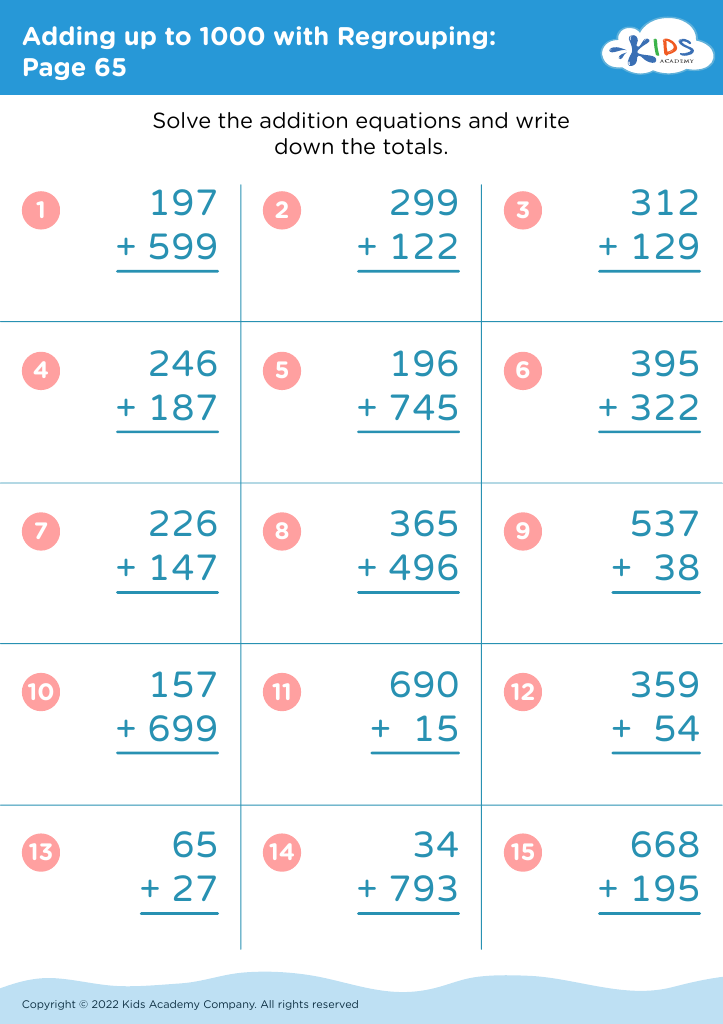
Adding up to 1000 with Regrouping: Page 65
Worksheet
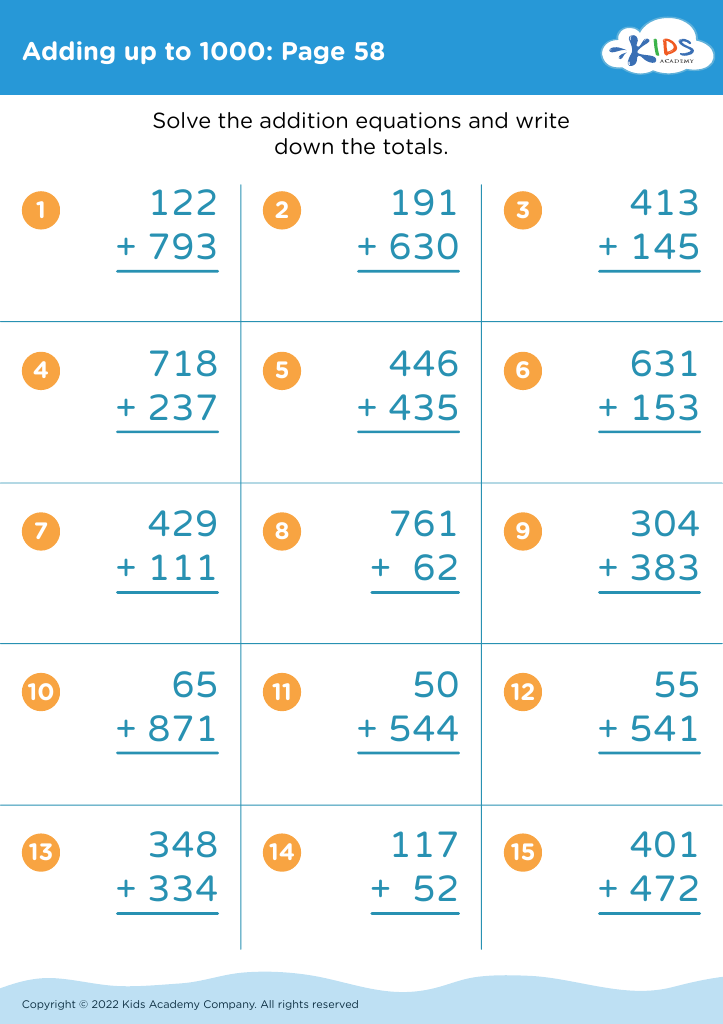
Adding up to 1000: Page 58

Adding up to 1000: Page 58

Adding up to 1000: Page 58
Worksheet
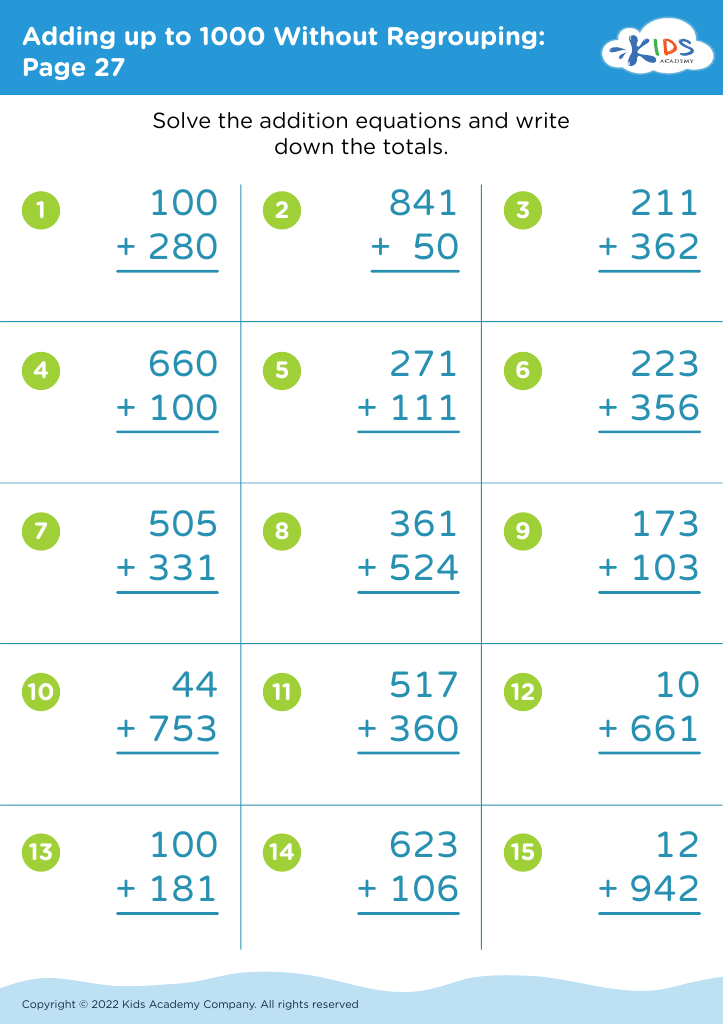
Adding up to 1000 Without Regrouping: Page 27
Worksheet
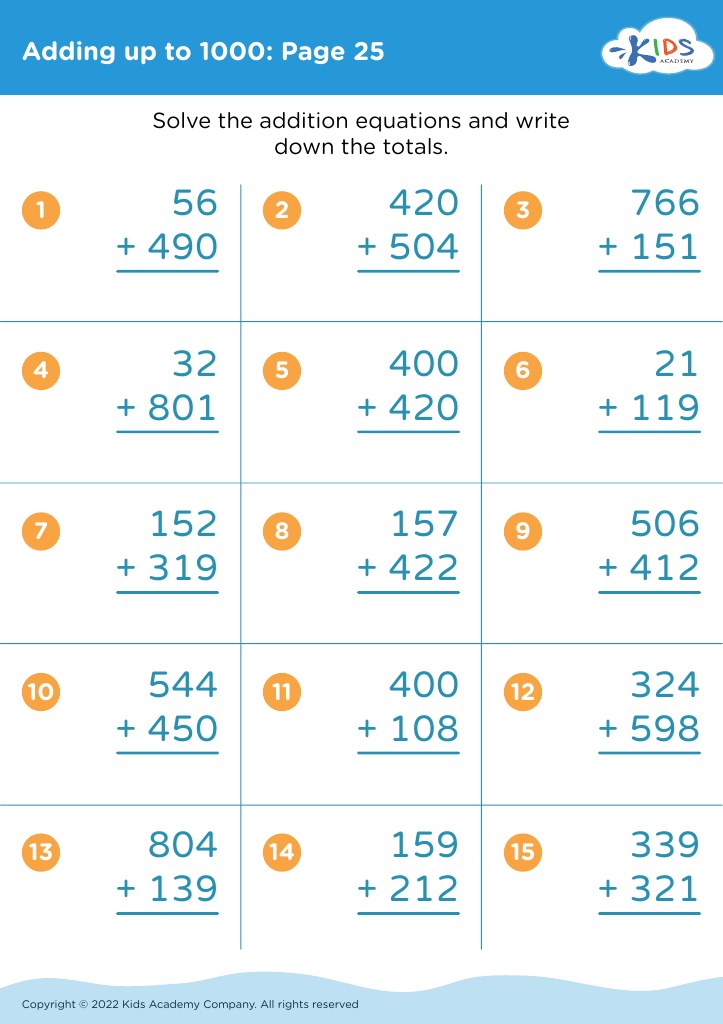
Adding up to 1000: Page 25

Adding up to 1000: Page 25

Adding up to 1000: Page 25
Worksheet
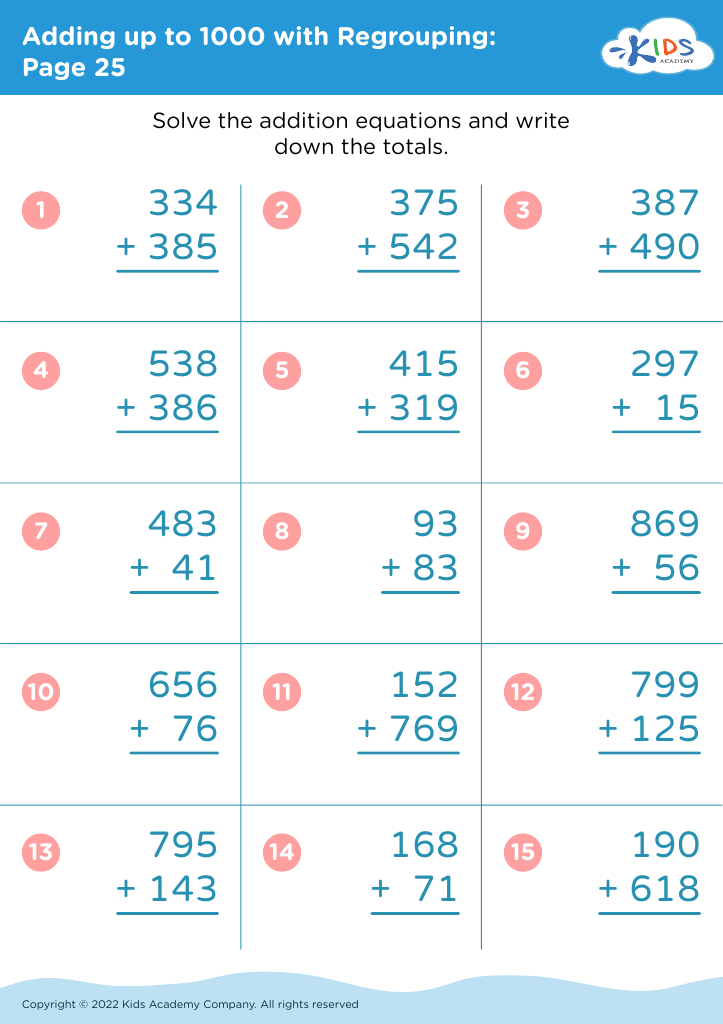
Adding up to 1000 with Regrouping: Page 25
Worksheet
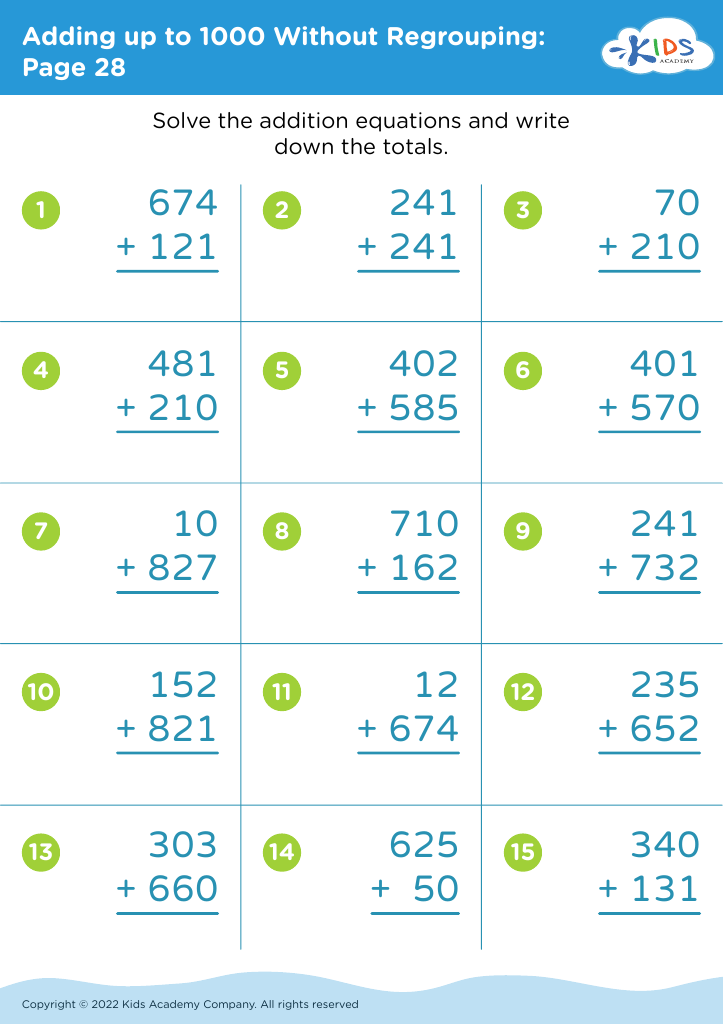
Adding up to 1000 Without Regrouping: Page 28
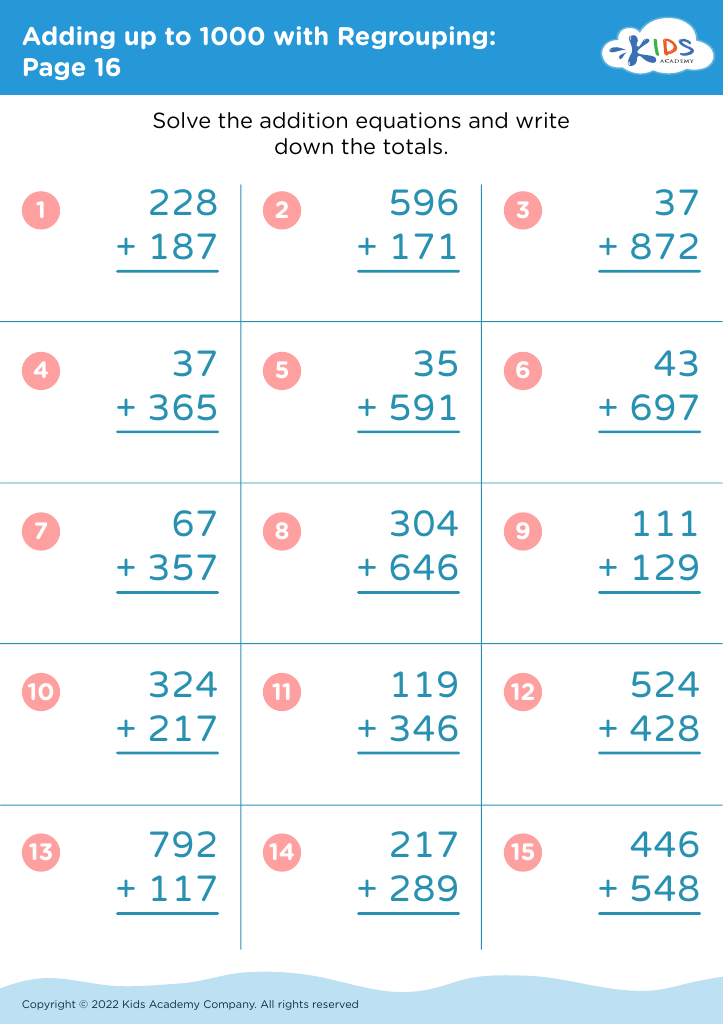
Worksheet
Adding up to 1000 with Regrouping: Page 16
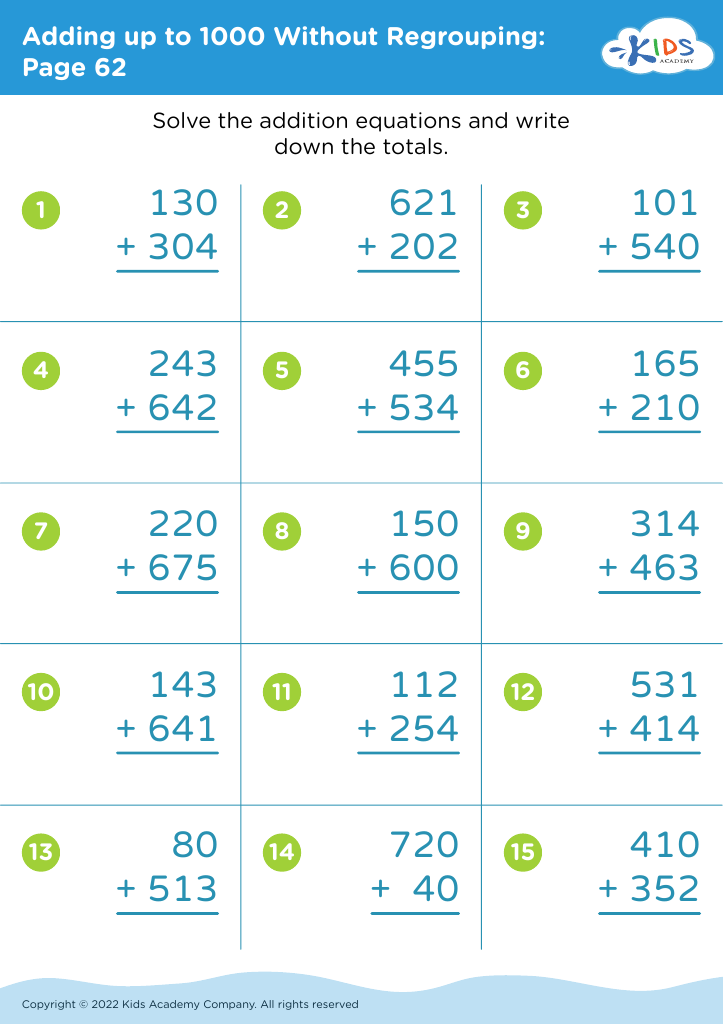
Worksheet
Adding up to 1000 Without Regrouping: Page 62
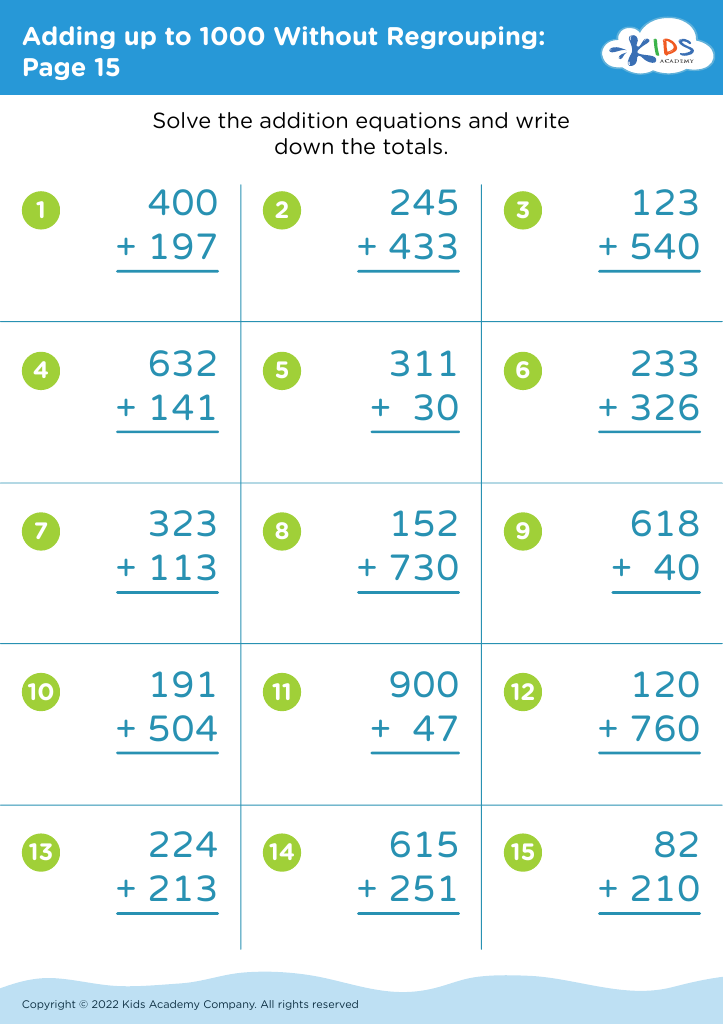
Worksheet
Adding up to 1000 Without Regrouping: Page 15
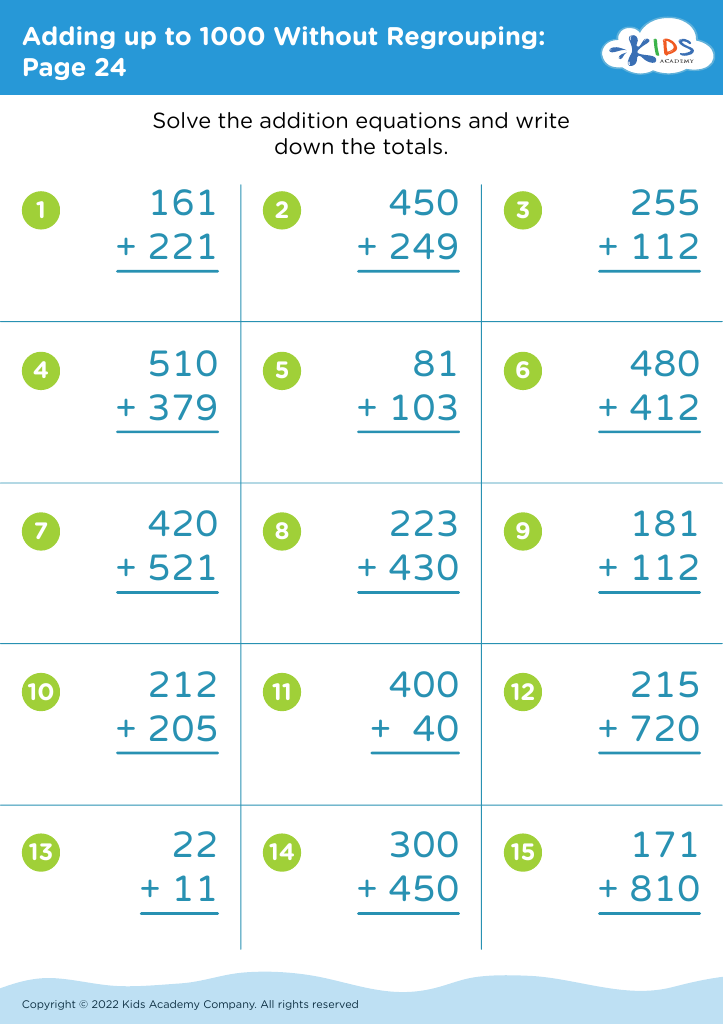
Worksheet
Adding up to 1000 Without Regrouping: Page 24
Worksheet


Understanding fractions and their addition is crucial for 9-year-olds as it lays the foundation for advanced math skills and everyday problem-solving. At this age, children transition from concrete arithmetic operations to more abstract mathematical concepts. Mastering fraction addition enriches their understanding of rational numbers, enabling them to compare, use, and manipulate parts of a whole.

Fractions are prevalent in real-life situations, such as cooking, budgeting, and time management. When children learn to add fractions, they cultivate critical thinking and analytical skills essential for later mathematical concepts, such as ratios, percentages, and algebra. Additionally, a solid grasp of fractions can boost their confidence and interest in math, making them more likely to engage in challenging topics in the future.

For teachers and parents, fostering an understanding of fractions can also improve a child's overall academic performance. It provides an opportunity for collaborative learning experiences, encouraging communication and peer interactions, thereby enhancing social skills. Ultimately, nurturing this foundational skill not only prepares children for future academic challenges but also equips them with practical tools for managing everyday tasks, instilling a lifelong appreciation for mathematics.