Cognitive Development Geometry Worksheets for 9-Year-Olds
3 filtered results
-
From - To
Unlock your child's potential with our Cognitive Development Geometry Worksheets designed for 9-year-olds! These carefully crafted worksheets engage young learners with captivating geometry problems aimed at enhancing spatial reasoning, critical thinking, and problem-solving skills. Our resources incorporate fun and challenging activities to stimulate cognitive growth while adhering to educational standards. Perfect for both classroom and home use, these worksheets provide a solid foundation in geometry, making learning enjoyable and effective. Explore a wide array of printable sheets that turn complex concepts into manageable and intriguing exercises. Foster your child's mathematical abilities with Kids Academy's expertly designed geometry worksheets today!
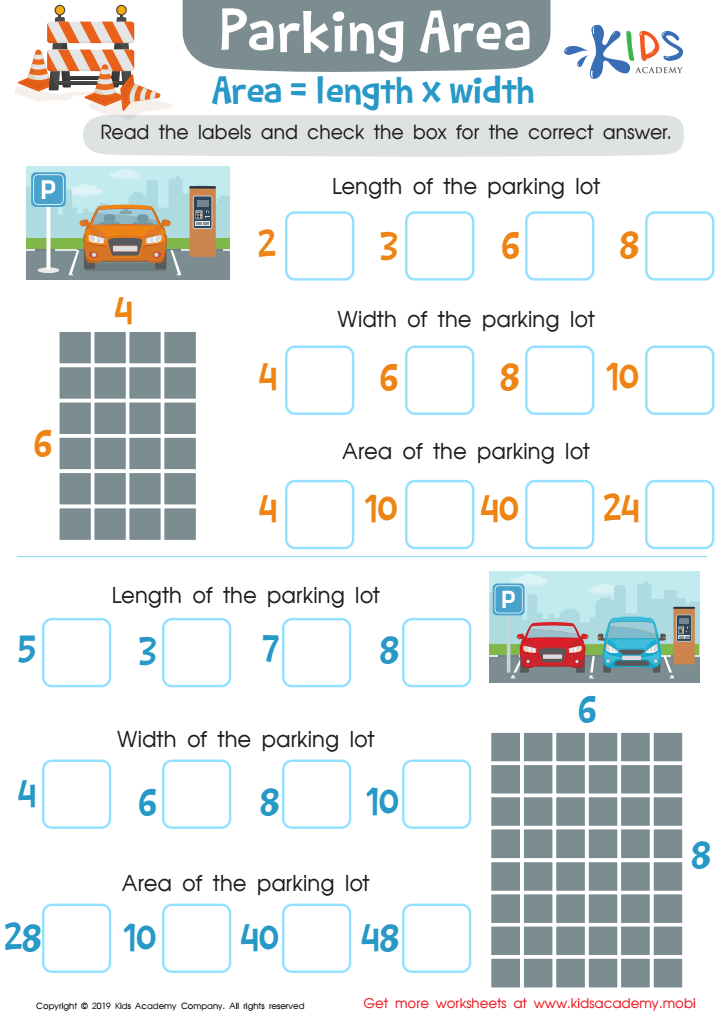
Parking Area Worksheet
 Assign to My Students











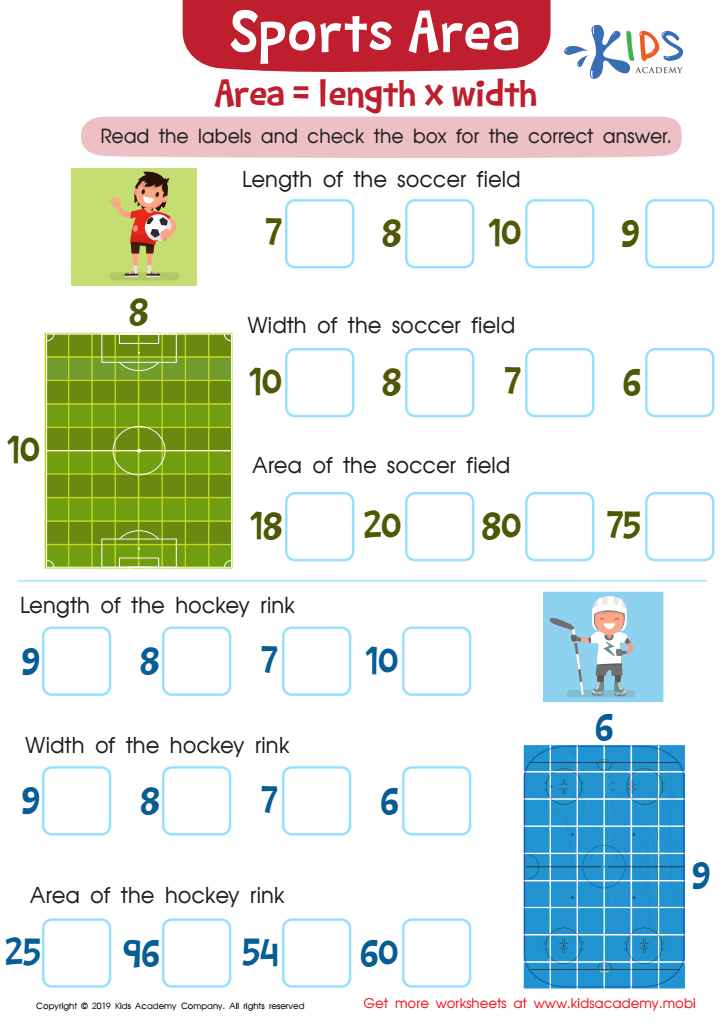
Sports Area Worksheet
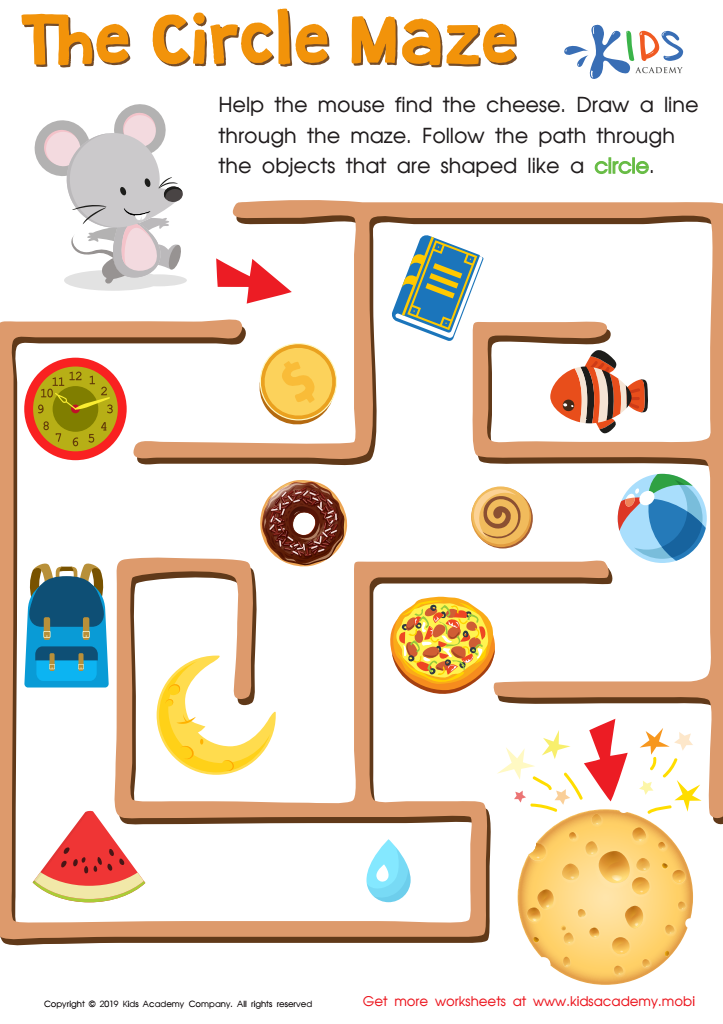
The Circle Maze Worksheet








Cognitive development in geometry for 9-year-olds is crucial because it builds a foundation for critical thinking, problem-solving, and reasoning skills that are essential throughout life. At this age, children transition from concrete operational stages to more abstract thinking, where they start understanding spatial relationships, shapes, and measurements more profoundly. Fostering geometric skills supports their overall mathematical proficiency and prepares them for more advanced topics in later grades.
Geometry also integrates with other academic subjects and real-world applications, enhancing children's ability to navigate their environments. For example, grasping geometry can improve their ability to read maps, understand art and design, recognize patterns, and even participate in physical activities requiring spatial awareness.
Additionally, cognitive development in geometry helps nurture perseverance and attention to detail. When children solve geometric problems, they practice setting goals, planning steps, and evaluating different outcomes. These skills are transferable to many areas of personal and academic life.
Parents and teachers should care because early proficiency in geometry fosters a positive attitude towards mathematics, encouraging a lifelong interest in STEM disciplines. Cultivating these skills early on leverages their natural curiosity and shapes a well-rounded, capable thinker ready to tackle complex problems in an ever-evolving world.








