
Vocabulary development Math Worksheets for 9-Year-Olds
4 filtered results
Difficulty Level
Grade
Age
-
From - To
Subject
Activity
Standards
Nurture your child's mathematical vocabulary with our specialized Math Worksheets designed for 9-year-olds! These engaging worksheets help young learners grasp essential math concepts and terms in a fun, interactive way. From understanding shapes and measurements to mastering multiplication and fractions, each exercise is crafted to enhance their problem-solving skills and boost confidence in math. Perfect for reinforcing school lessons or home learning, Kids Academy's vocabulary development worksheets ensure a solid foundation in math. Explore our collection today and support your child's journey to becoming a math whiz!
Favorites
With answer key
Interactive
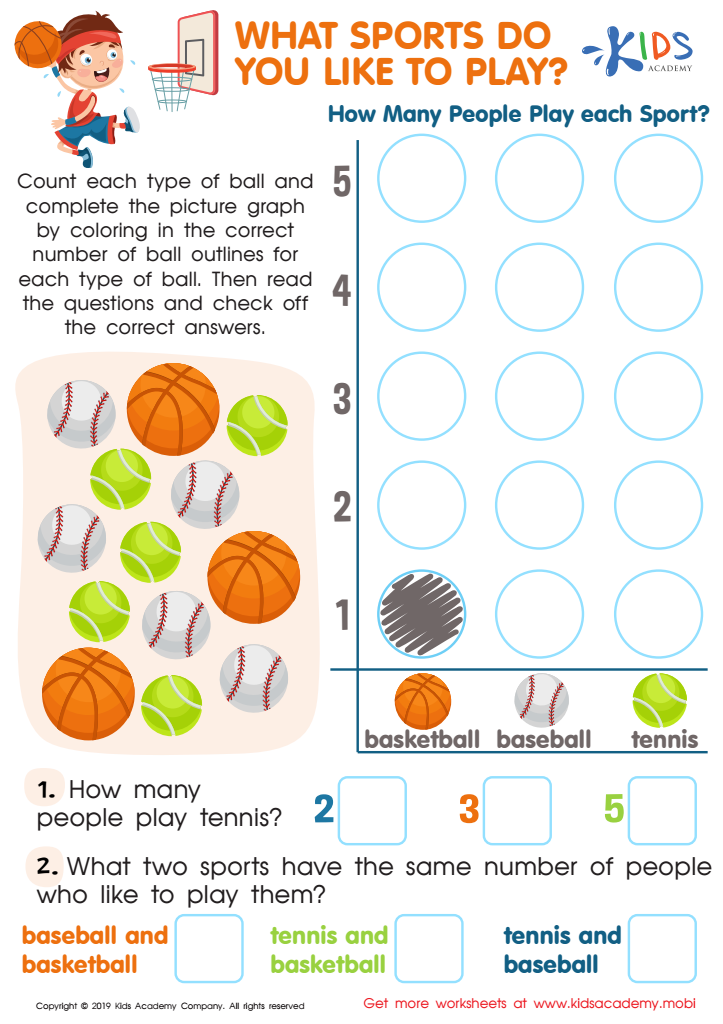
What Sports Do You Like to Play Worksheet
Encourage your kids to complete this fun sports-themed math worksheet! Count each type of ball then help them complete the picture graph. It's a great way to make math a fun, tear-free activity. Download our printable PDF to get started!
 Assign to My Students
What Sports Do You Like to Play Worksheet
Worksheet
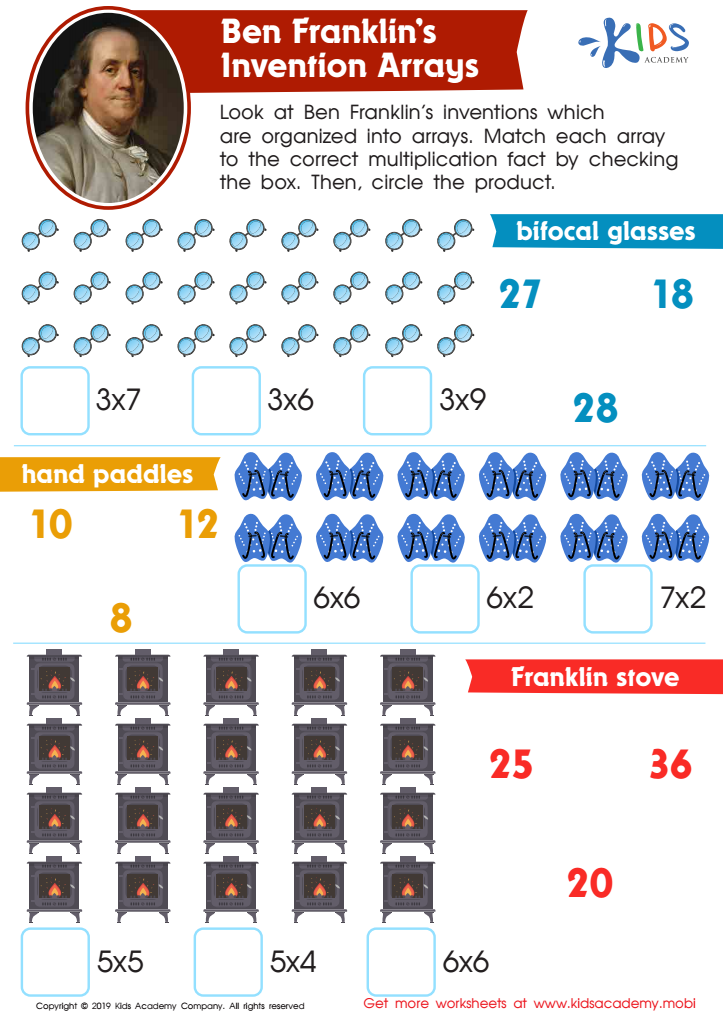
Ben Franklin’s Invention Arrays Worksheet
Have your child guess some of the inventors of the popular items we use today. For instance, the light bulb was invented by Thomas Edison. Look at Ben Franklin's inventions and help your kids match the arrays to the correct multiplication fact. Check the box and circle the product.
Ben Franklin’s Invention Arrays Worksheet
Worksheet
Join Kids Academy for Free
Who is primarily going to use this learning content?








Vocabulary development in math for 9-year-olds is crucial for several key reasons. Firstly, it sets the foundation for future academic success. Understanding math-specific vocabulary helps children grasp complex concepts more easily, enabling them to solve problems more accurately and efficiently.
Secondly, strong math vocabulary enhances communication. When students are able to articulate their thought processes and solutions clearly, it fosters better understanding and collaboration with peers and teachers. This is particularly important because math is not just about individual work; it's often a participatory subject requiring discussions and explanations.
Thirdly, enriching math vocabulary boosts confidence. When children understand the terminology, they are more likely to engage, ask questions, and participate in math activities without feelings of intimidation or frustration. This positive engagement creates a proactive attitude toward learning.
Moreover, vocabulary in math is intertwined with reading comprehension. As children encounter word problems, their ability to understand and dissect these problems relies heavily on their knowledge of math terms. Consequently, developing this vocabulary helps improve their overall reading skills.
In summary, investing in the development of math vocabulary aids cognitive development, communication skills, confidence, and comprehension in young learners, laying a strong groundwork for their educational journey. Parents and teachers play a crucial role in nurturing this aspect to ensure holistic academic growth.








