Basic Addition Word Problems Worksheets for 9-Year-Olds
6 filtered results
-
From - To
Explore our engaging Basic Addition Word Problems Worksheets tailored for 9-year-olds! These worksheets are designed to enhance students' critical thinking and problem-solving skills through realistic scenarios that make math fun. By integrating everyday situations, young learners will grasp the concepts of addition in a relatable way. Our resources encompass a variety of problems that challenge students to apply their addition skills creatively. Perfect for classroom use or homework assignments, these worksheets will support your child's mathematical development while building confidence. Download now and help your child embark on a smoothly guided journey towards mastering basic addition!
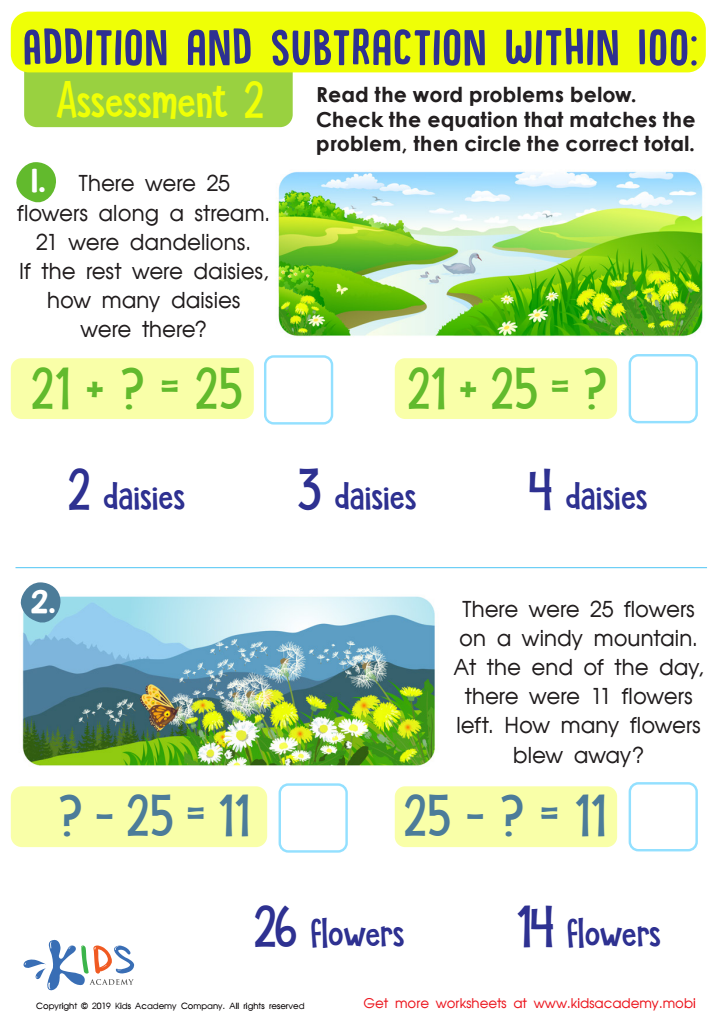
Assessment 2 Math Worksheet
 Assign to My Students
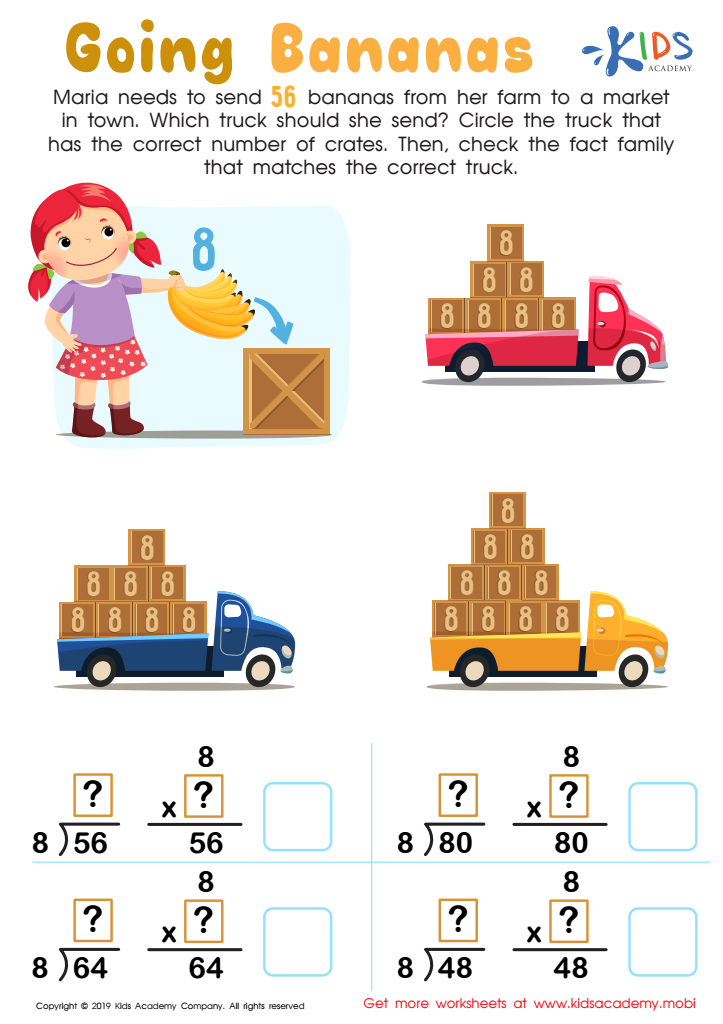
Going Bananas Worksheet
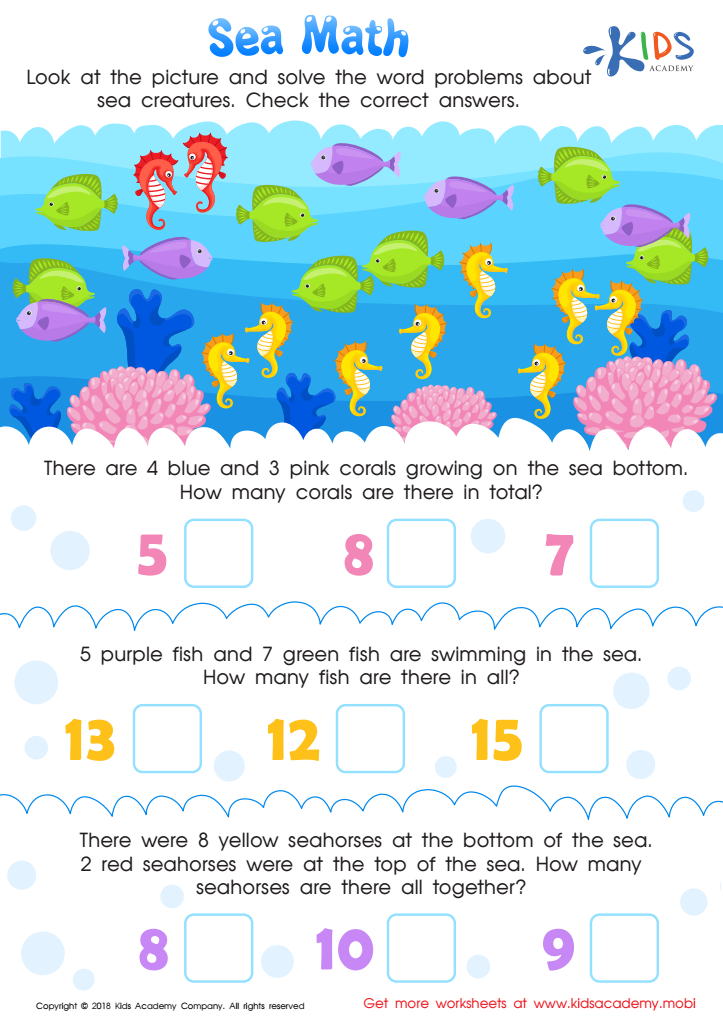
Sea Math Worksheet
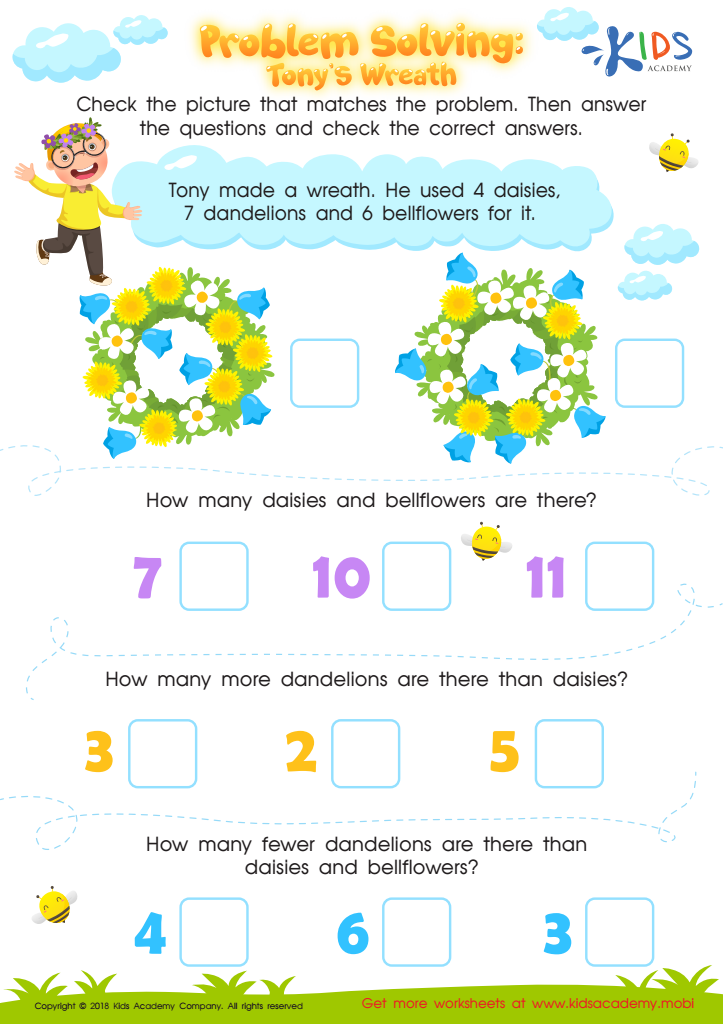
Problem Solving: Tony's Wreath Worksheet
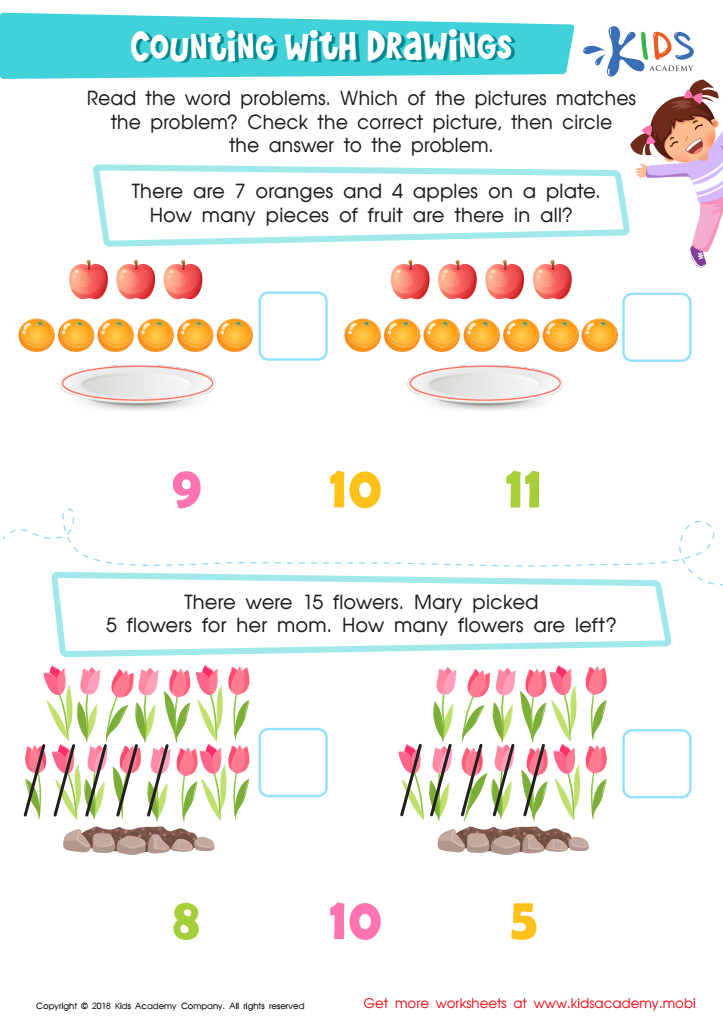
Counting with Drawings:Fruits & Flowers Worksheet
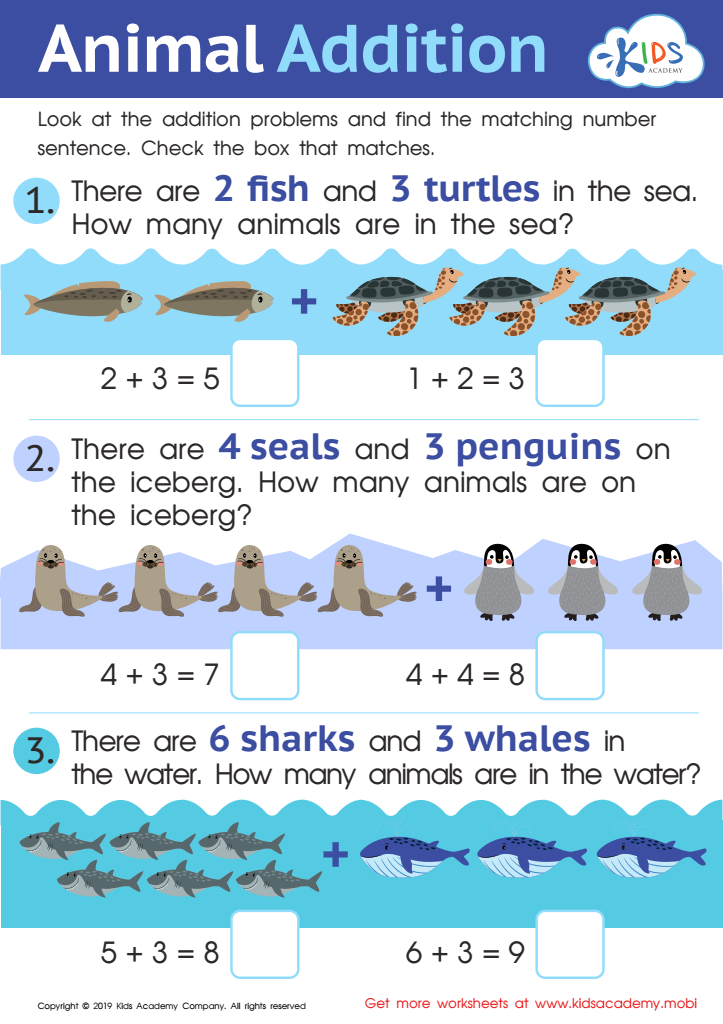
Animal Addition Worksheet







Teaching basic addition word problems is crucial for 9-year-olds because it not only reinforces fundamental math skills but also builds critical thinking and problem-solving abilities. At this age, children are transitioning from simple arithmetic to applying their knowledge in real-world contexts. Word problems encourage them to decipher information, identify relevant data, and determine the operations needed, fostering comprehension across subjects.
Additionally, mastering these problems can enhance a child's confidence in math, making them more willing to engage with more complex mathematical ideas later on. As parents and teachers emphasize the importance of these skills, they are helping children develop persistence and resilience—qualities essential for learning and personal growth.
Furthermore, basic addition word problems can spark a child's interest in mathematics by connecting learning to everyday scenarios. It provides a fun and interactive way to demonstrate how math is applicable in daily life—whether calculating the total cost of items when shopping or determining distances in travel scenarios. Above all, focusing on word problems ensures that children build a solid mathematical foundation, setting the stage for future academic success and enabling them to navigate everyday situations intelligently and effectively. By prioritizing this area of education, parents and teachers contribute significantly to holistic development.








