Comparing Fractions Reading Worksheets for 9-Year-Olds
7 filtered results
-
From - To
Discover engaging Comparing Fractions Reading Worksheets tailored for 9-year-olds! Our interactive materials promote essential math skills by helping young learners understand the concept of fractions and how to compare them effectively. With age-appropriate exercises, these worksheets encourage critical thinking and problem-solving, making learning both fun and educational. Each activity is designed to build confidence in fraction comparisons, ensuring students grasp the relationship between different fractions. Ideal for classroom use or home practice, these worksheets foster mastery of comparing fractions, empowering children to excel in their math journey. Explore our resources today to make learning about fractions exciting and enjoyable!
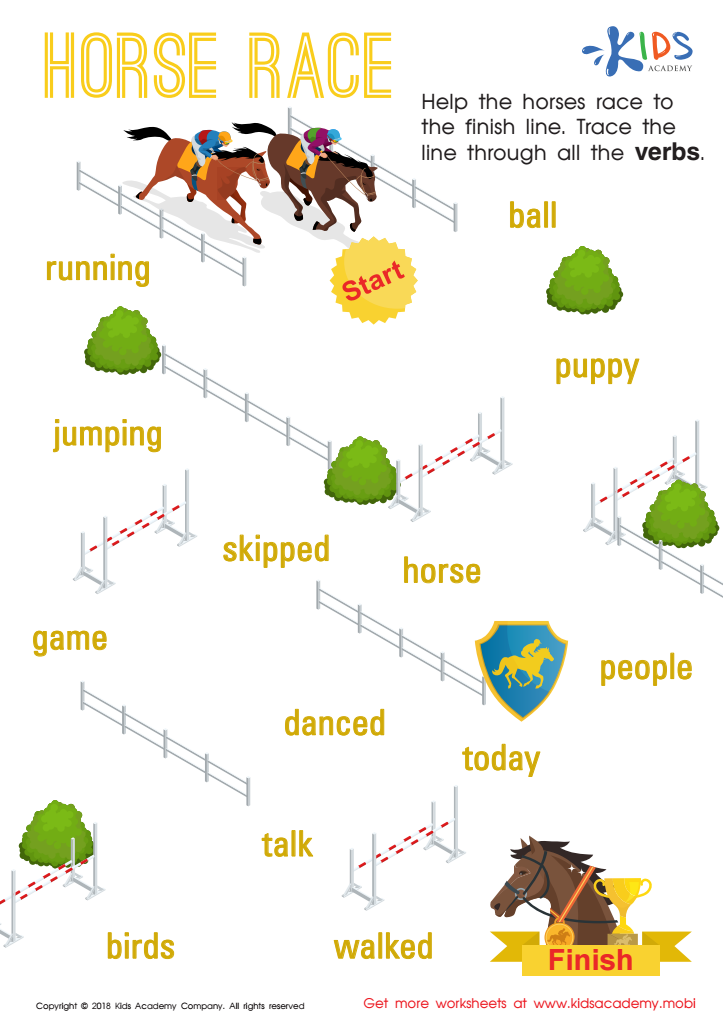
Horse Race Worksheet
 Assign to My Students






Parents and teachers should care about teaching 9-year-olds to compare fractions because this foundational skill enhances mathematical understanding and critical thinking. At this age, children are developing essential cognitive abilities that prepare them for more complex concepts in later grades. Comparing fractions helps students grasp the idea of equivalence, size, and proportionality, which are crucial for everyday decision-making, such as in cooking, shopping, or measuring.
Additionally, mastering fraction comparison fosters confidence in a subject that often challenges students. By actively engaging with fractions through activities and discussions, children become more comfortable and proficient in math, leading to better academic performance overall. Encouraging the exploration of fractions also helps develop persistence and problem-solving skills, which are valuable in and out of the classroom.
Moreover, this concept serves as a gateway to higher mathematical concepts, such as ratios, decimals, and percentages. Thus, focusing on fraction comparison not only supports immediate learning objectives but also instills a lifelong appreciation for mathematics. By emphasizing this vital skill, parents and educators can significantly contribute to a child’s overall intellectual growth and readiness for future academic challenges.








