Critical Thinking Reading Worksheets for 9-Year-Olds
11 filtered results
-
From - To
Discover our engaging Critical Thinking Reading Worksheets for 9-Year-Olds, designed to improve reading comprehension and analytical skills in young learners. Through a variety of fun and thought-provoking activities, these worksheets help students identify main ideas, make inferences, and draw conclusions from texts. Ideal for after-school practice or homeschool curriculum, they encourage curiosity and deeper understanding, transforming reading time into an exciting adventure. Foster your child's critical thinking abilities with accessible, expertly created resources from Kids Academy, ensuring they develop essential skills for lifelong learning and academic success. Start unlocking your child’s potential today!
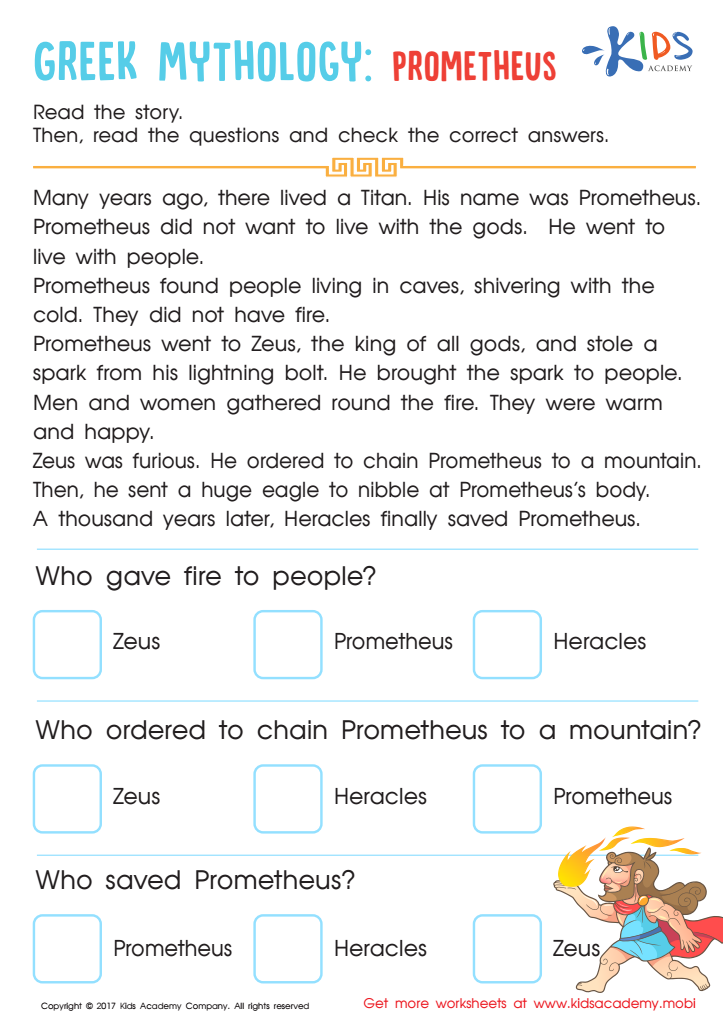
Prometheus Story Worksheet
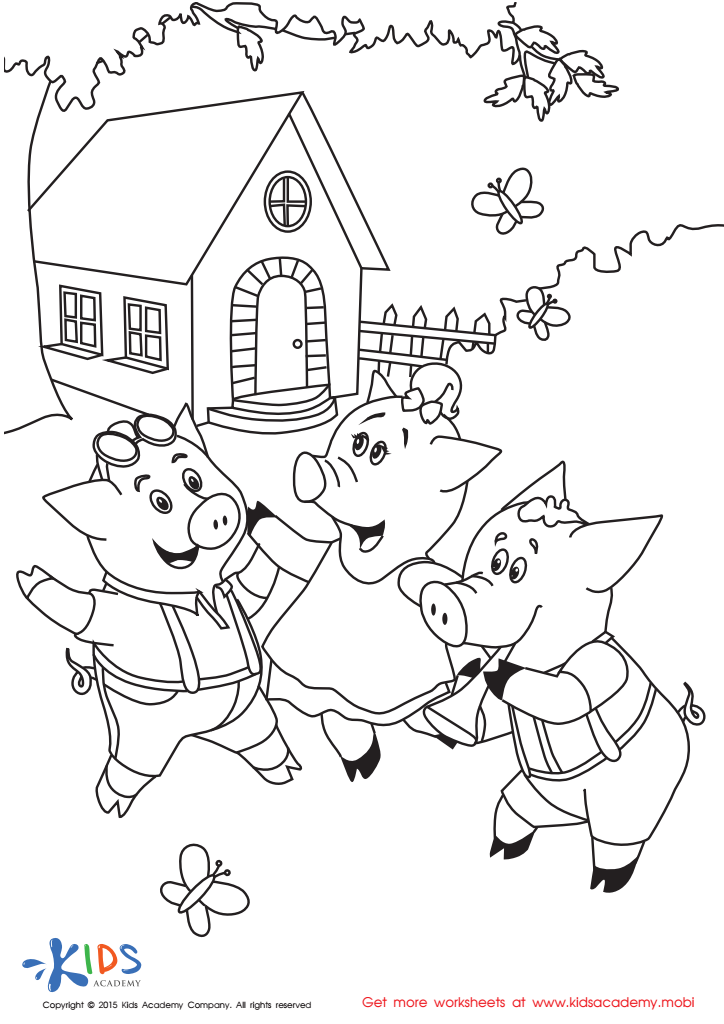
Folktales Printable PDF Worksheet: The 3 Little Pigs
 Assign to My Students

Native American Word Search Printable
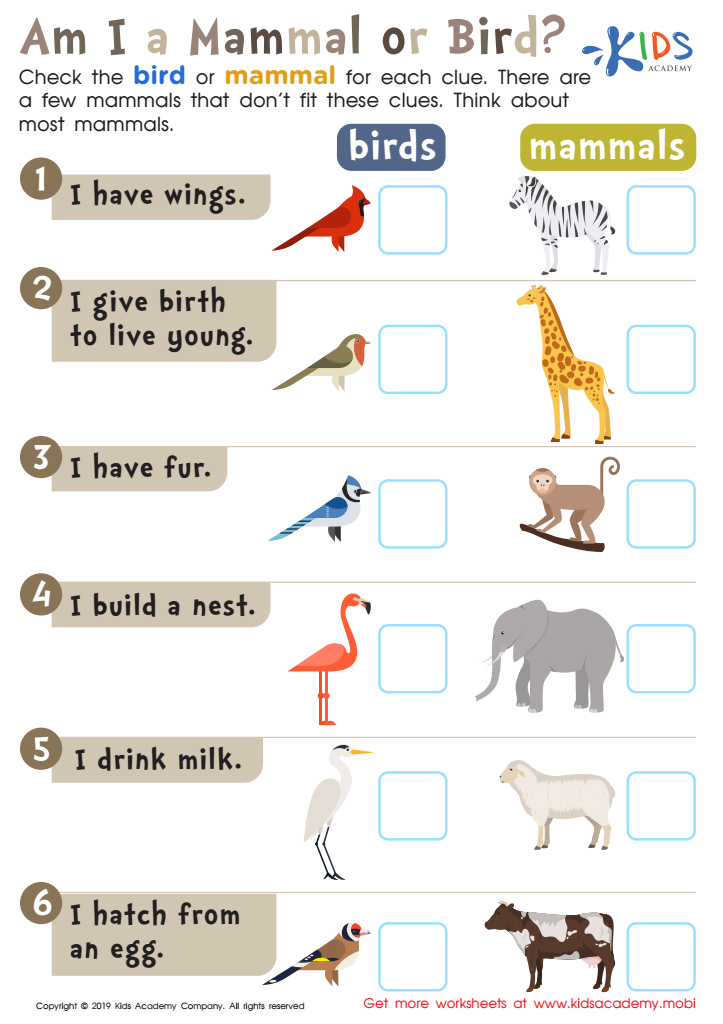
Am I a Mammal or Bird? Worksheet
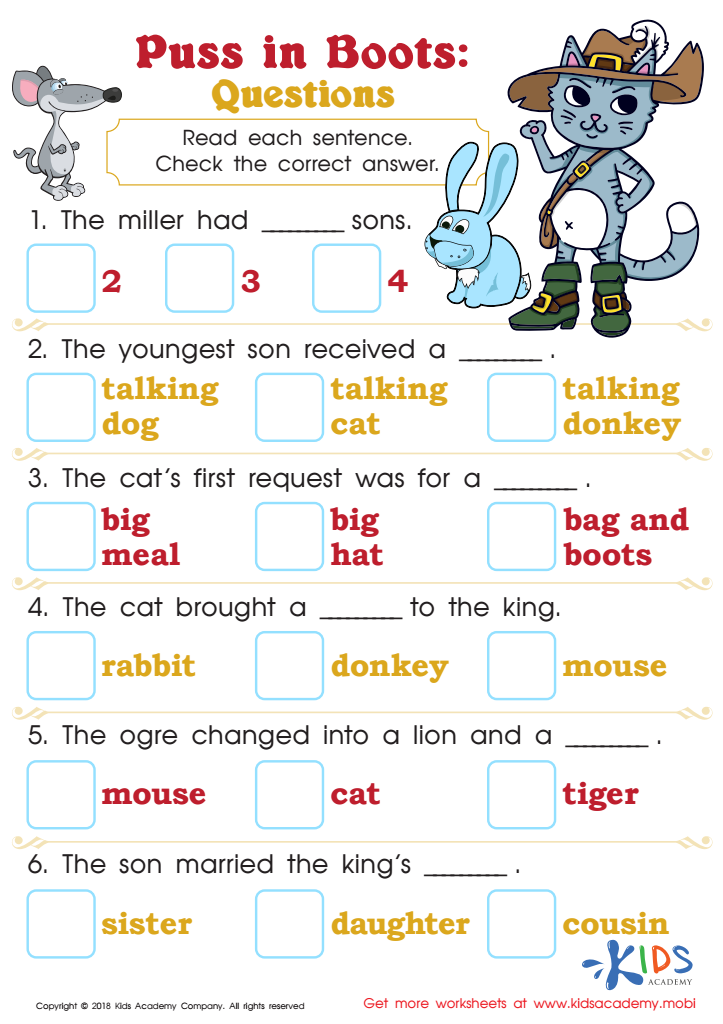
Puss in Boots: Questions Worksheet
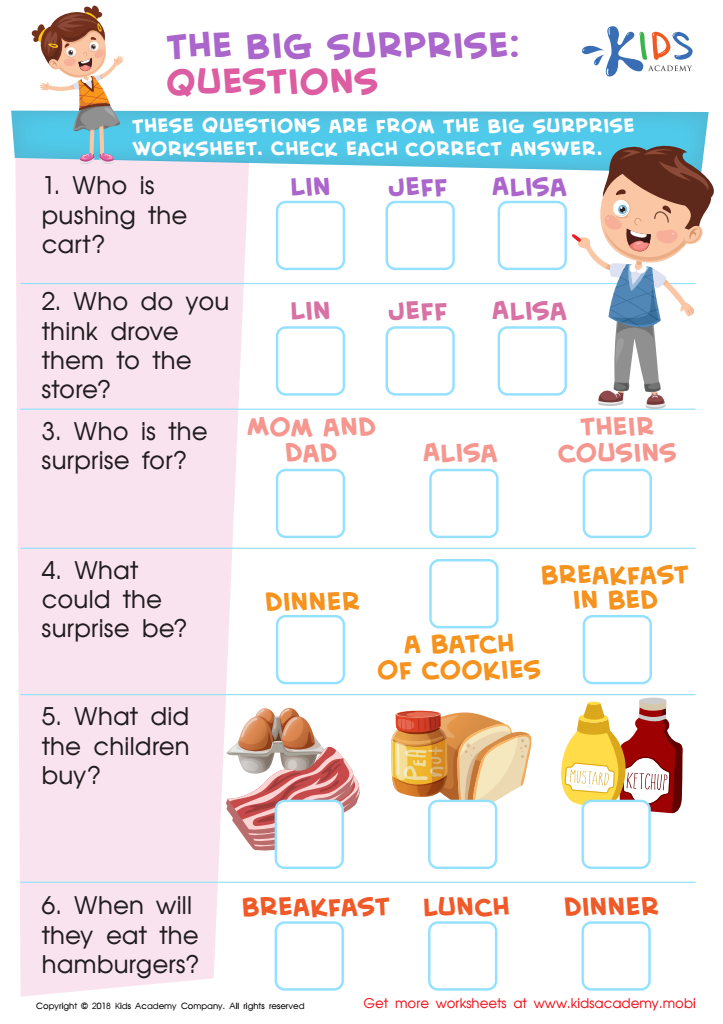
The Big Surprise: Questions Worksheet
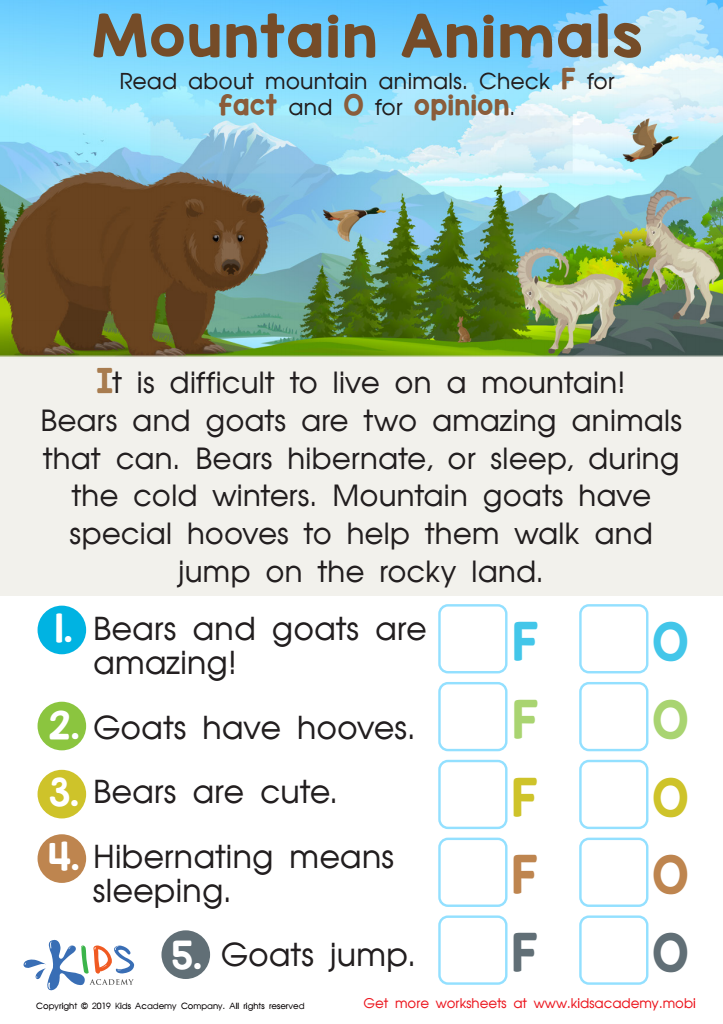
Mountain Animals Worksheet
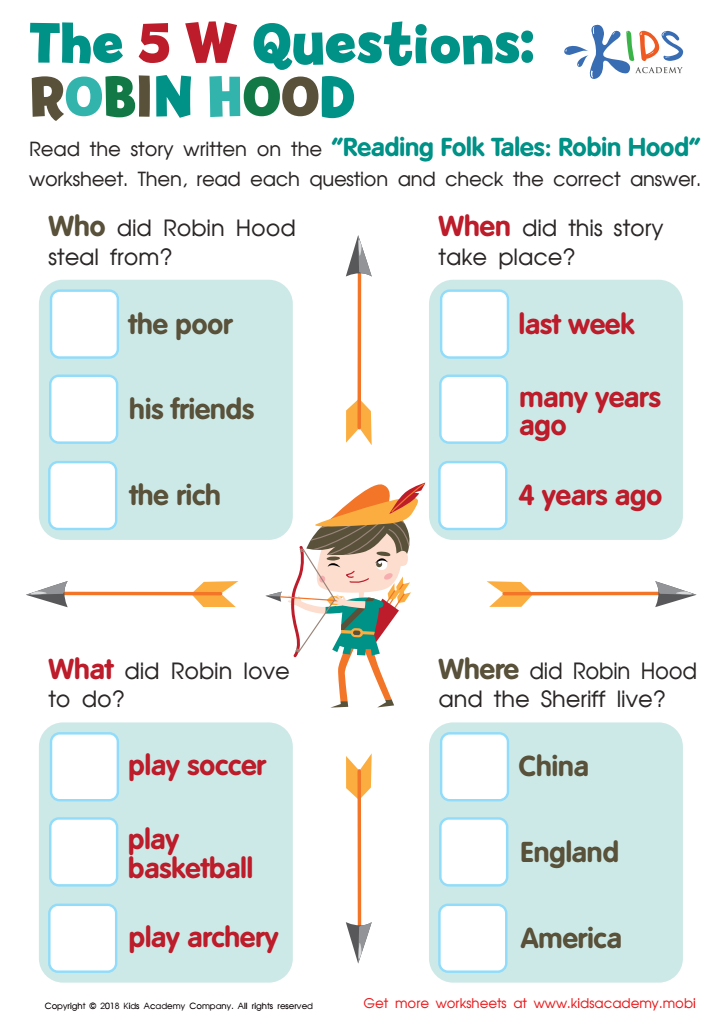
The 5 W Questions: Robin Hood Worksheet
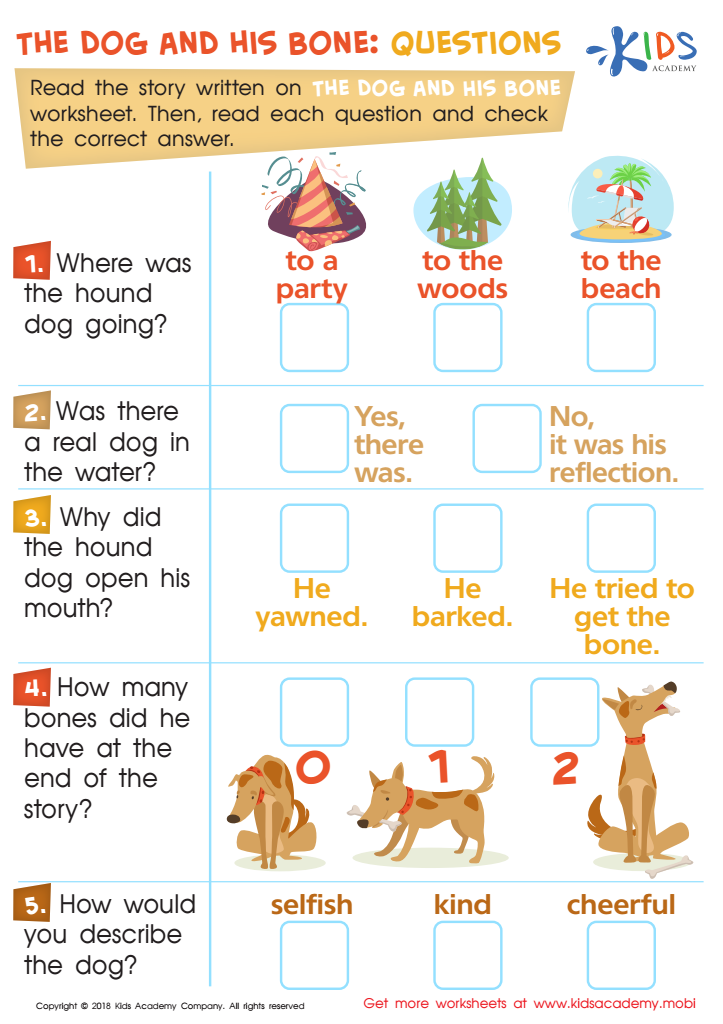
The Dog and His Bone: Questions Worksheet
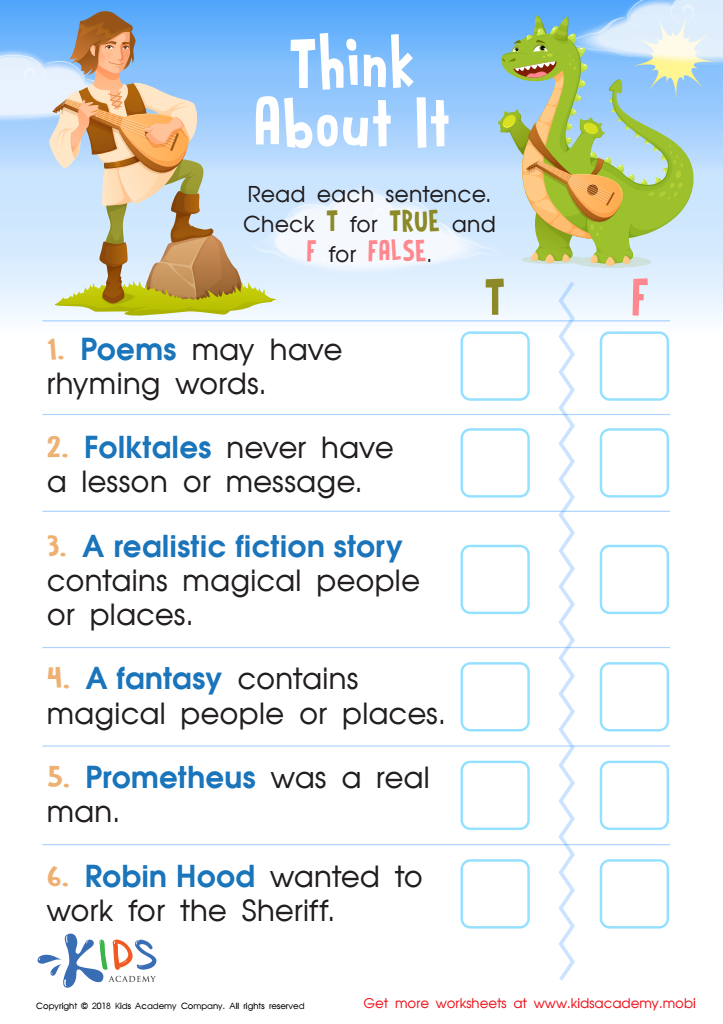
Think About It: Assessment Worksheet







Critical thinking reading is essential for 9-year-olds as it lays a sturdy foundation for their overall cognitive and academic development. Firstly, fostering critical thinking at this age helps children become active rather than passive readers. Instead of merely digesting information, children learn to question, analyze, and interpret what they are reading. This engages their imagination and enhances comprehension skills, making reading a more enriching experience.
Secondly, it teaches children to distinguish between fact and opinion, an invaluable skill in the age of information overload. This helps them become more discerning consumers of information and less susceptible to misinformation.
Additionally, critical thinking encourages problem-solving skills and creativity. By considering different perspectives and solutions, children learn to think outside the box, an ability beneficial in almost all areas of life, including math, science, and the arts.
Moreover, fostering these skills can contribute to social and emotional growth. When kids are invited to discuss various viewpoints and understand characters' motivations, they develop empathy and improved communication skills.
Overall, integrating critical thinking into reading for 9-year-olds prepares them not just for academic success but for life as informed, thoughtful, and empathetic individuals. This is why both parents and teachers should place a strong emphasis on nurturing these skills early on.








