
Vocabulary expansion Reading Fiction Worksheets for 9-Year-Olds
4 filtered results
Difficulty Level
Grade
Age
-
From - To
Subject
Activity
Standards
Enhance your 9-year-old's vocabulary with our engaging reading fiction worksheets! Designed to make learning fun, these worksheets feature captivating stories and insightful questions to help young readers discover new words and expand their linguistic skills. As children immerse themselves in the tales, they'll encounter varied vocabulary, boosting comprehension and retention effortlessly. Our expertly crafted exercises promote critical thinking and context clue usage, ensuring that students build a robust and diverse lexicon. Perfect for classroom use or at-home enrichment, these worksheets are a delightful way to cultivate a love for reading and a richer language arsenal.
Favorites
With answer key
Interactive
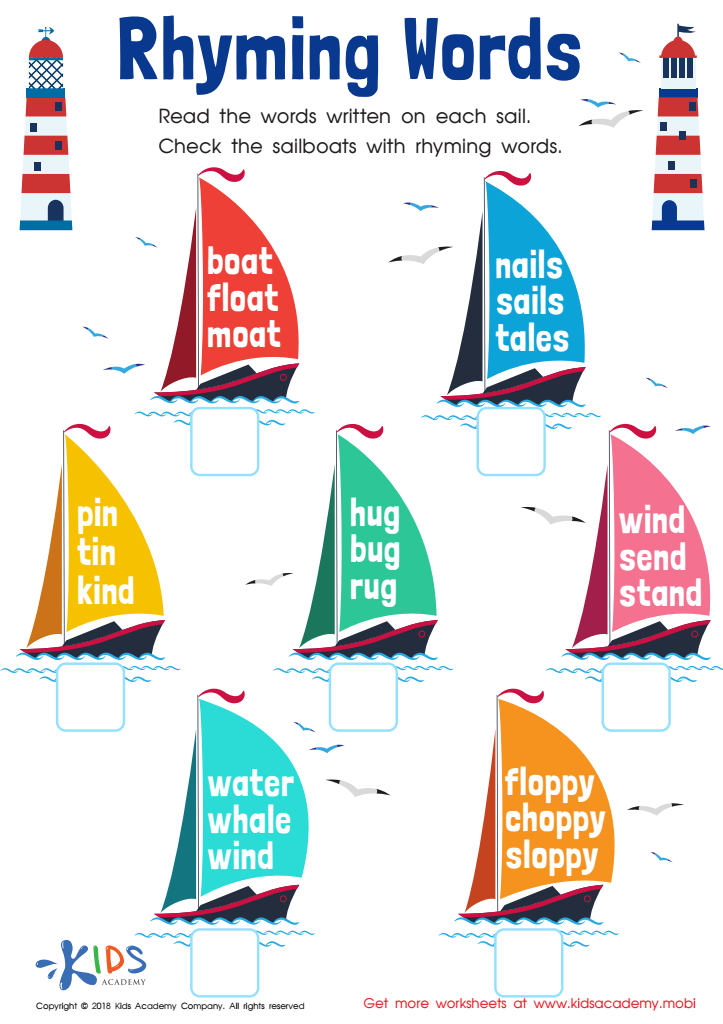
Rhyming Words Worksheet
Does your child know about rhyming words? Get them interested in poetry and explain that these words have similar sounds when pronounced. Read the words on each sailboat to your child and ask them to identify the rhyming pairs. Guide them to check the sailboats.
 Assign to My Students
Rhyming Words Worksheet
Worksheet
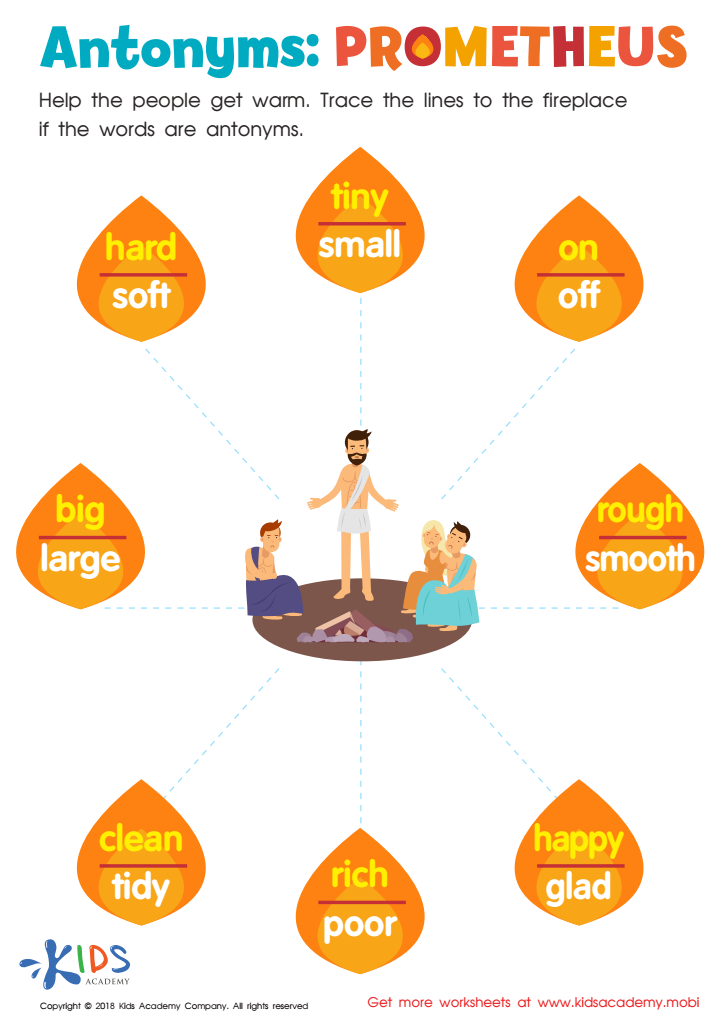
Antonyms: Prometheus Worksheet
Antonyms are words with opposite meanings to another. For example, the antonyms of 'good' are 'bad', 'poor' and 'wicked'. Ask your child to give you antonyms for 'Prometheus', which relates to fire. Invite your kids to trace the lines to the fireplace if the words are antonyms, helping the people in the tracing sheet get warm.
Antonyms: Prometheus Worksheet
Worksheet
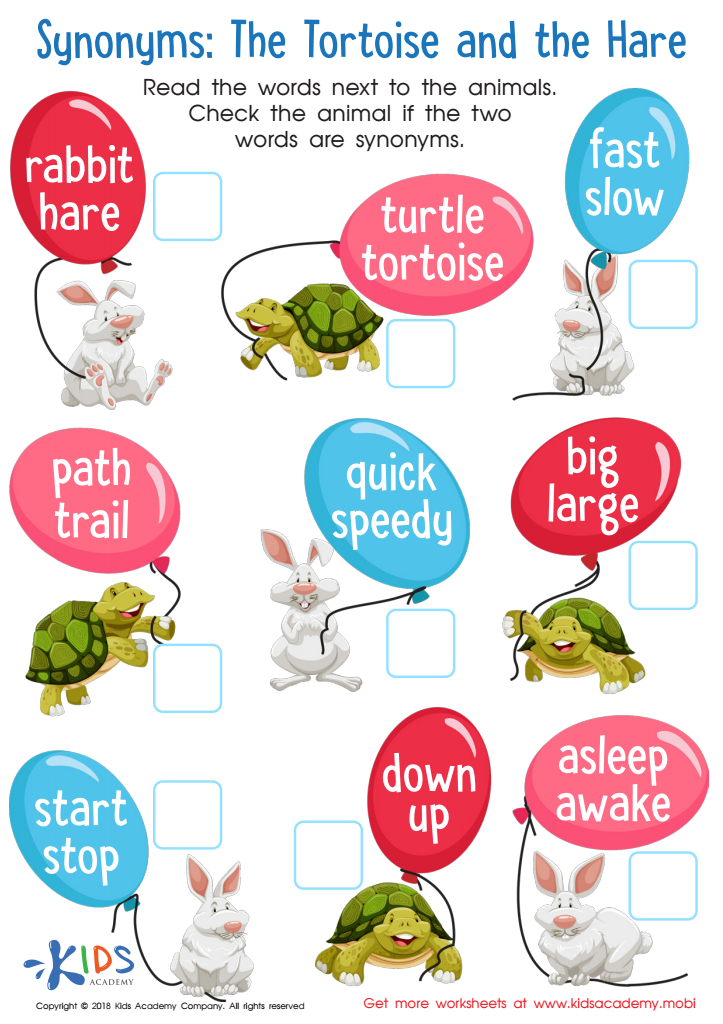
Synonyms: The Tortoise and Hare Worksheet
Help your kids identify words with similar meanings with this worksheet featuring a colourful picture of the Tortoise and the Hare. Show them how to check the boxes of animals with words that have similar meaning, then let them find more on their own. They'll love the challenge and you'll appreciate the educational value.
Synonyms: The Tortoise and Hare Worksheet
Worksheet
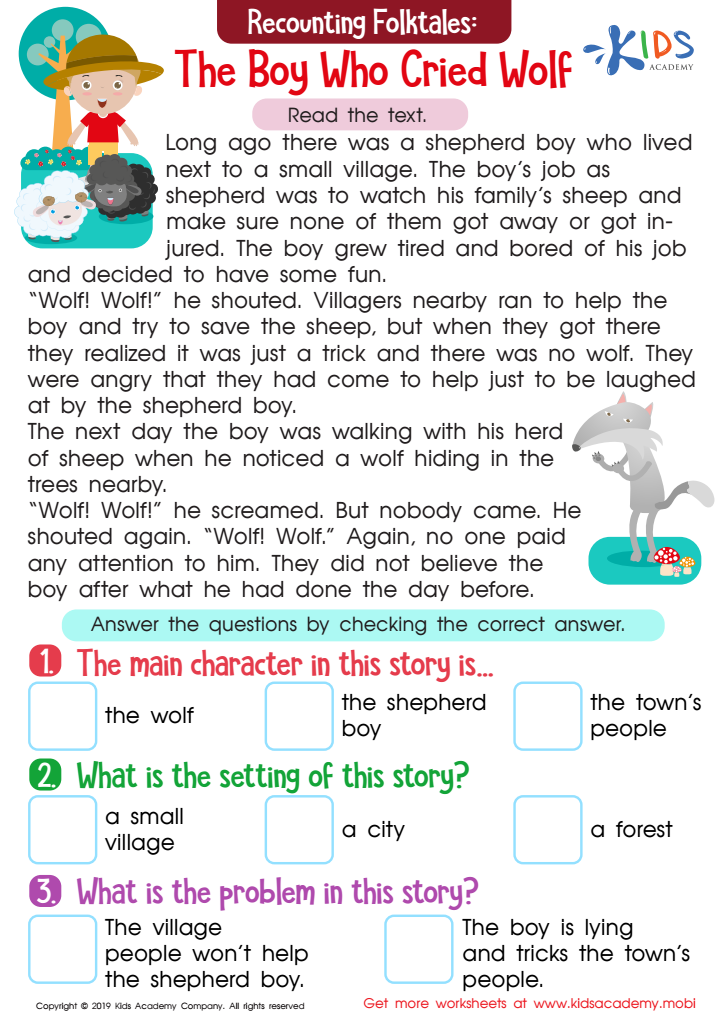
The Boy Who Cried Wolf Part 1 Worksheet
Storytime can be your kid's favorite part of the day. Ask them what their favorite stories are, then read the text in the printout. Read along with them, making sure they understand each word. At the end, go over the questions and have them check the correct answers.
The Boy Who Cried Wolf Part 1 Worksheet
Worksheet
Join Kids Academy for Free
Who is primarily going to use this learning content?





.jpg)

Vocabulary expansion is crucial for 9-year-olds, and reading fiction plays a significant role in this process. At this age, children are transitioning from learning to read to reading to learn. A robust vocabulary is an essential foundation for effective communication and academic success. Fiction introduces young readers to a diverse range of words and phrases in different contexts, enhancing their language skills beyond what they encounter in daily life or curriculum-focused texts.
When children delve into fictional worlds, they encounter rich, varied language that stimulates their cognitive development and comprehending abilities. Complex sentences, unusual words, and descriptive passages challenge them to infer meanings and think critically, skills integral to higher learning. These encounters also promote empathy and cultural awareness as young readers understand diverse perspectives through the characters and settings they read about.
Moreover, an extensive vocabulary directly contributes to improved writing skills. As children absorb new words and styles from their reading, they naturally incorporate them into their own use, expressing themselves more clearly and creatively. This spills over to their speaking skills, bolstering their confidence in every setting. Parents and teachers should care deeply about vocabulary expansion through reading fiction because it equips children with lifelong abilities to navigate an increasingly information-rich world, fostering both academic and personal growth.








