
Critical Thinking History Worksheets for 9-Year-Olds
12 filtered results
Difficulty Level
Grade
Age
-
From - To
Subject
Activity
Standards
Enhance your 9-year-old’s learning experience with our engaging Critical Thinking History Worksheets. These resources are designed to promote analytical skills while exploring historical events and figures. With age-appropriate activities, students will develop their abilities to interpret information, make connections, and construct sound arguments. Our worksheets encourage creativity and foster a deeper understanding of history, turning what might seem like dry facts into exciting challenges. Perfect for classroom use or homeschooling, these worksheets provide varied exercises that keep young learners motivated. Equip your child with essential critical thinking skills, and help them become confident thinkers in history and beyond!
Favorites
With answer key
Interactive
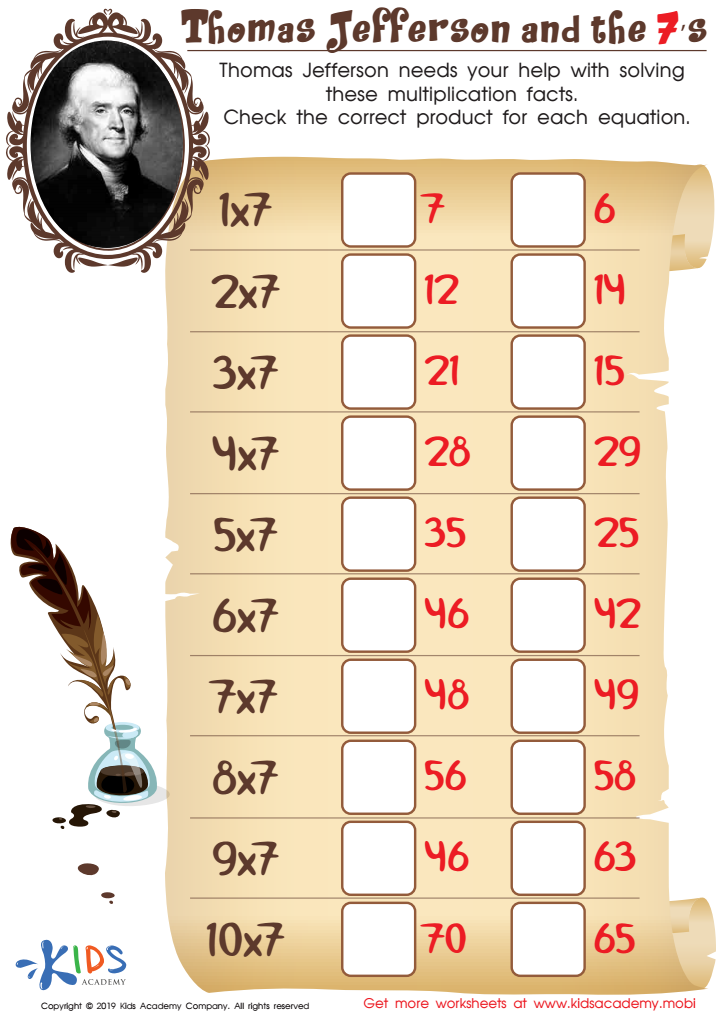
Thomas Jefferson and the 7’s Worksheet
Thomas Jefferson championed education and wants kids to know their times tables. Help your child with this worksheet focusing on 7's. Check the box for the correct answer for each multiplication problem. Make sure your child gets the facts right!
 Assign to My Students
Thomas Jefferson and the 7’s Worksheet
Worksheet
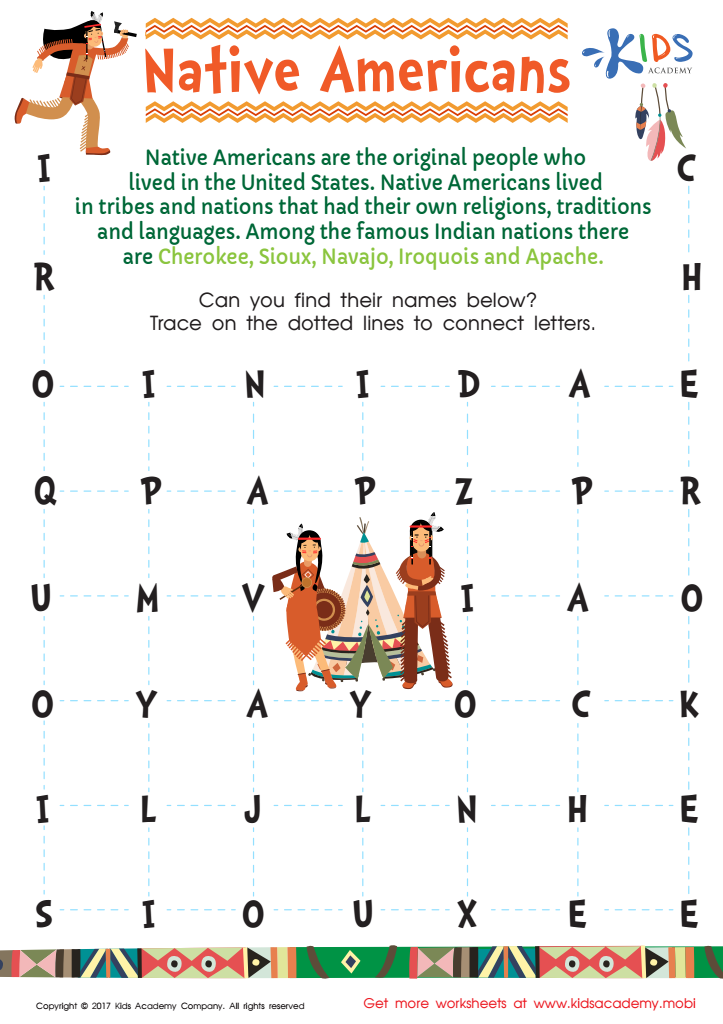
Native American Word Search Printable
This Native American word search PDF helps kids review important vocabulary and concepts about this important part of our county's history. It includes the names of famous and prominent Native American tribes. Solving the puzzle is fun and educative!
Native American Word Search Printable
Worksheet
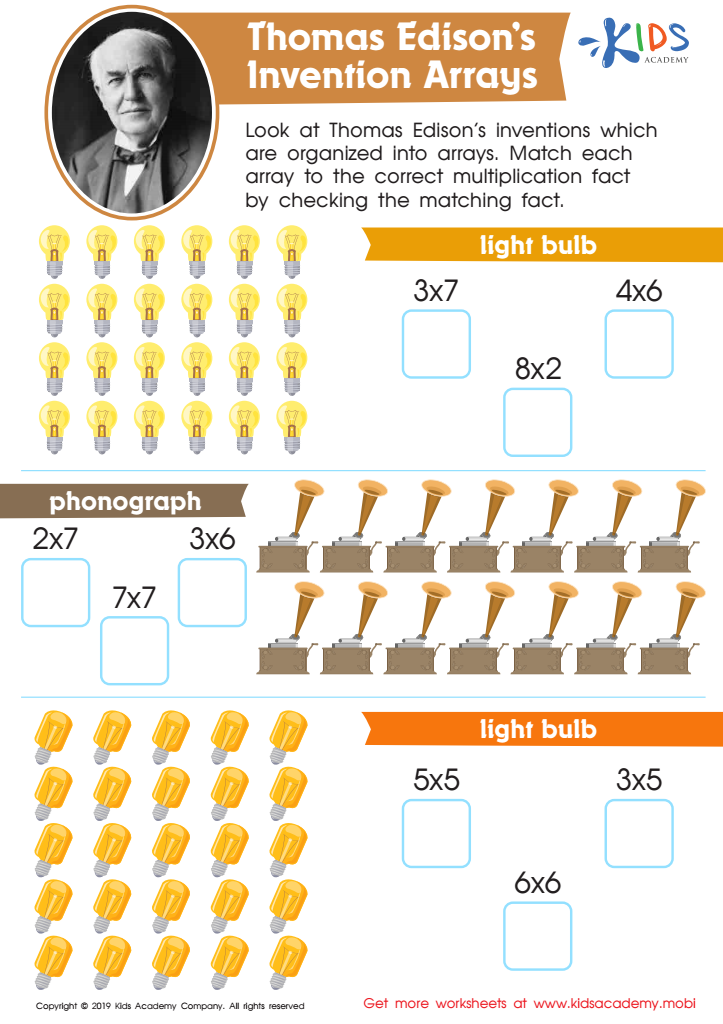
Thomas Edison’s Invention Arrays Worksheet
Test your students' knowledge on history by asking them what Thomas Edison invented. If they get the right answer, provide more information on other inventors. Check out this printout of Edison's light bulb inventions laid out in arrays. Get them to match each array to the correct multiplication fact.
Thomas Edison’s Invention Arrays Worksheet
Worksheet
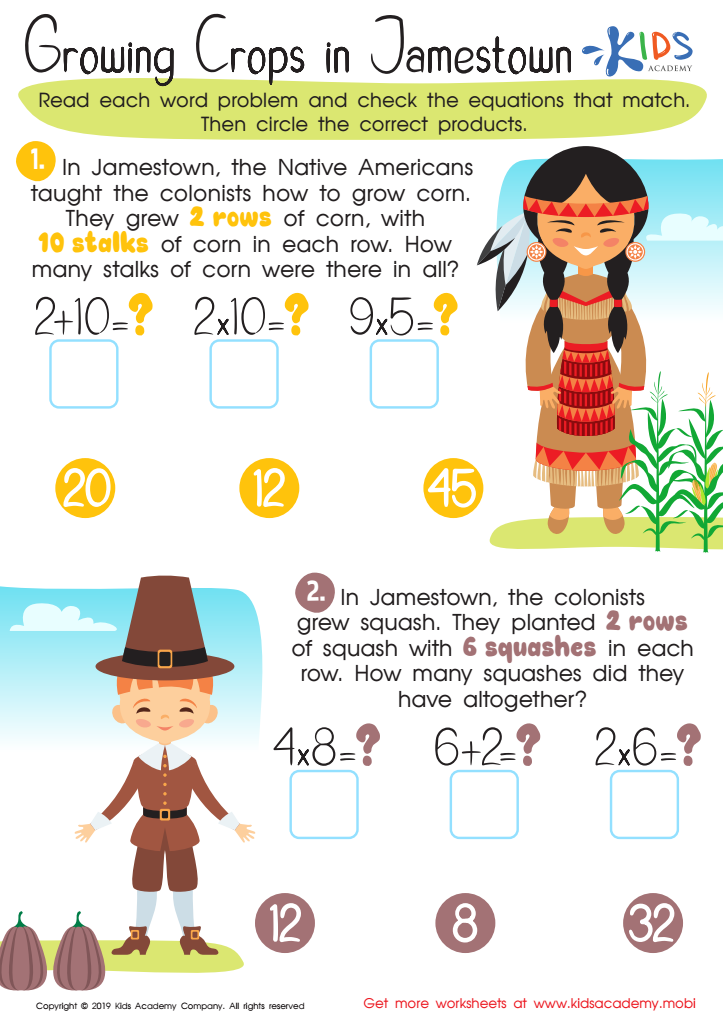
Growing Jamestown Worksheet
This exciting multiplication worksheet from Kids Academy uses American history facts as its theme. Kids learn about Native Americans helping early Americans at Jamestown, then read the word problems, match the equations and solve for the product. Finally, circle the correct answer!
Growing Jamestown Worksheet
Worksheet
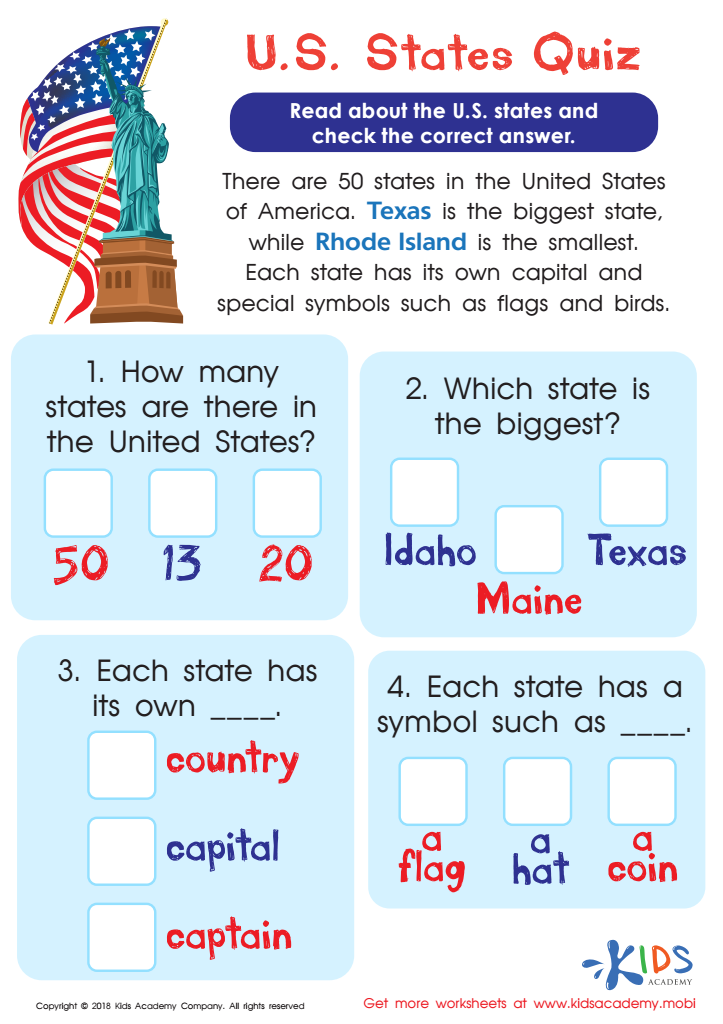
U.S. States Quiz Worksheet
Help your young historians reinforce their knowledge of the U.S. with this fun, free PDF worksheet! It'll assess their understanding of the fifty states and strengthen their visual discrimination skills too - they'll pick out the correct answers, with colorful word-coding. Give it a try!
U.S. States Quiz Worksheet
Worksheet
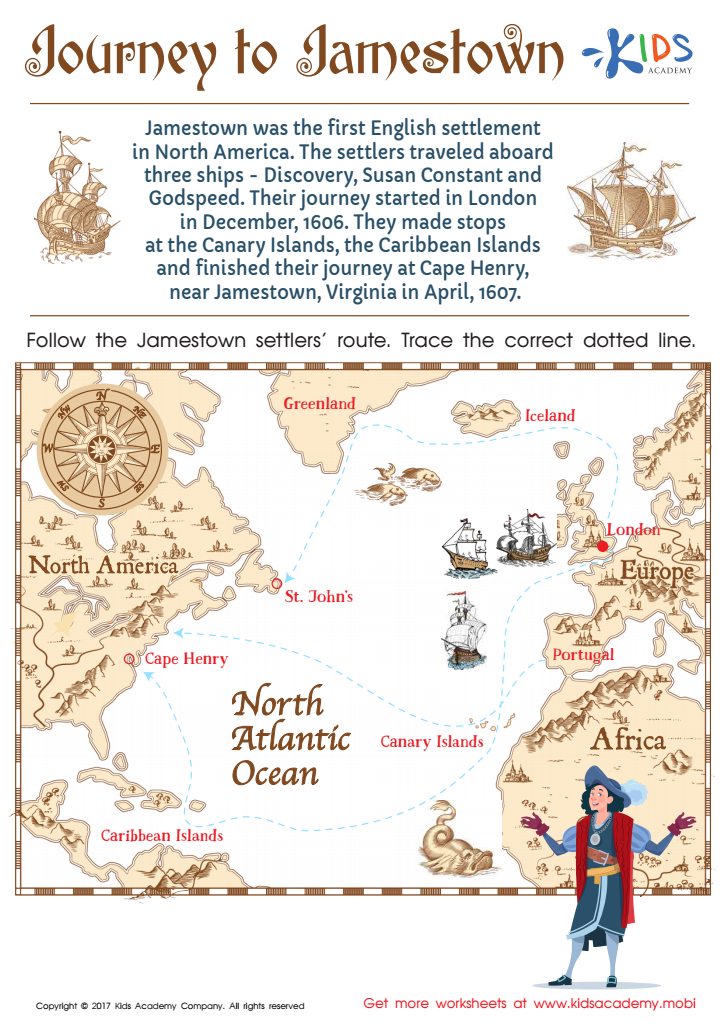
Journey to Jamestown Worksheet
Hit the high seas with this Journey to Jamestown worksheet and uncover the route the first pilgrims took to America! Kids explore a map and learn about stops the pilgrims made during their historic voyage.
Journey to Jamestown Worksheet
Worksheet
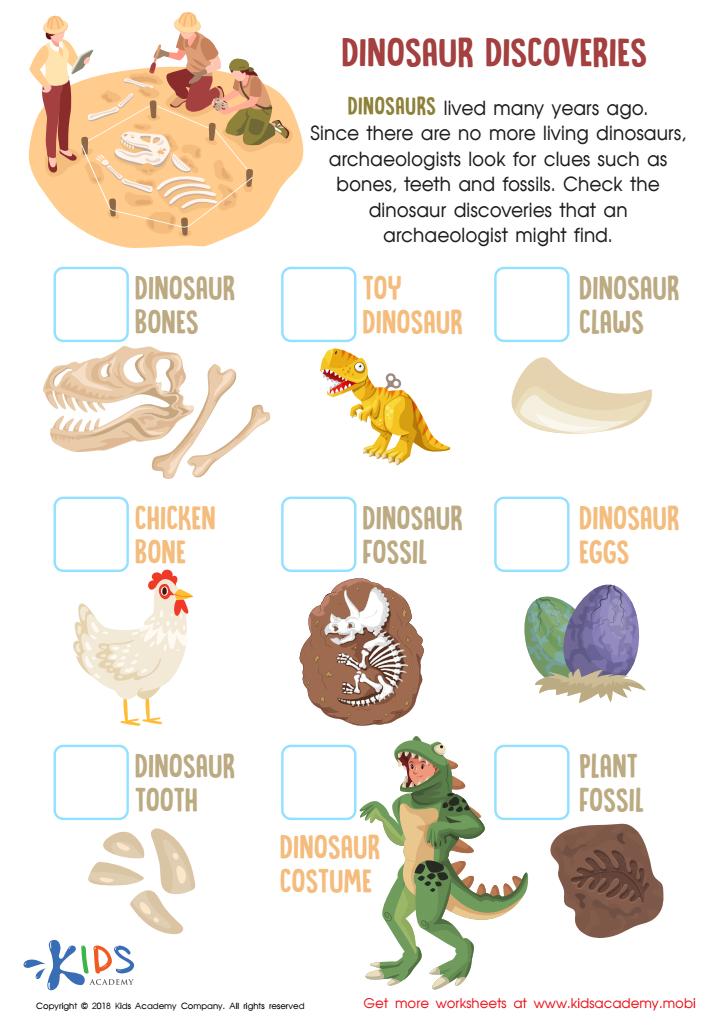
Dinosaur Discoveries Worksheet
Kids love the fascinating world of dinosaurs! This free worksheet educates them on how archeologists discover clues from their fossils, teeth, and bones. They'll identify items that are fossils with the help of pictures and choices provided. Learning has never been this fun!
Dinosaur Discoveries Worksheet
Worksheet
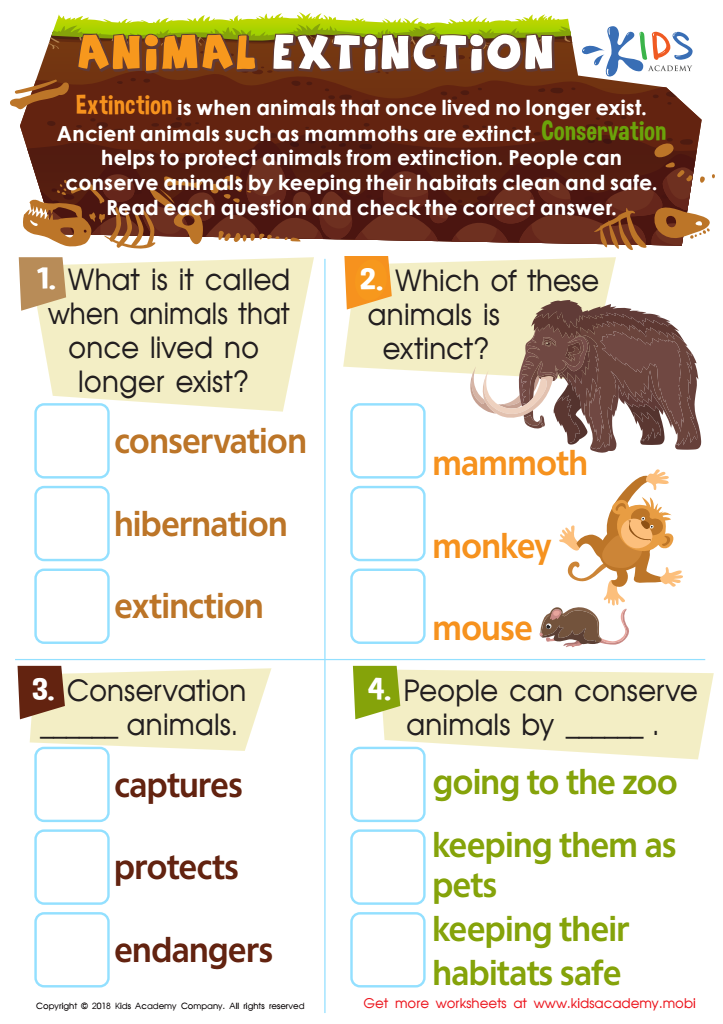
Animal Extinction Worksheet
Children can learn how their actions can help endangered animals with this free PDF worksheet. It explains extinction, looks at the mammoth as an example, and poses questions about conservation. Keeping habitats clean and safe is key to protecting animals and keeping them abundant. Learning about this now can make a huge difference for future generations.
Animal Extinction Worksheet
Worksheet
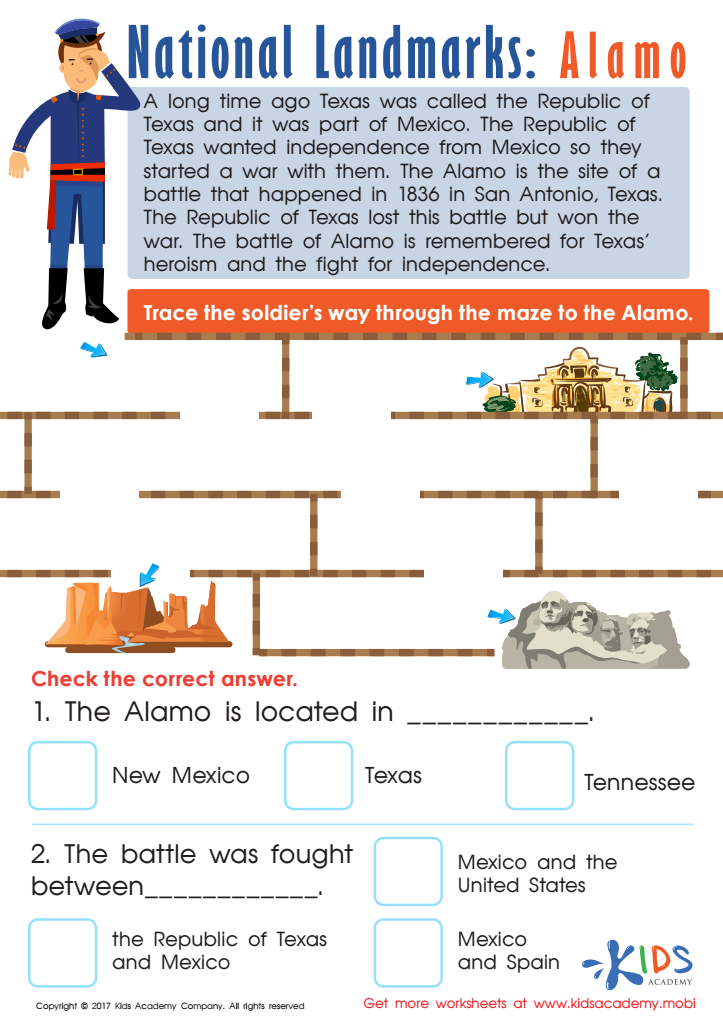
Alamo Printable Worksheet
Take your child on an educational journey to the Alamo! Our printable worksheet offers an interactive maze to explore the Republic of Texas and the fight for independence from Mexico.
Alamo Printable Worksheet
Worksheet
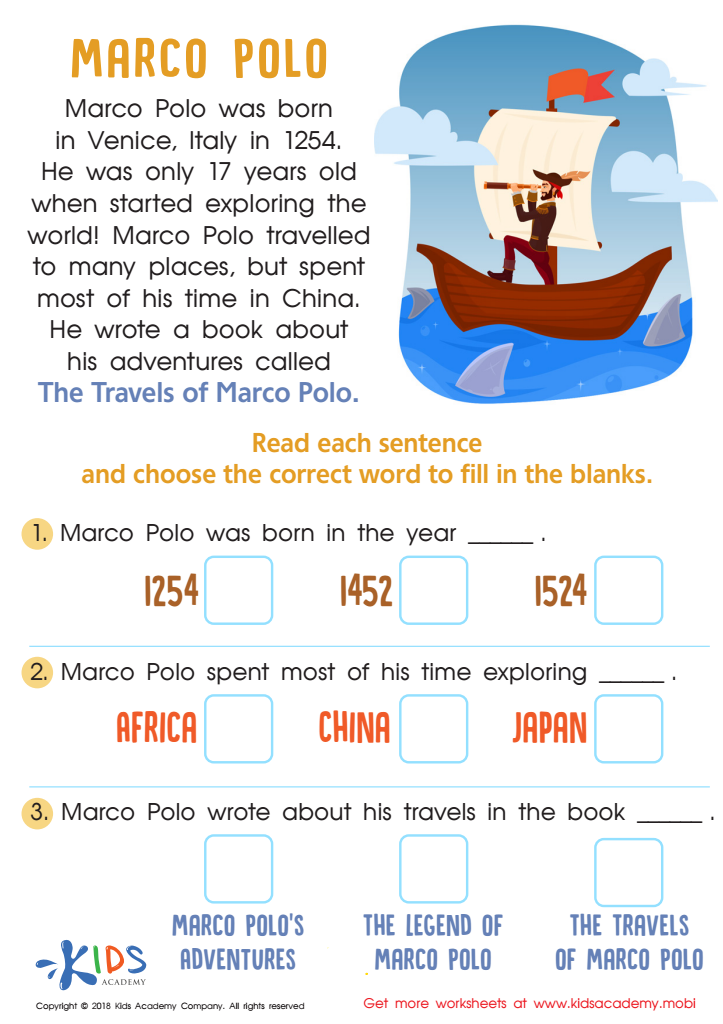
Marco Polo Worksheet
This free worksheet teaches kids about Marco Polo, the world explorer from Venice. They'll read about his journeys and the book he wrote and answer comprehension questions with multiple-choice boxes. He was just 17-years old when he started his travels!
Marco Polo Worksheet
Worksheet
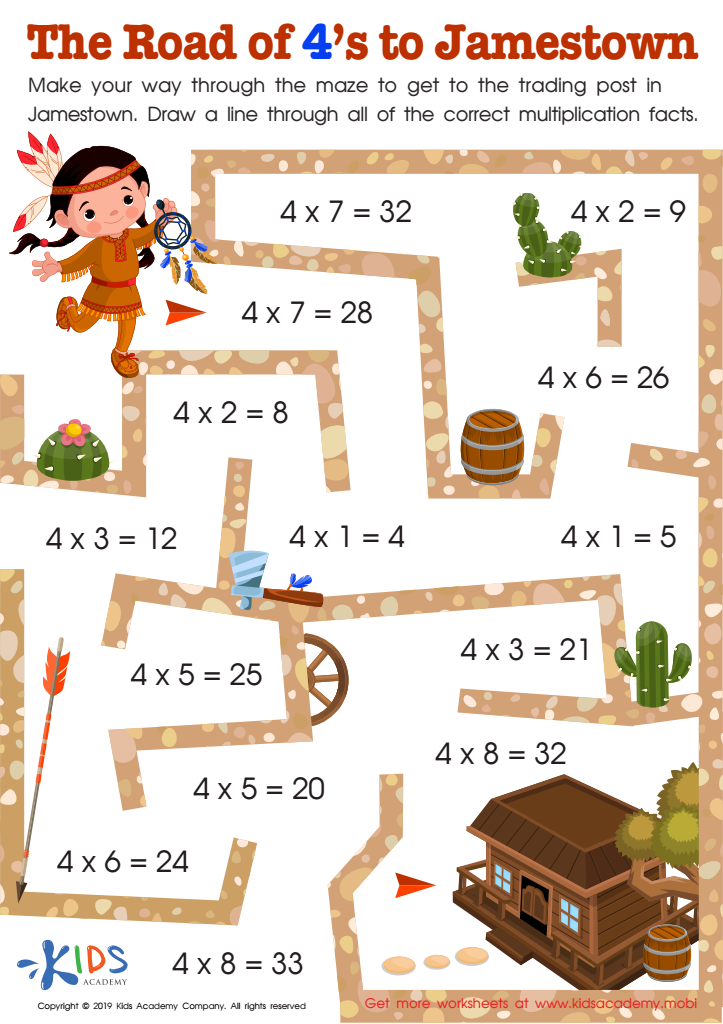
The Road of 4’s to Jamestown Worksheet
Does your child enjoy trips? Help them remember the best ones with this fun worksheet maze! Get your kid to look at the picture and draw a line through all the right multiplication facts to get to Jamestown's trading post. This worksheet is a great way to stimulate their problem-solving skills.
The Road of 4’s to Jamestown Worksheet
Worksheet
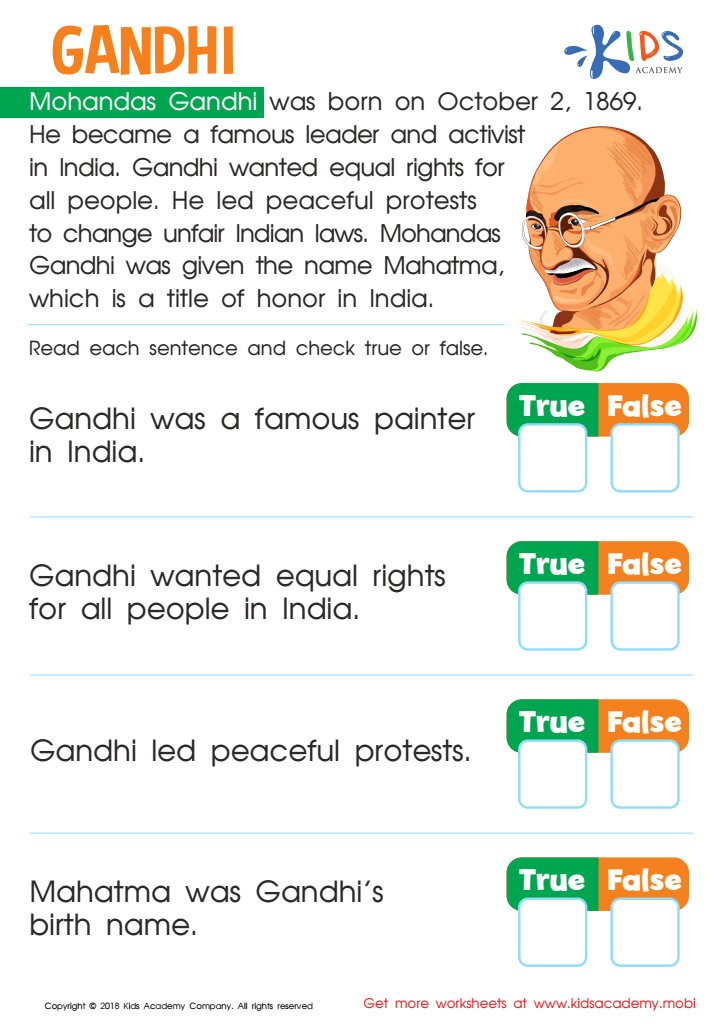
Gandhi Worksheet
This worksheet will teach your children about Mohandas Gandhi and his humanitarian works. They'll read statements and identify them as true or false using answer boxes. It's a great way to teach kids about Indian history and the incredible legacy of Gandhi.
Gandhi Worksheet
Worksheet
Join Kids Academy for Free
Who is primarily going to use this learning content?








Parents and teachers should prioritize Critical Thinking History for 9-year-olds because it lays the foundation for analytical and reasoning skills critical in today's information-rich world. At this age, children are naturally curious and question what they encounter. Introducing historical events requires them to not only engage with facts but also evaluate sources, consider multiple perspectives, and understand the complexities behind decisions and actions.
Critical Thinking History equips children with the ability to discern biases, identify credible sources, and synthesize information. These skills are essential in fostering informed citizens who can critically navigate the media landscape and make responsible decisions. History lessons rich in critical thinking also encourage empathy; students learn to appreciate diverse viewpoints and cultural contexts.
Furthermore, developing critical thinking nurtures confidence in problem-solving and encourages a lifelong love of learning. By giving students the tools to analyze past events, we prepare them for challenges they will face in their personal and academic lives. Ultimately, this holistic approach not only enhances their understanding of the past but also cultivates skills that will enrich their future, making them not just informed individuals but responsible members of society.








