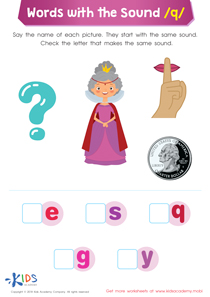
Word Recognition Consonant Digraphs Worksheets
5 filtered results
-
From - To
Boost your child’s reading skills with our engaging Word Recognition Consonant Digraphs Worksheets! Designed for early learners, these worksheets focus on helping children recognize and read consonant digraphs—two letters that create a single sound. Our resources are tailored to enhance phonemic awareness, improve vocabulary, and build reading confidence. With fun activities that include matching, filling in the blanks, and identifying digraphs in words, students will enjoy a hands-on learning experience. Perfect for classroom practice or homeschooling, these worksheets will guide your child to decode and master consonant digraphs, laying a strong foundation for their literacy journey. Get started today!
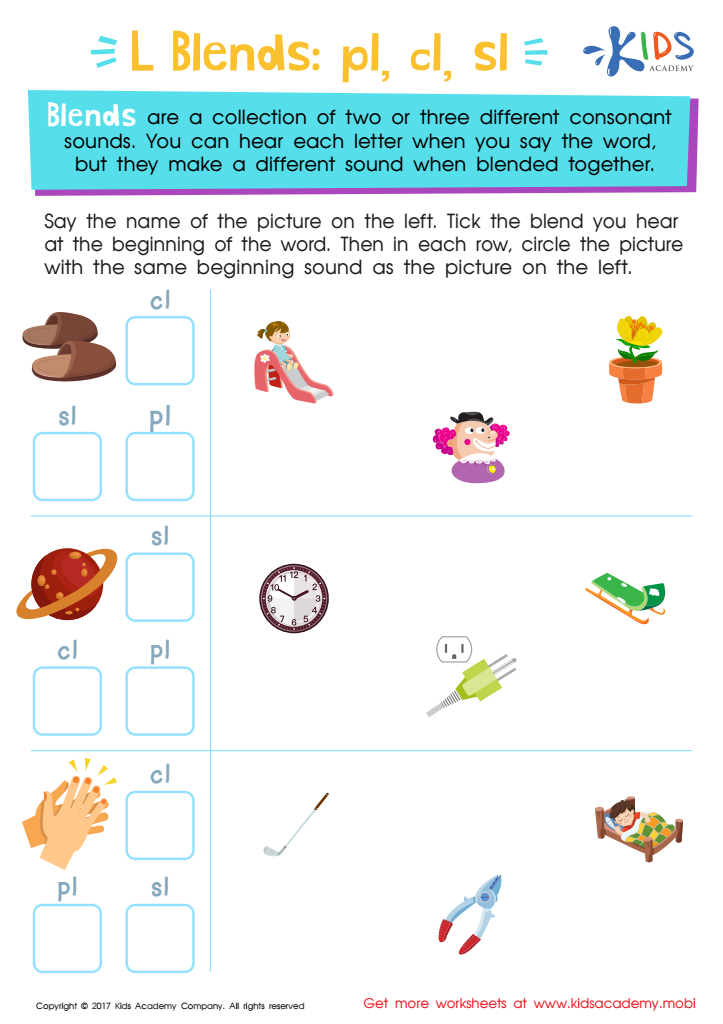
L Blends: "Pl", "Cl" and "Sl" Printable
 Assign to My Students
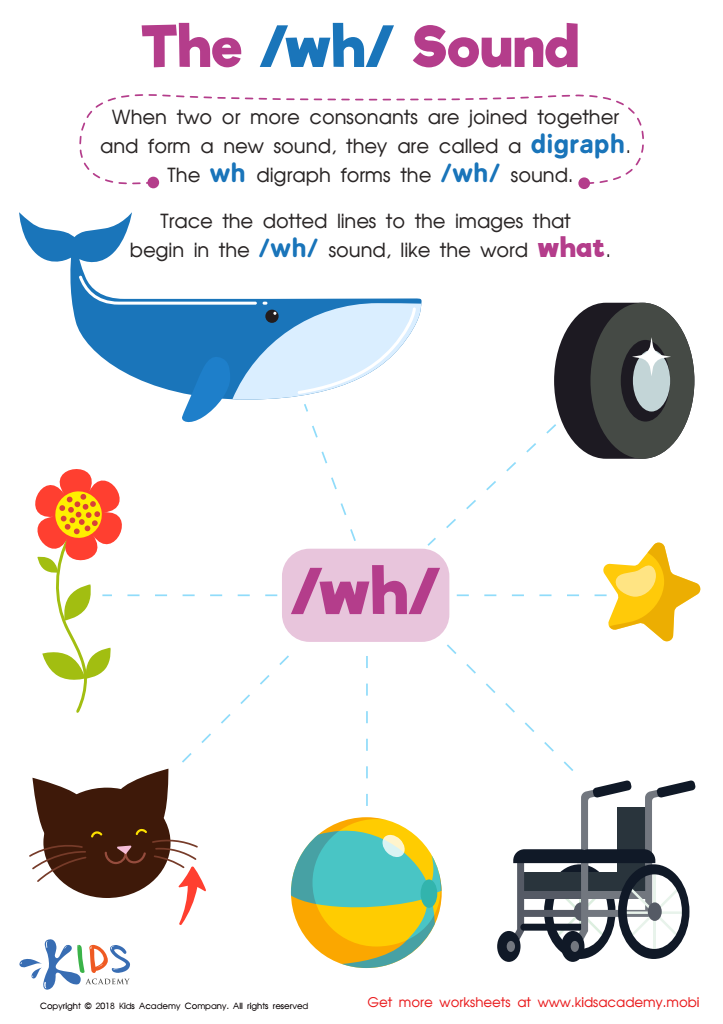
The /wh/ Sound Worksheet
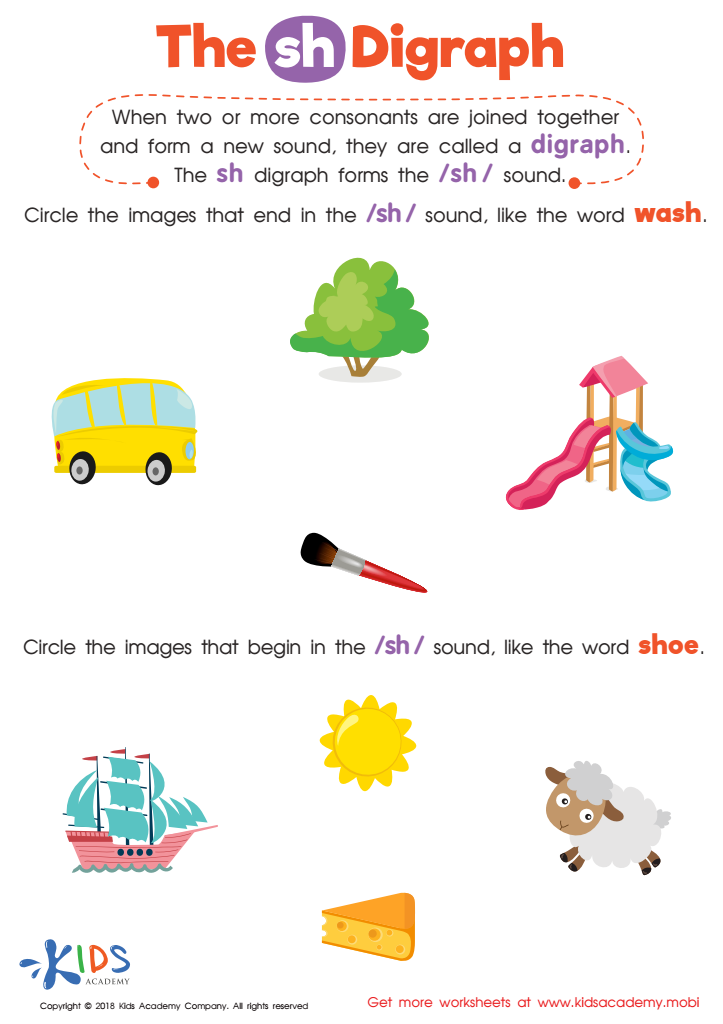
The SH Digraph Worksheet
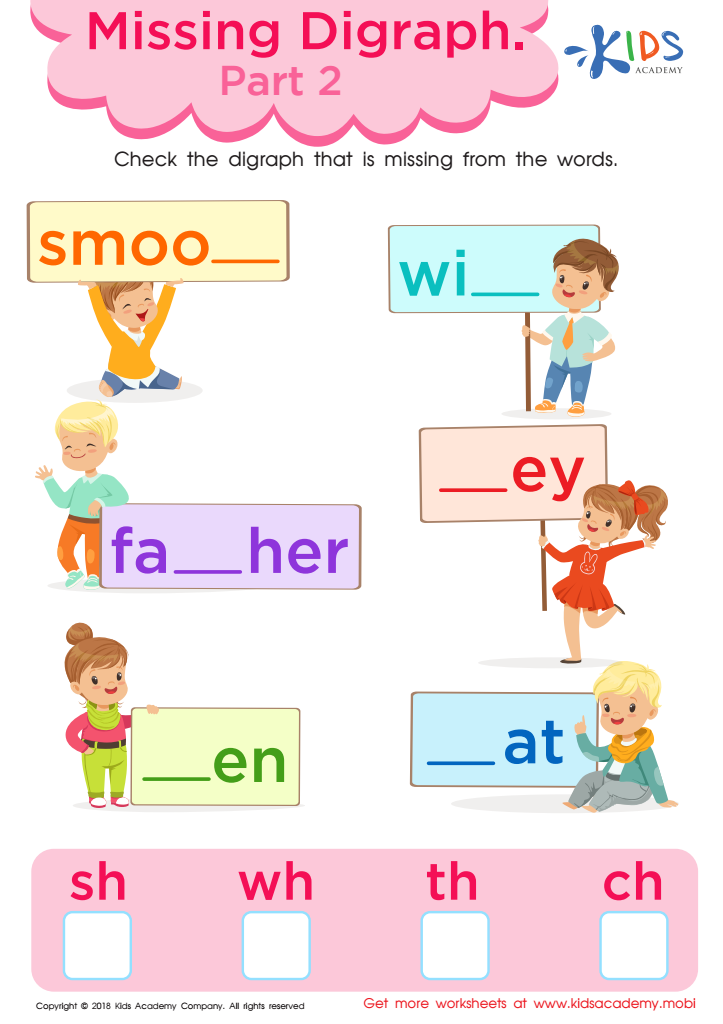
Missing Digraph: Part 2 Worksheet
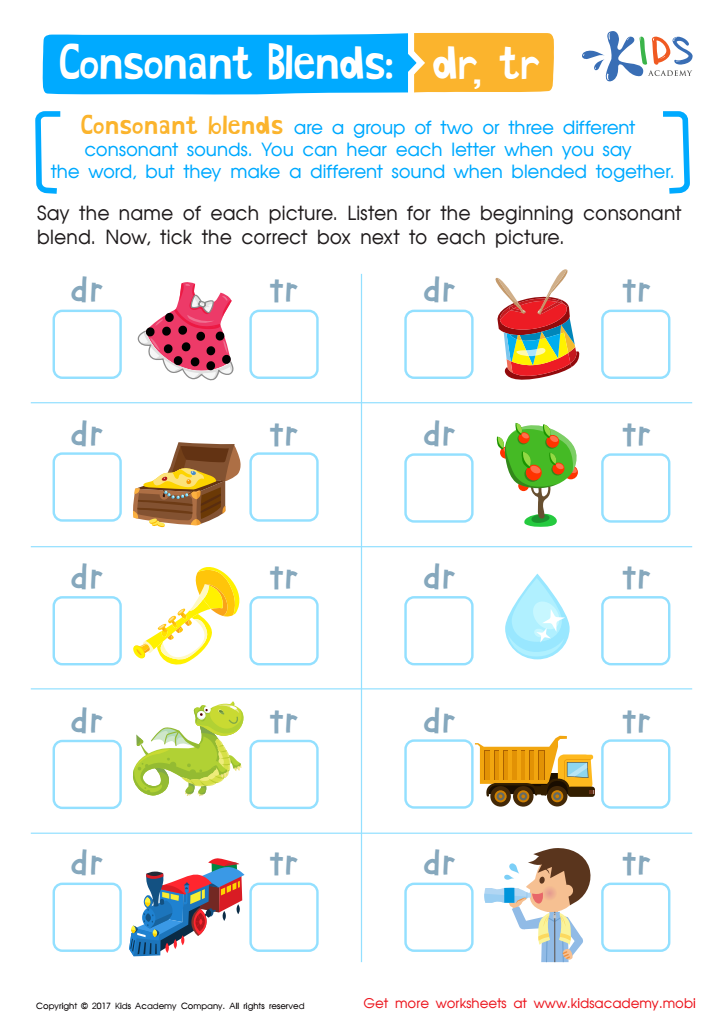
Consonant Blends: "Dr" and "Tr" Printable


Word recognition, particularly consonant digraphs, is crucial for early literacy development in children. Consonant digraphs, which consist of two letters that blend to produce a single sound (such as "th," "sh," and "ch"), play a significant role in helping young learners decode words. When parents and teachers emphasize the importance of understanding and recognizing these digraphs, they set the foundation for students' reading and spelling proficiency.
By being familiar with consonant digraphs, children can improve their ability to sound out unfamiliar words, enhancing fluency and comprehension. This skill directly impacts their confidence and willingness to engage with texts, fostering a love for reading. Moreover, strong word recognition skills support better academic performance across subjects and aid significantly in writing, as children learn to spell words correctly.
Parents and teachers who focus on word recognition and phonics instruction can create supportive environments that encourage practice and reinforcement. Collaborative efforts like reading together, highlighting digraphs, and engaging in fun phonics games can make learning enjoyable. Ultimately, prioritizing consonant digraphs allows educators and parents to equip children with the essential tools they need for successful lifelong literacy.