
Alphabetical order understanding Alphabet Worksheets
6 filtered results
Difficulty Level
Grade
Age
-
From - To
Subject
Activity
Standards
Explore our "Alphabetical Order Understanding Worksheets" designed to engage young learners in mastering the alphabet. These printable activities provide an interactive way for children to practice organizing words, enhancing their foundational literacy skills. By sorting words in alphabetical order, students strengthen their understanding of vocabulary and develop critical thinking. Each worksheet focuses on different themes and includes colorful illustrations to maintain interest and motivation. Ideal for pre-k and kindergarten classrooms or at home, these worksheets make learning fun and effective. Start cultivating your child’s alphabetical skills today and help them confidently navigate their way through language!
Favorites
With answer key
Interactive
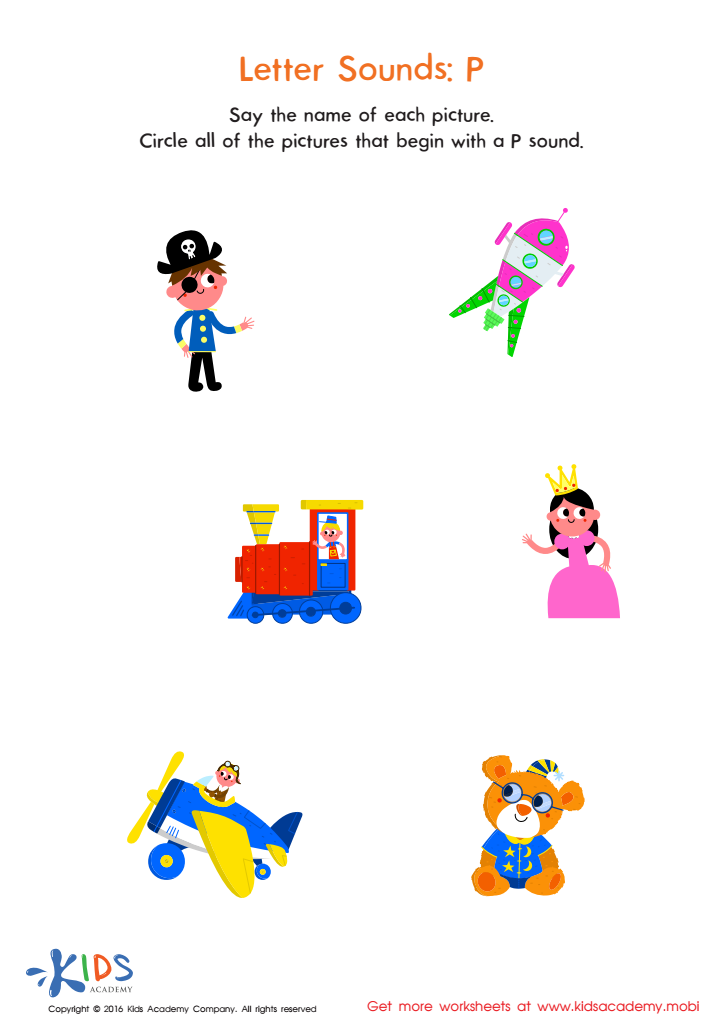
Letter P Sound Worksheet
Think P! Kids practice phonics with this fun letter P worksheet. With delightful illustrations, they'll sound out simple words and get closer to reading.
Letter P Sound Worksheet
Worksheet
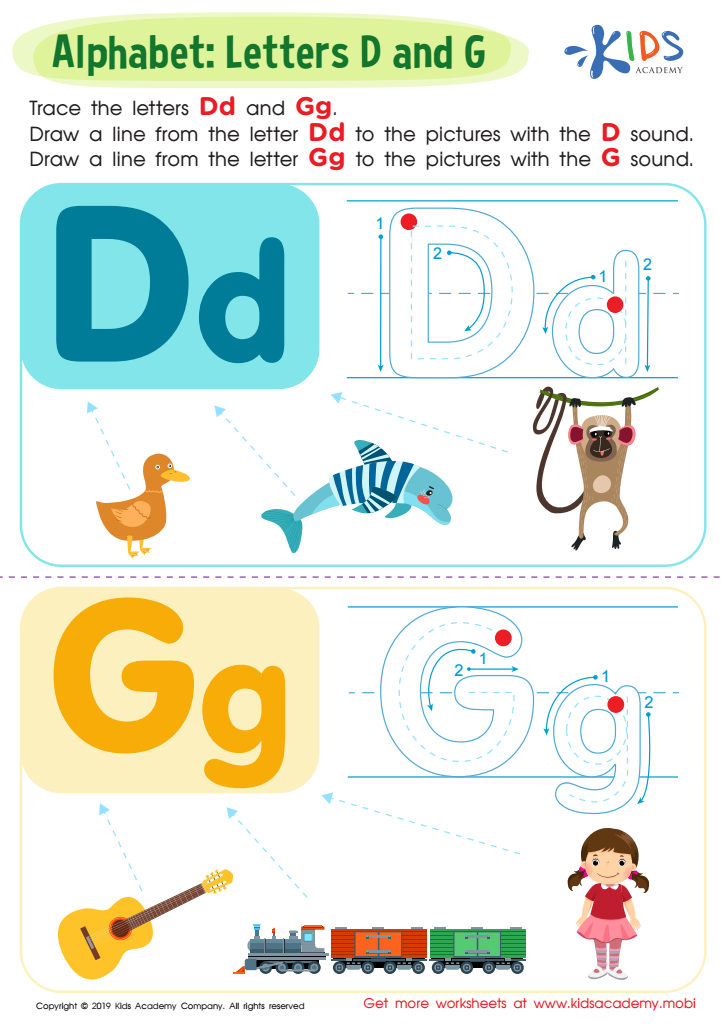
Letter D and G Tracing Worksheet
Kids can explore their imagination with the 'Alphabet: Letters D and G' worksheet! They'll trace capital and lowercase "D" and "G" and trace a line from the words. Colorful animals and objects make the task more fun and entertaining!
Letter D and G Tracing Worksheet
Worksheet
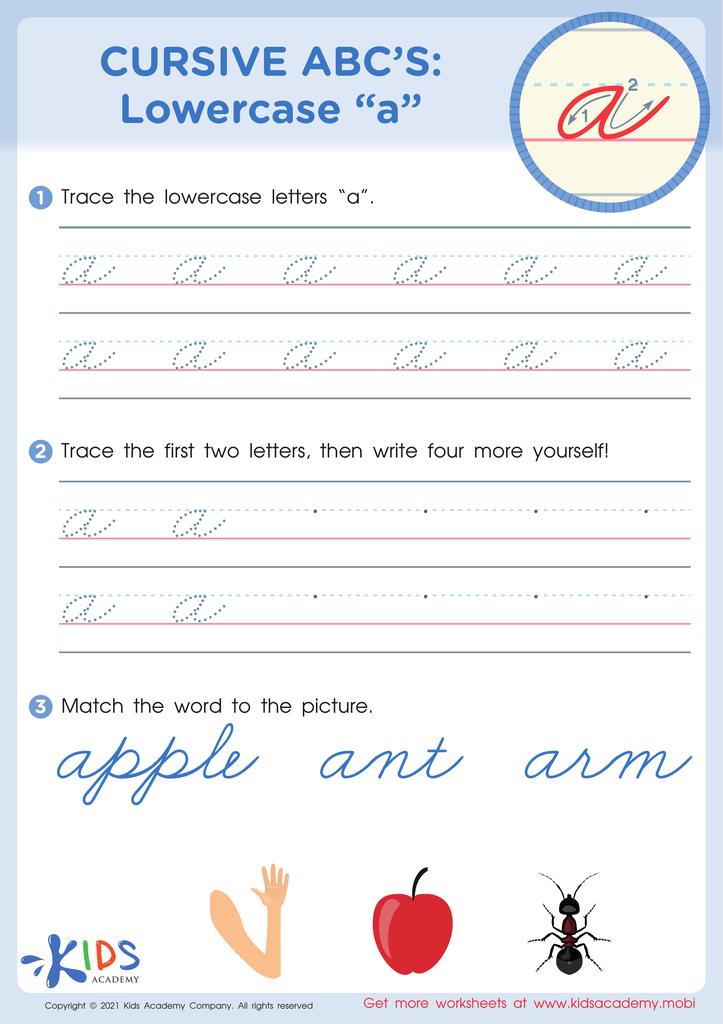
Cursive ABCs: Lowercase a
Help your children learn to write cursive letters with these free tracing sheets. They'll practice their handwriting, develop printing skills and build vocabulary. By tracing the lowercase letter “a” multiple times, they'll learn how it's formed and be ready to write it on their own. The colorful pictures at the bottom of each page also offer new words beginning with the letter 'a'.
Cursive ABCs: Lowercase a
Worksheet
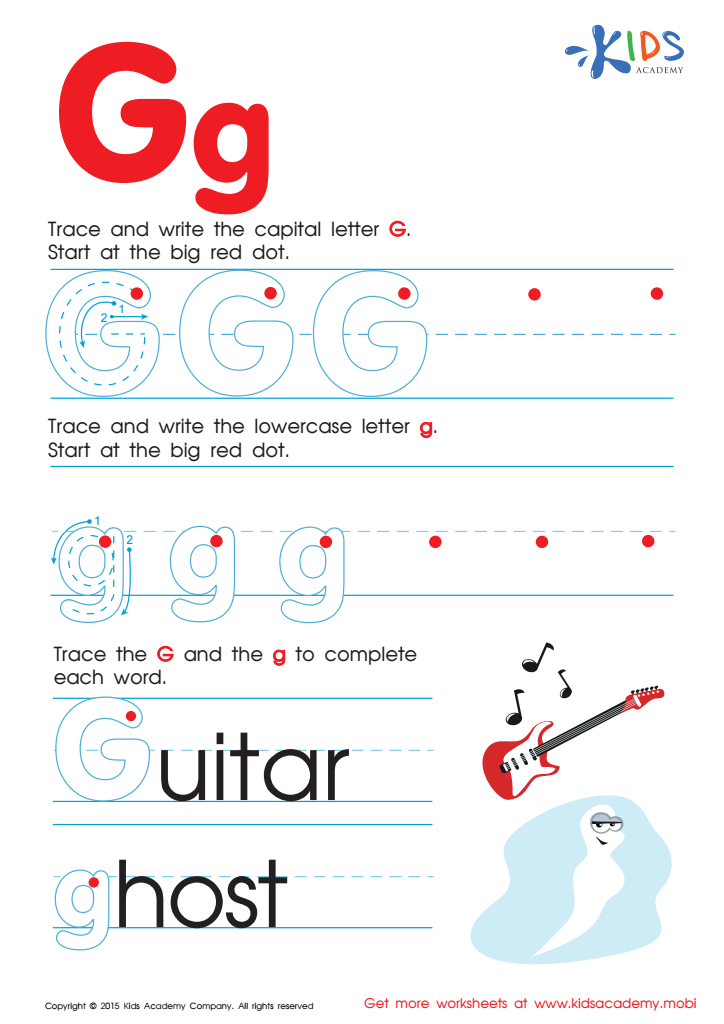
Letter G Tracing Page
Get ready to trace the letter "G" – with a big red spot as the starting point, trace the lines and watch the letter appear. Uppercase and lowercase letters are both easy and fun to write. Give it a go and finish the word "go". Play the guitar and say "hello" to a funny ghost!
Letter G Tracing Page
Worksheet
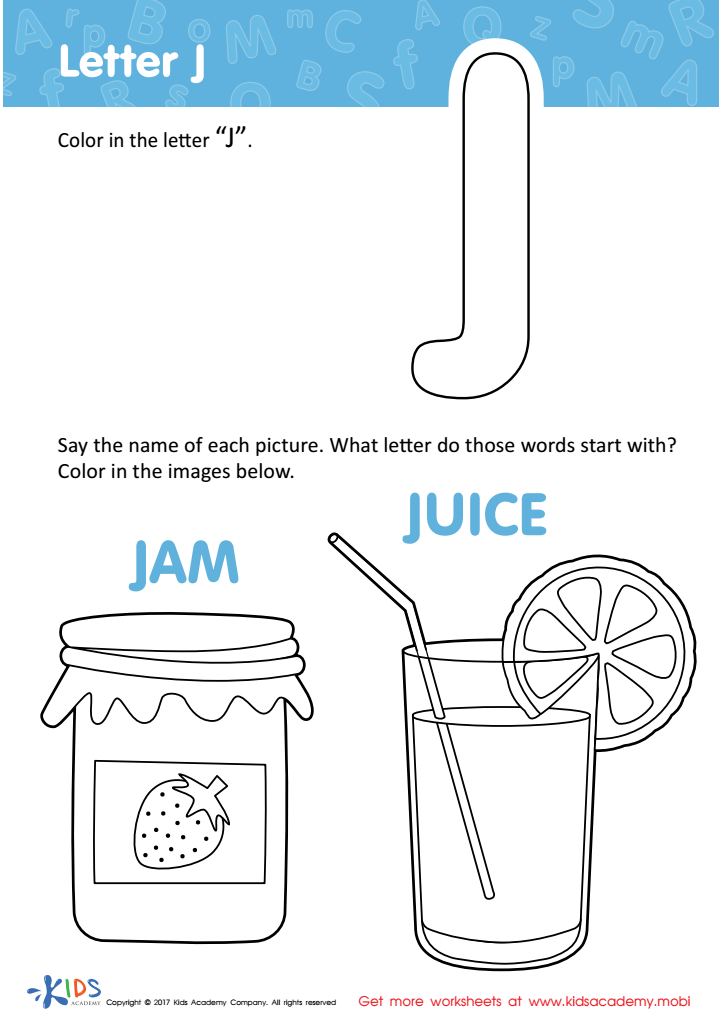
Letter J Coloring Sheet
Practice the letter 'J' with your little one with this fun coloring page! Pictures of jar, juice, jam and jelly make it an enjoyable experience for kids. Learning the letter and coloring is fun for even the youngest learners.
Download (PDF)
 Assign to My Students
Assign to My Students
Letter J Coloring Sheet
Worksheet
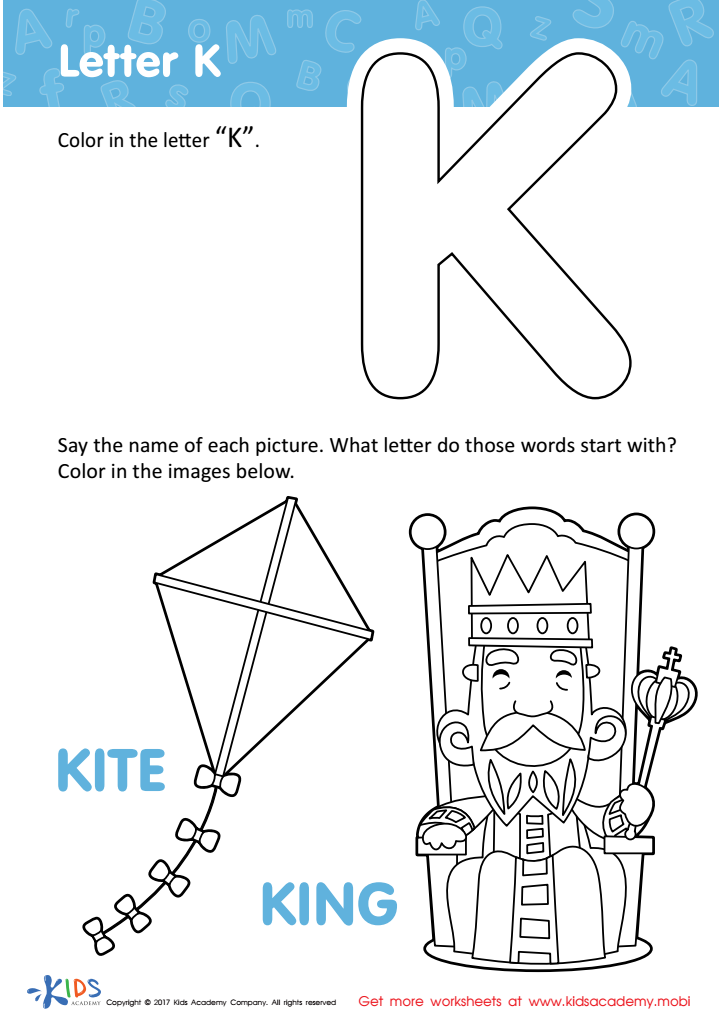
Letter K Coloring Sheet
This letter K coloring page captivates your child's creativity while learning the letter! Showcasing a king and kite, common words for their age group, it's sure to spark their imagination.
Download (PDF)
Assign to My Students
Assign to My Students
Letter K Coloring Sheet
Worksheet
Join Kids Academy for Free
Who is primarily going to use this learning content?





Understanding alphabetical order is a fundamental skill that promotes literacy and organizational abilities in young learners. It serves as a building block for reading and writing, allowing children to access information efficiently. When children grasp how the alphabet is structured, they can improve their vocabulary and comprehension by locating words, either in dictionaries or glossaries of books. This knowledge fosters independence in learning and reading.
Moreover, organizing items in alphabetical order can enhance critical thinking skills. For instance, when children group words or objects, they learn to categorize information, making it easier to retrieve later. This skill spills over into other subjects; for example, it aids in math when organizing numbers or data.
From a parental perspective, knowing the alphabet encourages involvement in children’s education. Parents can reinforce these concepts at home through fun activities like alphabetizing books or games, fostering a lasting interest in literacy. Teachers also benefit by using alphabetical order in classroom management, promoting a structured learning environment. Ultimately, instilling this understanding cultivates essential life skills that support overall academic success and encourages children to become engaged learners both inside and outside the classroom.







