Lowercase identification Letter Recognition Worksheets
5 filtered results
-
From - To
Enhance your child's literacy skills with our engaging lowercase identification letter recognition worksheets! Designed for early learners, these worksheets provide a fun and interactive way to help children recognize and distinguish lowercase letters. Each worksheet features colorful illustrations and varied activities that keep students motivated as they practice identifying, tracing, and writing. Perfect for classrooms or home learning, our resources are tailored to meet the developmental needs of young children. Boost your child's confidence in reading and writing with our comprehensive worksheets, ensuring they build a strong foundation in alphabet recognition. Start exploring today for an exciting learning experience!
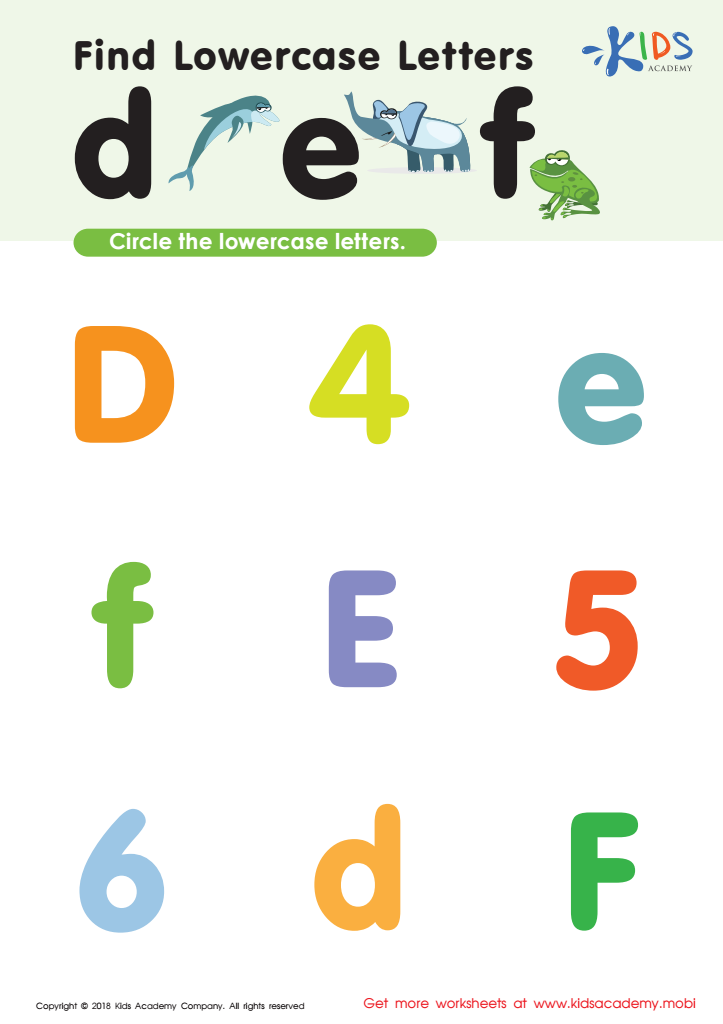
Find Lowercase Letters d e f Worksheet
 Assign to My Students
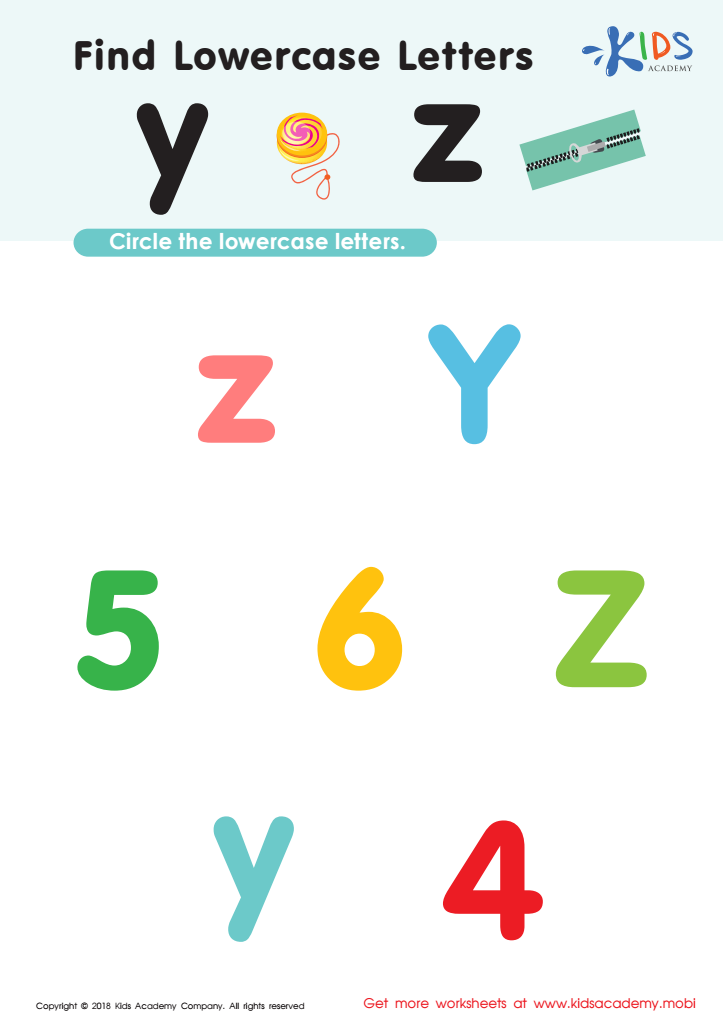
Find Lowercase Letters y z Worksheet
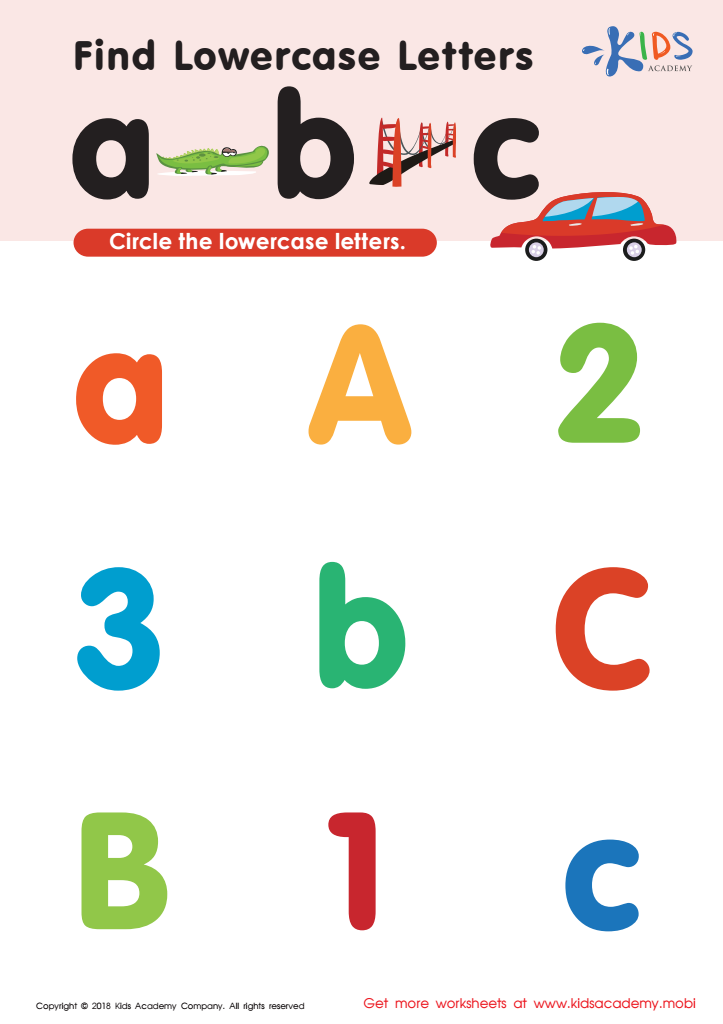
Find lowercase letters a b c Worksheet
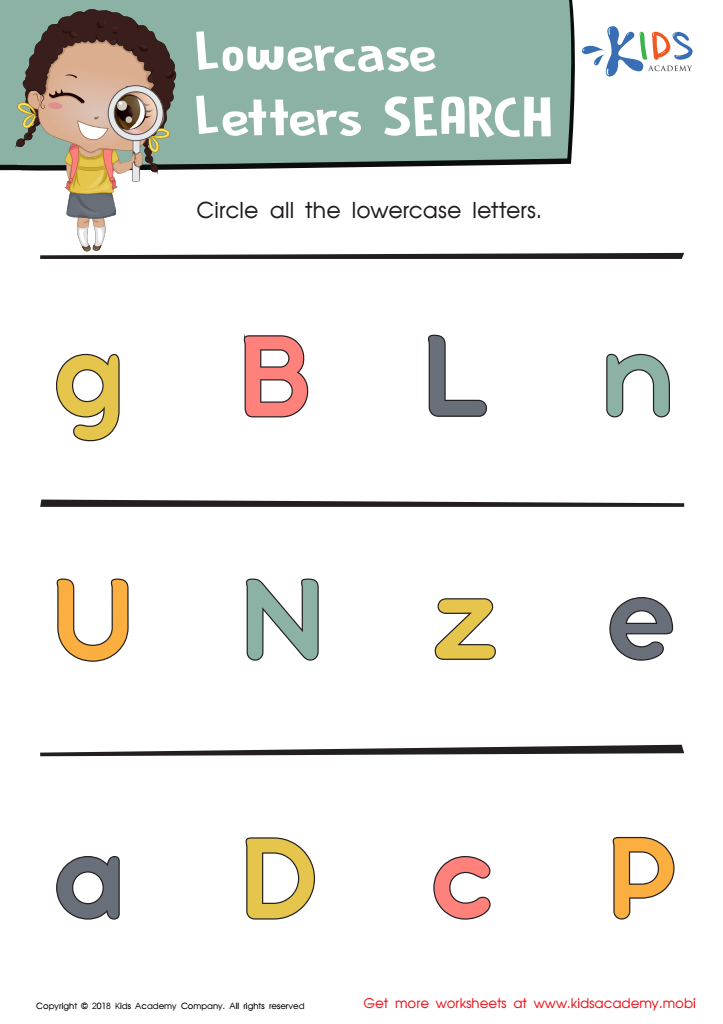
Lowercase Letters Search: Assessment Worksheet
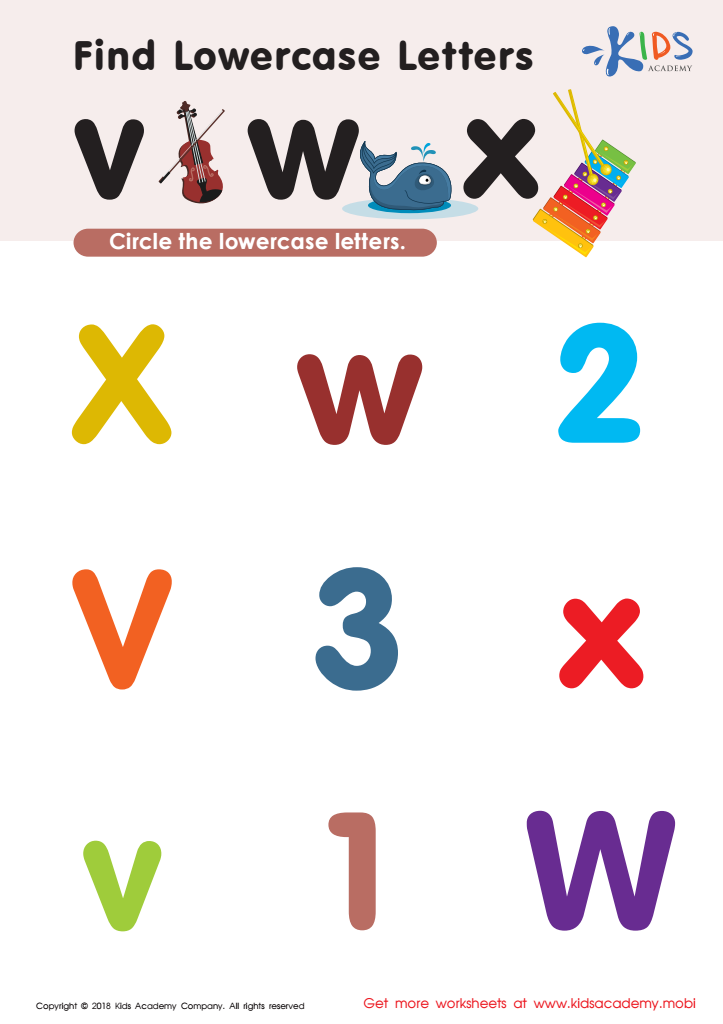
Find Lowercase Letters v w x Worksheet








Lowercase letter recognition is a fundamental skill for young learners and plays a critical role in their overall literacy development. It is essential for parents and teachers to prioritize this area of learning because it directly impacts a child's ability to read and write effectively. Lowercase letters are predominant in children's books and everyday texts, making their recognition crucial for reading fluency and comprehension.
When children can identify and distinguish between lowercase letters, they become more confident in decoding words, which enhances their reading skills. This recognition also supports writing development, allowing them to formulate words correctly, as most writing occurs in lowercase. Furthermore, research shows that early mastery of lowercase letter recognition is linked to better spelling and overall academic success in language arts.
Encouraging lowercase letter recognition in fun and engaging ways—such as through games, songs, and interactive activities—can stimulate a child’s interest in reading. Parents and teachers can work together to foster a supportive environment that nurtures literacy skills, making it easier for children to become avid readers and effective communicators. Ultimately, the development of lowercase letter recognition lays the groundwork for a lifetime of learning and academic achievement.







