Letter recognition Lowercase/Small Letters Worksheets
11 filtered results
-
From - To
Discover our engaging lowercase letter recognition worksheets designed to help young learners master the alphabet! Our resources provide children with the opportunity to identify, trace, and differentiate between small letters, enhancing their reading and writing skills. Each worksheet features vibrant illustrations and interactive activities that captivate young minds while making learning fun. Perfect for preschool and early elementary students, these printable worksheets encourage hands-on practice, ensuring kids build a solid foundation for their literacy journey. Empower your child's learning experience with our carefully crafted letter recognition resources that foster confidence and curiosity in the world of letters! Start exploring today!
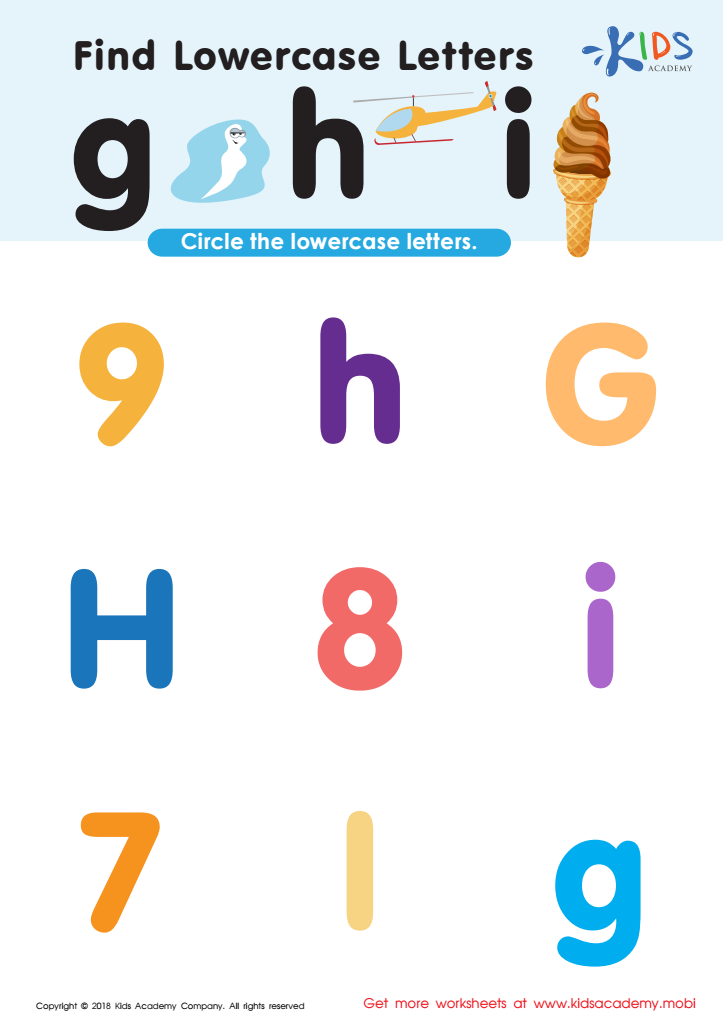
Find Lowercase Letters g h i Worksheet
 Assign to My Students
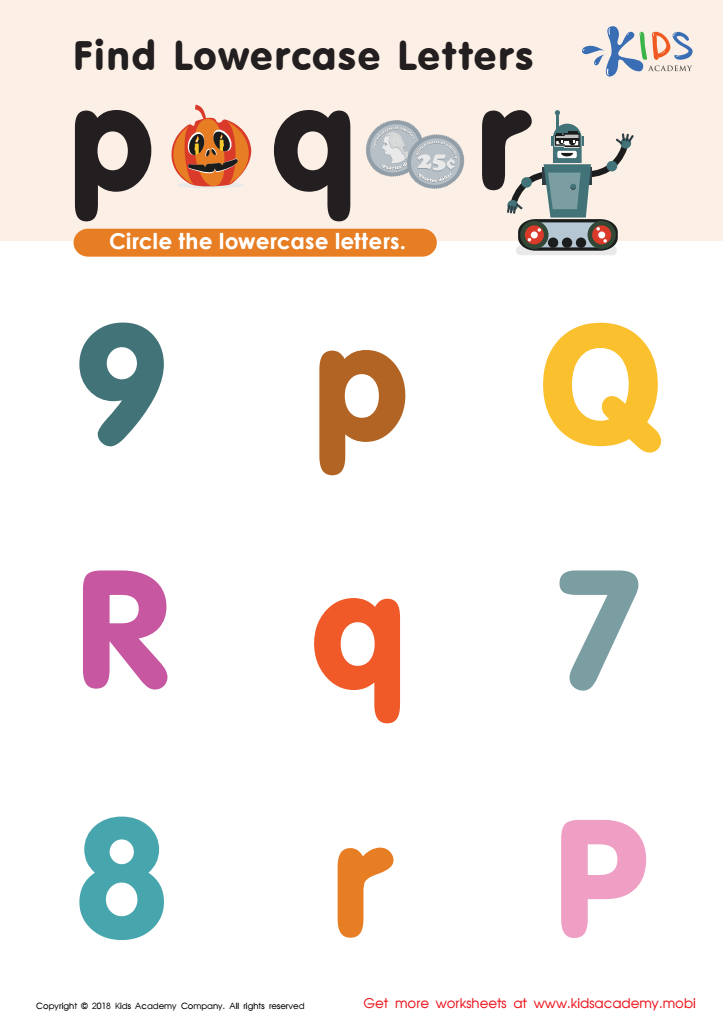
Find lowercase Letters p q r Worksheet
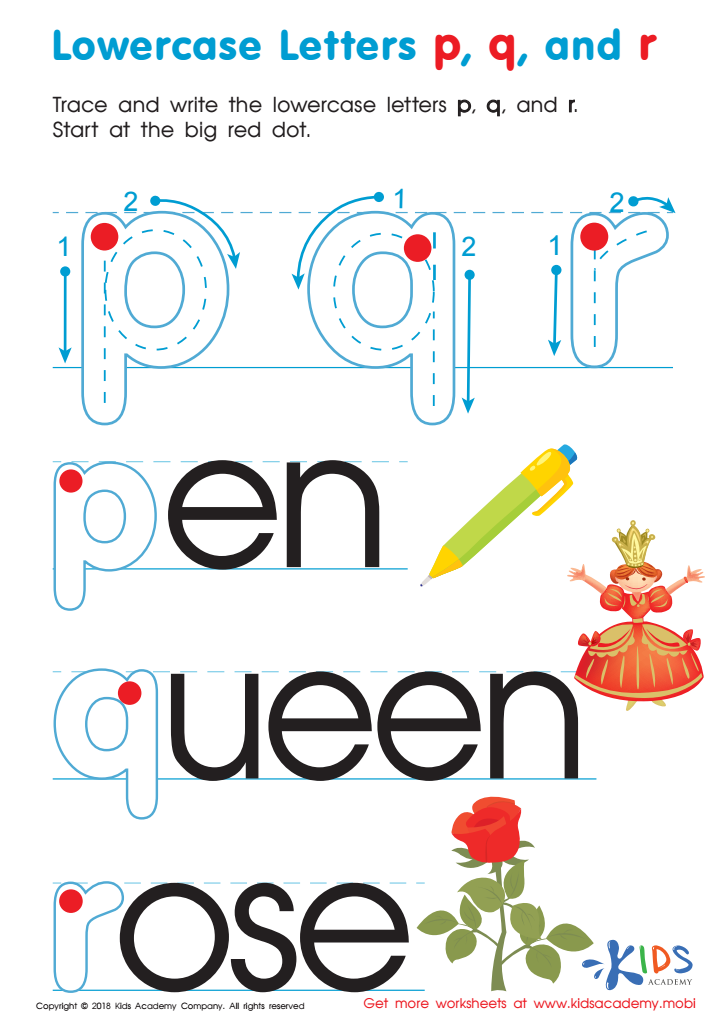
Lowercase Letters p q r Worksheet
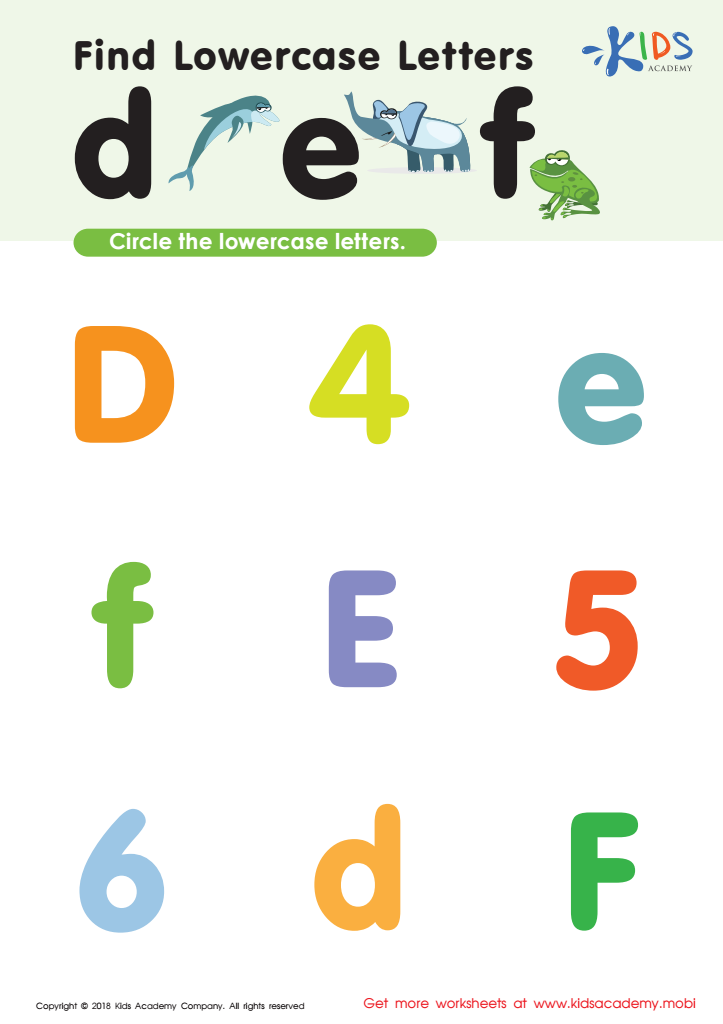
Find Lowercase Letters d e f Worksheet
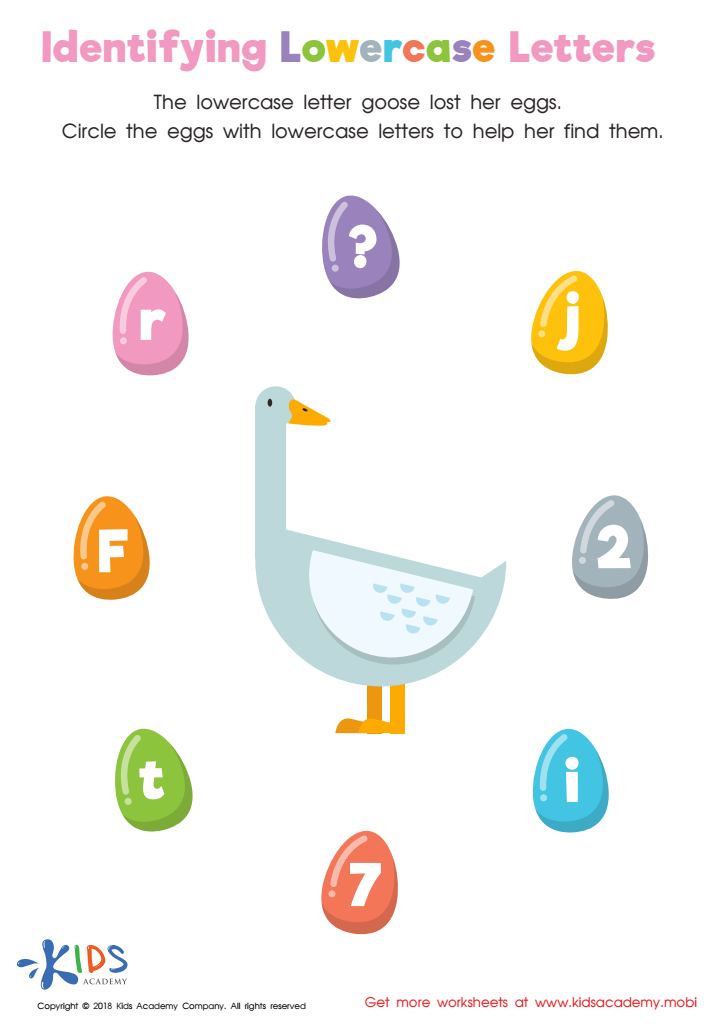
Identifying Lowercase Letters Worksheet
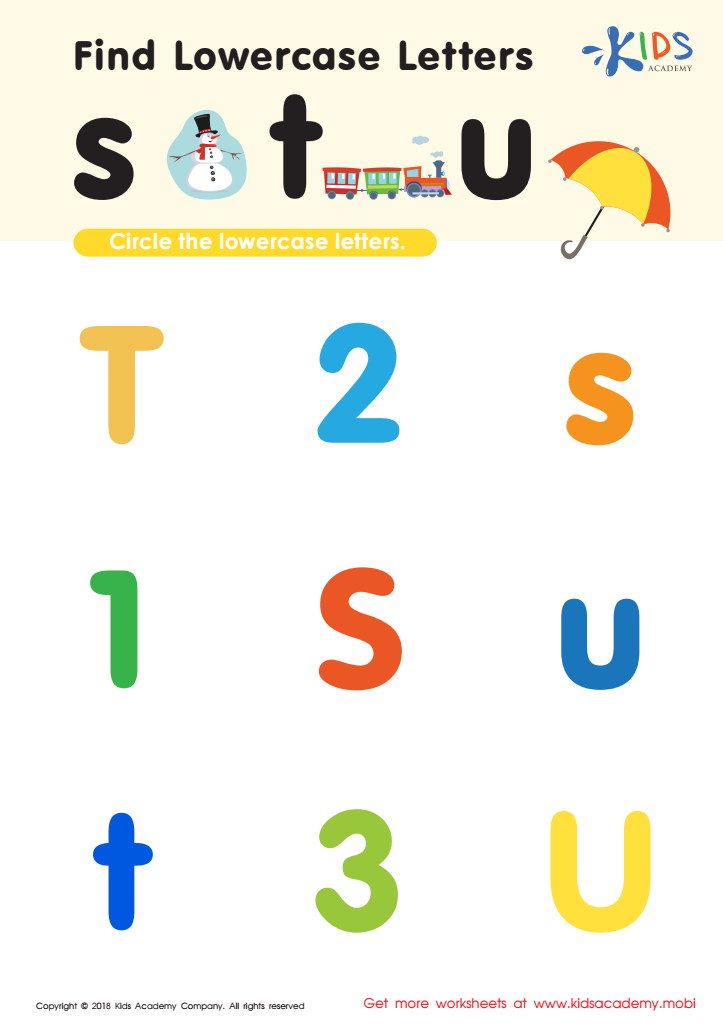
Find lowercase Letters s t u Worksheet
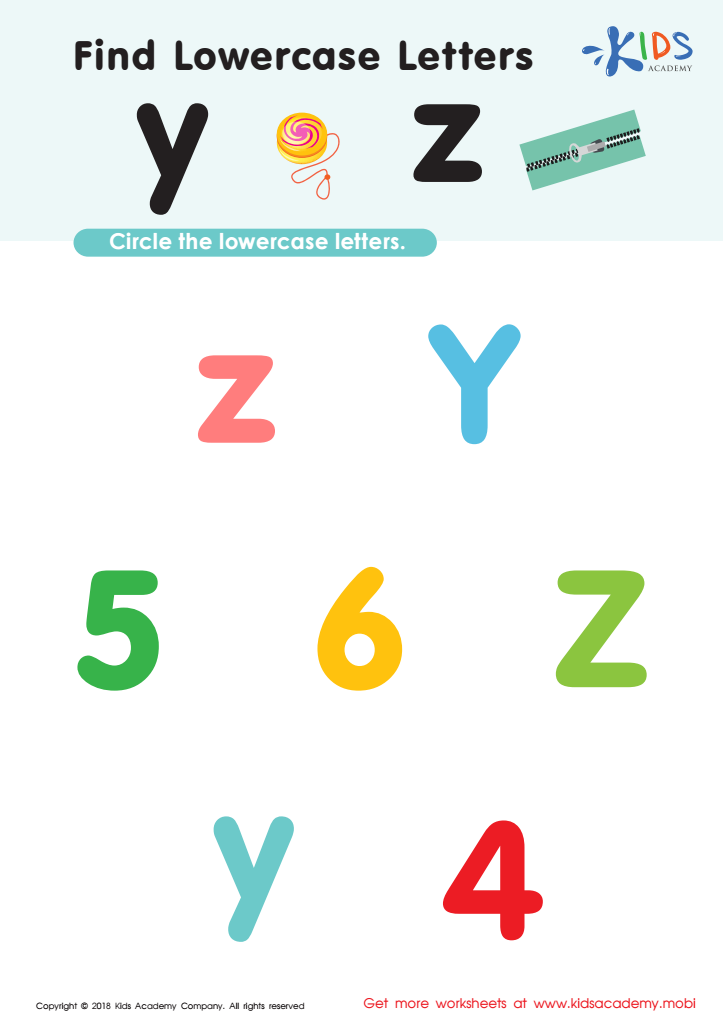
Find Lowercase Letters y z Worksheet
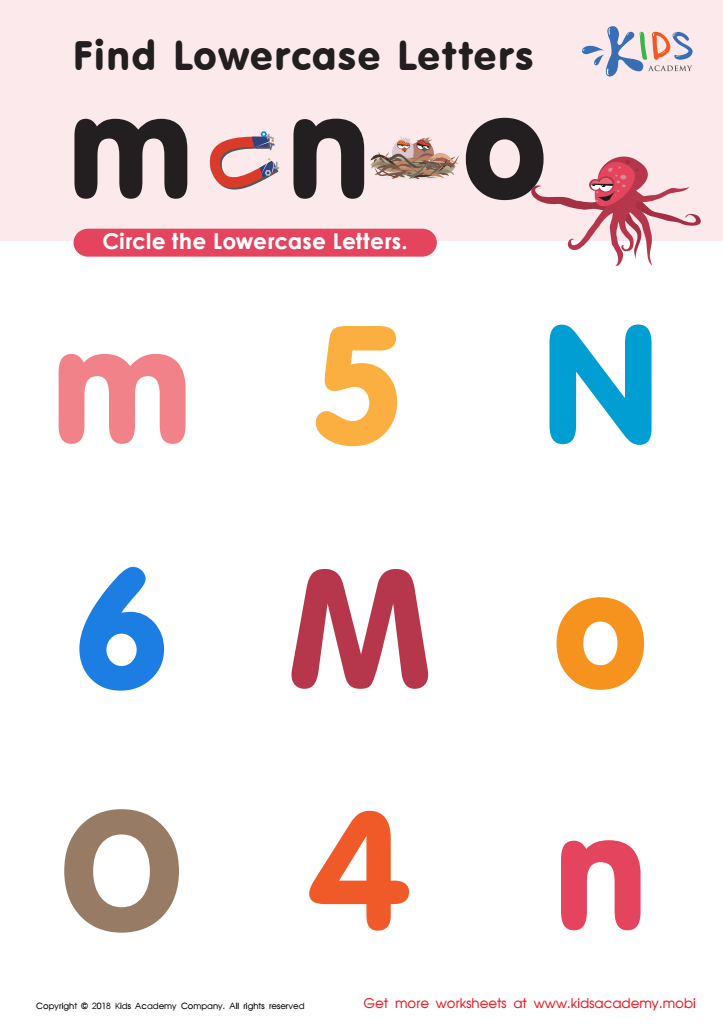
Find Lowercase Letters m n o Worksheet

Find lowercase letters a b c Worksheet
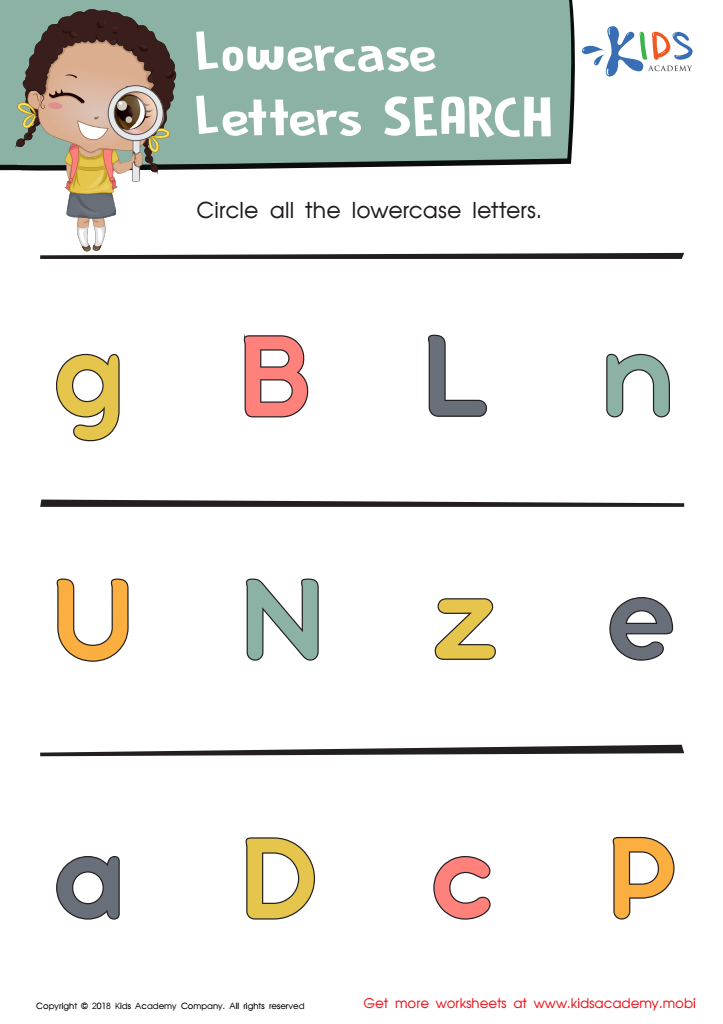
Lowercase Letters Search: Assessment Worksheet

Find Lowercase Letters v w x Worksheet


Letter recognition, particularly lowercase or small letters, is a foundational skill in early literacy development. It's essential for several reasons that both parents and teachers should prioritize this aspect of learning.
Firstly, lowercase letters are predominantly used in written communication. Children encounter these letters more frequently in reading materials, such as books, signs, and labels. Recognizing these letters equips children with the ability to decode words effectively, fostering reading fluency and comprehension.
Secondly, understanding lowercase letters supports handwriting development. As children learn to form these letters, they enhance their fine motor skills and gain confidence in their writing abilities. This is critical not just academically, but also for expressing their thoughts and ideas.
Lastly, letter recognition promotes a love for reading and learning. Engaging children in activities that involve identifying and using lowercase letters can make learning fun. When children see their own names or familiar words in lowercase letters, they feel a sense of ownership, encouraging further exploration.
In conclusion, fostering lowercase letter recognition is vital in early education, preparing children for academic success, enhancing their writing skills, and promoting positive attitudes towards literacy activities. Parents and teachers should actively support this critical learning phase.