Letter identification Phonics Worksheets
3 filtered results
-
From - To
Explore our engaging Letter Identification Phonics Worksheets designed to help young learners master the alphabet. These worksheets provide a fun and interactive approach to recognizing letters in both uppercase and lowercase forms. With various activities such as tracing, matching, and coloring, children will strengthen their letter identification skills while enjoying the learning process. Perfect for preschool and early grade classrooms, these printable resources cater to diverse learning styles, making them an essential tool for teachers and parents alike. Enhance your child's phonics skills and boost their confidence in reading with our comprehensive collection of letter identification worksheets today!
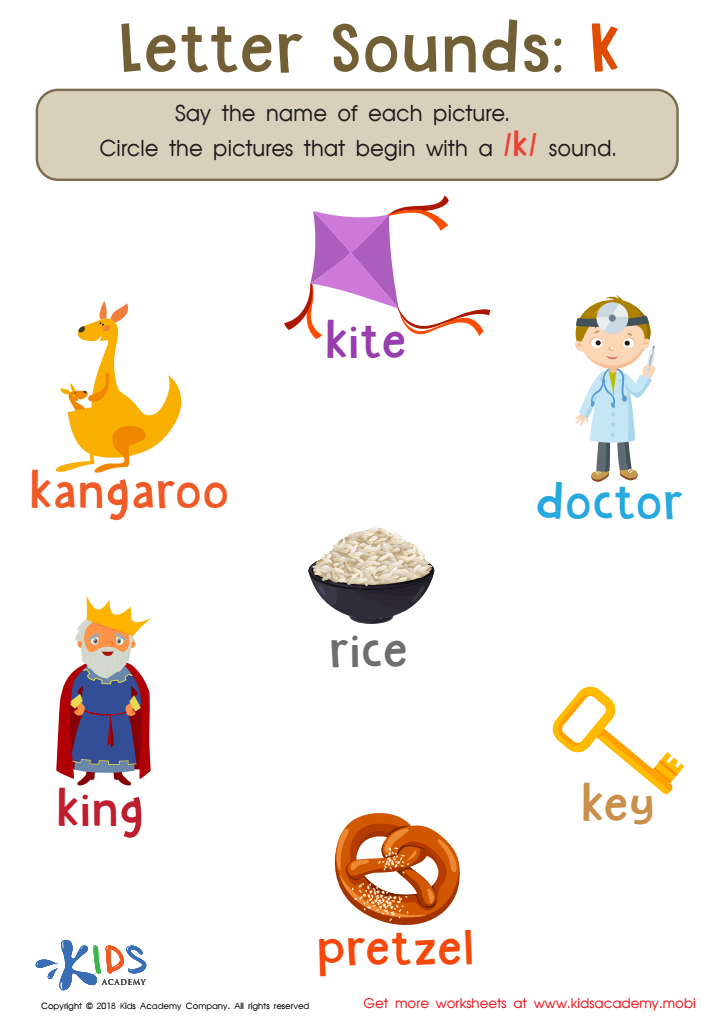
Letter K Sounds Worksheet
 Assign to My Students
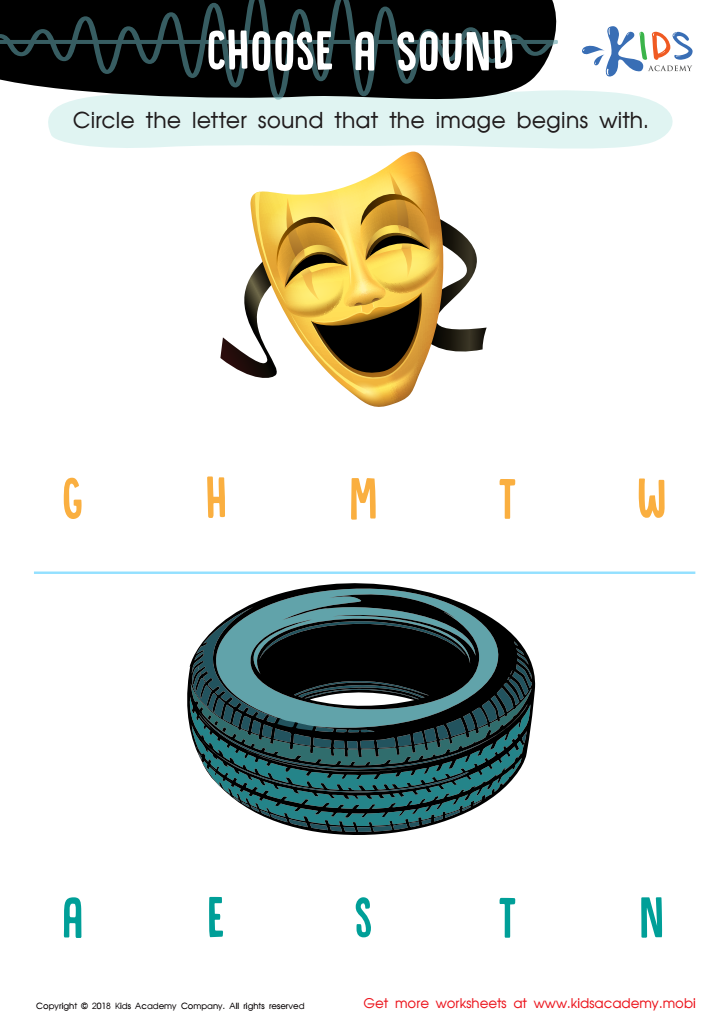
Choose a Sound Worksheet
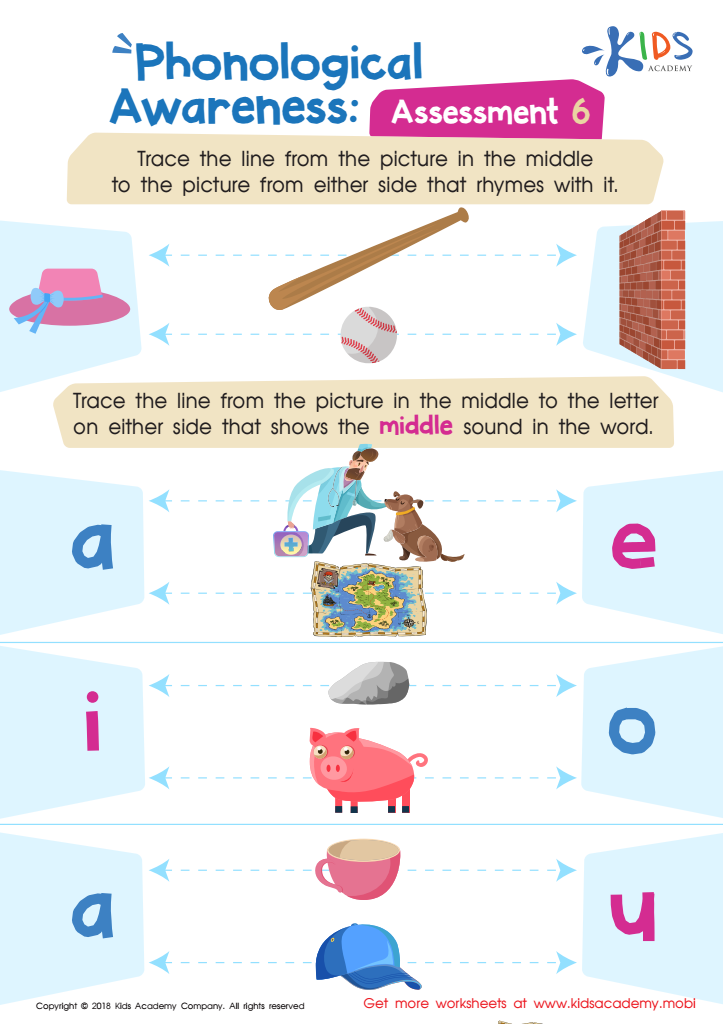
Phonological Awareness: Assessment 6 Worksheet








Letter identification and phonics play a crucial role in early literacy development, making it essential for parents and teachers to prioritize these skills. Firstly, letter identification serves as the foundation for reading and writing. When children recognize letters and their associated sounds, they gain the ability to decode words, which is a vital skill for reading fluently.
Phonics, which links sounds with letters and spellings, enhances children's understanding of how words are constructed. This understanding helps them become proficient readers and encourages confident communication. Moreover, a strong grasp of phonics can significantly reduce reading difficulties later in their educational journey, setting the stage for academic success.
Teachers play a vital role in providing effective phonics instruction, utilizing engaging methods to help students master these skills. When teachers and parents collaborate to support letter identification and phonics learning, children receive consistent reinforcement at home and in school, which accelerates their progress.
Lastly, supporting early literacy not only fosters intellectual growth but also boosts children's self-esteem and cognitive development. Increased reading ability opens doors to greater learning opportunities, enriching the child's overall educational experience. Thus, prioritizing letter identification and phonics is essential for laying the groundwork for lifelong literacy skills.







