
Rhyme recognition Phonics Worksheets
5 filtered results
Difficulty Level
Grade
Age
-
From - To
Subject
Activity
Standards
Enhance your child's phonics skills with our engaging Rhyme Recognition Phonics Worksheets! Designed for early learners, these worksheets offer fun activities that help children identify and produce rhyming words, an essential skill in reading proficiency. Through playful exercises, kids will experiment with sounds, improving their auditory discrimination and vocabulary. Each worksheet encourages creativity and critical thinking while providing essential practice in a vibrant and interactive format. Ideal for parents and educators, these resources foster a love for reading and language from an early age. Download our free Rhyme Recognition Phonics Worksheets today and watch your child’s confidence soar!
Favorites
With answer key
Interactive
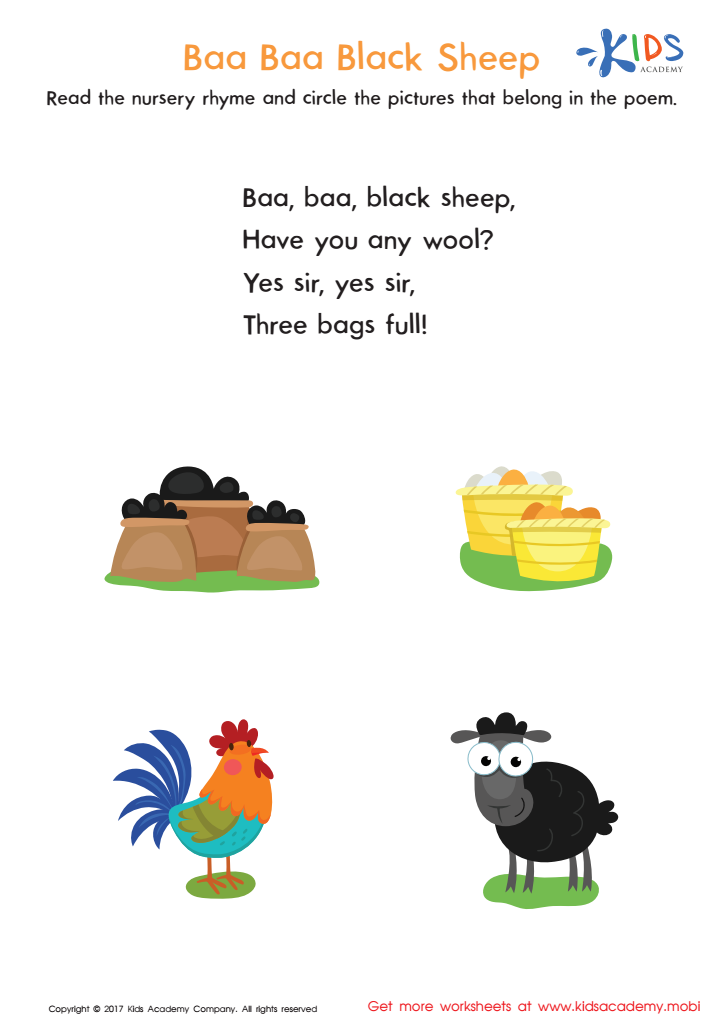
Baa Baa Black Sheep Printable
Jumpstart your child's reading skills with this printable Baa Baa Black Sheep worksheet! Recite the lines with them, then have them select the pictures associated with the poem to test comprehension. Fun and educational!
 Assign to My Students
Baa Baa Black Sheep Printable
Worksheet
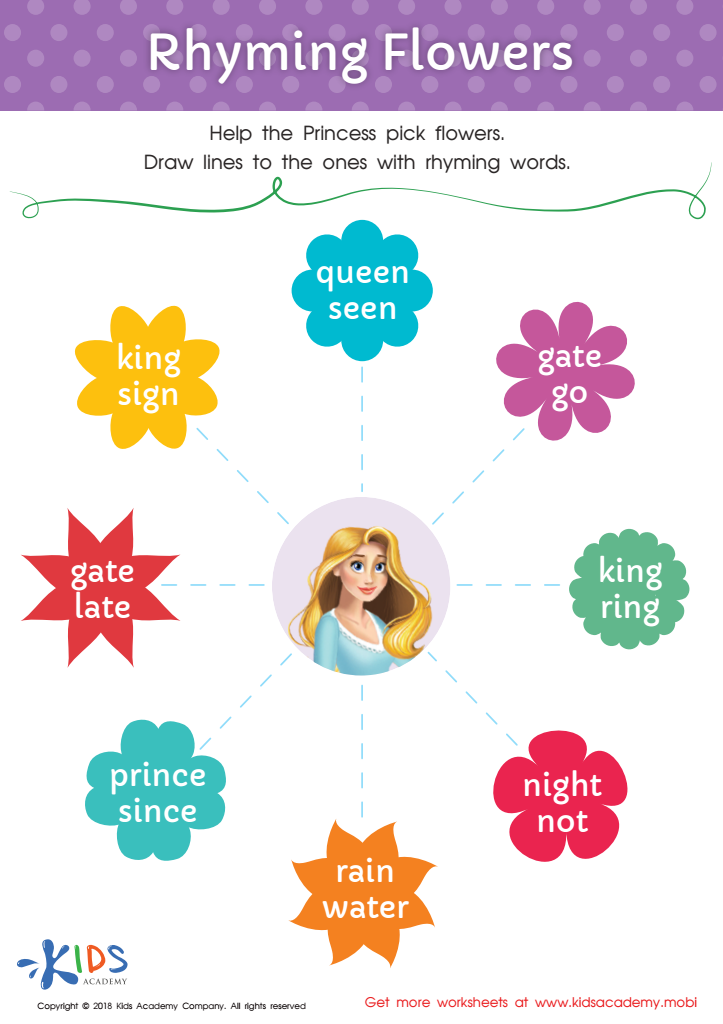
Rhyming Flowers Worksheet
Recognizing rhyming words boosts phonological awareness. With this skill, students can identify similar sounds in words and predict new words more accurately. This worksheet provides practice and is ideal for the reading classroom. Download and find the rhyming words! (80 words)
Rhyming Flowers Worksheet
Worksheet
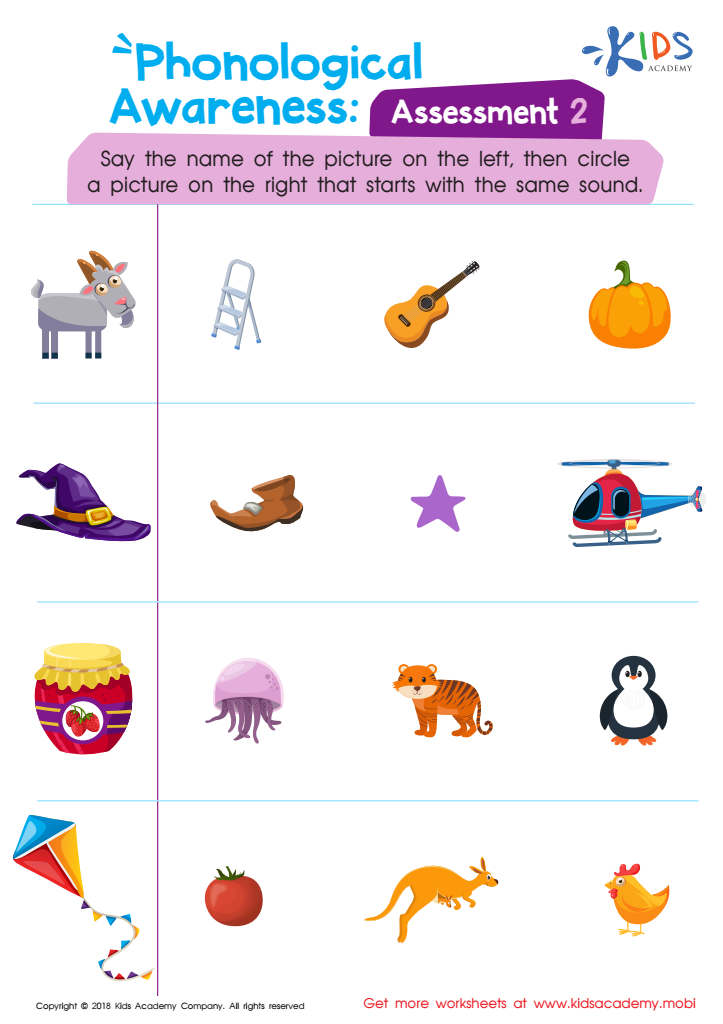
Phonological Awareness: Assessment 2 Worksheet
Test your child’s phonological awareness and reading readiness with this charming worksheet! Perfect for K-1, it assesses if they can name a picture aloud, listening for the starting sound and matching it to another word. Watch as they think deeply and listen to the sounds as they name each picture. Determine if your child is ready to sound out words or needs more phonics practice.
Phonological Awareness: Assessment 2 Worksheet
Worksheet
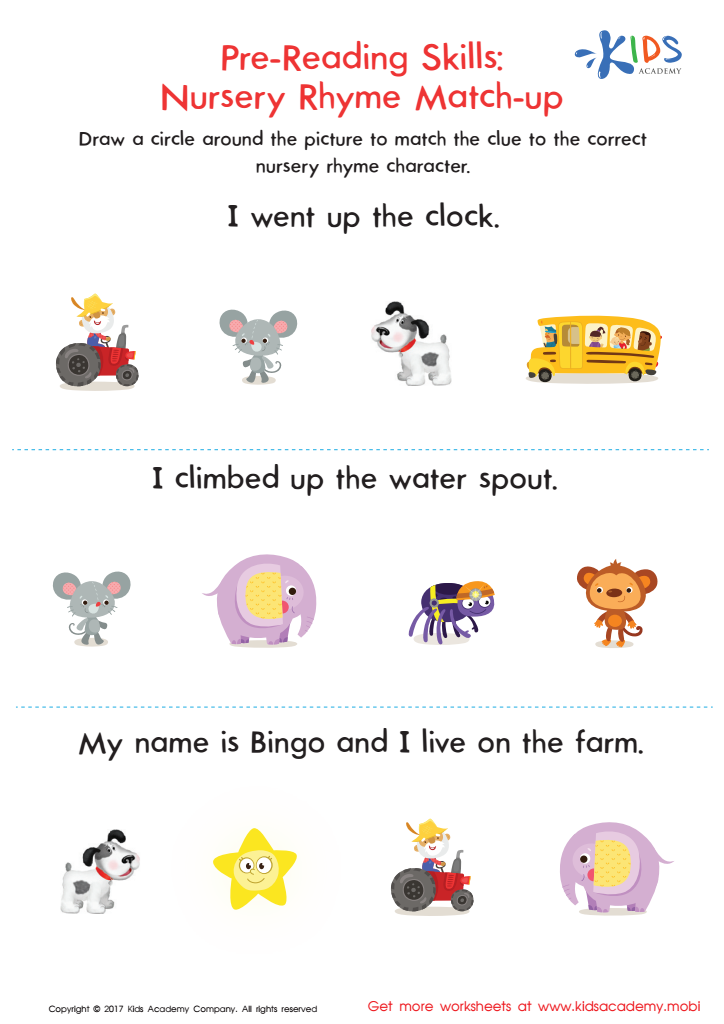
Nursery Rhyme Match–Up Worksheet
This worksheet helps kids build pre-reading skills using stories they know and love! By connecting with prior knowledge, kids can develop ideas about characters and set the stage for reading strategies.
Nursery Rhyme Match–Up Worksheet
Worksheet
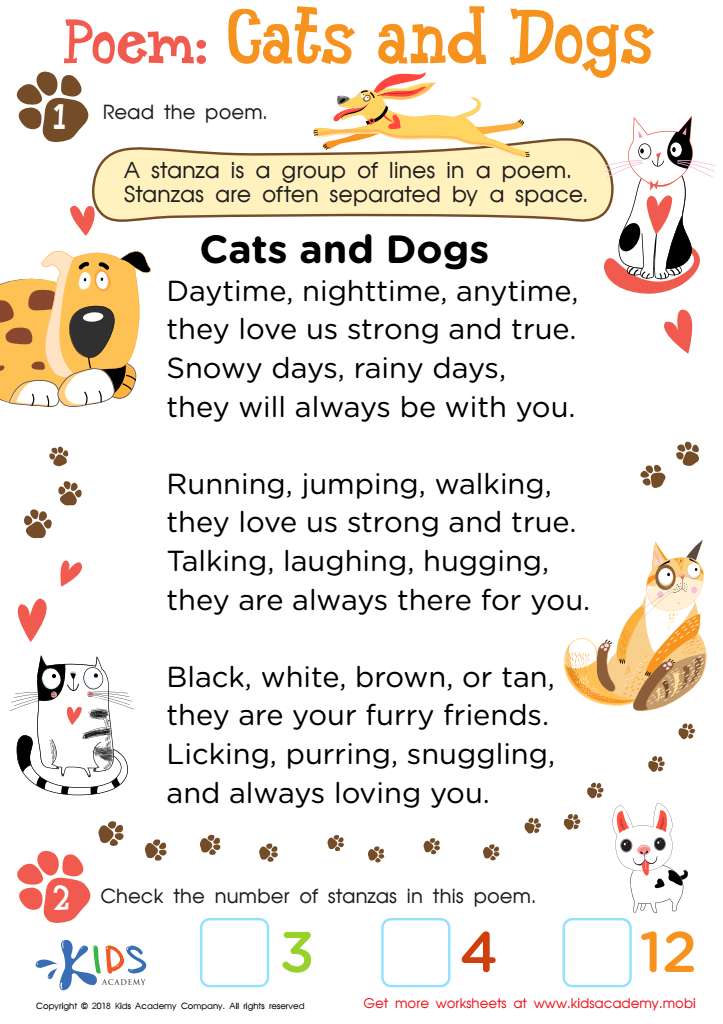
Poem: Cats and Dogs Worksheet
Read the poem to your child and point out where each stanza ends. Ask if they know what a stanza is (if not, explain it's a group of lines in a poem). Help them answer the question at the bottom of the printout. This simple, sweet poem about cats is easy for your child to relate to.
Poem: Cats and Dogs Worksheet
Worksheet
Join Kids Academy for Free
Who is primarily going to use this learning content?








Rhyme recognition phonics is a crucial component of early literacy development, and understanding its importance can greatly benefit parents and teachers. Rhyme recognition helps children identify and produce rhyming words, which is essential for developing phonemic awareness—the ability to hear, identify, and manipulate individual sounds in spoken words. This foundational skill directly correlates with reading proficiency.
When children engage with rhymes, they become more attuned to the sounds and structures of language, enhancing their decoding abilities. Recognizing the patterns in rhymes also fosters a love for language and promotes auditory discrimination. As children learn to associate sounds with letters, they develop a stronger grasp of phonics, making it easier to read and write.
Moreover, rhyme recognition can improve vocabulary and comprehension skills. Exposure to varied vocabulary through rhymes enriches a child's linguistic repertoire, making them more adept at understanding and using language effectively.
Parents and teachers play a key role in incorporating rhymes through songs, stories, and playful activities. By prioritizing rhyme recognition phonics, they not only contribute to academic success but also cultivate a lifelong appreciation for reading and learning, setting the stage for future educational achievements.







