Sound identification Phonics Worksheets
4 filtered results
-
From - To
Enhance your child's reading skills with our engaging Sound Identification Phonics Worksheets designed for early learners. These interactive resources help children connect sounds to letters, fostering phonemic awareness essential for effective reading. Packed with fun activities, our worksheets encourage kids to identify beginning sounds, blend phonemes, and practice sound recognition at their own pace. Perfect for preschool and kindergarten, each printable worksheet reinforces crucial literacy skills, making learning both enjoyable and effective. Explore our collection today to create a strong foundation for your child's reading journey, supporting them in developing confidence and a love for learning!
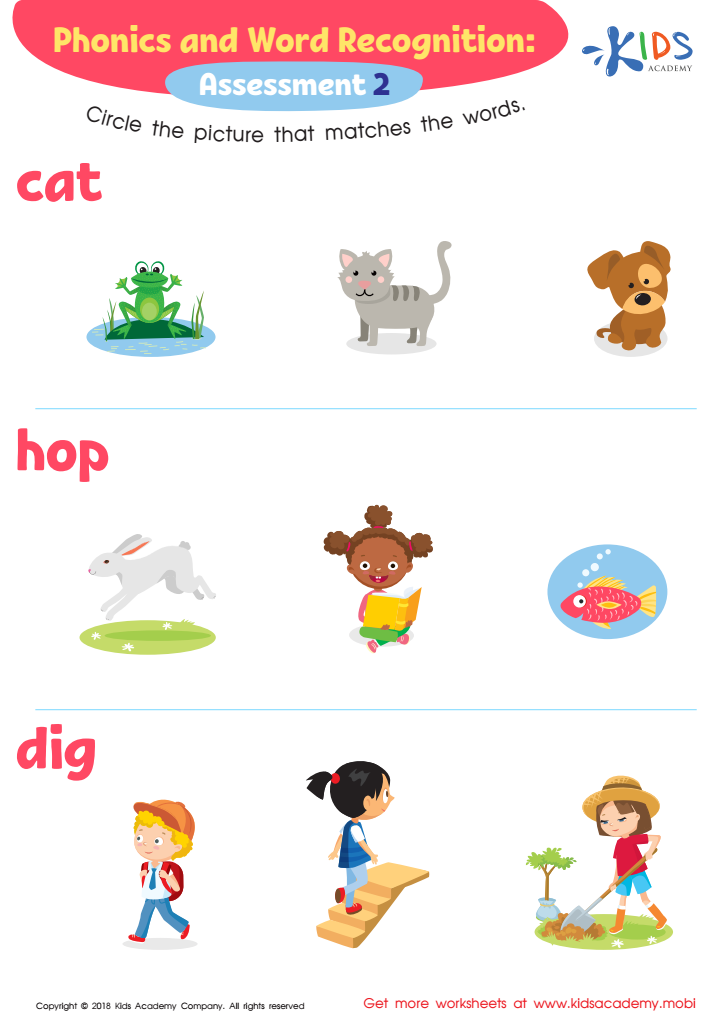
Phonological Awareness: Assessment 2 ELA Worksheet
 Assign to My Students
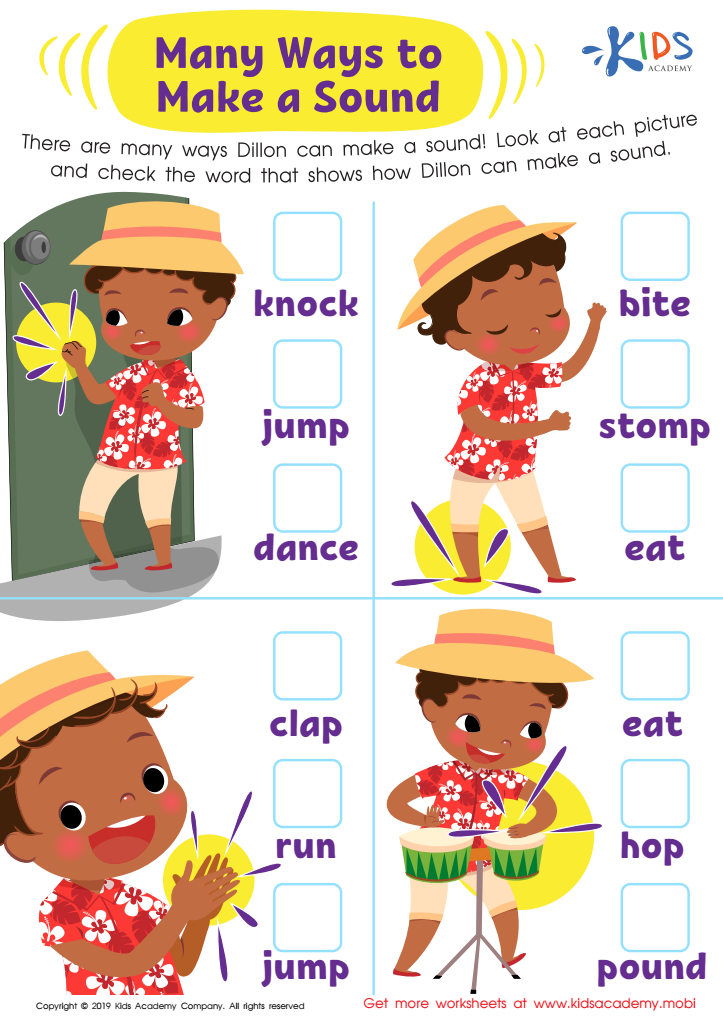
Many Ways to Make a Sound Worksheet
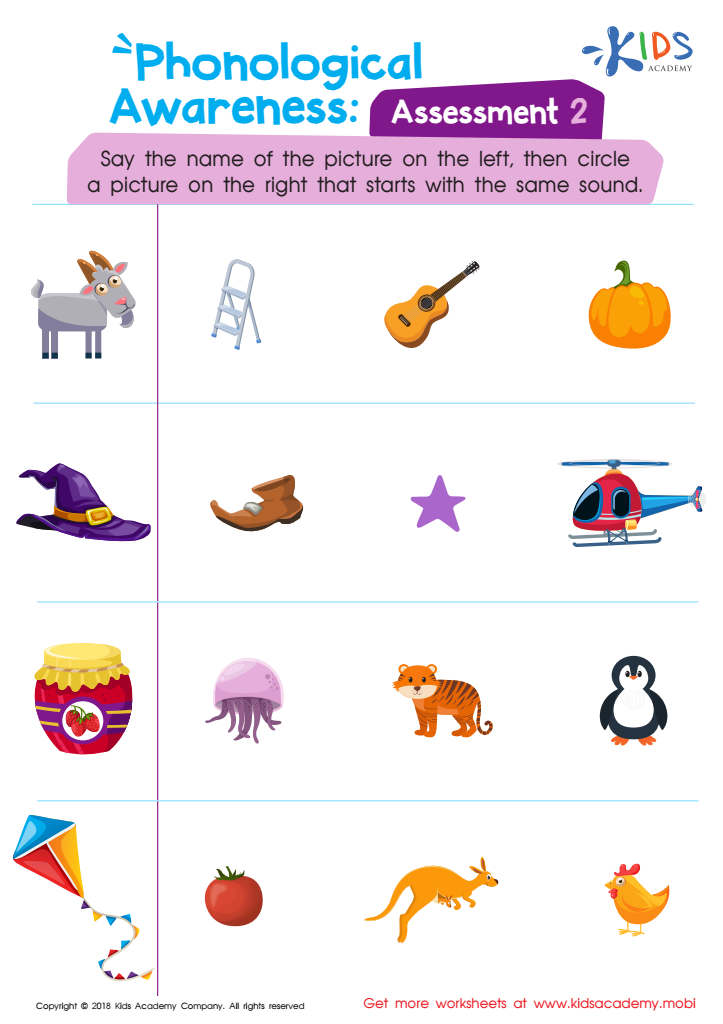
Phonological Awareness: Assessment 2 Worksheet
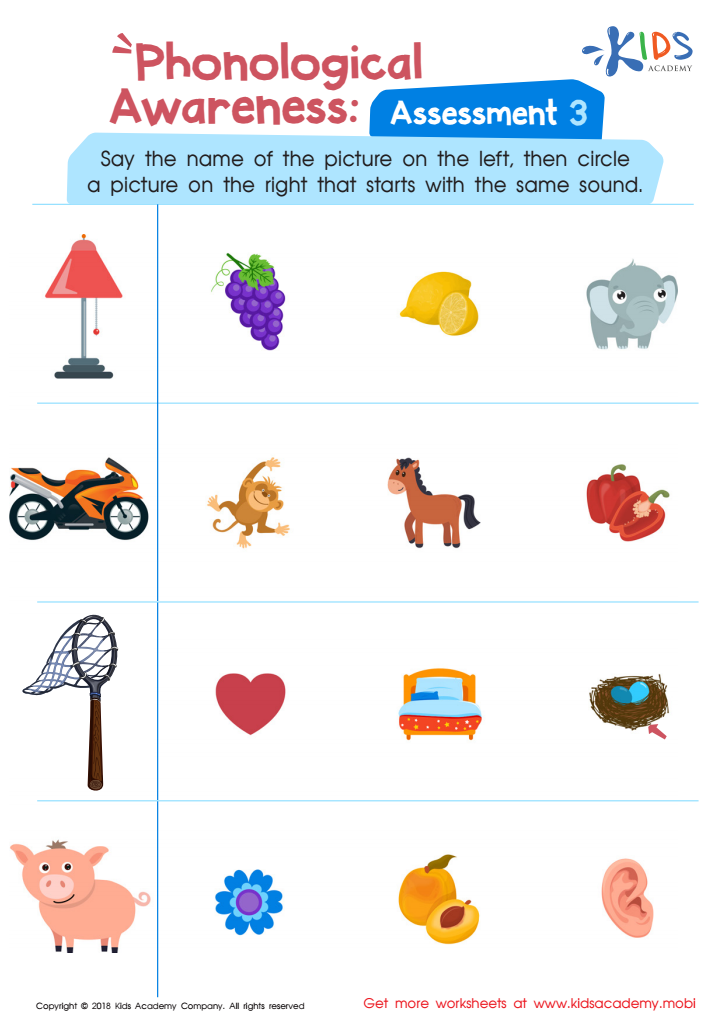
Phonological Awareness: Assessment 3 Worksheet








Sound identification phonics is crucial for early literacy development, making it essential for both parents and teachers. Understanding how letters represent sounds fosters strong decoding skills, enabling children to read fluently. When children grasp phonics principles, they become competent readers who can tackle unfamiliar words independently, which builds confidence and a love for reading.
Additionally, sound identification phonics enhances comprehension. When children can decode words easily, they can focus on understanding the meaning of the text rather than struggling with pronunciation. This sets the foundation for academic success across all subjects, as reading proficiency is vital in a variety of disciplines.
Moreover, a solid grounding in phonics helps support language development. Children learn to connect spoken language to written words, enriching their vocabulary and aiding in effective communication skills.
For teachers, implementing sound identification phonics in instruction aligns with educational standards and promotes a structured approach to teaching reading. Meanwhile, parents can reinforce these skills at home through engaging, fun activities. Encouraging sound identification phonics is a cooperative effort that can lead to a lifetime of literacy and learning, making it an essential focus for both teachers and parents.







