
Letter formation Tracing Letters Worksheets
4 filtered results
Difficulty Level
Grade
Age
-
From - To
Subject
Activity
Standards
Discover endless learning fun with our "Letter Formation Tracing Letters Worksheets" at Kids Academy. Perfect for early childhood education, these worksheets help children master essential handwriting skills and alphabet recognition through guided letter tracing activities. Each worksheet ensures engaging practice, increasing children’s confidence and supporting foundational literacy development. Meticulously designed for young learners, these printables combine play with education as kids trace uppercase and lowercase letters with accuracy. Ideal for at-home practice or classroom use, our tracing letter worksheets foster fine motor skills, hand-eye coordination, and spark a lifelong love for writing. Explore more to give your child a head start today!
Favorites
With answer key
Interactive
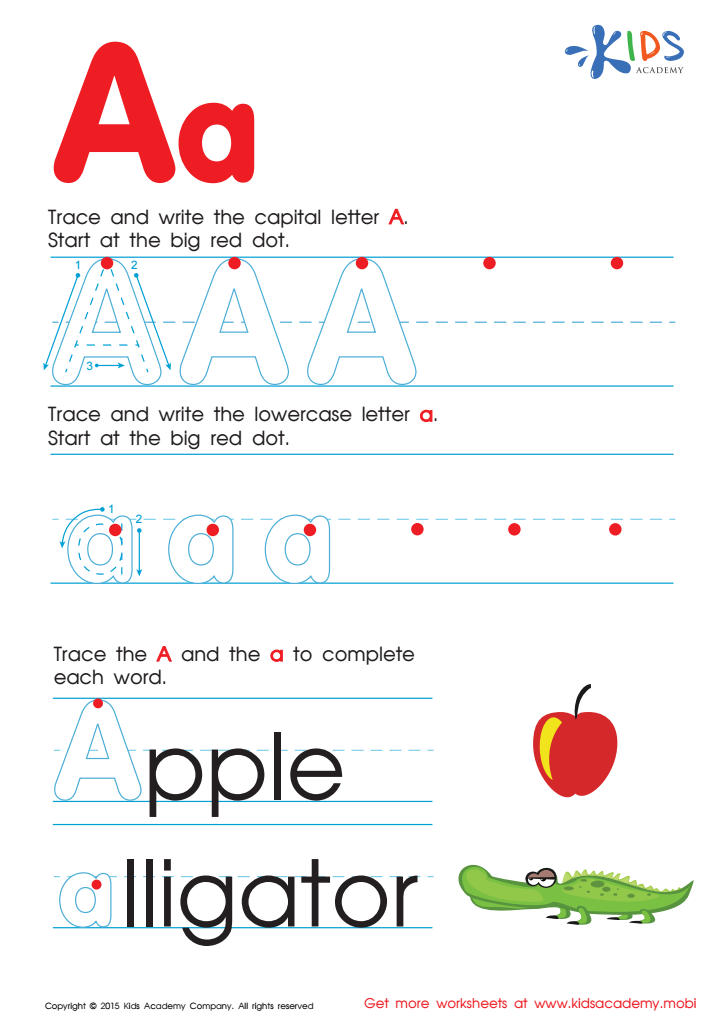
Letter A Tracing Page
Trace and write the letter "A"! Start with the big red dot, then do the capital and lowercase versions. Then write it again with two words - apple and alligator. Download more tracing worksheets at Kids Academy.
 Assign to My Students
Letter A Tracing Page
Worksheet
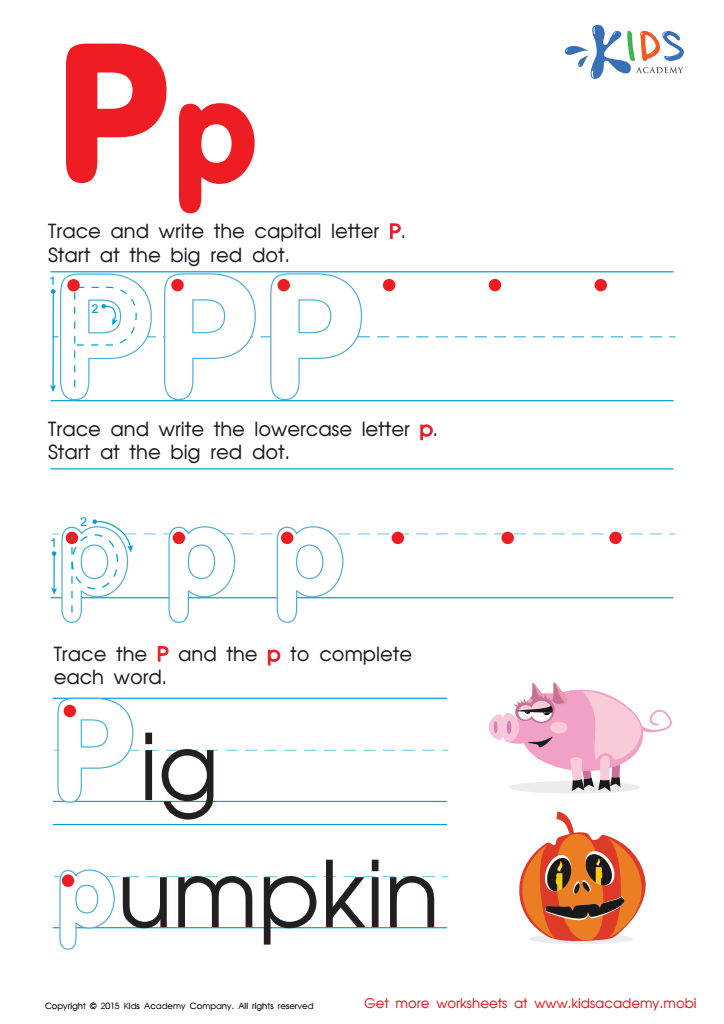
Letter P Tracing Page
Trace the lines from the red dot to learn to write "P"! Then practice this letter with the fun activities: complete the word "Pig" and "Pumpkin". Check out Kids Academy to get more free ABC worksheets.
Letter P Tracing Page
Worksheet
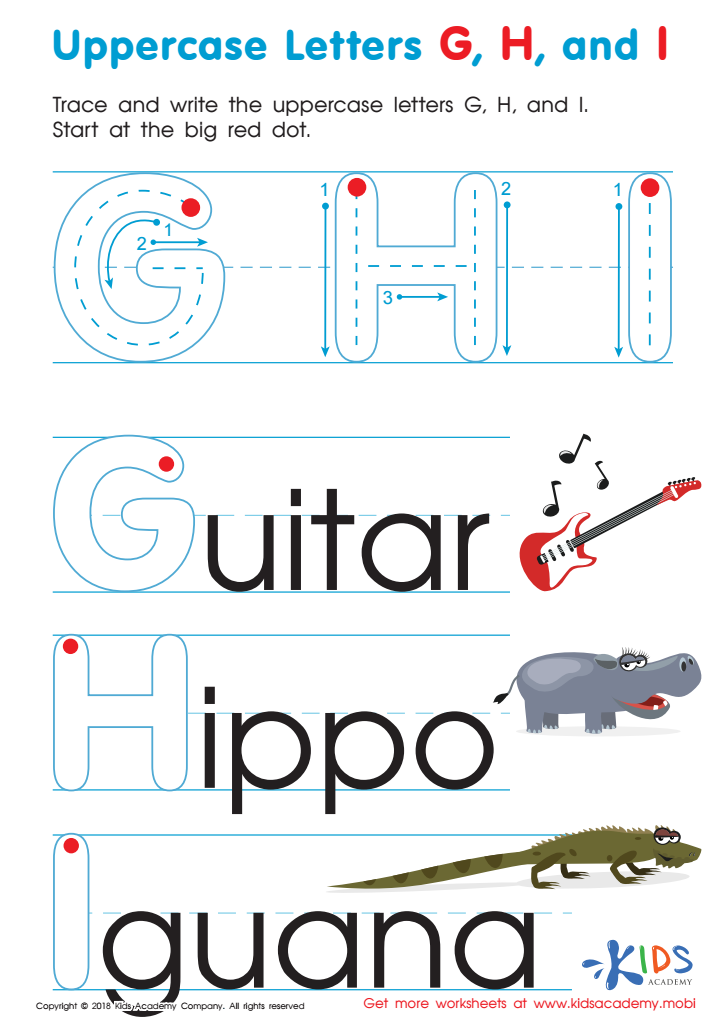
Uppercase Letters G, H, and I Worksheet
Trace each letter with the big red dot, connecting them to sounds as you go. Then write G to I. Congrats on a job well done! Rock on with a cute hippo and iguana while working on this delightful kindergarten worksheet!
Uppercase Letters G, H, and I Worksheet
Worksheet
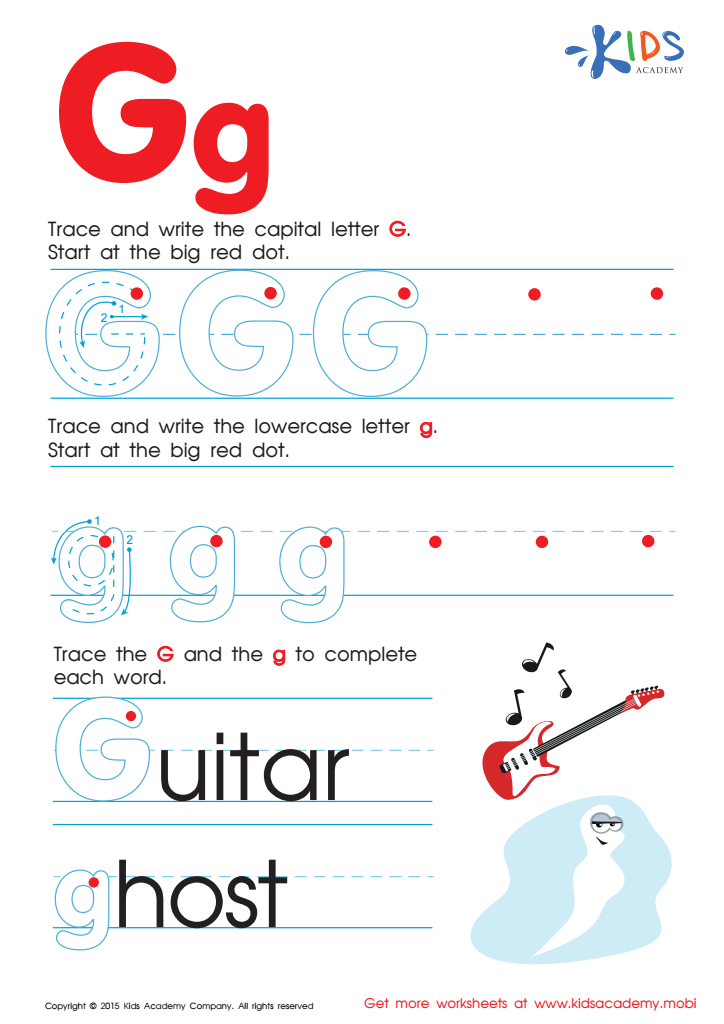
Letter G Tracing Page
Get ready to trace the letter "G" – with a big red spot as the starting point, trace the lines and watch the letter appear. Uppercase and lowercase letters are both easy and fun to write. Give it a go and finish the word "go". Play the guitar and say "hello" to a funny ghost!
Letter G Tracing Page
Worksheet
Join Kids Academy for Free
Who is primarily going to use this learning content?







Letter formation and tracing letters are foundational elements in early childhood education that parents and teachers should prioritize. This practice plays a critical role in a child's literacy development, facilitating the transition from recognizing letters to writing them independently.
First, mastering letter formation enhances fine motor skills and hand-eye coordination. These skills are vital not only for writing but also for other tasks like buttoning a shirt or tying shoelaces. Tracing helps children practice the precise movements needed for accurate and legible writing, which is essential for effective communication.
Second, tracing letters provides children with a clear understanding of letter shapes and orientations, which is fundamental in preventing future writing difficulties, such as letter reversals or inversions. Consistent practice using structured worksheets or guided exercises reinforces these patterns, making them second nature.
Finally, early success in writing can boost a child's confidence and foster a positive attitude toward learning. By securing consistent early practice, parents and teachers set a foundation for literacy that will aid in all future academic endeavors. In summary, focusing on letter tracing and formation encourages the development of critical motor skills, helps prevent learning obstacles, and builds a robust base for a child’s educational journey.








