Filters

7 filtered results

Clear all filters
Favorites
With answer key
Interactive

7 filtered results

Difficulty Level

Grade


Enhance your child's reading skills with our engaging "Word Recognition Two Letter Phonics Worksheets"! Designed for early learners, these interactive worksheets help reinforce phonemic awareness and word recognition through fun activities focused on two-letter combinations. Each worksheet features colorful illustrations and clear instructions to keep young minds excited about learning. By practicing with these worksheets, children will strengthen their vocabulary and improve their decoding skills, laying a solid foundation for future reading success. Perfect for use in the classroom or at home, these resources make learning phonics enjoyable while promoting early literacy development. Explore and watch your child thrive!

Check out this FREE Trial Lesson on Two Letter Phonics!

Review Blends

Favorites
With answer key
Interactive
  • Word Recognition
  • Two Letter Phonics
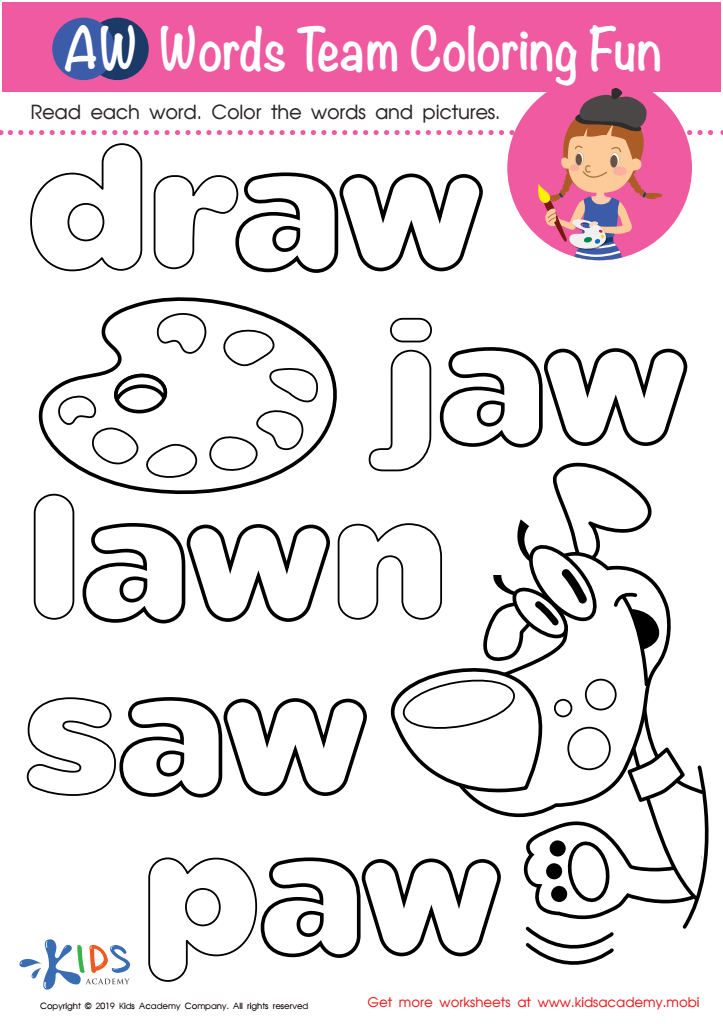
AW Words Team Coloring Fun Worksheet

AW Words Team Coloring Fun Worksheet

Coloring words they can read is a blast for little learners! This worksheet offers emerging readers the chance to practice and gain confidence in reading words from the -aw family, while also improving fine-motor and creativity skills. Without knowing it, they'll learn about phonetic teams along the way!
Download (PDF)
Assign to My Students
AW Words Team Coloring Fun Worksheet
Worksheet
What do you hear Worksheet

What do you hear Worksheet

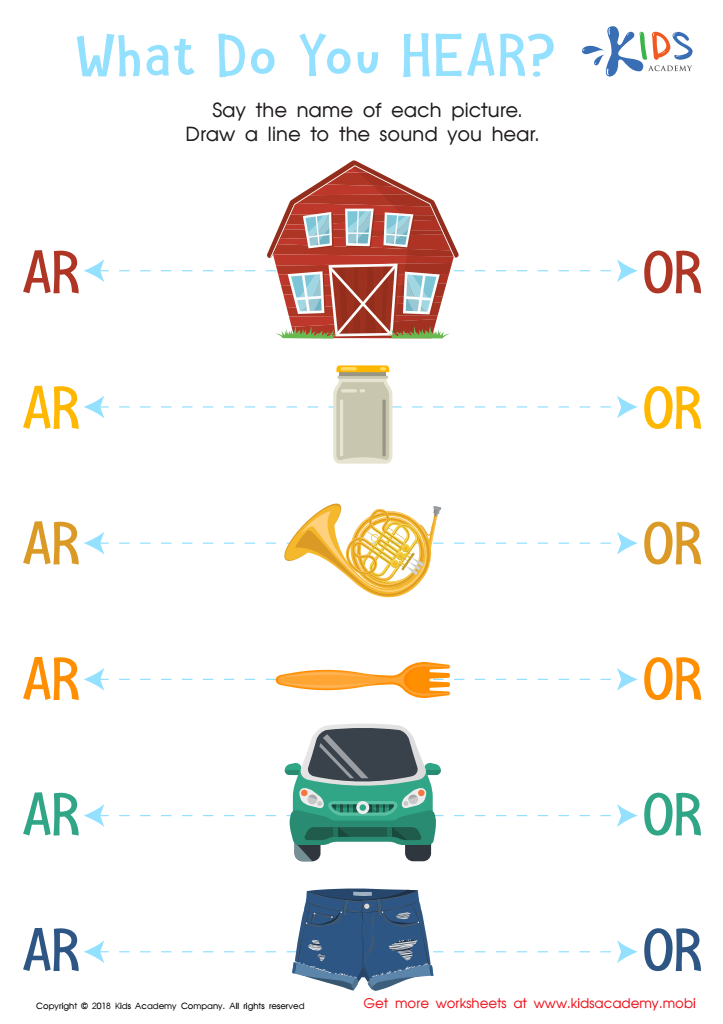
Kids can practice distinguishing between r-controlled vowel teams /ar/ and /or/ with this worksheet. The pictures help identify the words and the sounds heard. Tracing a line to the correct sound supports fine motor skills development.
What do you hear Worksheet
Worksheet
Words with ea Worksheet

Words with ea Worksheet

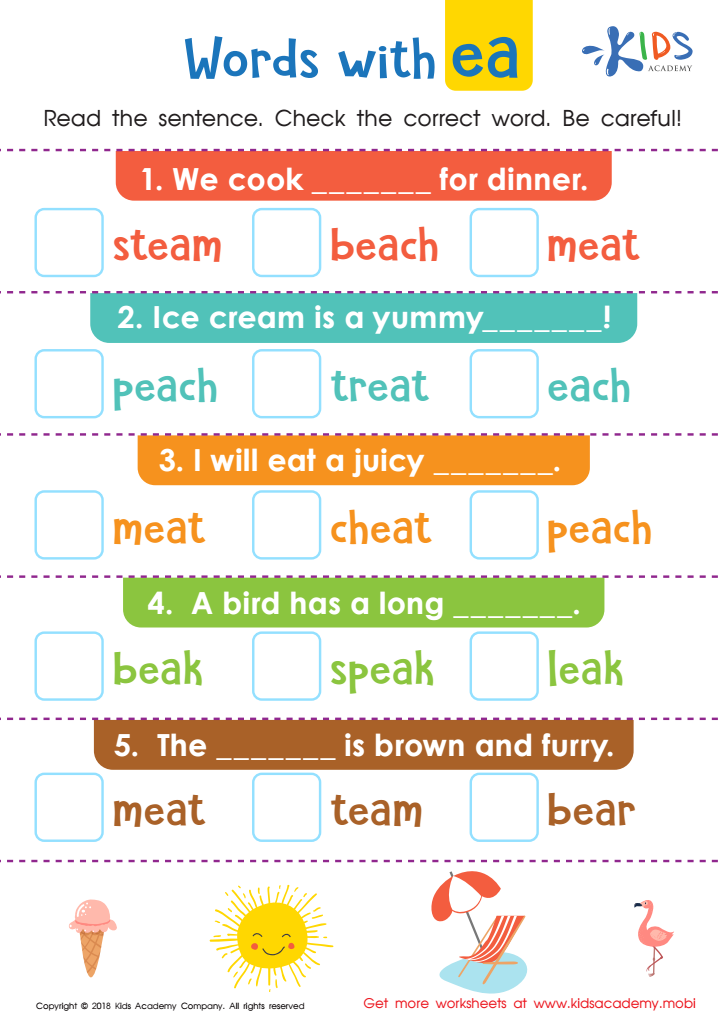
Beginning readers may struggle with -ea vowel digraphs, which can have multiple sounds and be tricky to decode. This cheerful worksheet helps kids practice reading sentences with missing -ea words, using context clues to fill in the blanks. They'll also be exposed to various -ea sound examples, and build their sight word knowledge.
Words with ea Worksheet
Worksheet
Consonant Blends Pl, Cl, and Sl Printable Worksheet

L Blends: "Pl", "Cl" and "Sl" Printable
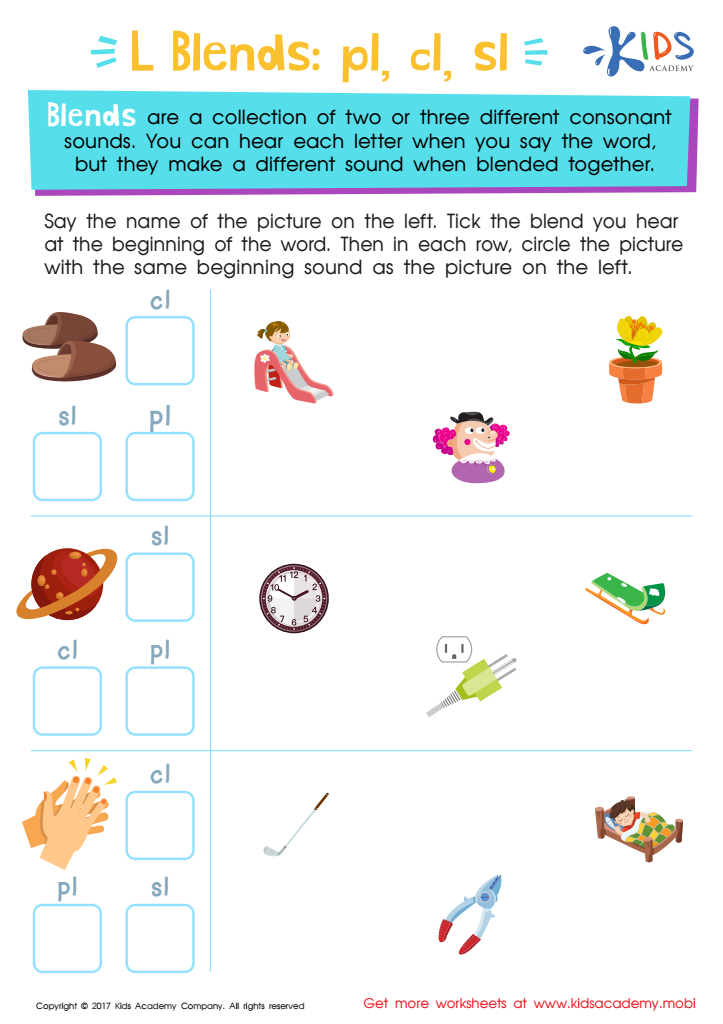
This printable worksheet will help your child recognize and identify the Pl, Cl, and Sl consonant blends, sound them out, and identify them in print. Improve your child's reading and writing skills with fun and colorful phonics practice!
L Blends: "Pl", "Cl" and "Sl" Printable
Worksheet
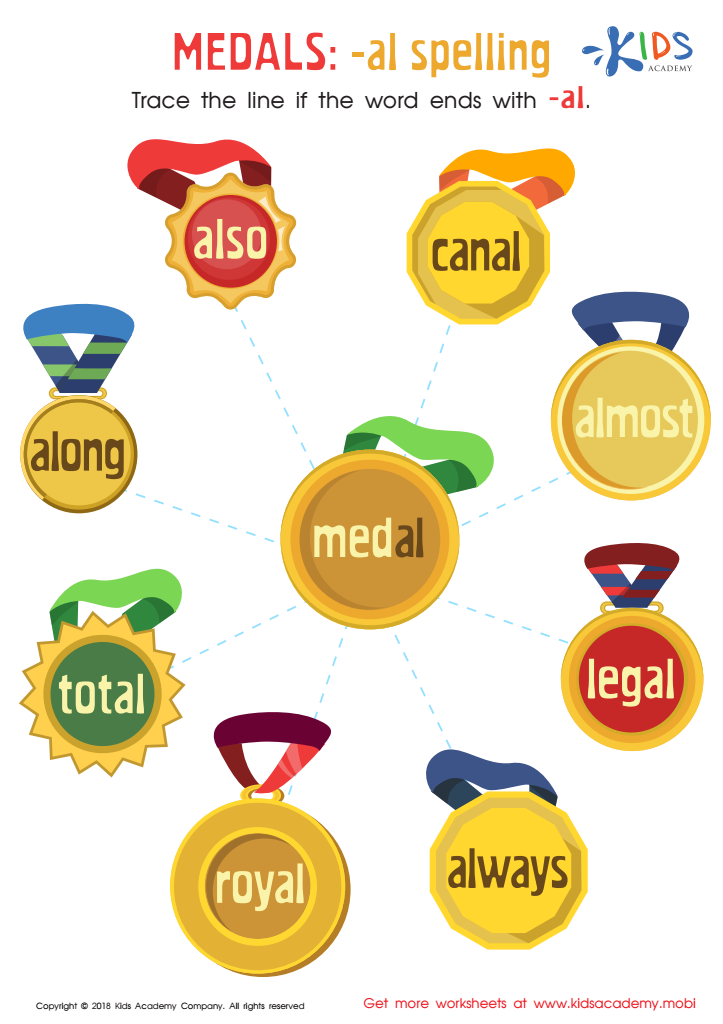
Medals: Al Spelling Worksheet

Medals: Al Spelling Worksheet

Have your students list common words ending with -al. See how many they can give and spell. Give examples of your own, assisting with spelling. Now review the words in the worksheet. Guide students to trace the line for each word ending with -al. 80 words
Medals: Al Spelling Worksheet
Worksheet
Missing Digraph: Part 2 Worksheet

Missing Digraph: Part 2 Worksheet

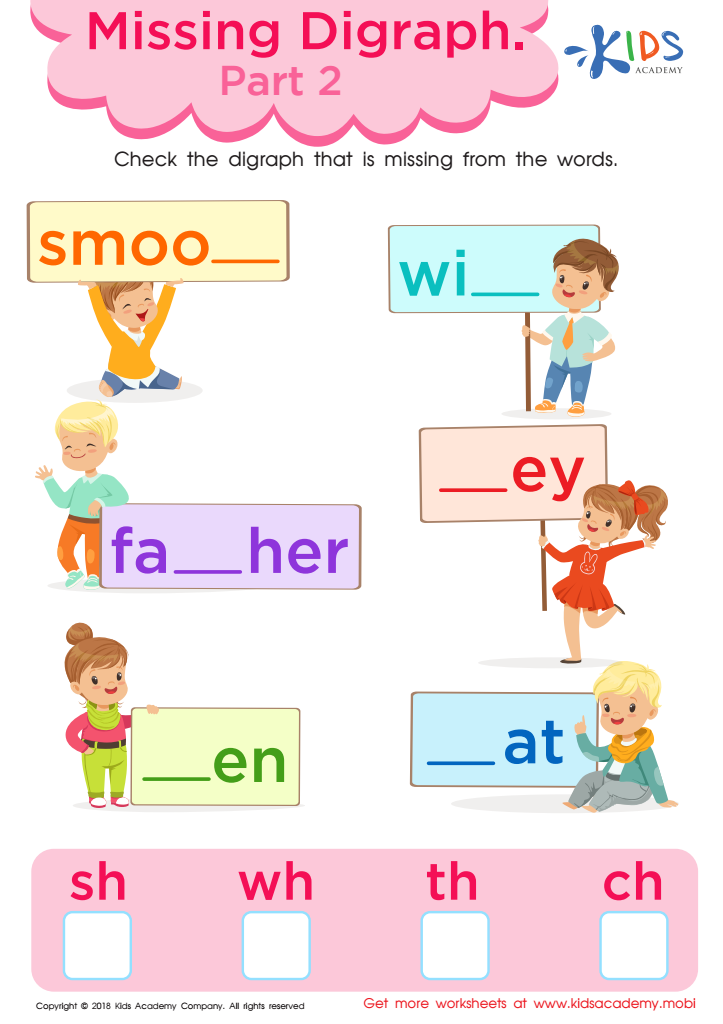
Practice the "th" digraph with this fun worksheet from Kids Academy! See how it appears at the beginning, middle, or end of words and help learners fill in the blanks. Check if they got it right by finding the th digraph at the bottom!
Missing Digraph: Part 2 Worksheet
Worksheet
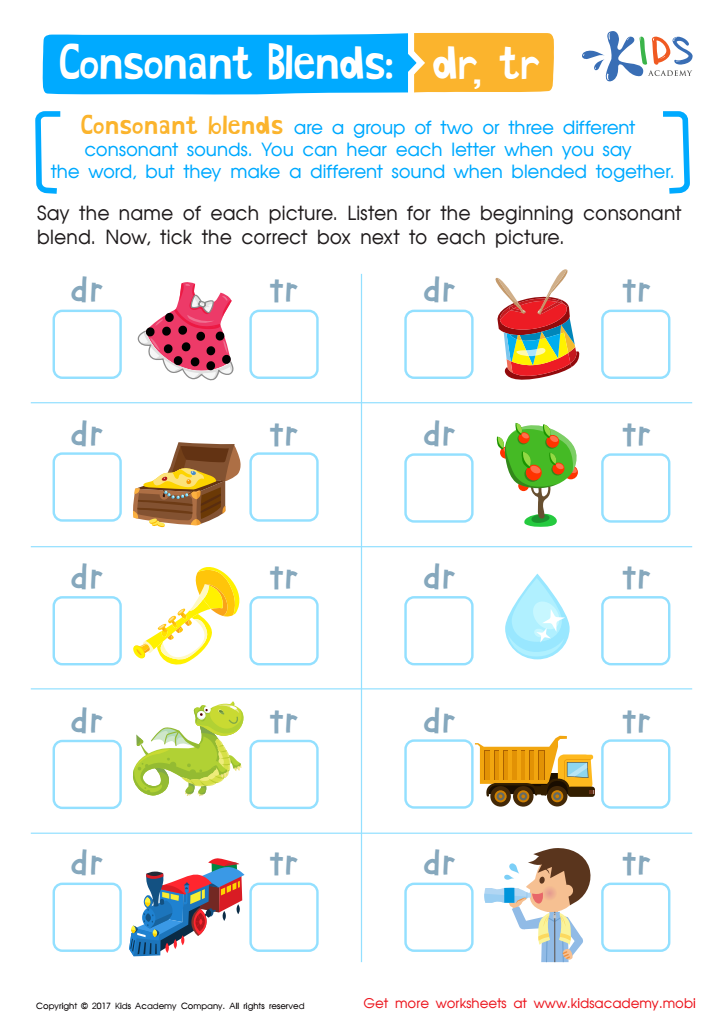
Consonant Blend Dr and Tr Printable Worksheet

Consonant Blends: "Dr" and "Tr" Printable

Pictures of the words provide a visual cue, and sound-outs help with auditory cues.
Consonant Blends: "Dr" and "Tr" Printable

Worksheet


Word recognition and two-letter phonics are foundational elements of early literacy that play a crucial role in a child's reading development. For parents and teachers, understanding and prioritizing this aspect of literacy can significantly enhance a child's ability to decode and recognize words quickly and accurately.

Two-letter phonics, often involving consonant-vowel combinations such as "at," "it," and "en," helps children recognize patterns in language, aiding their reading fluency. By mastering these basic sound combinations, children become more confident readers and can tackle increasingly complex texts.

When children develop strong word recognition skills, they can focus more on comprehension rather than decoding individual words, leading to a deeper understanding of what they read. This is particularly important for building a love of reading, as children who read smoothly are more likely to engage with and enjoy the material.

Furthermore, early literacy skills have been linked to overall academic success. Parents and teachers who emphasize two-letter phonics create a solid foundation for future learning, helping children navigate more advanced reading and writing tasks as they progress through their education. Ultimately, caring about word recognition and phonics is an investment in a child's lifelong learning journey.