Lowercase identification Upper & Lowercase Letters Worksheets
5 filtered results
-
From - To
Enhance your child's literacy skills with our engaging Lowercase Identification Worksheets. Designed for early learners, these worksheets focus on recognizing and distinguishing between uppercase and lowercase letters. Fun and interactive activities foster a strong foundational understanding of the alphabet, allowing children to improve their reading and writing abilities. Whether at home or in the classroom, our printable resources provide an effective and enjoyable way for kids to practice their letter recognition skills. With colorful illustrations and varied exercises, these worksheets make learning the alphabet a delightful adventure. Start your little one's journey to literacy today with our captivating worksheets!
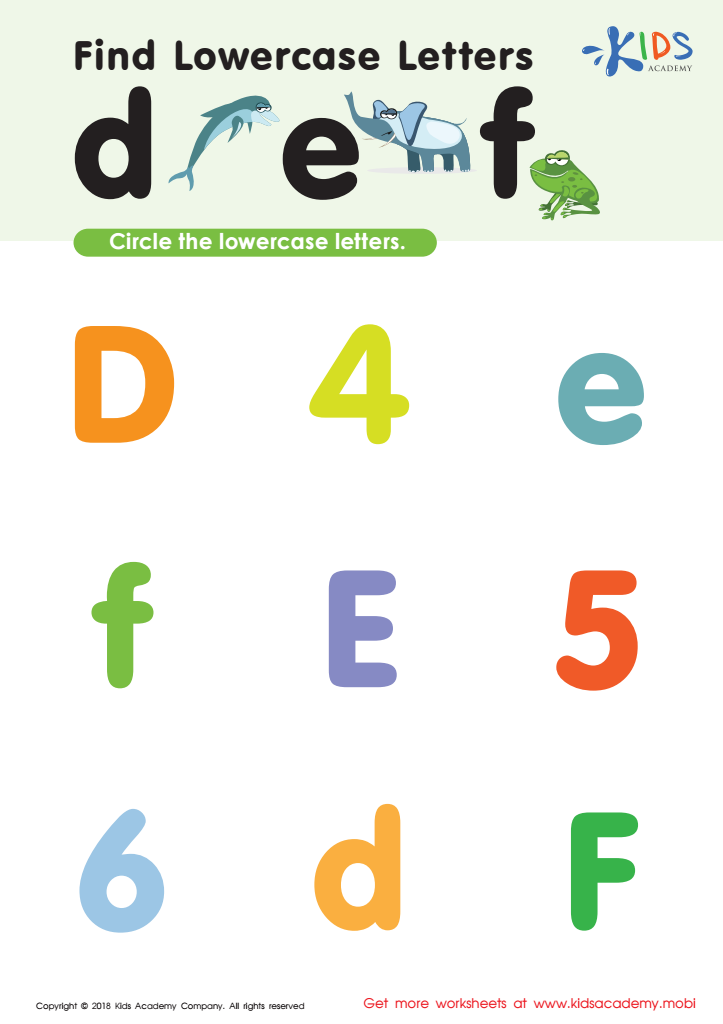
Find Lowercase Letters d e f Worksheet
 Assign to My Students

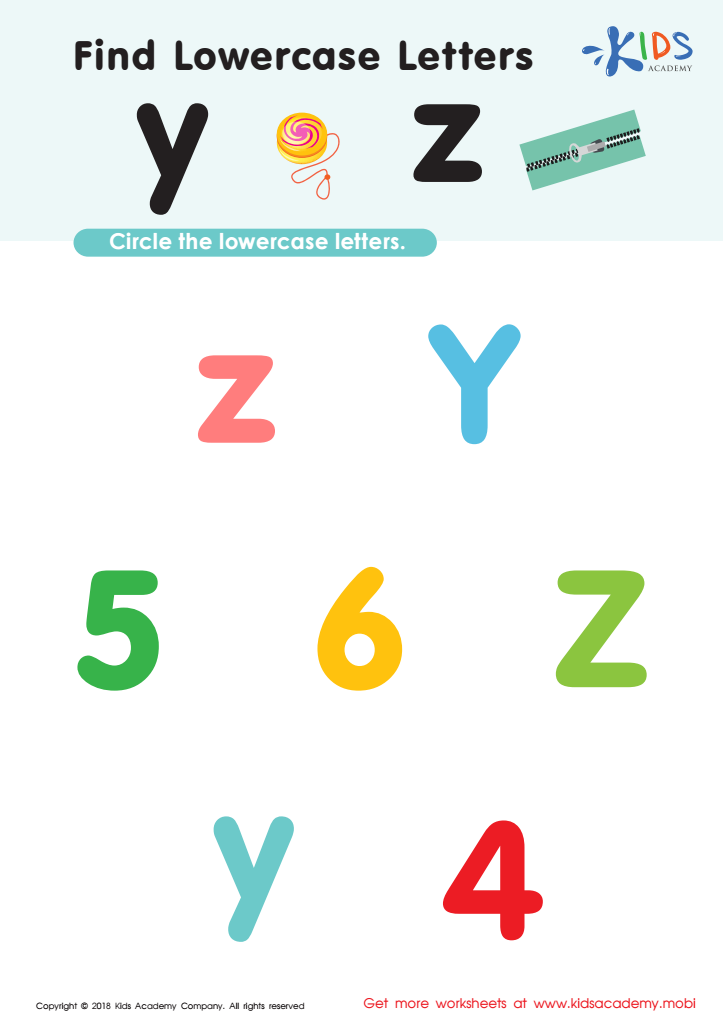
Find Lowercase Letters y z Worksheet
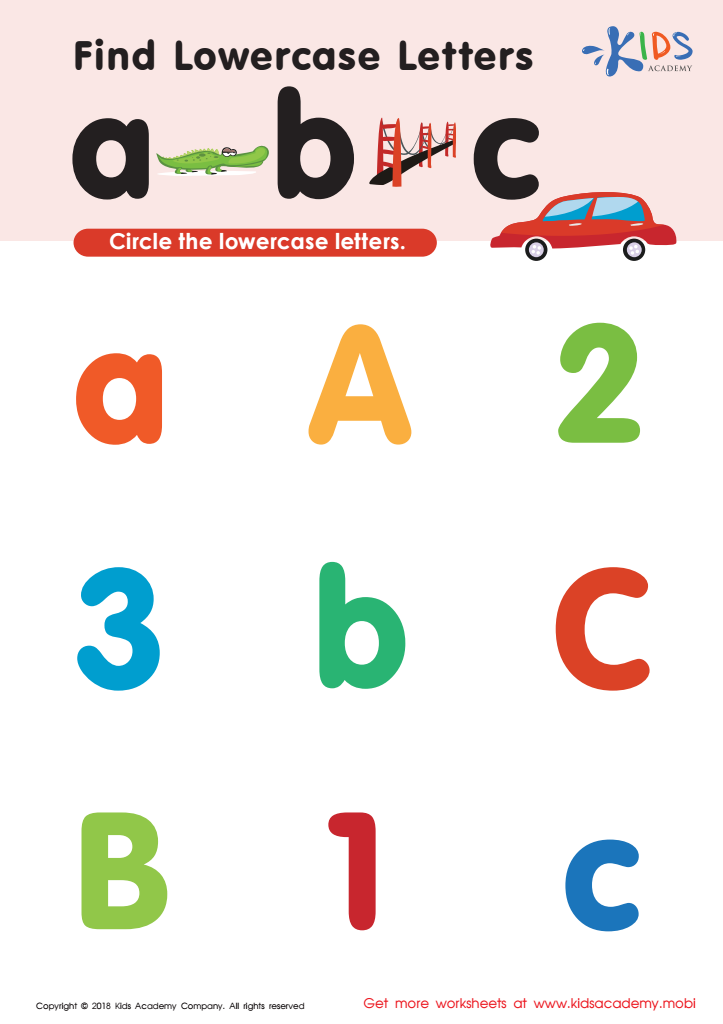
Find lowercase letters a b c Worksheet
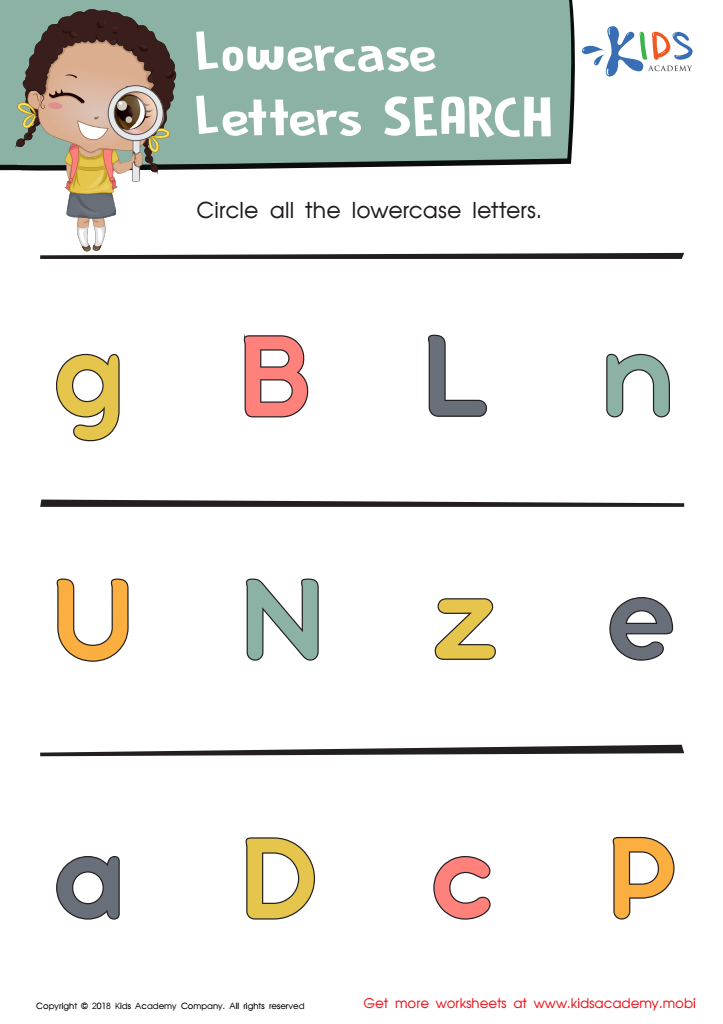
Lowercase Letters Search: Assessment Worksheet

Find Lowercase Letters v w x Worksheet






Understanding the difference between uppercase and lowercase letters is crucial for young learners as they develop foundational literacy skills. For parents and teachers, fostering lowercase identification is essential since the majority of text in English is written in lowercase. Recognizing lowercase letters enables children to read more fluently, as they encounter them far more frequently than their uppercase counterparts in everyday reading materials, like storybooks, labels, and signs.
Additionally, strong lowercase letter recognition plays a significant role in children's writing skills. Children often express their thoughts and creativity through writing, and knowing how to form and recognize these letters is key to effective communication. Identifying lowercase letters also aids in spelling, phonics, and overall language comprehension, which are vital for academic success.
Moreover, promoting awareness of uppercase letters, while important for proper nouns and sentence beginnings, requires balance with lowercase education to ensure students are confident and competent readers and writers. Teachers and parents should engage children through fun activities like letter matching games, reading sessions, and writing practice to make learning enjoyable. This balanced focus on both uppercase and lowercase letters nurtures a child's overall literacy development, setting a strong foundation for lifelong learning.







