Punctuation Worksheets Activities With Answers for Ages 3-9
3 filtered results
-
From - To
Enhance your child's writing skills with our engaging Punctuation Worksheets and Activities designed for ages 3-9! Our specially curated resources provide a fun, interactive way to explore punctuation marks through creative exercises and colorful illustrations. Each worksheet is aligned with age-appropriate learning goals, ensuring your little ones grasp essential punctuation concepts while enjoying the process. With included answer keys, parents and educators can easily track progress and understanding. Whether it’s filling in the blanks or matching activities, our worksheets offer diverse learning experiences that cater to young learners. Boost your child’s confidence in writing today!
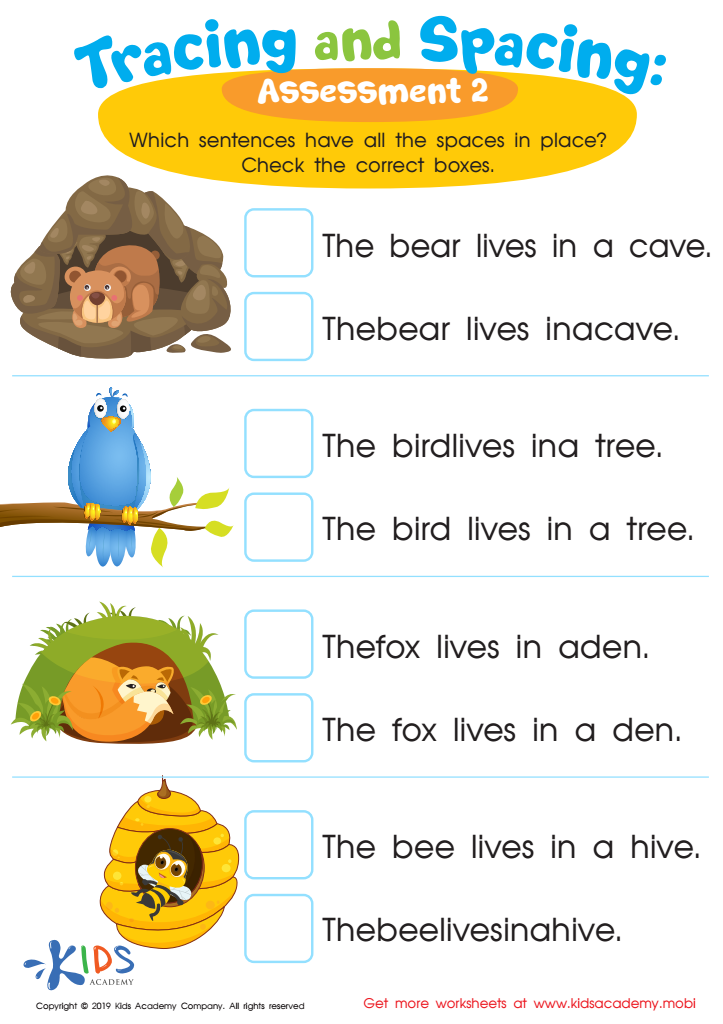
Tracing and Spacing: Assessment 2 Worksheet
 Assign to My Students
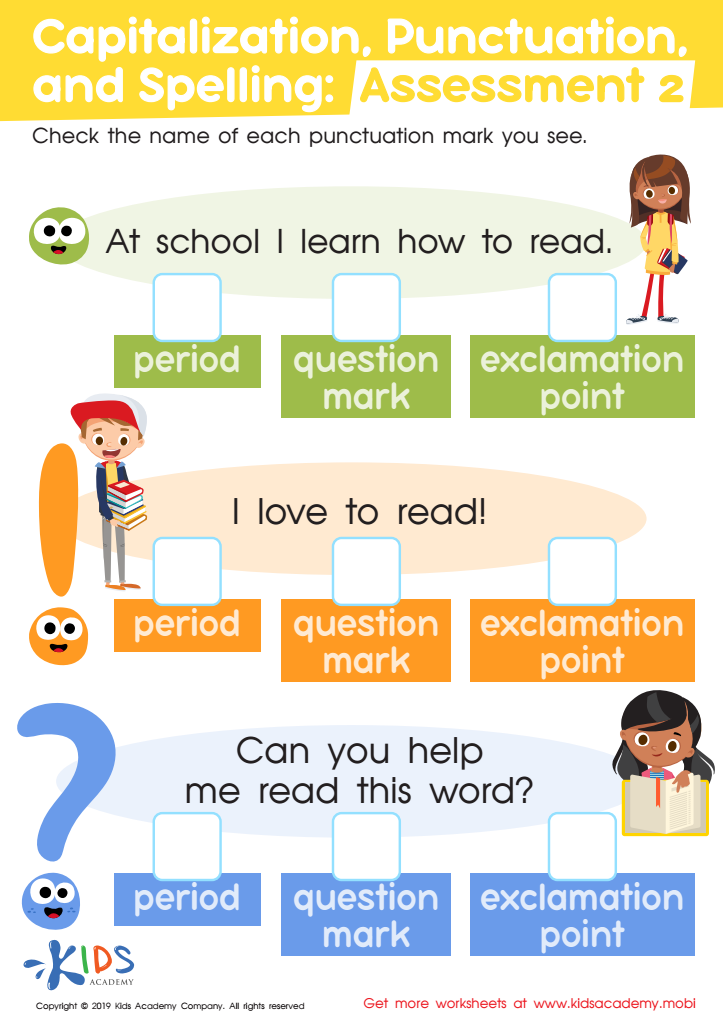
Capitalization. Punctuation. Spelling: Assessment 2 Worksheet
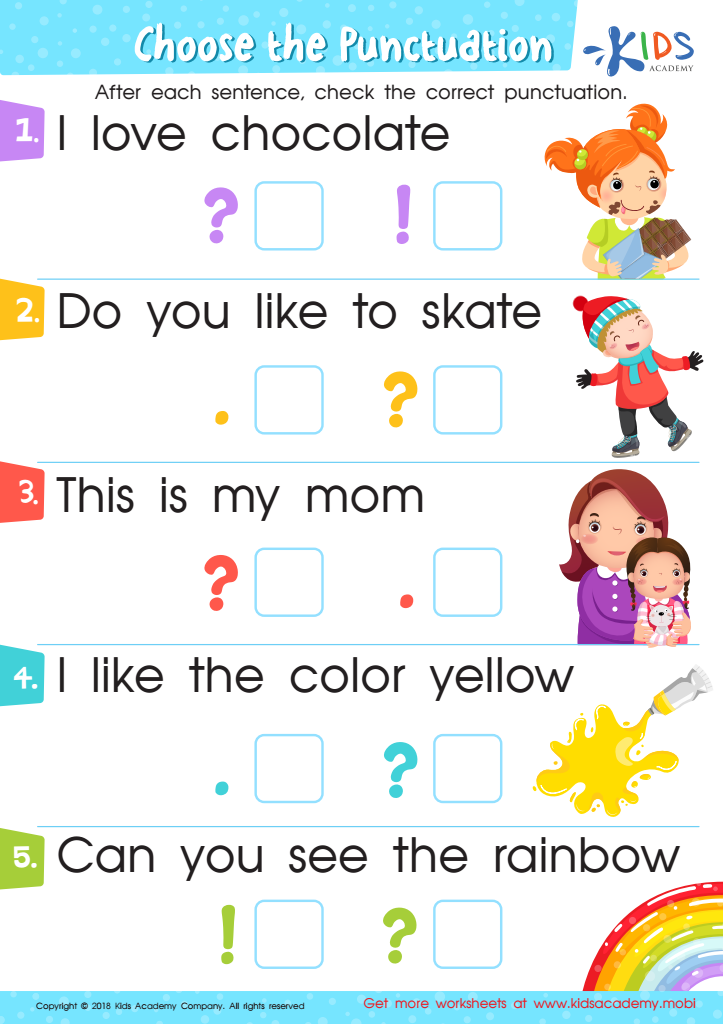
Choose the Punctuation: Assessment Worksheet






Punctuation activities for ages 3-9 are crucial for young learners as they lay the foundation for effective communication skills. Parents and teachers should care about these activities because punctuation marks—such as periods, commas, question marks, and exclamation points—are essential in conveying meaning and emotion within written language. Understanding punctuation helps children grasp basic sentence structure, making their writing clearer and easier to understand.
Engaging in punctuation activities makes learning fun and interactive, nurturing a child's enthusiasm for reading and writing. These activities often incorporate games, storytelling, and visuals that capture the attention of young learners, fostering a positive attitude toward literacy. When children recognize the role that punctuation plays in writing, they can experiment more creatively with their language, enhancing their expression and storytelling abilities.
Moreover, developing strong punctuation skills at a young age can propel students ahead academically, as these skills are foundational for more advanced writing concepts they will encounter in school. Overall, incorporating punctuation activities not only strengthens children's language development but also promotes critical thinking and attention to detail, ultimately equipping them for future academic success. Therefore, parents and teachers should prioritize these activities to support and enrich their children’s literacy journeys.








