Alphabet Worksheets Activities With Answers for Ages 4-7 - Page 2
25 filtered results
-
From - To
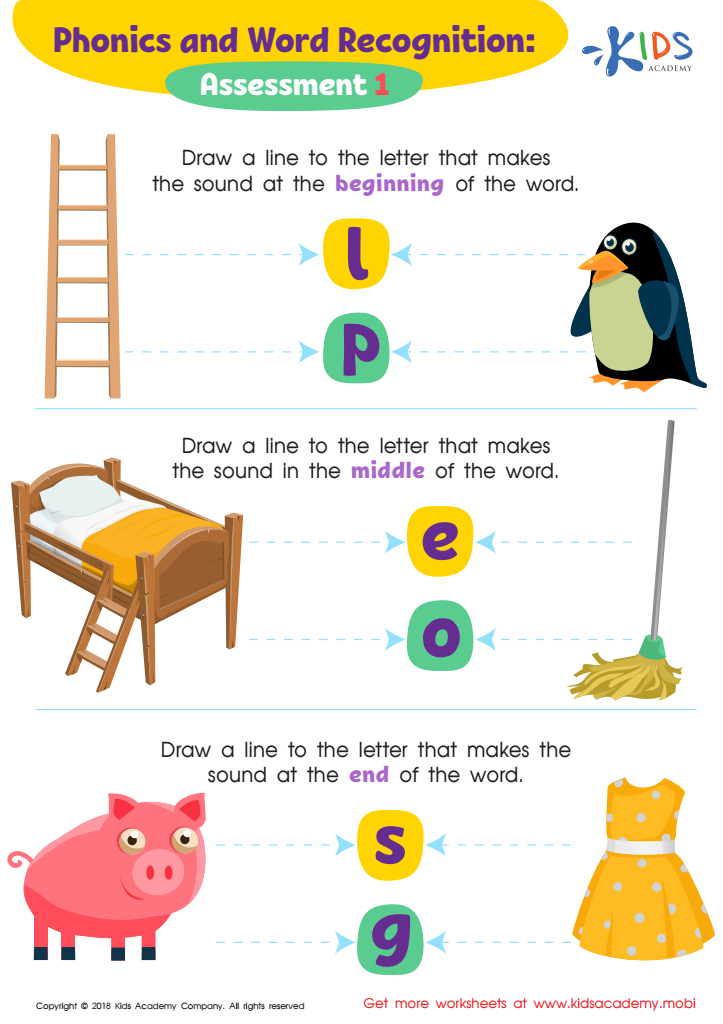
Phonics and Word Recognition: Assessment 1 ELA Worksheet
 Assign to My Students








Parents and teachers should prioritize alphabet activities for children ages 4-7 because these foundational experiences are vital for early literacy development. Mastering the alphabet is a critical stepping stone in reading and writing, which are essential skills for lifelong learning.
Engaging in alphabet activities helps children recognize letters, understand their sounds, and develop phonemic awareness. This sets the stage for developing powerful reading strategies and boosts language skills. Furthermore, hands-on activities foster creativity, making learning enjoyable and memorable. For instance, using crafts, songs, and games related to the alphabet can capture a child's attention while encouraging social interaction and teamwork.
Interactive alphabet activities can also help children with fine motor skills through tracing, cutting, or writing letters. These skills contribute to the overall cognitive and physical development of young learners. Furthermore, consistent practice solidifies their learning, setting the groundwork for future academic success.
Ultimately, caring about these activities demonstrates a commitment to nurturing a child’s growth and fostering a love for learning. By creating positive associations with reading and writing early on, parents and teachers can inspire lifelong curiosity, paving the way for a bright academic future.








