Phonics Worksheets Activities With Answers for Ages 4-8 - Page 2
25 filtered results
-
From - To
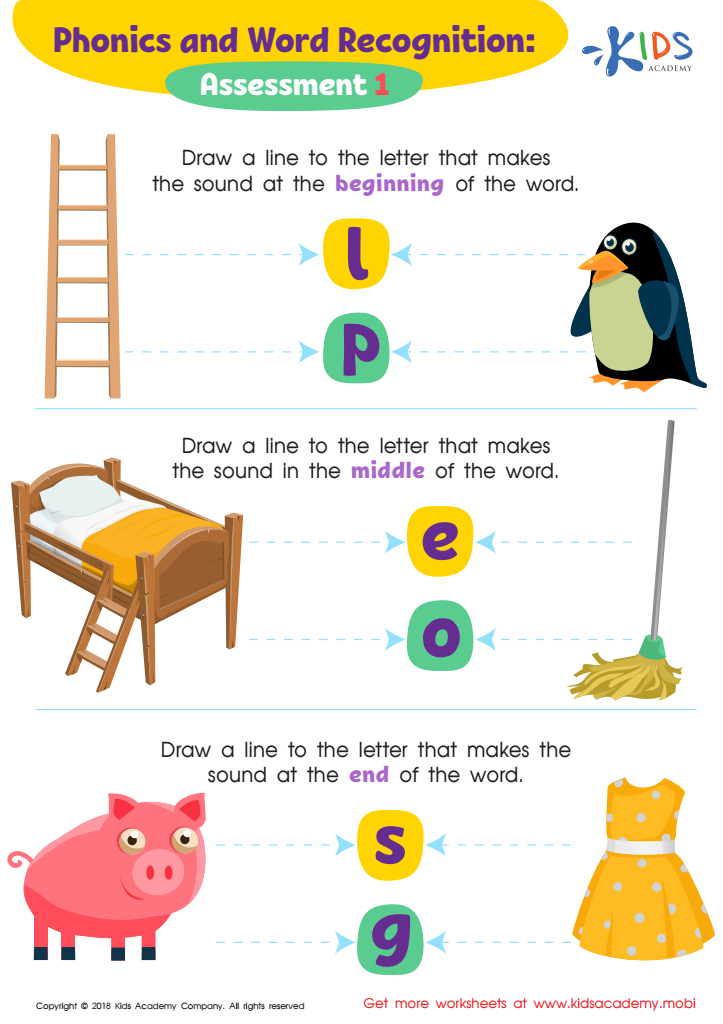
Phonics and Word Recognition: Assessment 1 ELA Worksheet
 Assign to My Students






Phonics activities are essential for young learners aged 4-8 as they form the foundation for reading and writing skills. Engaging in phonics activities helps children recognize the relationship between letters and sounds, enhancing their ability to decode words. Parents and teachers should prioritize these activities because they cater to different learning styles, making literacy more accessible and enjoyable.
Interactive phonics activities, often available with answers, allow parents and teachers to assess a child's understanding while encouraging them to practice independently. These activities build confidence and reduce anxiety surrounding reading by providing a supportive framework for growth.
Moreover, the early development of phonics skills fosters a lifelong love of reading, which can lead to improved academic performance across subjects. Children who grasp phonetic concepts early are better equipped to tackle more complex reading tasks later on. Additionally, phonics activities often incorporate games and creative exercises, making learning fun and engaging.
By investing in phonics activities, parents and teachers create a strong literacy foundation, significantly influencing a child's future educational success and overall development. This attention to phonics not only supports academic achievement but also nurtures critical thinking and communication skills essential in today's world.








