Addition & Subtraction Worksheets Activities With Answers for Ages 5-8 - Page 2
26 filtered results
-
From - To
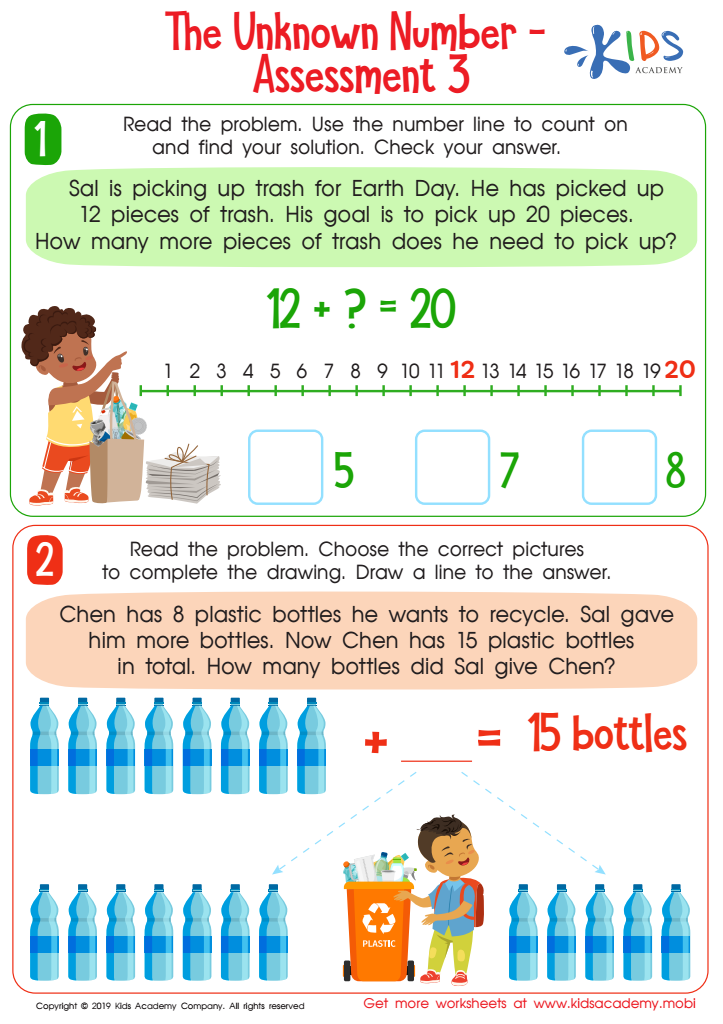
The Unknown Number - Assessment 3 Worksheet
 Assign to My Students
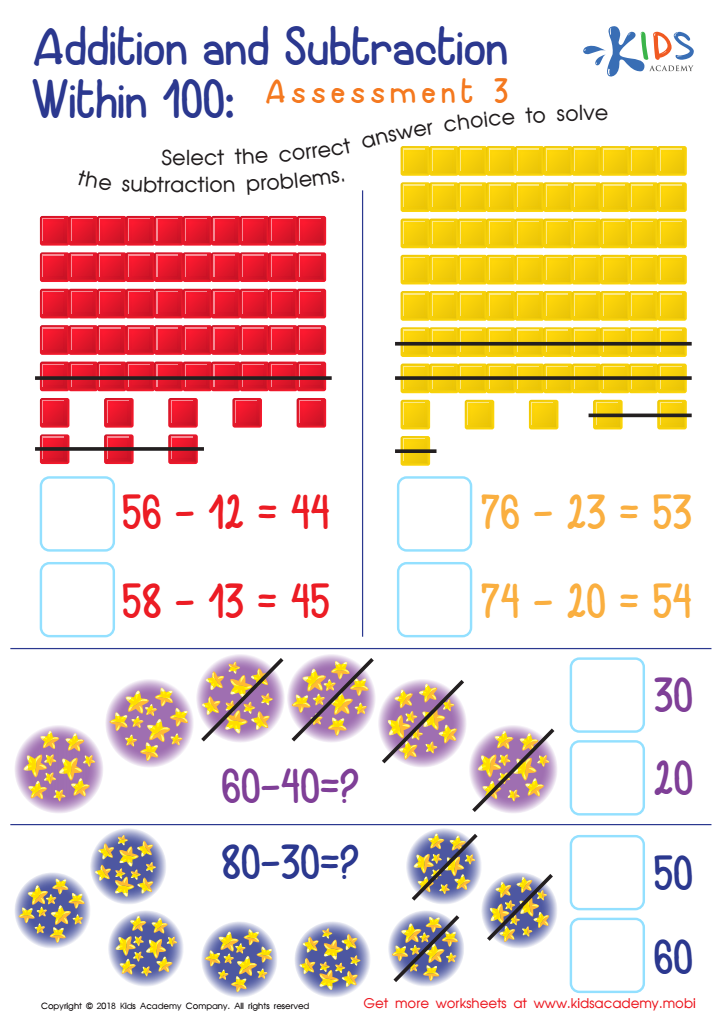
Addition and Subtraction Within 1: Assessment 3 Worksheet








Parents and teachers should prioritize addition and subtraction activities for ages 5-8 because these skills form the foundation of mathematical understanding. At this stage, children are in a critical period for developing fluency with numbers, which is essential for future learning. Engaging in these activities not only helps children grasp basic arithmetic concepts but also reinforces problem-solving skills and logical thinking.
Addition and subtraction activities catered to young learners spark curiosity and make math enjoyable. When children work on these skills through games, hands-on activities, and challenges, they build confidence in their abilities. This confidence often extends beyond math, positively impacting other areas of learning.
Additionally, structured activities provide educators and parents with immediate feedback through the answer keys, allowing them to assess a child’s understanding effectively. This can better inform instruction or support at home.
Importantly, engaging children in math activities fosters communication about numbers and problem-solving strategies, promoting a deeper understanding of the subject. The collaborative aspect of these activities also encourages teamwork and social skills. Prioritizing addition and subtraction for this age group equips children with essential life skills, setting them up for success in future academic endeavors.








