Physical Science Worksheets Activities With Answers for Ages 5-8
6 filtered results
-
From - To
Explore our engaging Physical Science Worksheets Designed for Ages 5-8! Perfect for young learners, these interactive activities foster curiosity and understanding of the natural world. Each worksheet is tailored to make learning fun, covering fundamental concepts like matter, energy, and the environment. With easy-to-follow instructions and colorful illustrations, children will enjoy hands-on experiments and exciting challenges. Our answer keys ensure that parents and educators can provide guidance while tracking progress. Transform learning into an adventure with our comprehensive resources, which are ideal for both classroom use and at-home practice. Discover the joy of physical science today!
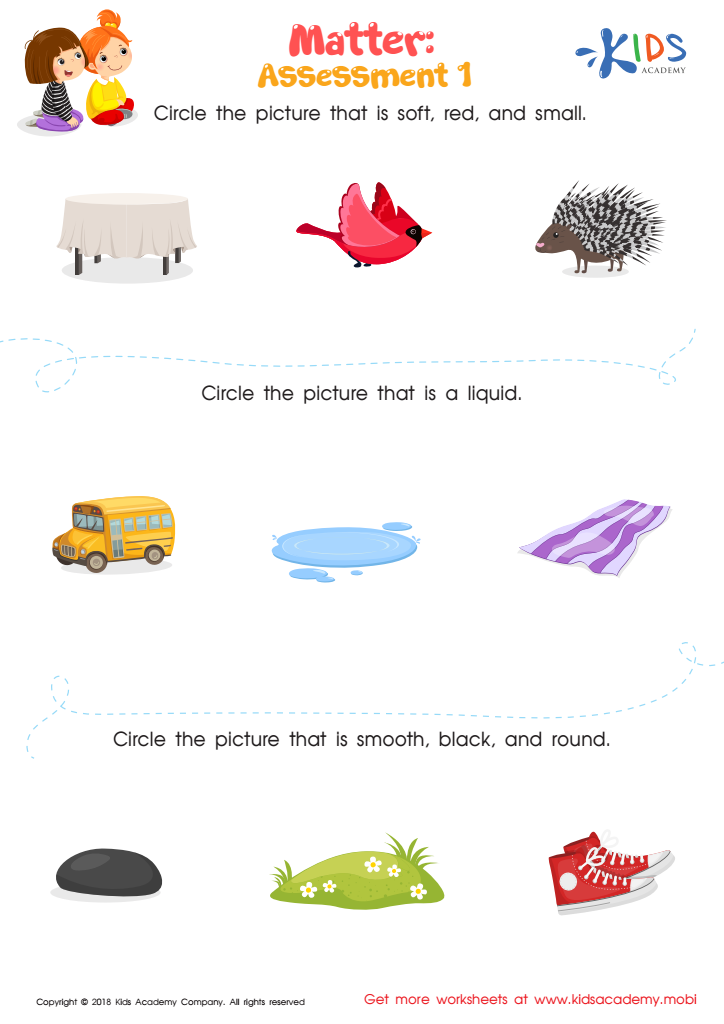
Matter: Assessment 1 Worksheet
 Assign to My Students
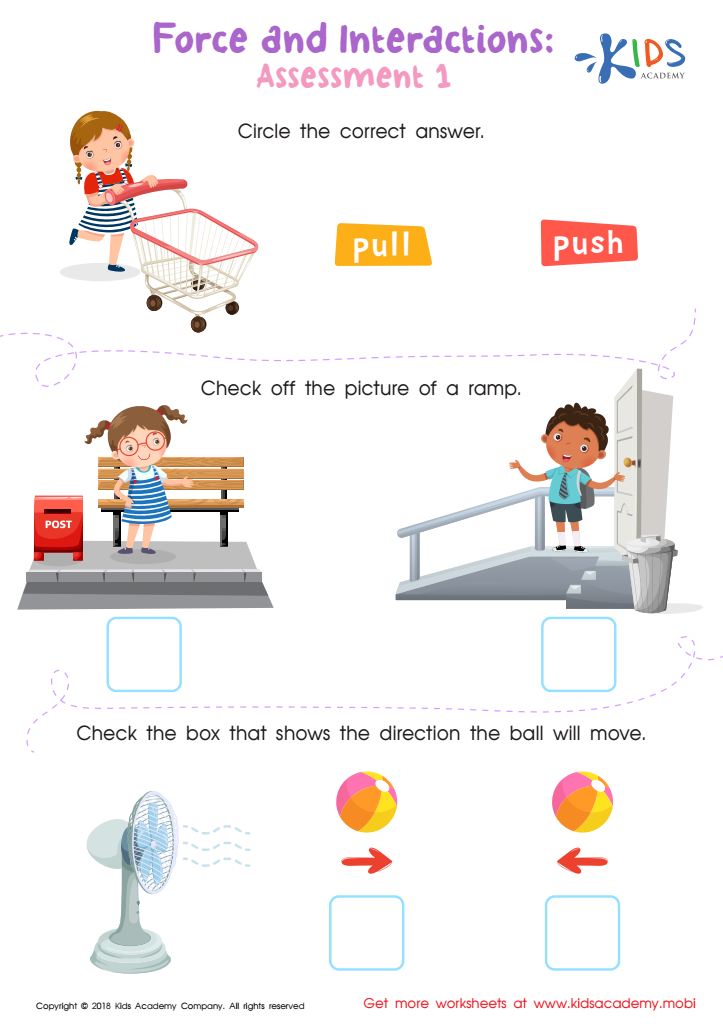
Force and Interactions: Assessment 1 Worksheet
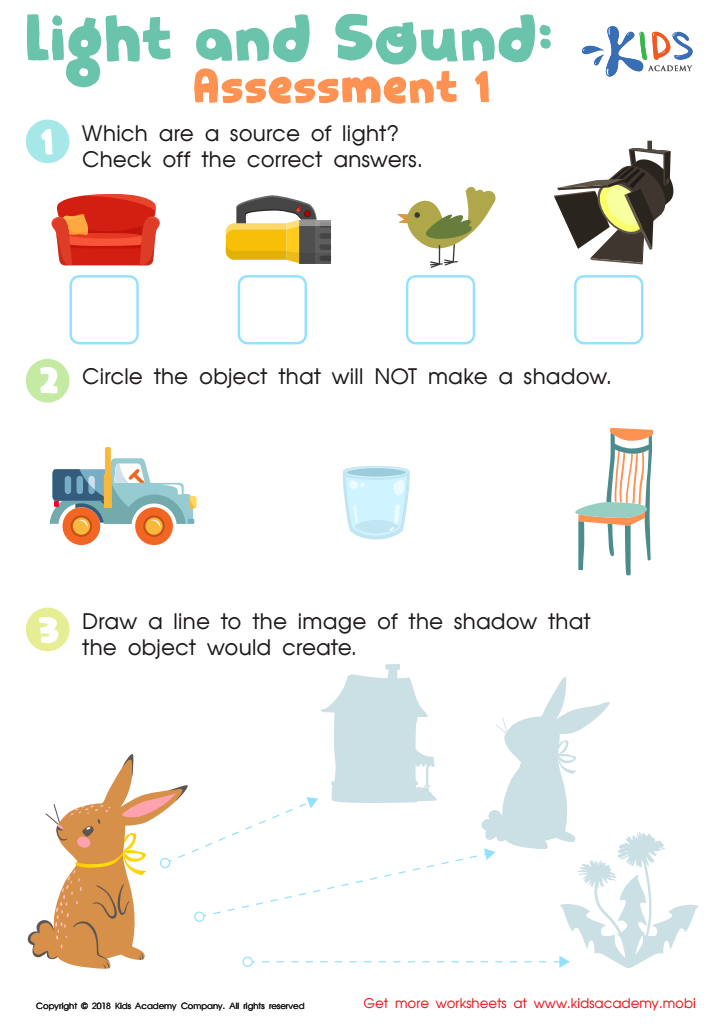
Light and Sound: Assessment 1 Worksheet
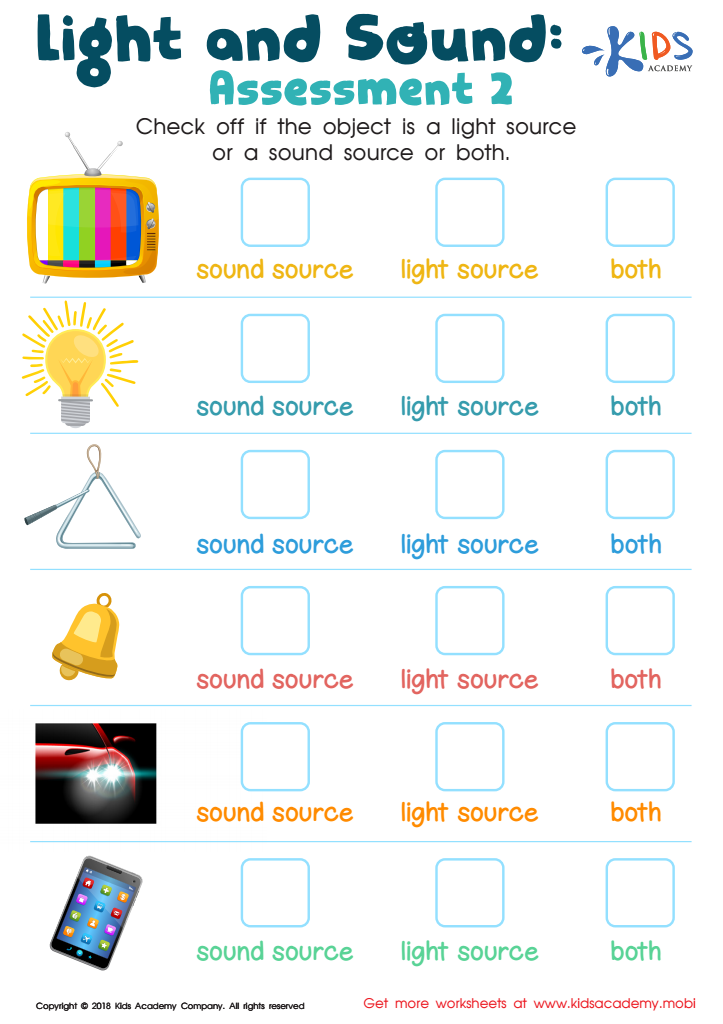
Light and Sound: Assessment 2 Worksheet
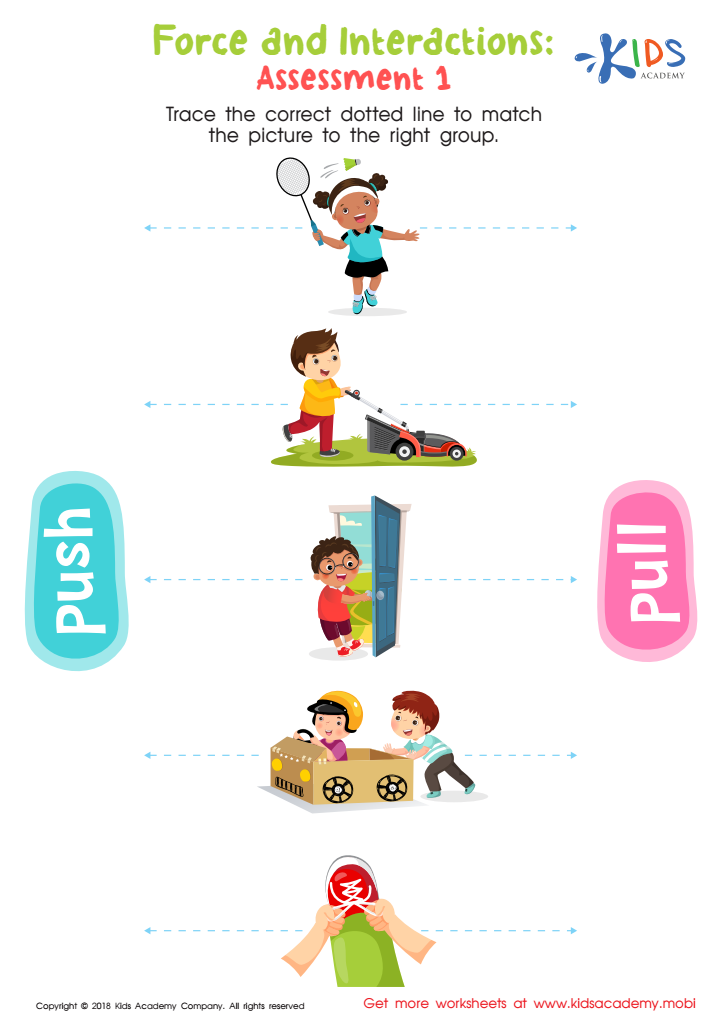
Force and Interactions: Assessment 2 Worksheet
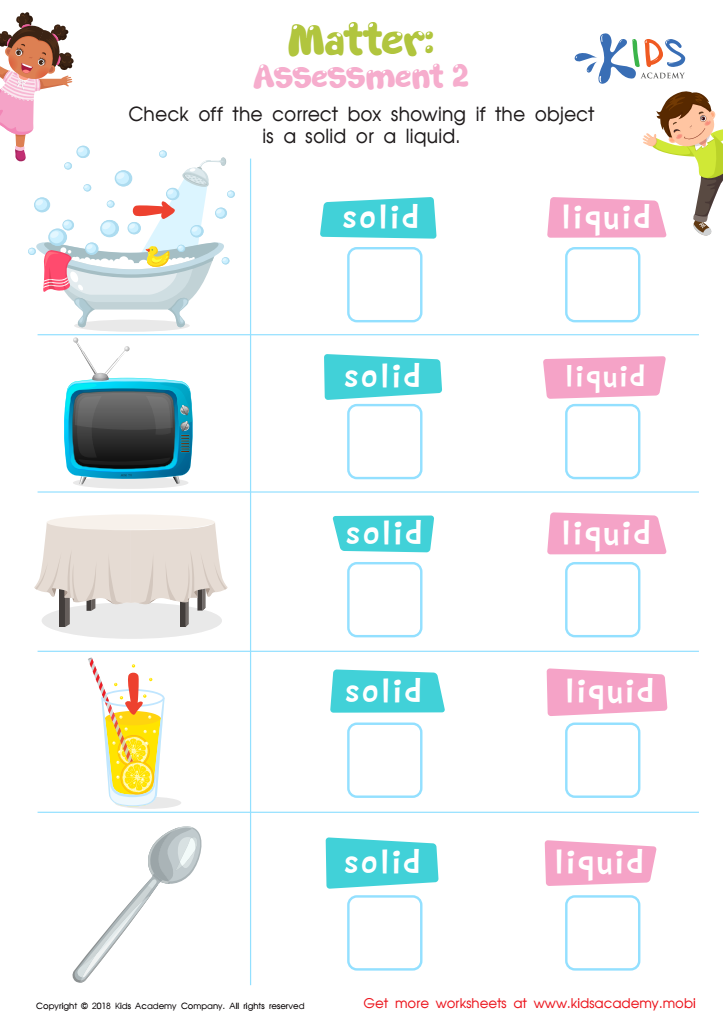
Matter: Assessment 2 Worksheet







Parents and teachers should prioritize Physical Science activities for children aged 5-8 for several compelling reasons. First, engaging in science activities nurtures curiosity and fosters a sense of wonder about the natural world, helping young learners develop a lifelong love for exploration and discovery. At this age, children are naturally inquisitive, and hands-on experiments provide an ideal platform for them to ask questions, make observations, and draw conclusions.
Moreover, these activities promote critical thinking and problem-solving skills vital for academic success. As children experiment with concepts like gravity, movement, and forces, they learn to formulate hypotheses, gather data, and analyze results, laying a foundation for scientific literacy.
Physical Science activities also integrate fundamental concepts of math and literacy through measurement, observation, and communication, thus enhancing overall cognitive development. Collaborative activities boost social skills, as children learn to work in teams, share observations, and discuss findings.
In essence, Physical Science activities serve as a multi-faceted educational tool, promoting cognitive, social, and emotional growth. By involving children in exciting and educational science experiences, parents and teachers can help shape budding scientists and informed citizens committed to understanding and caring for their world.








