Phonics Worksheets Activities With Answers for Ages 5-9 - Page 2
25 filtered results
-
From - To
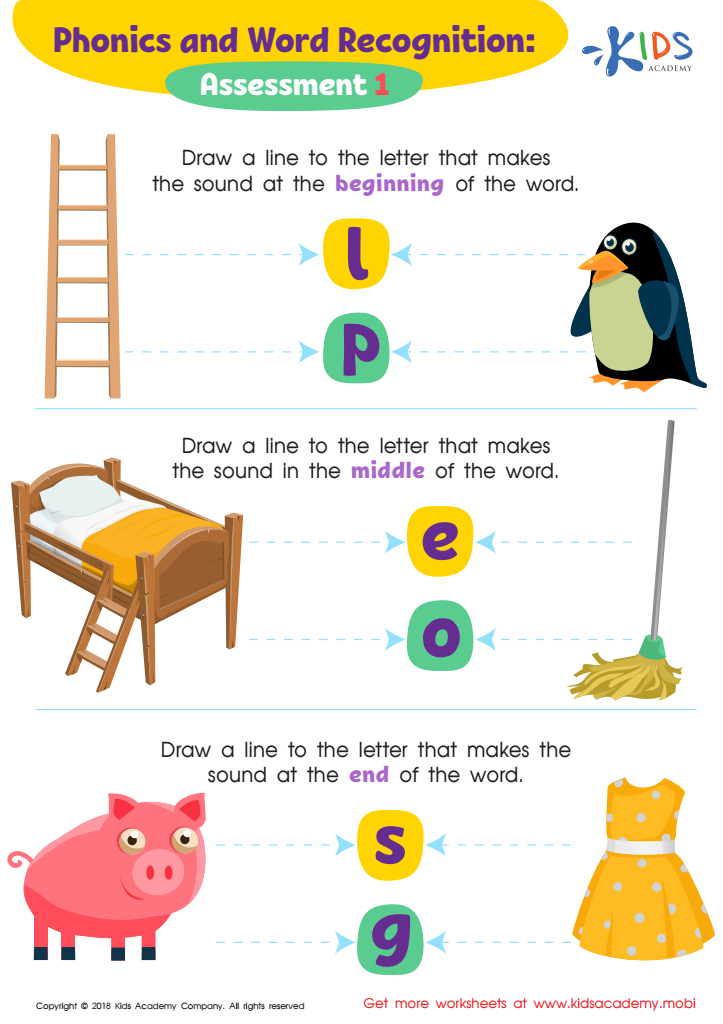
Phonics and Word Recognition: Assessment 1 ELA Worksheet
 Assign to My Students








Phonics activities are essential for children aged 5-9 as they form the foundation of reading and language skills. At this age, children are particularly receptive to early literacy instruction, making it crucial for parents and teachers to engage them in phonics activities. These activities not only help children understand the relationship between letters and their sounds but also contribute to their overall language development, vocabulary building, and comprehension skills.
By incorporating phonics activities with answers, parents and teachers can provide immediate feedback, allowing children to learn from their mistakes and reinforce their understanding. This hands-on approach promotes active engagement, making learning more enjoyable and effective. Furthermore, phonics skills are critical for developing the confidence needed to tackle more complex reading materials as children progress in their education.
In a world where literacy impacts academic success and lifelong opportunities, prioritizing phonics in early education is vital. The ability to decode words will empower children, opening doors to a wealth of knowledge and exploration. Ultimately, caring about and investing time in phonics activities leads to stronger readers, better communicators, and more enthusiastic learners, fostering a love for reading that can last a lifetime.








