Reading Non-Fiction Worksheets Activities With Answers for Ages 6-7
3 filtered results
-
From - To
Discover an engaging collection of reading non-fiction worksheets tailored for children ages 6-7. Our activities encourage young learners to explore fascinating topics while developing critical reading and comprehension skills. Each worksheet comes equipped with answers, making it easy for parents and educators to assess understanding. Covering diverse subjects, these non-fiction worksheets promote curiosity and encourage independent learning. Perfect for classroom use or at-home practice, these activities help lay a strong foundation for academic success. Encourage your child's love for reading and knowledge with our thoughtfully designed, interactive worksheets. Dive into a world of facts and fun today!
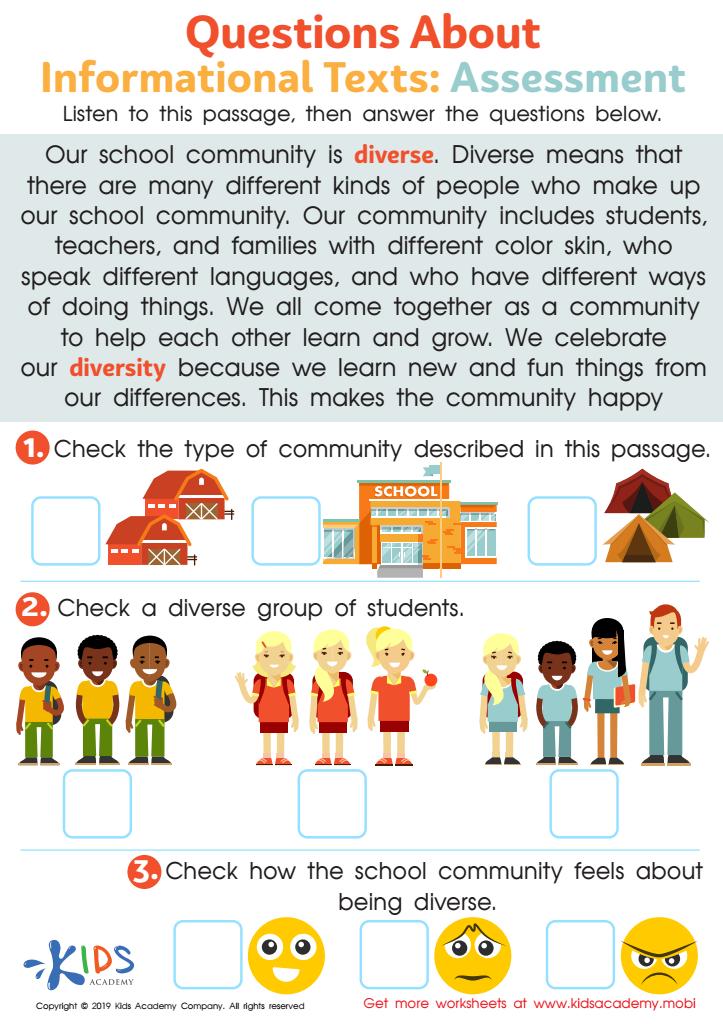
Questions About Informational Texts: Assessment 1 Worksheet
 Assign to My Students
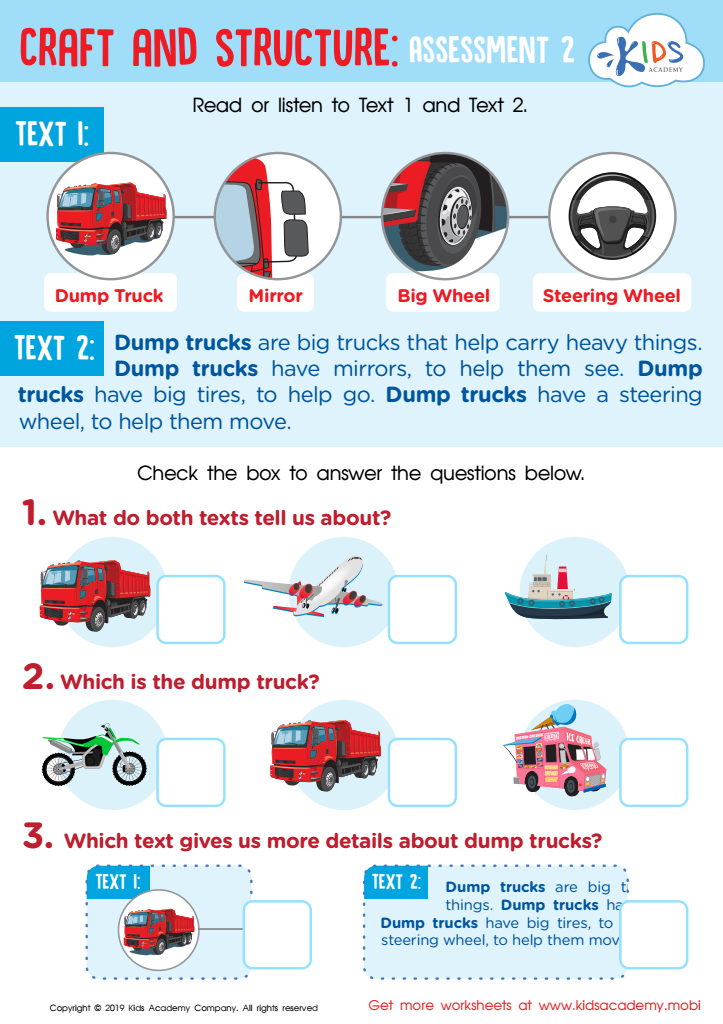
Craft and Structure: Assessment 2 Worksheet
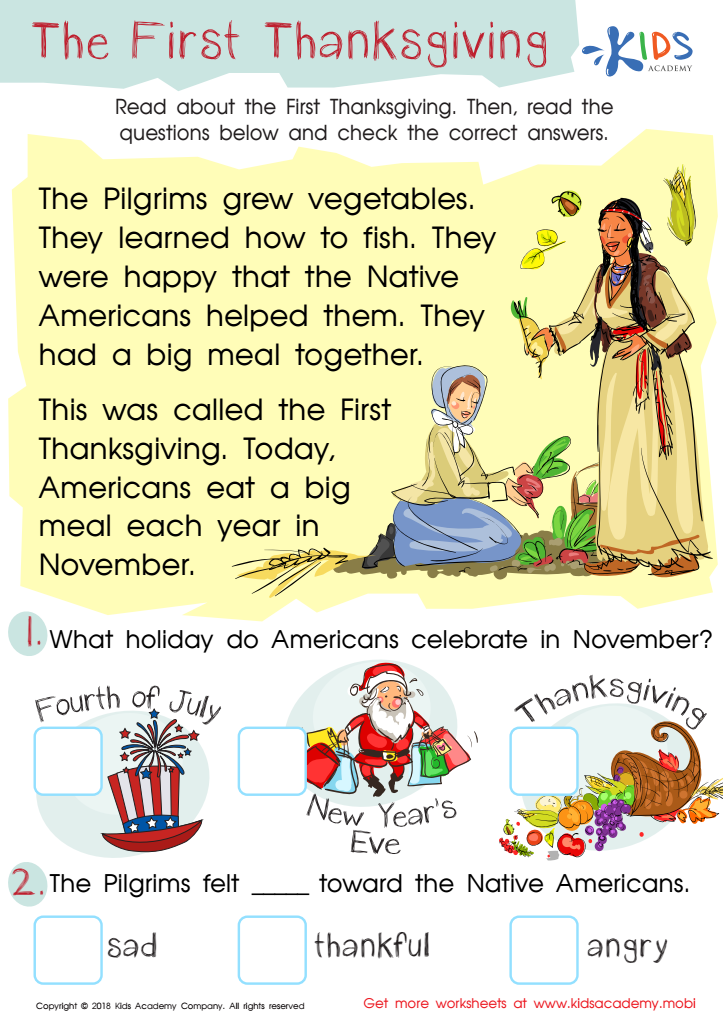
Assessment: First Thanksgiving Worksheet








Parents and teachers play a crucial role in shaping young learners' reading habits and comprehension skills, especially in early grades. Reading non-fiction books and engaging in related activities designed for ages 6-7 allows children to explore the world around them, sparking curiosity and encouraging a love for learning. Here are several reasons why this is important:
-
Knowledge Acquisition: Non-fiction exposes children to real-world concepts, facts, and ideas, helping them understand their environment, cultures, and scientific principles.
-
Critical Thinking Skills: Activities that follow non-fiction reading, like Q&A sessions, promote critical thinking. Kids learn to analyze information, make connections, and develop their reasoning abilities.
-
Vocabulary Building: Non-fiction texts often utilize rich and specific vocabulary, enhancing language skills and providing a language foundation for more advanced studies.
-
Motivation to Read: Engaging activities make reading enjoyable and interactive, fostering greater interest in literature and lifelong reading habits.
-
Comprehension Skills: Simple questions and answers related to the text can assess understanding, helping educators and parents identify areas where children excel or need support.
Overall, non-fiction reading activities are essential for developing well-rounded, informed, and confident learners.








