Easy Addition & Subtraction Worksheets Activities With Answers for Ages 6-8
5 filtered results
-
From - To
Welcome to our Easy Addition & Subtraction Worksheets page designed specifically for children ages 6-8! Our engaging activities provide young learners with fun, interactive ways to practice their math skills while building confidence. With a variety of worksheets that cater to different learning styles, these resources will help kids master addition and subtraction concepts. Each worksheet comes complete with answer keys to support parents and educators in tracking progress. Explore our collection to find perfect practice materials that make math enjoyable and accessible for your child. Start their math journey today and witness their skills flourish!
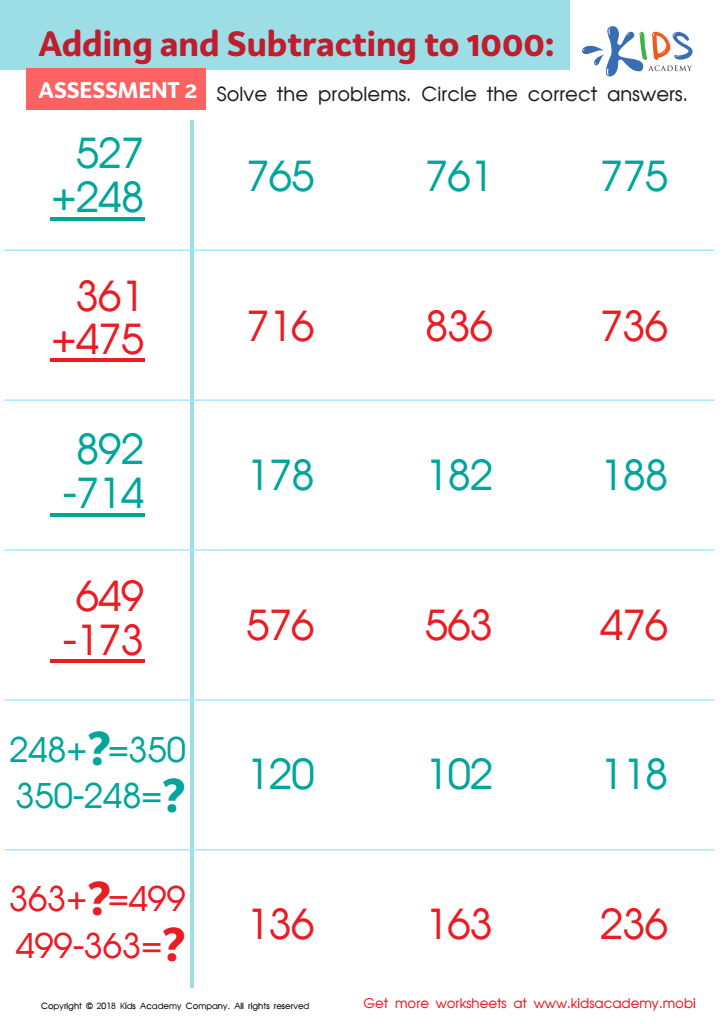
Adding and Subtracting to 1 Worksheet: Assessment 2
 Assign to My Students
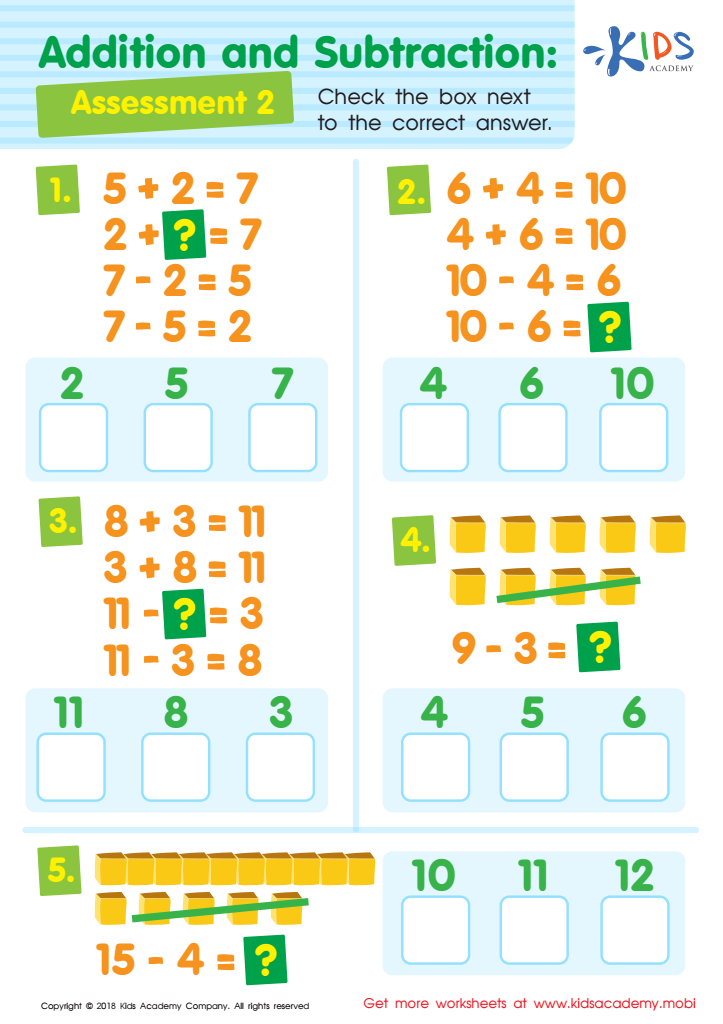
Addition and Subtraction Assessment 2 Worksheet
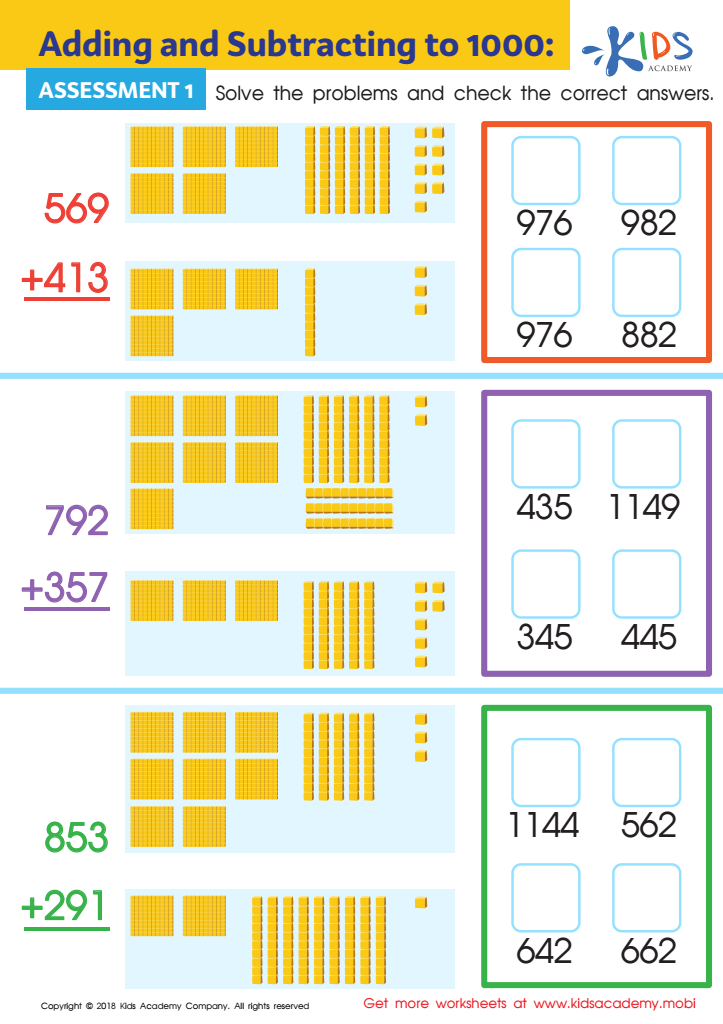
Adding and Subtracting to 1 Worksheet: Assessment 1
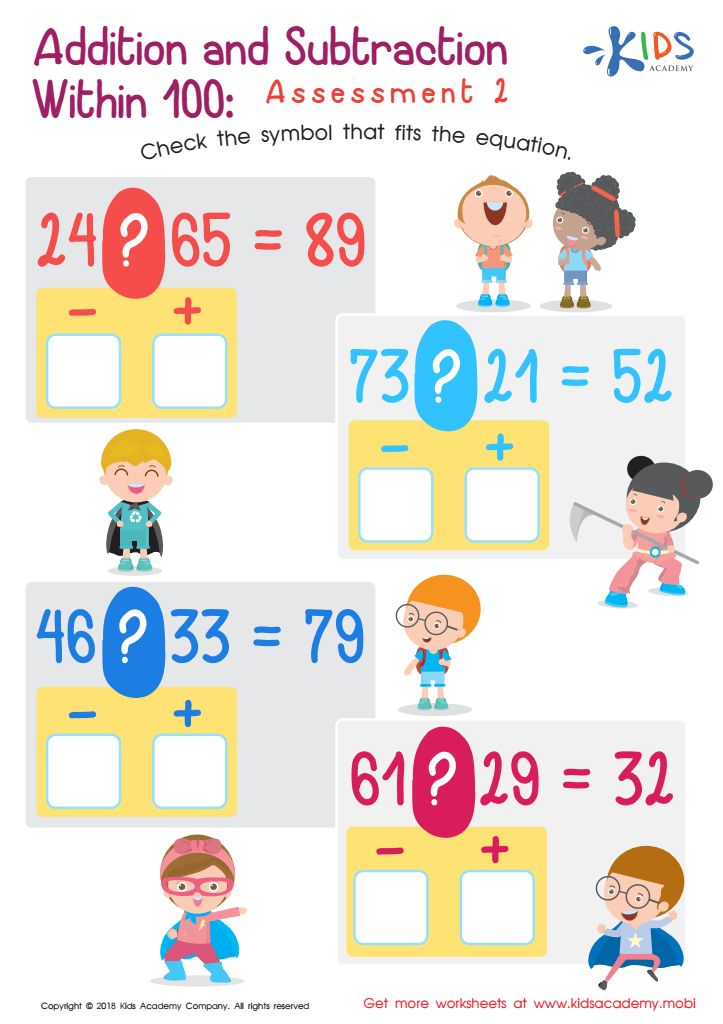
Addition and Subtraction Within 1: Assessment 2 Worksheet
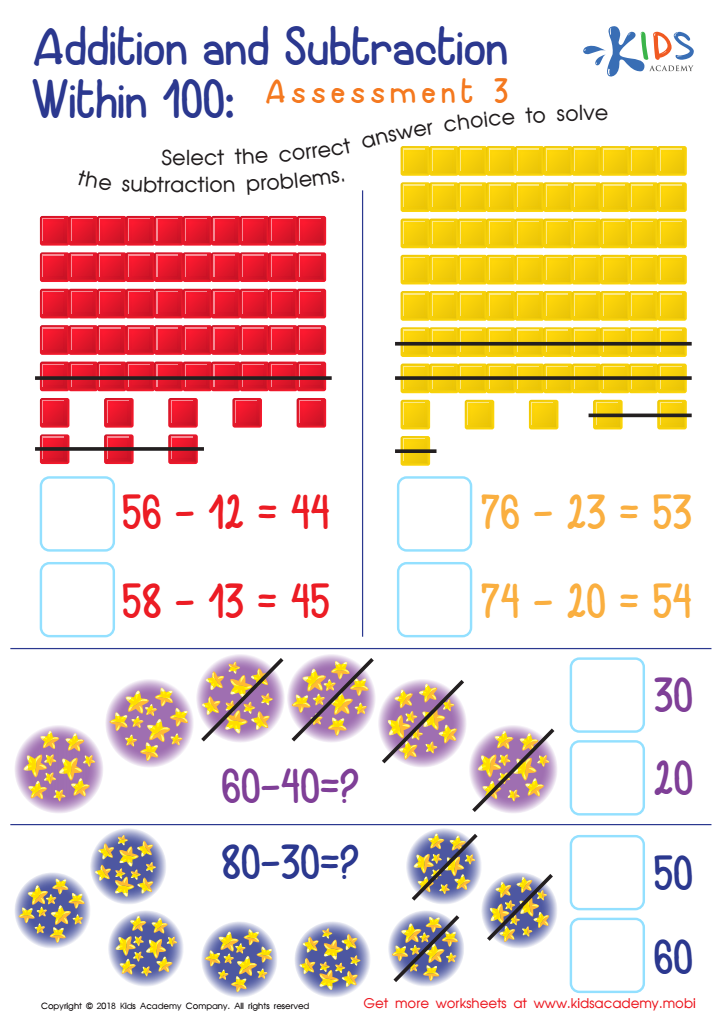
Addition and Subtraction Within 1: Assessment 3 Worksheet







Parents and teachers should prioritize Easy Addition and Subtraction Activities for children aged 6-8 as they are crucial for building foundational math skills. At this developmental stage, children are not only beginning to grasp numerical concepts but are also gaining confidence in their ability to solve problems. Engaging in fun and interactive activities helps make math less intimidating and more enjoyable, laying the groundwork for lifelong numeracy.
These activities cater to different learning styles, promoting varied methods of understanding addition and subtraction. By incorporating games, manipulatives, and visual aids, children can better conceptualize math problems and enhance their critical thinking skills. Furthermore, these exercises often promote collaboration, allowing peers to work together, fostering communication and social skills.
Additionally, providing answers to these activities supports immediate feedback, enabling children to learn from their mistakes and reinforce their understanding. This hands-on approach not only solidifies math concepts but also boosts students’ self-esteem and motivation.
Ultimately, a focus on Easy Addition and Subtraction Activities helps cultivate a strong mathematical foundation, nurtures a positive attitude toward learning, and equips children with essential skills required for future academic success. Therefore, both parents and teachers should actively engage children in these valuable educational practices.








