Normal Physical Science Worksheets Activities With Answers for Ages 6-9
4 filtered results
-
From - To
Discover our engaging Normal Physical Science Worksheets designed for children aged 6-9! These interactive activities help young learners deepen their understanding of essential science concepts while having fun. Each worksheet presents creative tasks on topics such as matter, forces, and natural phenomena. With clear answer keys provided, teachers and parents can easily monitor progress and reinforce learning. Tailored to maintain the interest of young minds, our worksheets encourage curiosity and exploration. Whether used in the classroom or at home, these resources are perfect for building a strong foundation in physical science. Explore our collection today and inspire a love for science!
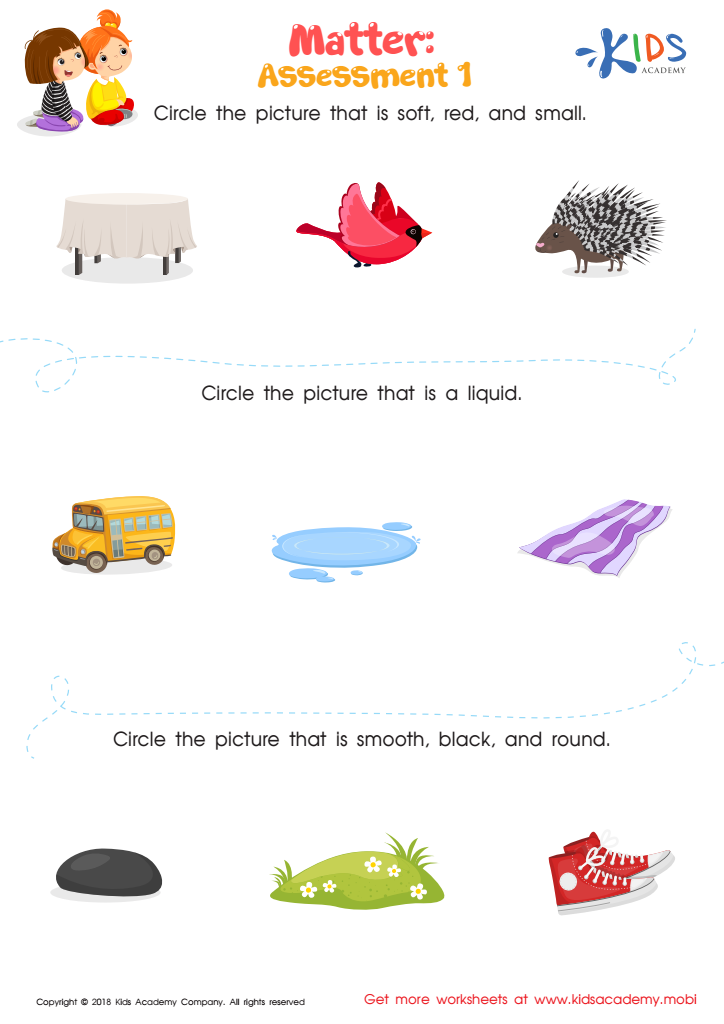
Matter: Assessment 1 Worksheet
 Assign to My Students
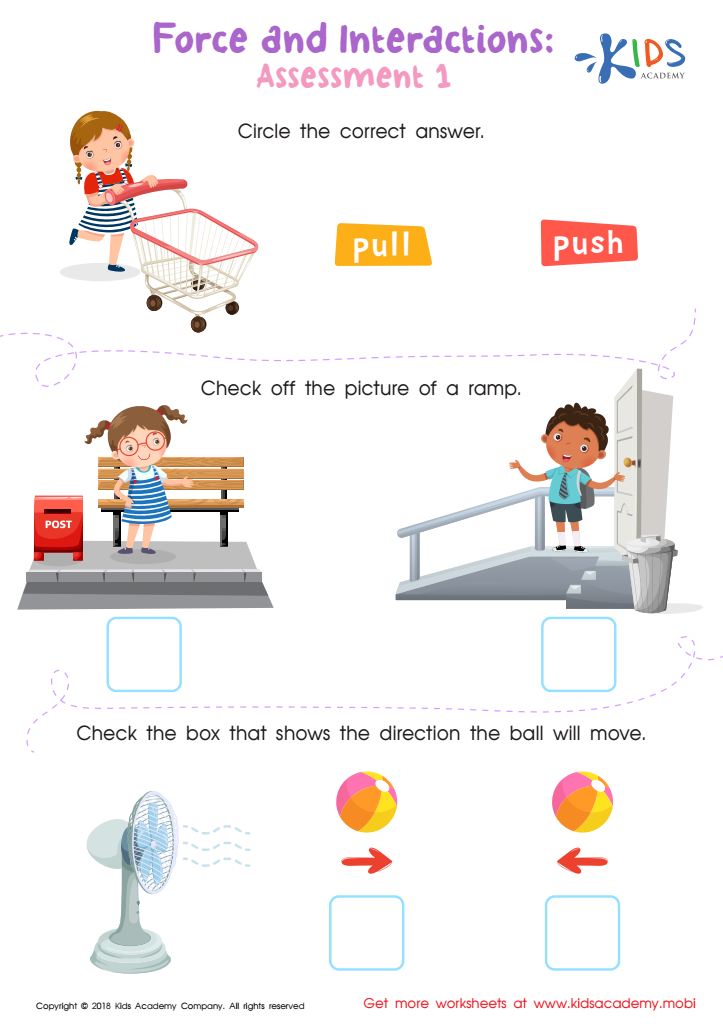
Force and Interactions: Assessment 1 Worksheet
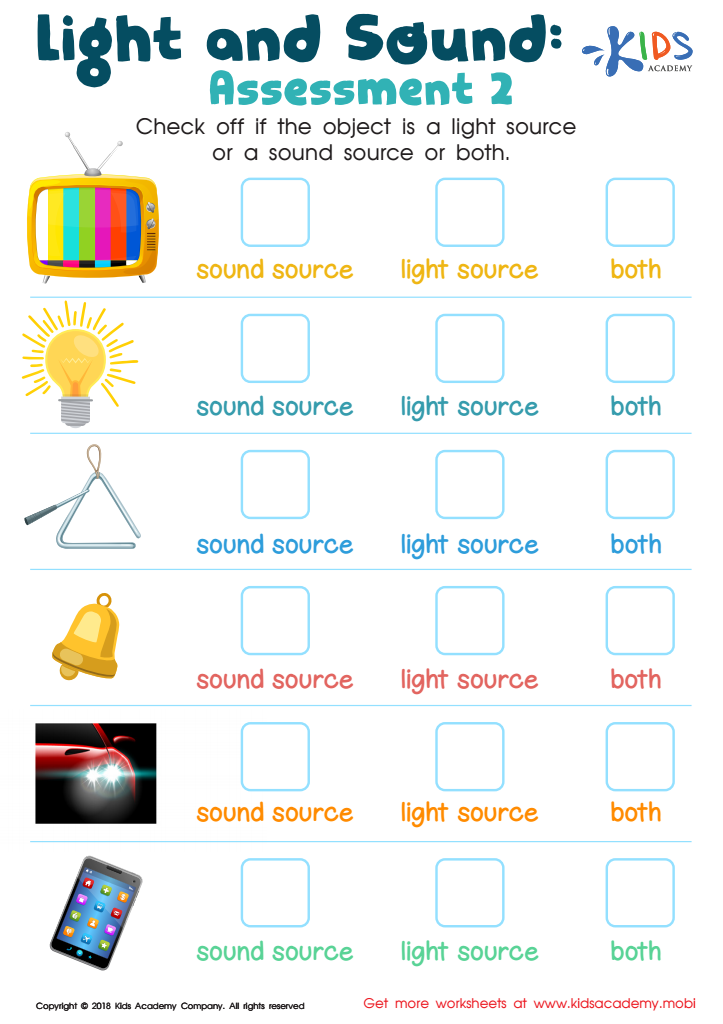
Light and Sound: Assessment 2 Worksheet
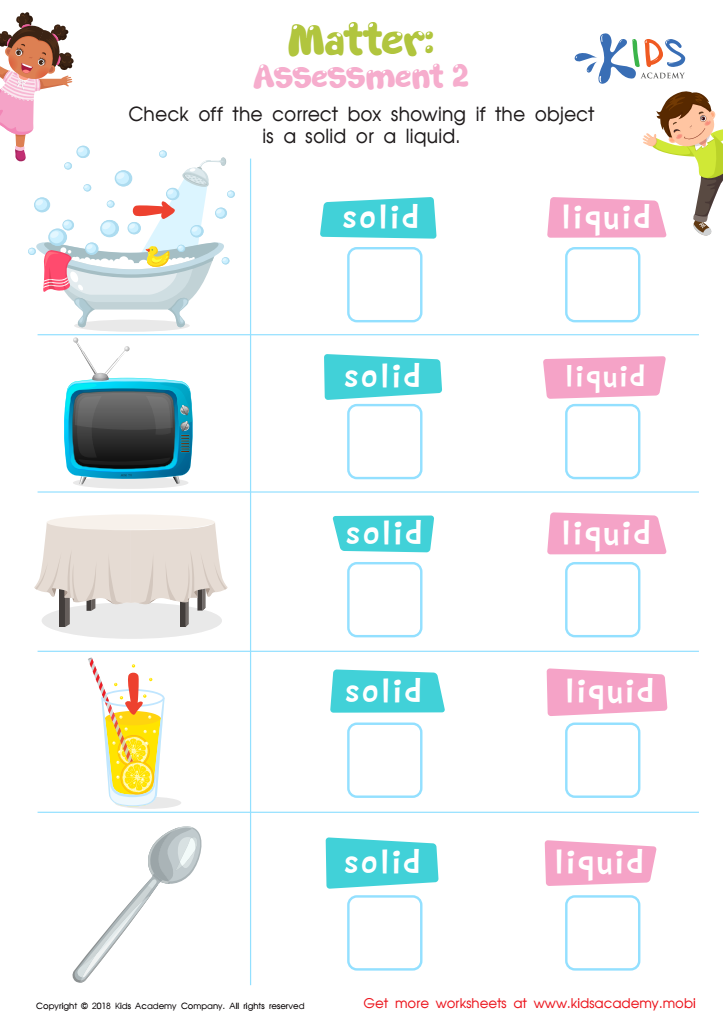
Matter: Assessment 2 Worksheet








Parents and teachers should prioritize Normal Physical Science Activities for children aged 6-9 because these foundational experiences foster a love for learning and cultivate critical thinking skills. At this age, children's curiosity about the world is at its peak, and engaging them in hands-on activities helps solidify their understanding of basic scientific concepts such as matter, energy, force, and motion.
Incorporating scientific activities into learning encourages exploration and experimentation. Such interactive experiences not only make science fun but also enhance cognitive development as children learn to ask questions, make predictions, conduct investigations, and analyze results. Furthermore, early engagement with physical science can spark a long-lasting interest in STEM (Science, Technology, Engineering, and Mathematics) fields.
Providing answers and guidance for these activities also empowers parents and teachers to facilitate meaningful discussions, allowing children to express their observations and thoughts. Moreover, structured activities provide a framework that aligns with educational standards, ensuring that children are acquiring essential knowledge in an enjoyable manner.
Overall, Normal Physical Science Activities promote curiosity, creativity, and confidence, enabling young learners to develop their skills while exploring the wonders of the natural world. Investing time and resources in these activities is a key step toward nurturing the next generation of thinkers and innovators.








