Elementary Phonics Worksheets for Ages 3-4 - Page 2
25 filtered results
-
From - To
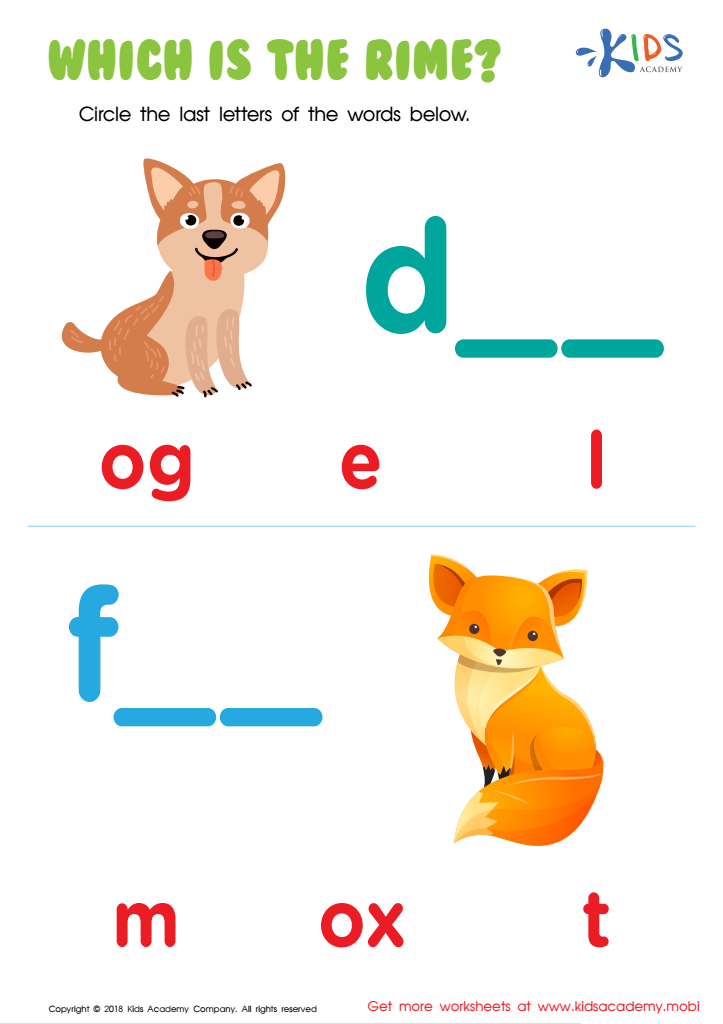
Which Is the Rime? Worksheet
 Assign to My Students




Elementary Phonics for Ages 3-4 stands as a cornerstone in laying the foundation for early reading and writing skills among young learners. At this critical age, children are at a prime stage of cognitive development, where their brains absorb information much like sponges soaking up water. The use of worksheets specifically designed for this age group caters to their learning needs, making the acquisition of phonics not only effective but also engaging.
These worksheets are crafted with the understanding that children at ages 3-4 are beginning to recognize sounds and letters, building the initial blocks of literacy. Through a variety of activities, such as matching letters to sounds, tracing letters, and identifying initial sounds in words, Elementary Phonics worksheets for Ages 3-4 make learning tangible. They offer a hands-on approach that enhances fine motor skills alongside phonetic awareness.
Moreover, these worksheets provide a structured way for young learners to practice at their own pace, encouraging repetition, which is key to mastering phonics. The vibrant colors and interactive elements keep children engaged, turning a learning task into an enjoyable activity. Thus, Elementary Phonics worksheets for Ages 3-4 are not just about learning sounds and letters; they are about instilling confidence and a love for reading from the earliest stages of education.







