Matching numbers Math Worksheets for Ages 3-4
12 filtered results
-
From - To
Discover our "Matching Numbers Math Worksheets for Ages 3-4," designed to boost early math skills and number recognition. Our engaging worksheets feature colorful, age-appropriate exercises that captivate young learners. By matching numbers to pictures and completing fun number-themed activities, children develop critical thinking and fine motor skills. Ideal for preschool and pre-K students, these printable worksheets make learning enjoyable through play. Foster a strong foundation in math and set your child on the path to academic success. Browse our collection today on Kids Academy and make math fun and effective for your little ones!
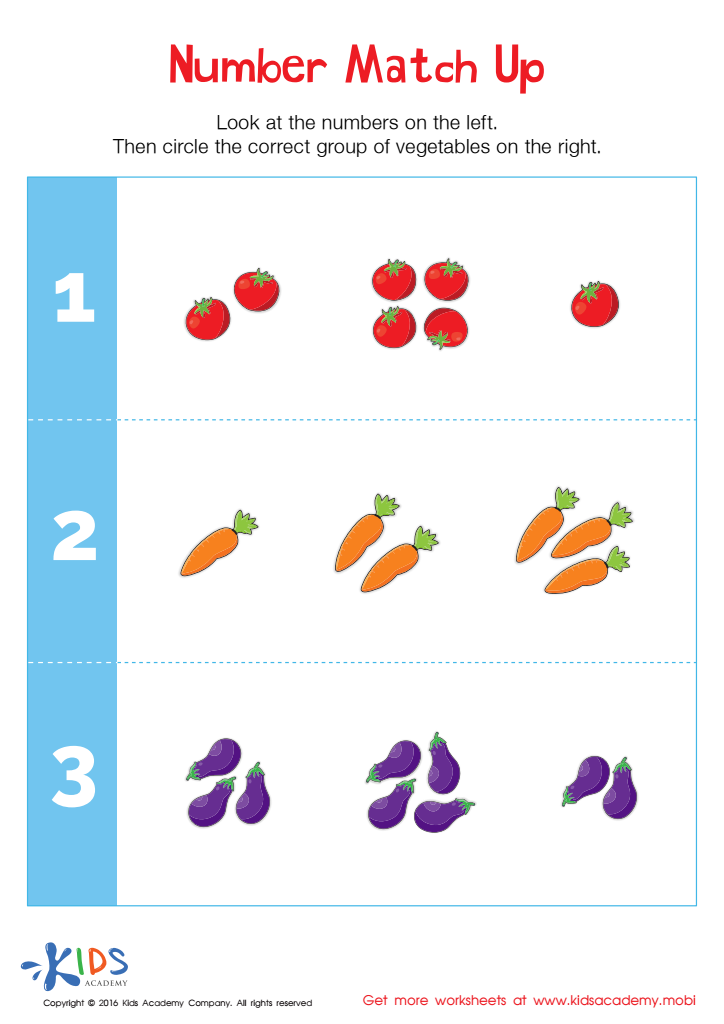
Number Match Up Worksheet
 Assign to My Students
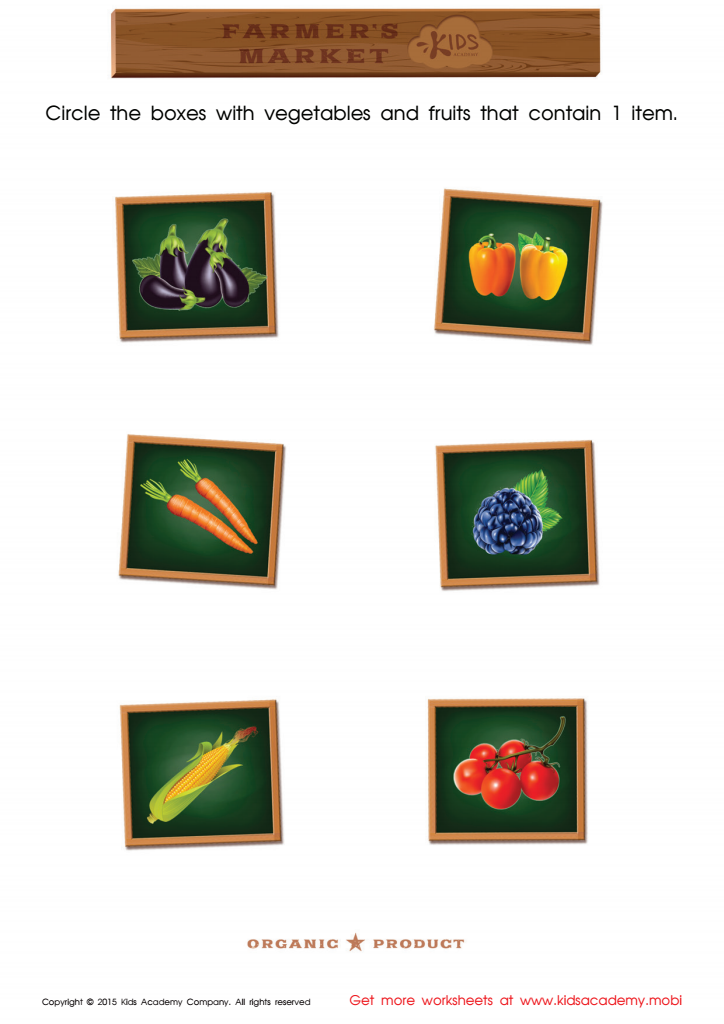
Count and Match Vegetables 1 – 7 Math Worksheet
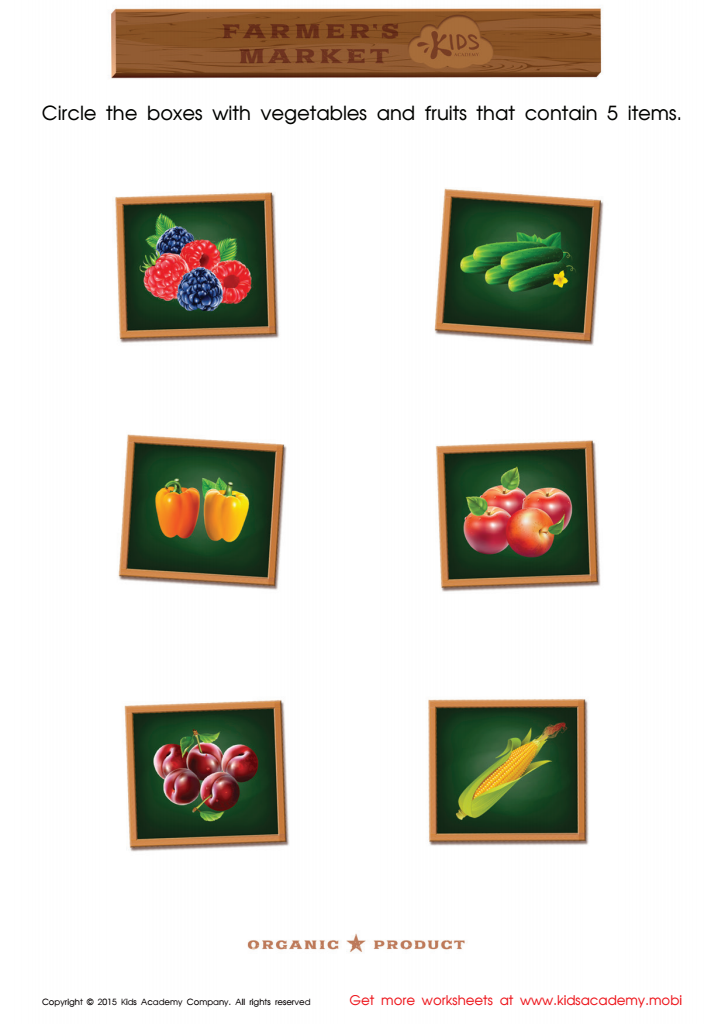
Count and Match Boxes with Vegetables
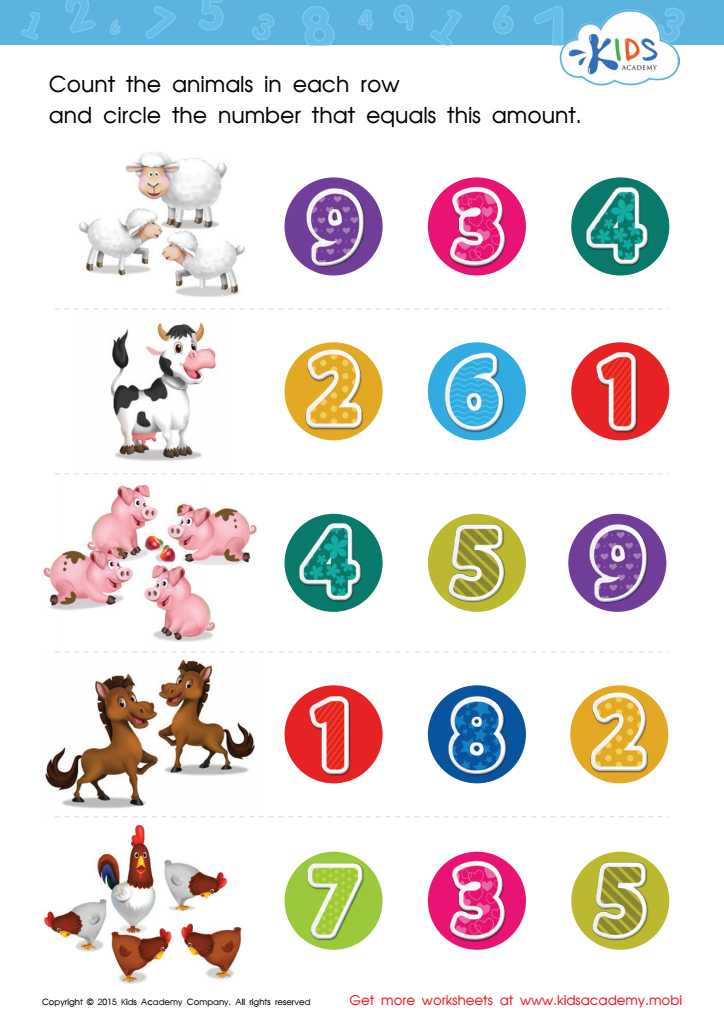
Count and Match 1 – 5 Math Worksheet
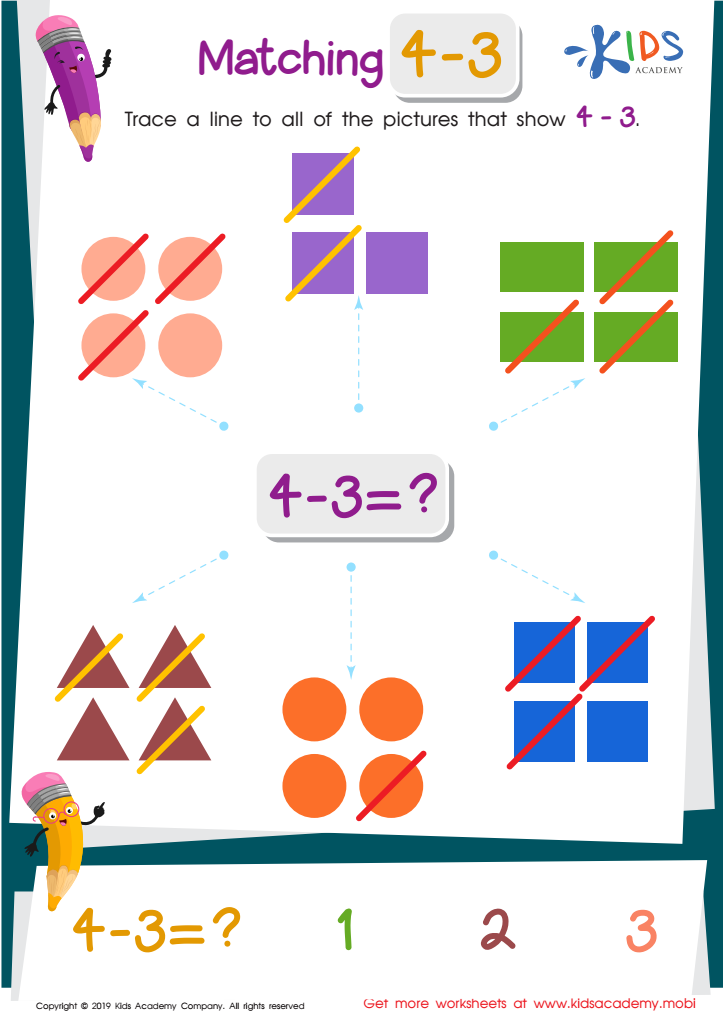
Matching 4 – 3 Worksheet
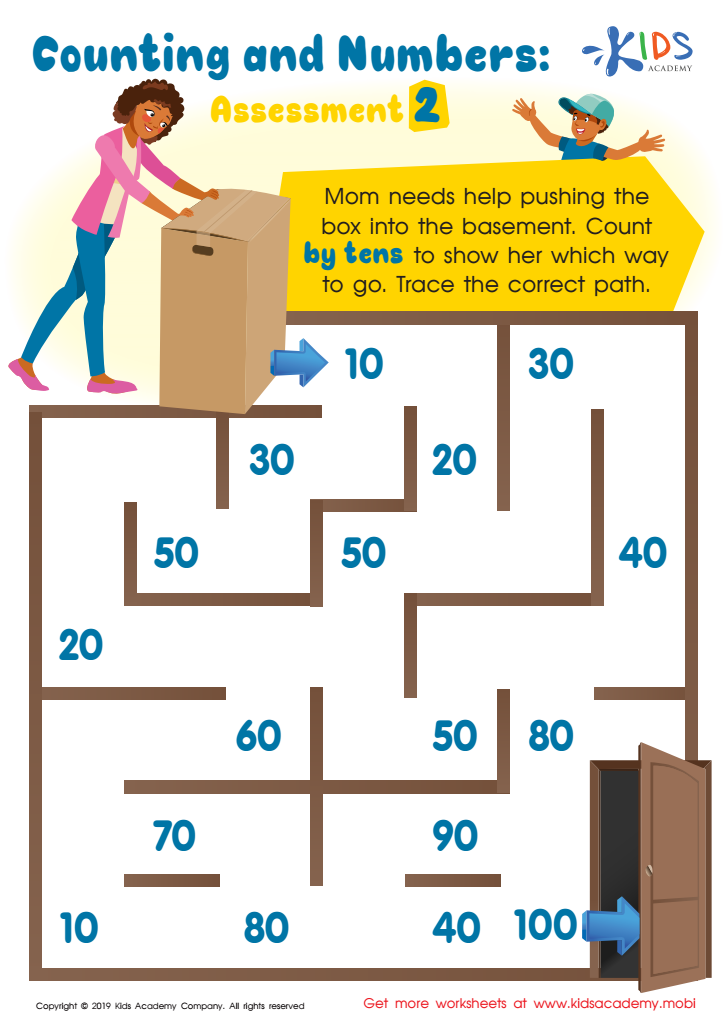
Counting and Numbers: Assessment 2 Worksheet
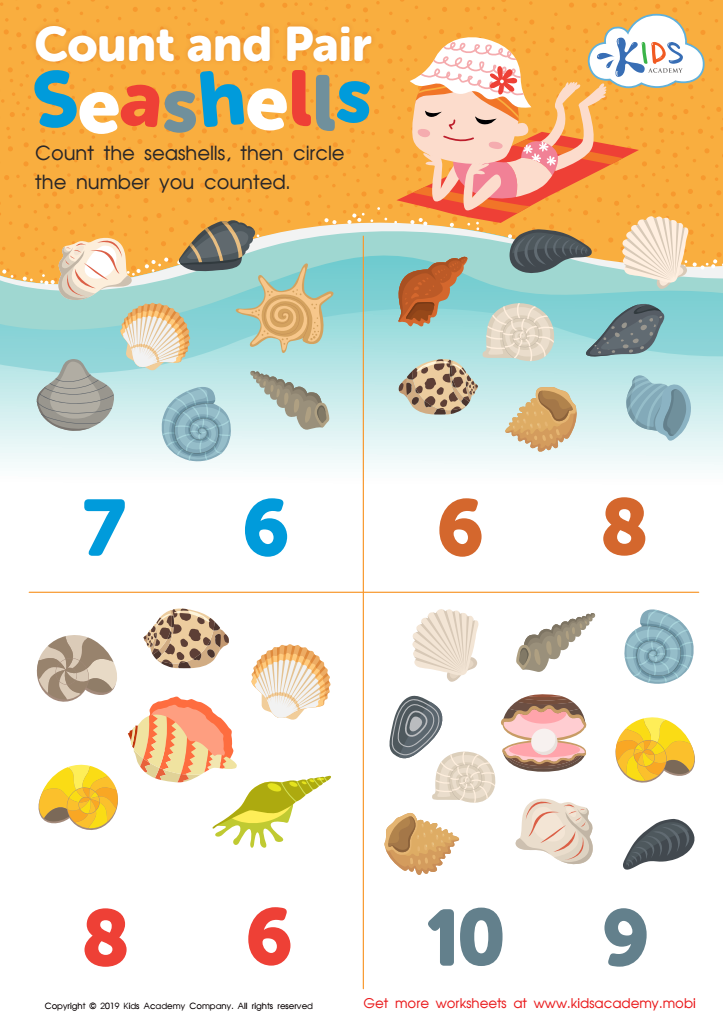
Count and Pair Seashells Worksheet
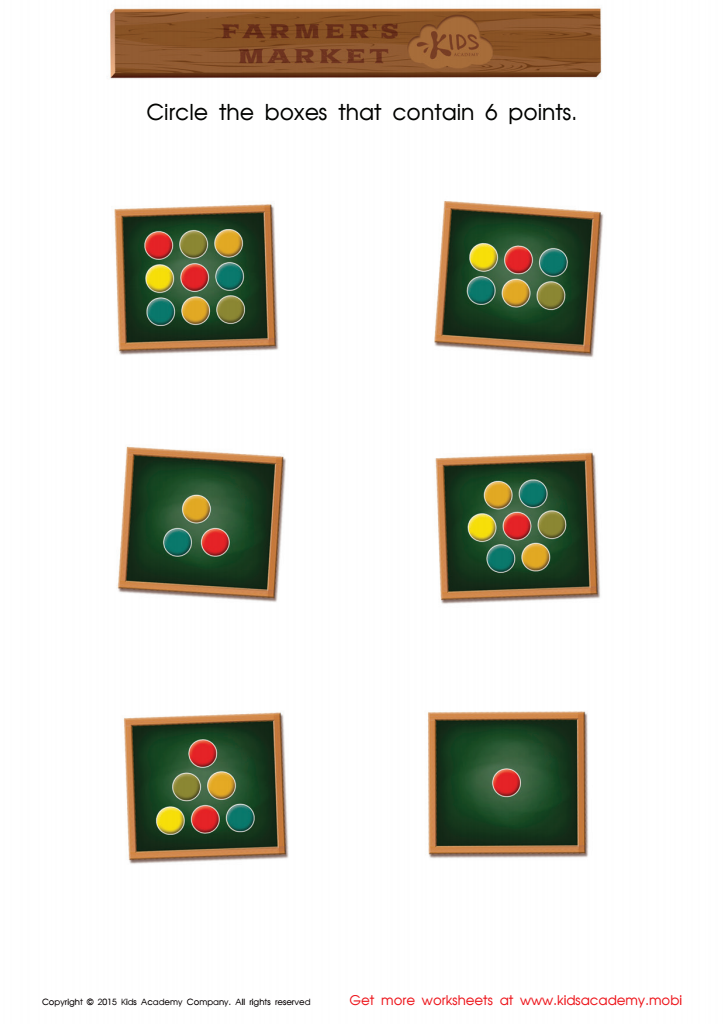
Count and Match Points 6 Math Worksheet
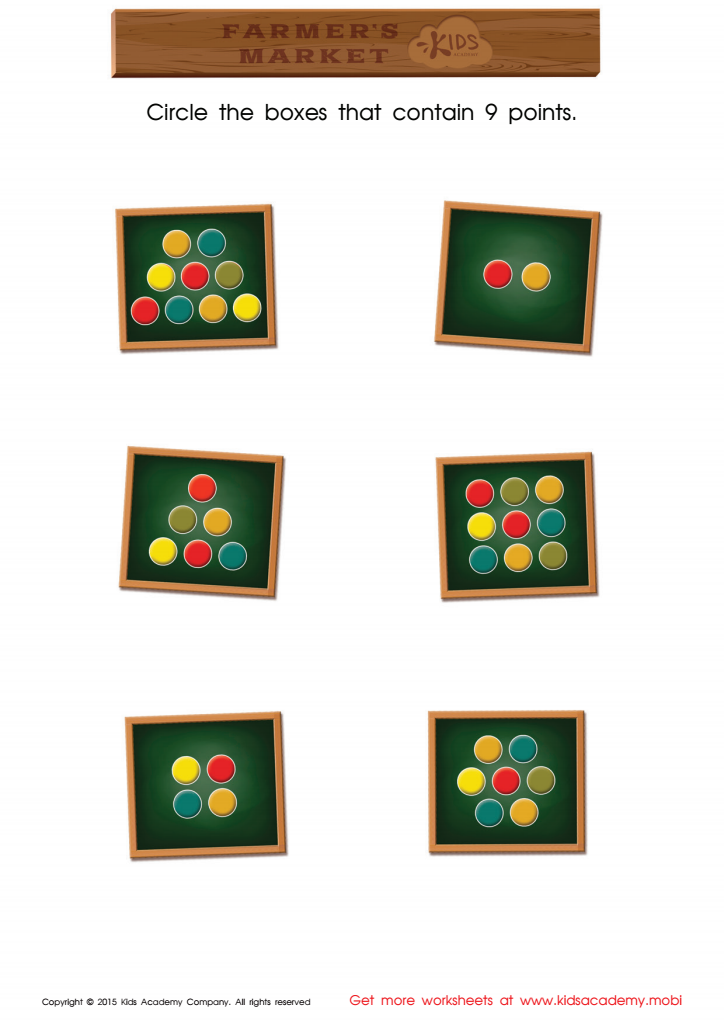
Count and Match Points 9 Math Worksheet
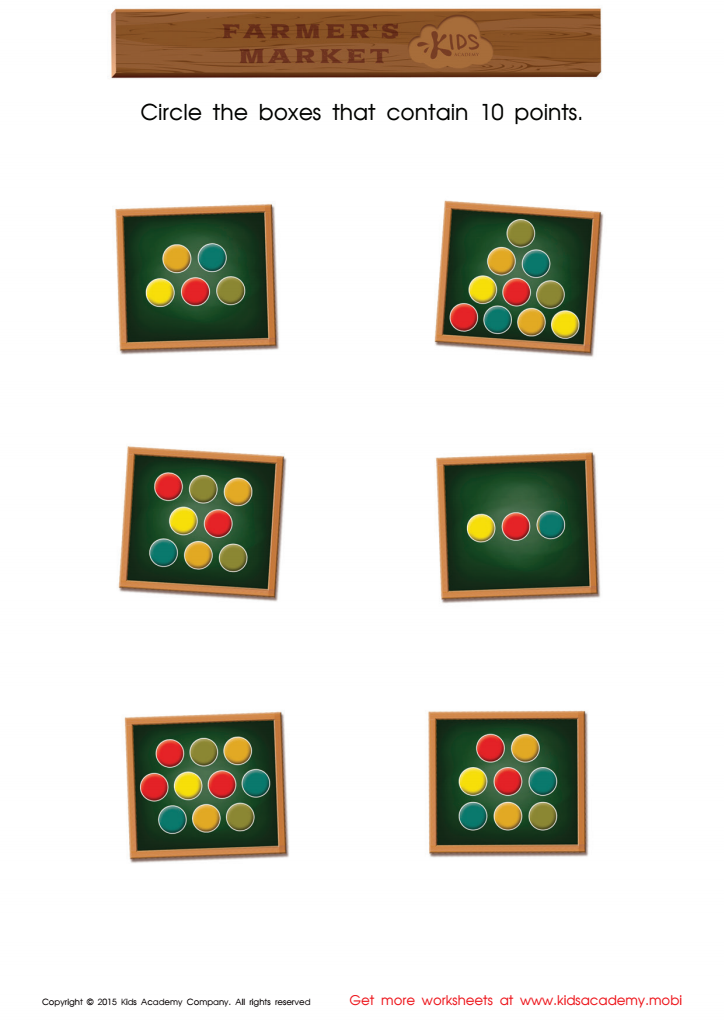
Count and Match Points 10 Math Worksheet
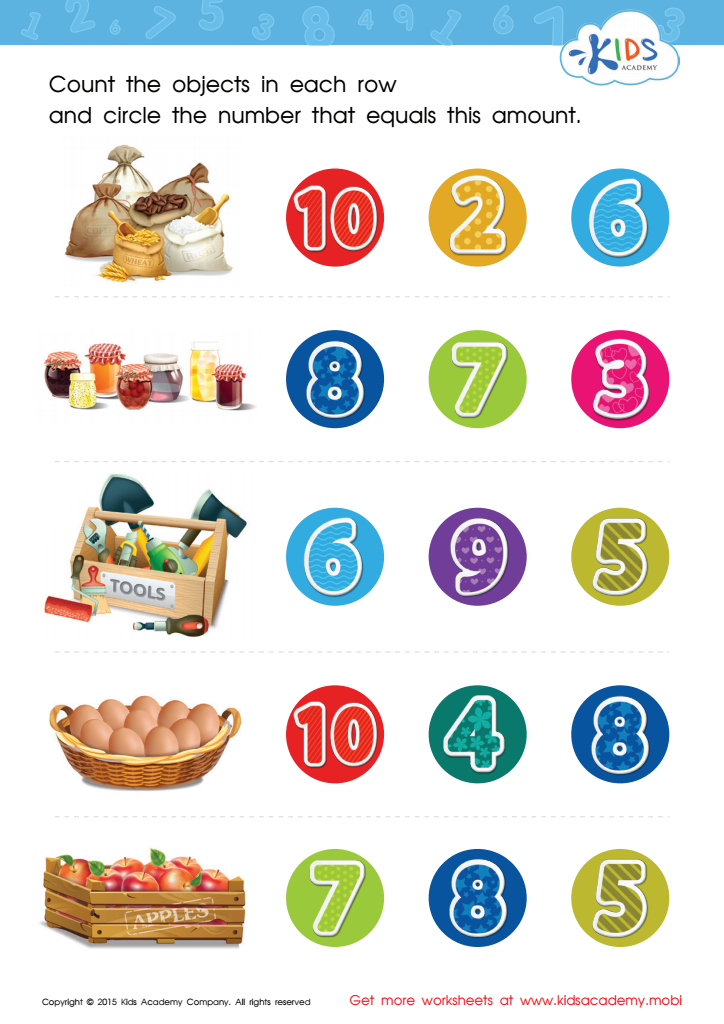
Count and Match 6 – 10 Math Worksheet
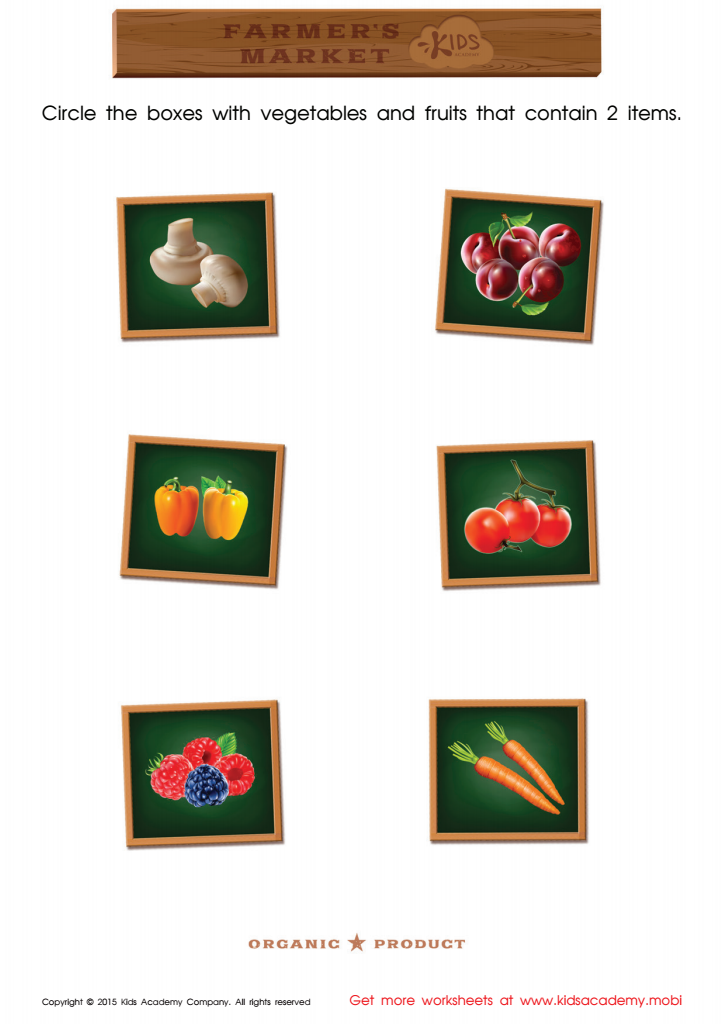
Count and Match Vegetables and Points Math Worksheet






Parents and teachers should care about matching numbers math activities for children aged 3-4 because these activities lay foundational skills crucial for early cognitive and mathematical development. During these formative years, children's brains are highly receptive to learning patterns, structures, and relationships. Engaging children in number matching tasks helps them understand one-to-one correspondence, which is the idea that each object being counted corresponds to one number. This concept is fundamental for all future mathematical learning.
Moreover, matching numbers helps in enhancing memory and concentration, as children need to understand and recall the number symbols and their associated quantities. It also supports the development of fine motor skills when activities involve physical manipulation of objects, such as matching cards or sorting blocks. These skills are not only valuable in mathematical contexts but also contribute to overall cognitive development.
Additionally, these activities can be fun and engaging, making learning enjoyable through playful interaction, which fosters a positive attitude toward learning and problem-solving. This early enthusiasm for math can have lasting impacts, encouraging a lifelong interest in STEM (Science, Technology, Engineering, and Mathematics) fields. Therefore, focused efforts in these areas can substantially aid in the child's holistic growth and readiness for more complex concepts in later educational stages.








