Math Worksheets for Ages 3-5 - Page 28
650 filtered results
-
From - To
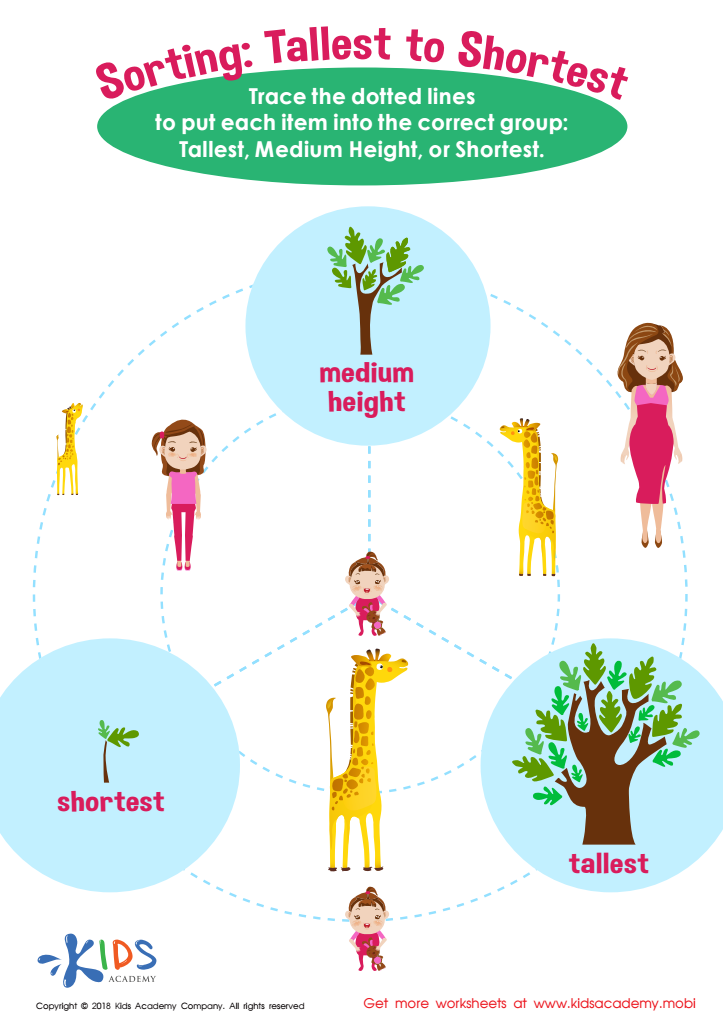
Sorting: Tallest to Shortest Worksheet
 Assign to My Students
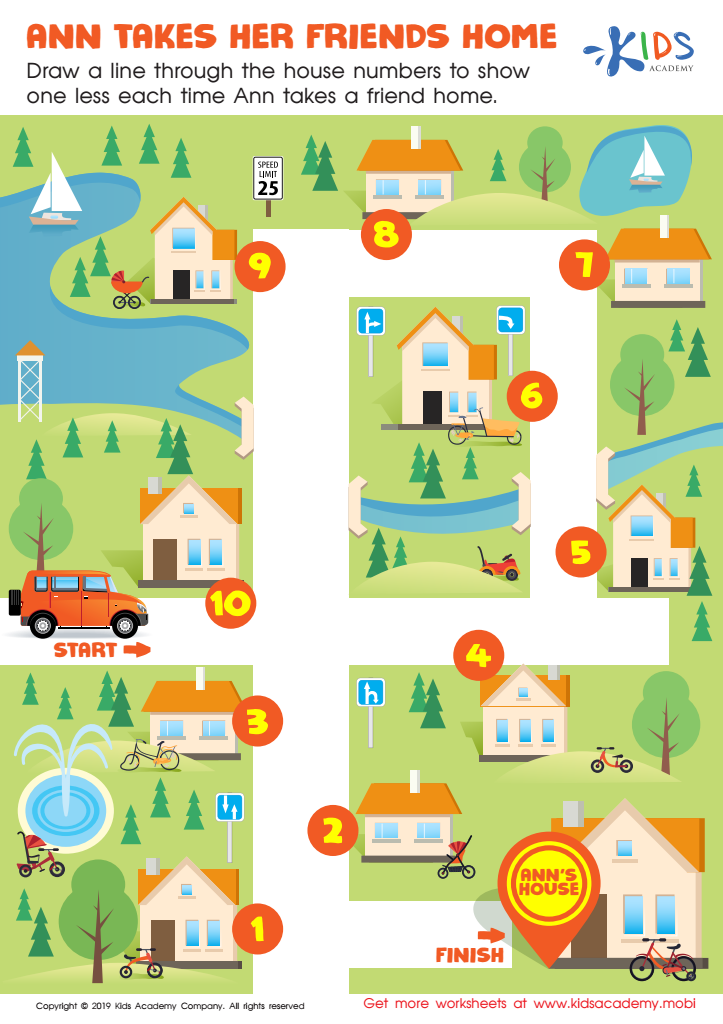
Ann Takes her Friends Home Worksheet








Math worksheets designed for ages 3-5 play a pivotal role in early childhood education, laying a strong foundation for numeracy skills that children will build on throughout their lives. These worksheets are specifically tailored to cater to the developmental stage of preschoolers, making math concepts accessible and engaging for young learners.
Incorporating math worksheets for ages 3-5 into a child's learning routine has several benefits. Firstly, they introduce basic math concepts such as counting, shapes, patterns, and simple addition and subtraction in a structured yet fun manner. This early exposure helps children develop a positive attitude towards math, seeing it not as a daunting subject but as an interesting and enjoyable activity.
Secondly, these worksheets are designed to enhance fine motor skills and cognitive development. As children use pencils or crayons to fill in numbers, trace shapes, and solve puzzles, they improve their hand-eye coordination and problem-solving abilities. This hands-on approach to learning enables young minds to grasp abstract math concepts more concretely.
Furthermore, math worksheets for ages 3-5 facilitate individualized learning. Not all children learn at the same pace, and worksheets can be selected and tailored to meet each child's unique learning needs and interests, ensuring that they are neither under-challenged nor overwhelmed.
In conclusion, math worksheets for ages 3-5 are an invaluable tool in early childhood education, making learning enjoyable and effective while preparing children for a lifetime of mathematical learning and thinking.








