Vowel Digraphs Worksheets for Ages 3-8
3 filtered results
-
From - To
Unlock the power of reading with our engaging Vowel Digraphs Worksheets for ages 3-8! Designed to reinforce essential phonics skills, these printable resources help young learners explore vowel combinations such as "ai," "ea," and "oo." Each worksheet features fun illustrations and exercises that captivate children's attention, making learning both enjoyable and effective. Our activities cater to various learning styles, promoting letter recognition and sound blending. Perfect for classroom or home use, these worksheets are an essential tool for early literacy development. Discover the joy of reading with our Vowel Digraphs resources that set the foundation for lifelong learning!
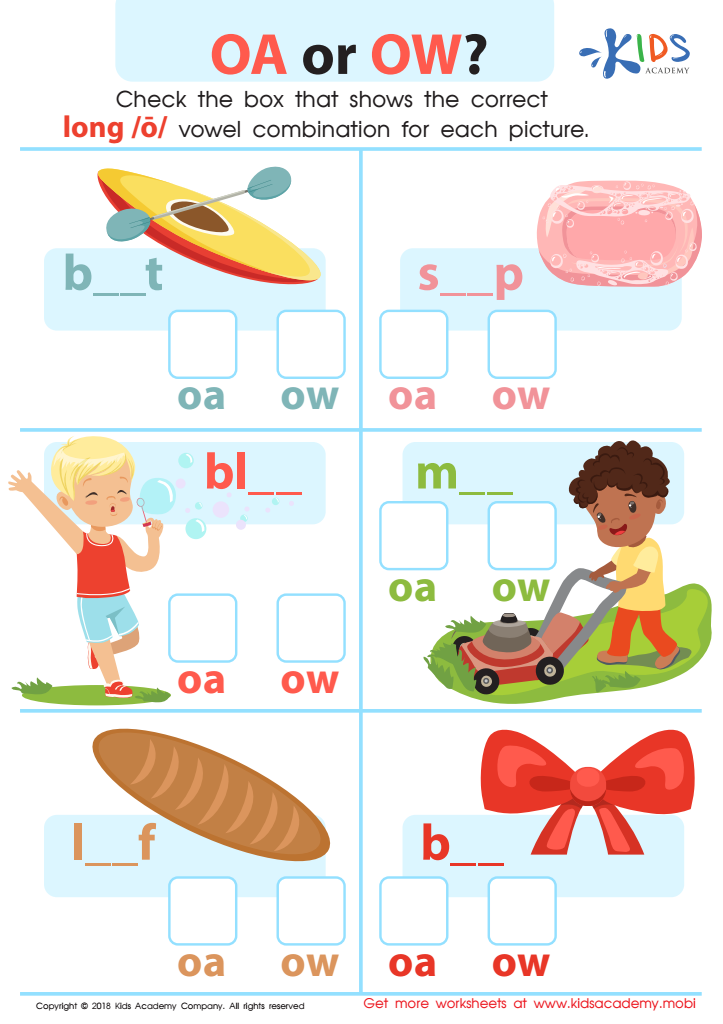
Reading: OA or OW Worksheet
 Assign to My Students
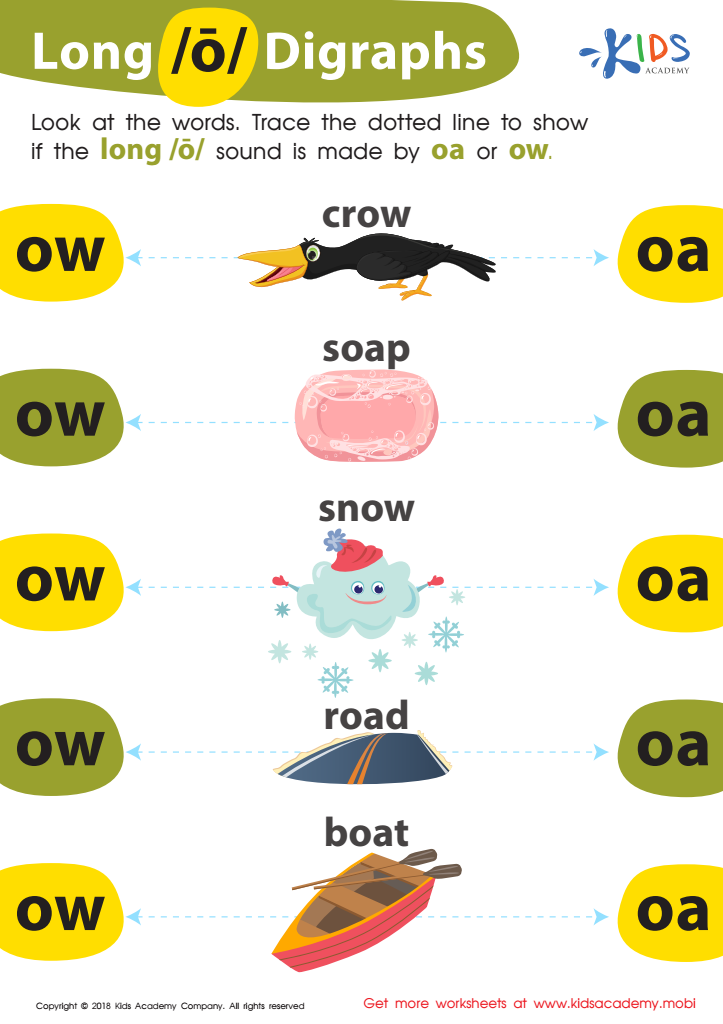
Reading: Long O Digraphs Worksheet
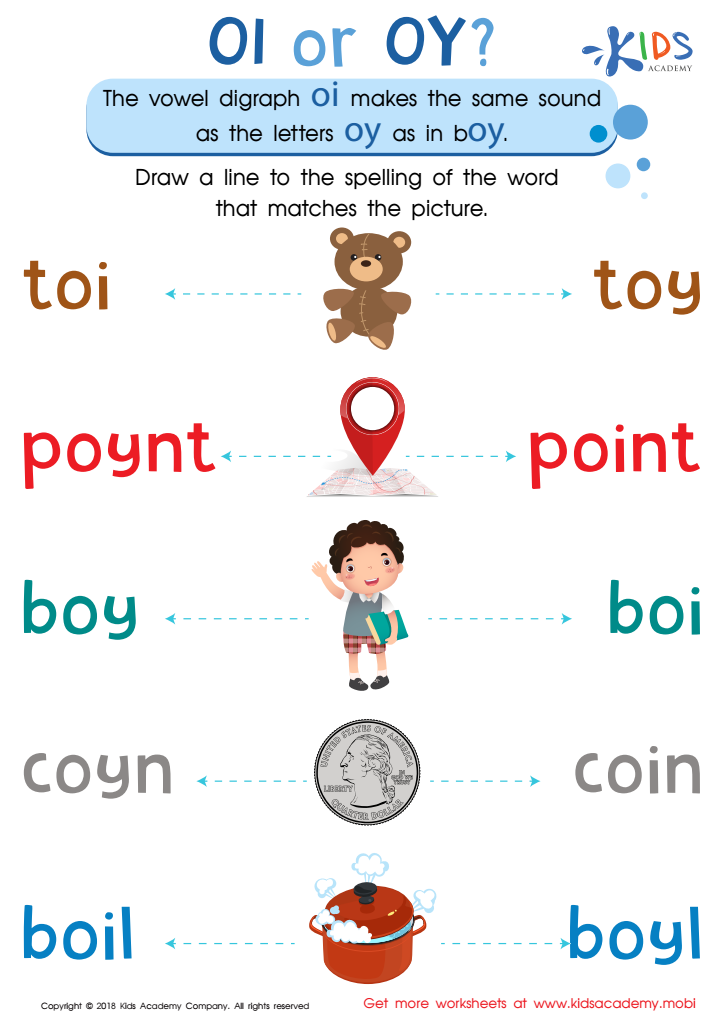
Reading: OI and OY Worksheet


Vowel digraphs, two vowels combined to represent a single sound, play a crucial role in early literacy development for children aged 3 to 8. Understanding vowel digraphs supports children’s phonemic awareness, which is essential for reading and writing. As young learners encounter words like "train," "moon," or "team," they begin to recognize patterns in language that enhance their decoding skills. By mastering these patterns, children build a stronger foundation for fluency and comprehension.
Parents and teachers should prioritize vowel digraphs because they contribute significantly to vocabulary acquisition. Early familiarity with these letter combinations empowers children to tackle complex words they’ll encounter in their educational journey. Moreover, addressing vowel digraphs can prevent potential reading difficulties, ensuring that kids develop confidence and enjoyment in reading from an early age.
Incorporating fun activities such as storytelling, games, and songs focusing on vowel digraphs can make learning engaging. By nurturing this understanding at a young age, parents and teachers help foster a love for language, paving the way for successful readers and effective communicators. Ultimately, emphasizing vowel digraphs is an investment in a child’s future literacy success, equipping them with skills for lifelong learning.