Vowel Diphthongs Worksheets for Ages 3-8 - Page 2
27 filtered results
-
From - To
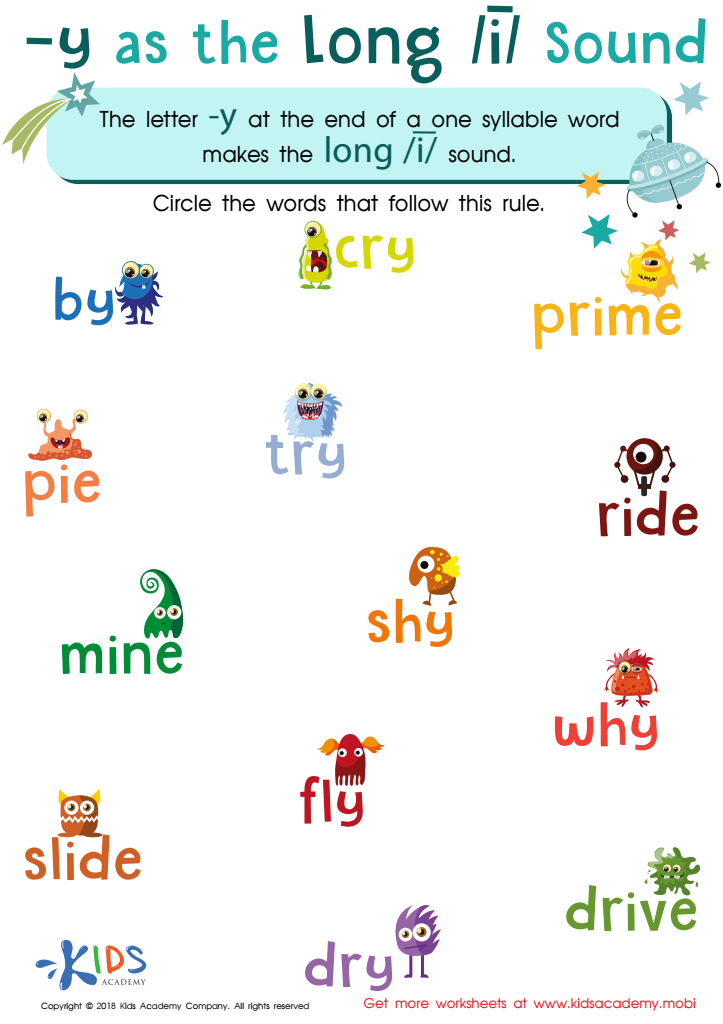
Reading: Y as Long I Worksheet
 Assign to My Students
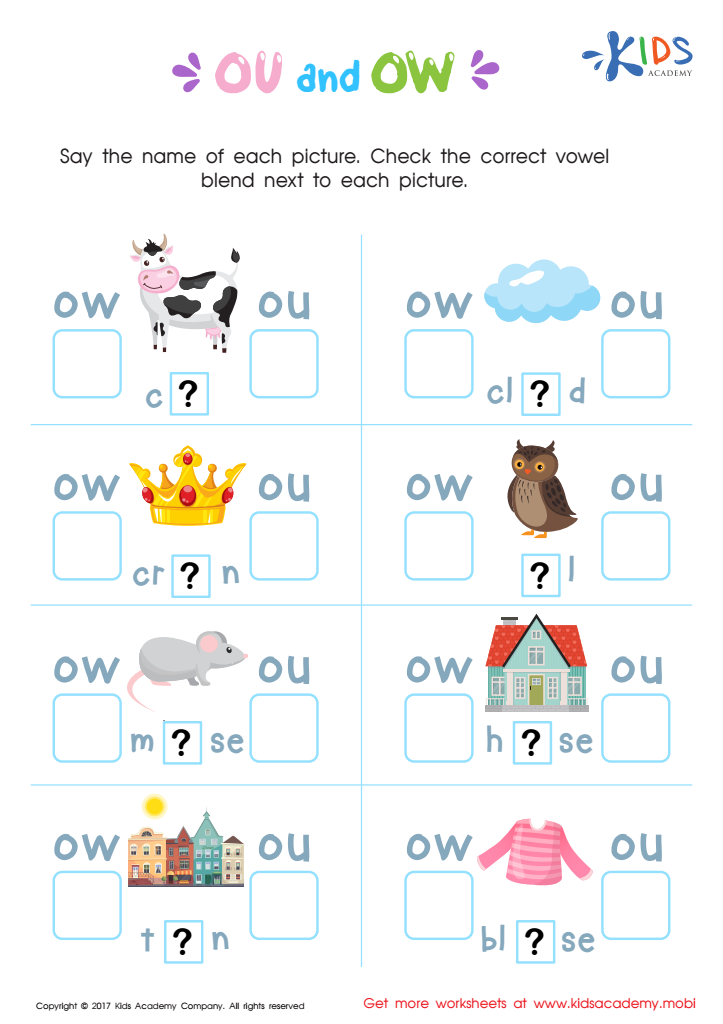
OU and OW Words Worksheet
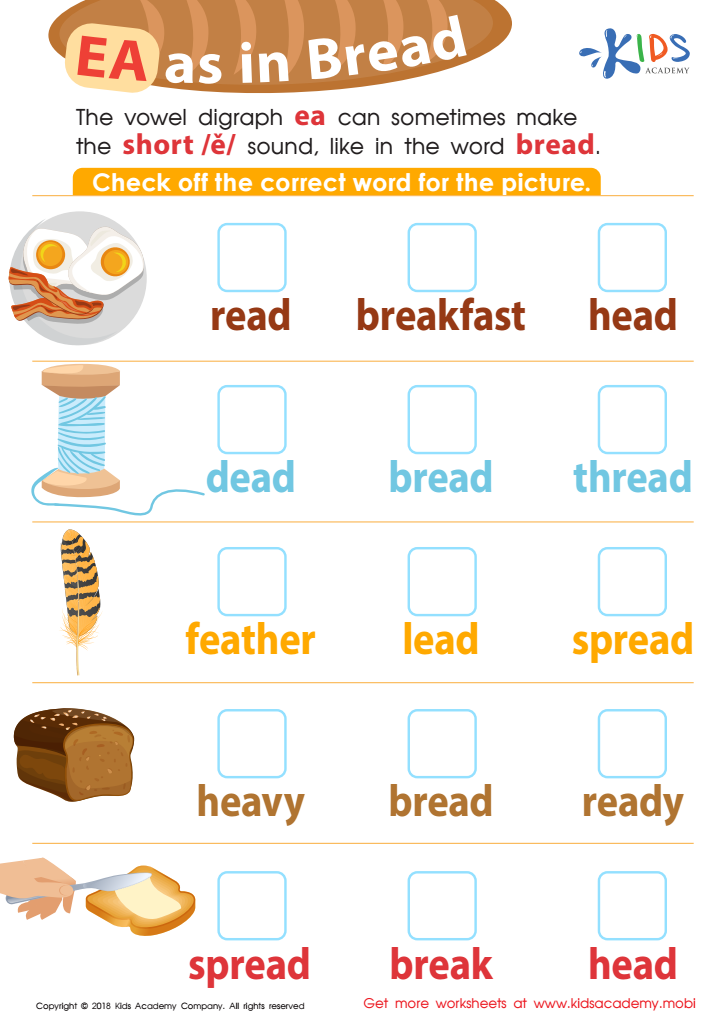
Reading: EA as in Bread Worksheet


Vowel diphthongs are crucial for early literacy development in children aged 3-8, and understanding them can greatly benefit parents and teachers. Diphthongs, which are complex vowel sounds that begin with one vowel sound and glide into another (e.g., "oi" in "boil" or "ow" in "cow"), play a significant role in phonics instruction and language acquisition. Children who grasp diphthongs can decode and pronounce more challenging words, greatly enhancing their reading fluency and comprehension.
Moreover, recognizing vowel diphthongs helps children develop better listening skills and phonemic awareness, essential foundations for literacy. As they become familiar with varied vowel combinations, their ability to spell and articulate words improves, supporting effective communication.
Greater awareness and practice with diphthongs can also enhance a child's confidence in using language, crucial for their overall educational experience. Through engaging activities, such as songs, games, or storytelling, teachers and parents can make learning about diphthongs fun and impactful. By caring about this aspect of language education, caregivers actively contribute to a child's successful journey in literacy, fostering lifelong learning and curiosity in the world around them.