Subtraction Worksheets for Ages 3-8 - Page 5
97 filtered results
-
From - To
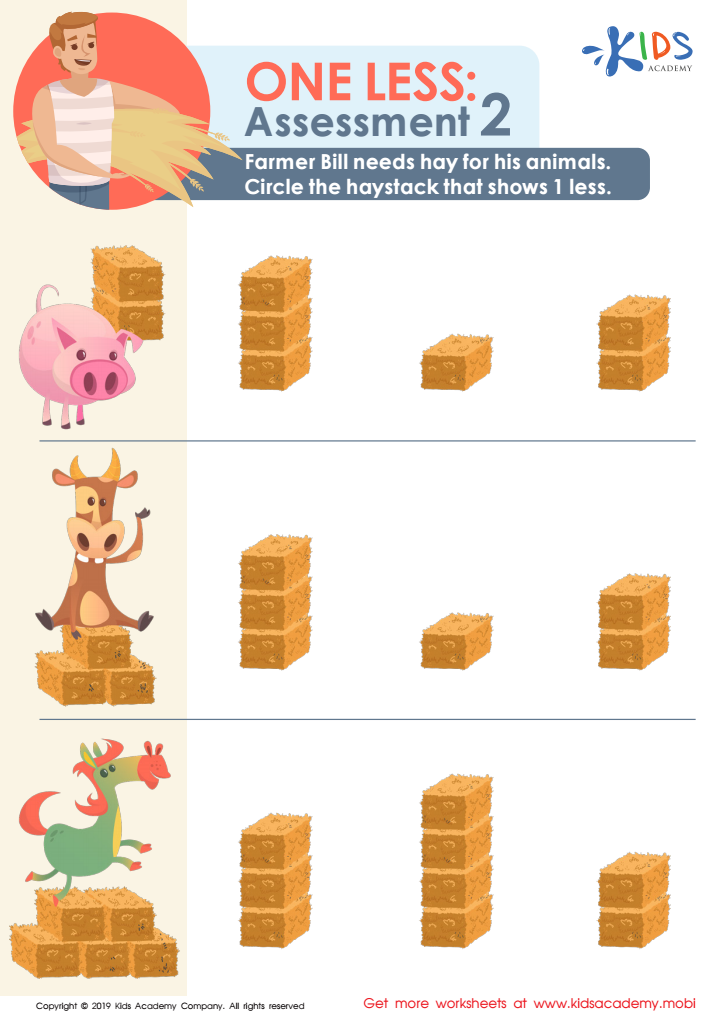
One Less: Assessment 2 Worksheet
 Assign to My Students








Subtraction is a fundamental mathematical operation that lays the groundwork for children's numeracy skills and overall cognitive development. For children ages 3-8, understanding subtraction goes beyond simple number manipulation; it enhances critical thinking and problem-solving abilities. As children learn to subtract, they develop a better grasp of quantity, learn how to balance relationships in numbers, and improve their ability to make comparisons.
Parents and teachers should care about subtraction because it fosters early mathematical fluency, which is essential for later learning in more complex math concepts. Engaging children in fun, hands-on subtraction activities helps solidify their understanding and keeps them motivated. Using everyday situations, such as sharing snacks or counting toys, makes the learning process relatable and enjoyable.
Additionally, mastering subtraction supports emotional development, helping children learn patience and perseverance when they encounter challenging problems. It also aids in building self-confidence as they successfully solve problems. Encouraging a strong foundation in subtraction can lead to proficiency in math that extends into adulthood, influencing career choices and logical reasoning skills. By prioritizing subtraction learning, parents and teachers can empower young learners to thrive in both academic and real-life situations.








