Upper & Lowercase Letters Worksheets for Ages 3-9 - Page 3
50 filtered results
-
From - To
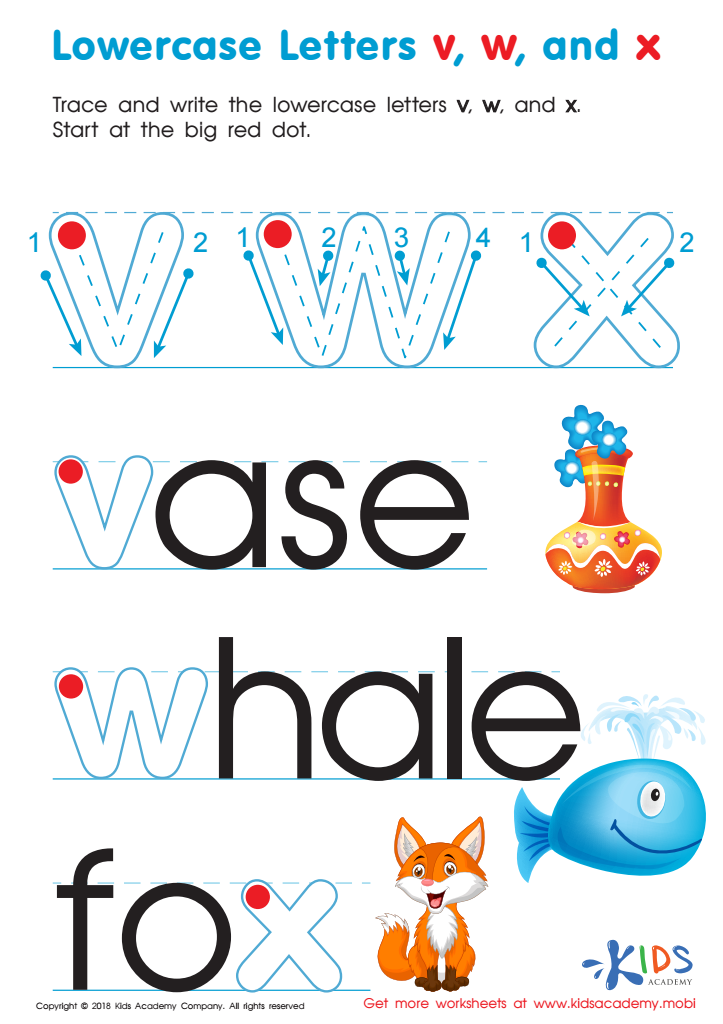
Lowercase Letters v w x Worksheet
 Assign to My Students

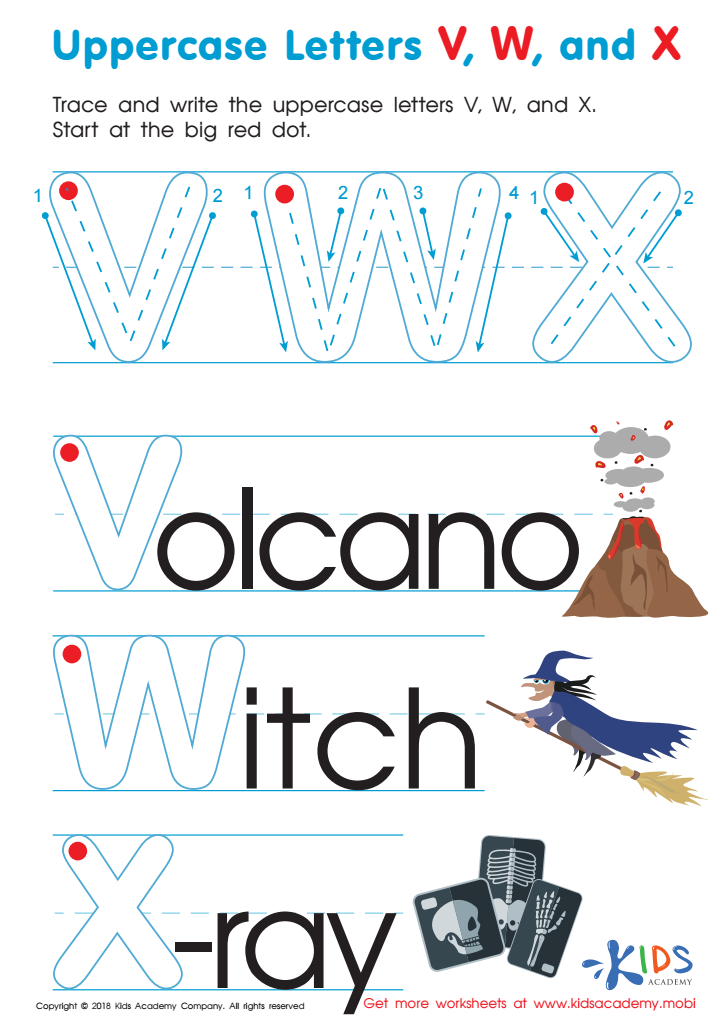
Uppercase Letters V, W, and X Worksheet






Understanding uppercase and lowercase letters is foundational for early literacy skills in children aged 3-9. Recognizing these letters goes beyond mere alphabet knowledge; it plays a crucial role in reading and writing development. For young learners, lowercase letters are predominantly used in texts, while uppercase letters often signify important concepts, such as the beginning of sentences or proper nouns.
Parents and teachers should care about teaching these distinctions as it aids in building phonetic awareness, allowing children to sound out words more effectively. Mastery of both forms of letters enhances spelling abilities, making it easier for children to write and understand written communication.
Additionally, familiarity with uppercase and lowercase letters boosts children's confidence when they encounter text, promoting a love for reading. Engaging children with interactive activities, such as games or storytelling, can further reinforce their understanding and retention.
Ultimately, by supporting children in mastering uppercase and lowercase letters, parents and teachers lay the critical groundwork for effective communication skills, fostering a lifelong appreciation for literature and learning. Ensuring that children are comfortable with both forms contributes significantly to their success in school and beyond.







