Missing Vowels Worksheets for Ages 4-5
4 filtered results
Difficulty Level
Grade
Age
-
From - To
Subject
Activity
Standards
Dive into the world of letters with our "Missing Vowels for Ages 4-5" worksheets! Specifically designed for young learners, these engaging worksheets offer a unique way to grasp early literacy skills. Through fun and interactive activities, children will explore the magic of vowels and their crucial role in word formation. Perfect for ages 4 to 5, these worksheets not only enhance letter recognition and phonemic awareness but also boost confidence in budding readers. Each page is crafted to captivate young minds, ensuring learning is both effective and enjoyable. Get ready to witness a love for reading bloom with our "Missing Vowels for Ages 4-5" worksheets!
Favorites
With answer key
Interactive
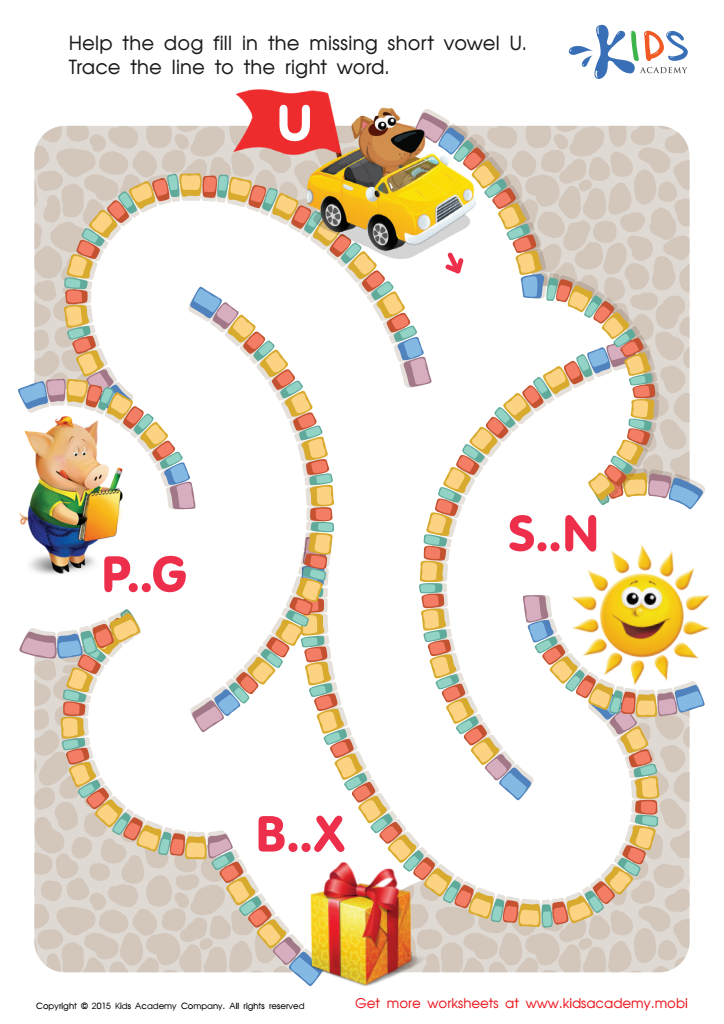
Short Vowel Sound U Worksheet
Practice abc phonics to help young learners link sounds to letters. This free printable phonics worksheet helps your kid learn the short vowel sound U. Guide them through the maze to help the dog complete the word "sun". Make sure they say the word out loud to emphasize the short U sound. Check out more phonics worksheets with mazes here.
 Assign to My Students
Short Vowel Sound U Worksheet
Worksheet
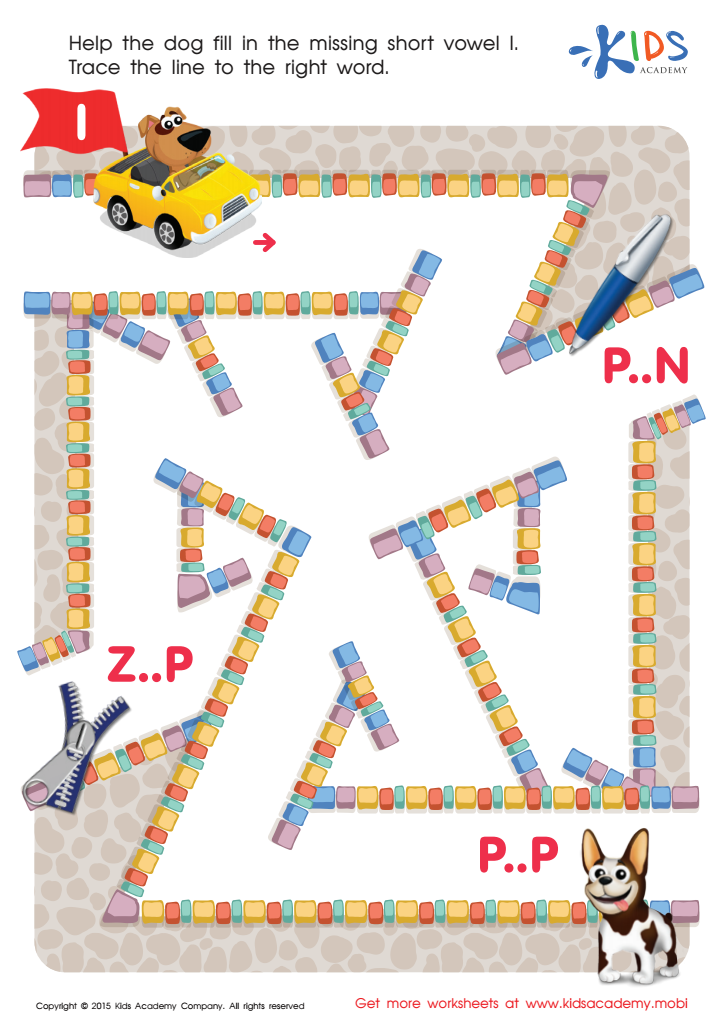
Short Vowel Sound I Worksheet
This free printable phonics worksheet will get your kid prepped for reading! It's a maze to help the dog complete the word “zip” with the missing letter I. Have your kid say the word aloud to learn the I sound. It's a great way to practice reading, writing and spelling skills. Check out here for more phonics worksheets!
Short Vowel Sound I Worksheet
Worksheet
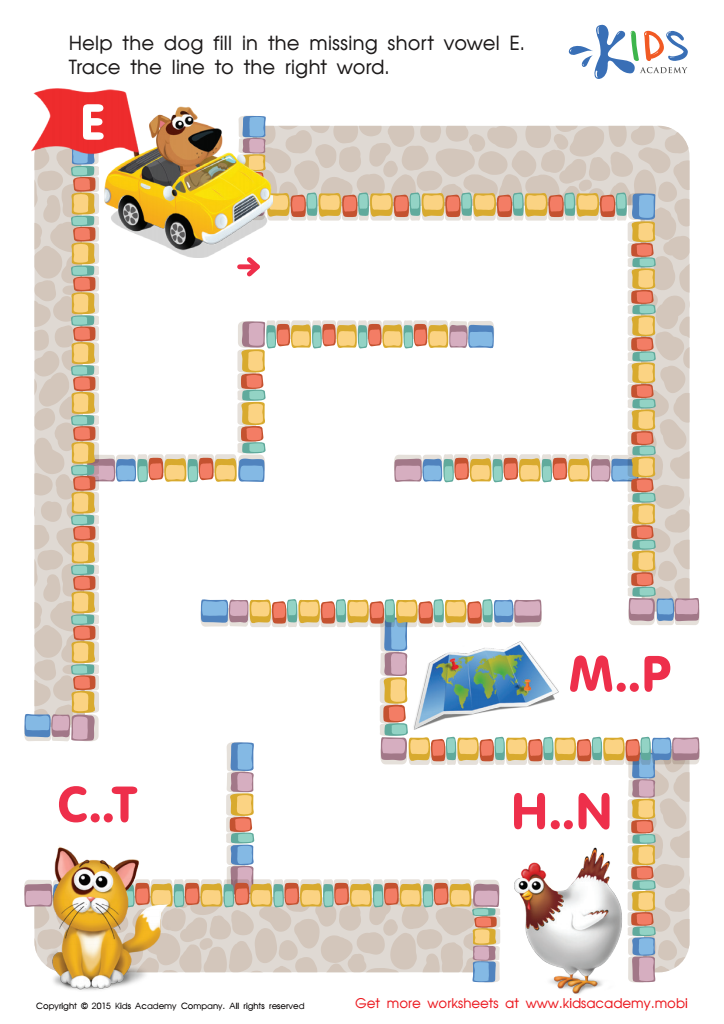
Short Vowel Sound E Worksheet
This free printable phonics worksheet helps kids learn the short vowel sound E. Kids need to help the dog complete the word “hen” by finding their way through a maze. It teaches kids to see the connection between letters and sounds and also strengthens their writing and spelling skills. Fun and educational, this phonics worksheet is great for kids. Want more? Check out here.
Short Vowel Sound E Worksheet
Worksheet
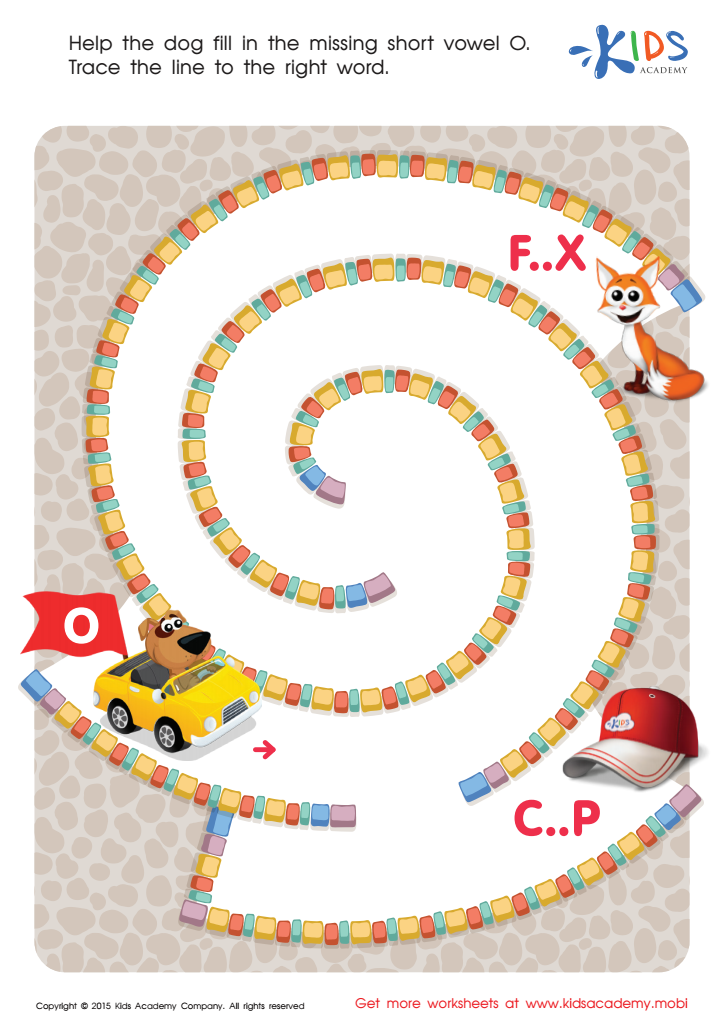
Short Vowel Sound O Worksheet
Help your child learn the short vowel sound O with this fun and free printable phonics worksheet! They'll need to complete the maze to help the dog finish the word "fox" with the missing letter O. Engage their fine motor muscles while they color or trace the maze with crayon or pencil. This educational activity is sure to bring a smile to your little learner's face! For more phonics worksheets, check here.
Short Vowel Sound O Worksheet
Worksheet
Join Kids Academy for Free
Who is primarily going to use this learning content?


Missing Vowels worksheets are an innovative and engaging tool designed specifically for young learners, aged 4-5. These worksheets are extremely useful because they introduce children to the fundamental aspects of reading and spelling in an interactive manner. By focusing on the identification and insertion of missing vowels into words, children develop a keen understanding of word structure, which is crucial for their early literacy skills.
For children aged 4-5, learning through play and hands-on activities is most effective, and Missing Vowels worksheets cater precisely to this need. They challenge young minds to think critically and recognize patterns, which enhances their cognitive development. Moreover, these worksheets improve their vowel recognition, a key component in phonics learning, helping them to decode words more efficiently and fostering a love for reading.
Additionally, the simplicity of the Missing Vowels concept makes it accessible to children in this age group, ensuring they feel confident and motivated. The sense of achievement they gain from correctly completing these worksheets boosts their self-esteem and encourages a positive attitude towards learning.
In essence, Missing Vowels worksheets for Ages 4-5 are more than just an educational resource. They are a foundation-building tool that nurtures early literacy skills, cognitive development, and a positive learning attitude, all of which are critical for young learners' success in their educational journey.