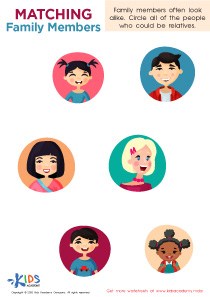
Good Citizenship Worksheets for Ages 4-5
9 filtered results
-
From - To
Introduce your young learners to the essentials of good citizenship with our engaging Good Citizenship Worksheets for Ages 4-5. Designed to inspire and educate, these worksheets help kids understand important concepts such as sharing, honesty, respect, and community involvement. Each activity fosters critical thinking and encourages discussions about values and behaviors that contribute to a harmonious society. With colorful illustrations and simple prompts, these worksheets make learning fun and accessible for preschoolers and kindergarteners. Start your child's journey toward becoming a responsible and caring member of their community today. Download our printable worksheets now and nurture lifelong skills!
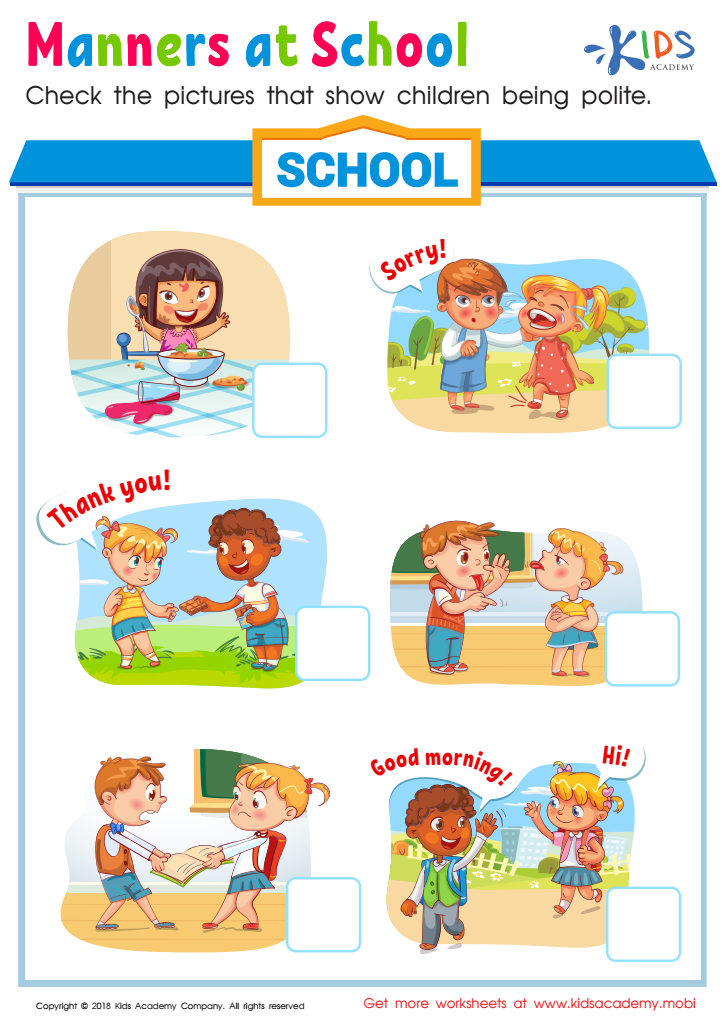
Manners at School Worksheet
 Assign to My Students
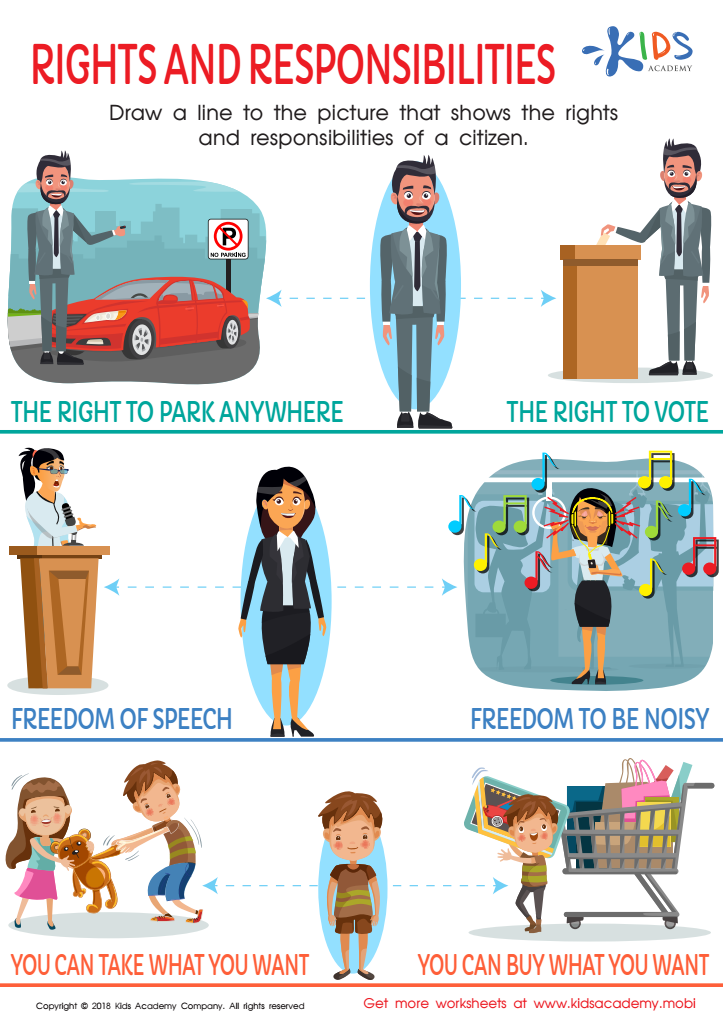
Rights and Responsibilities Worksheet
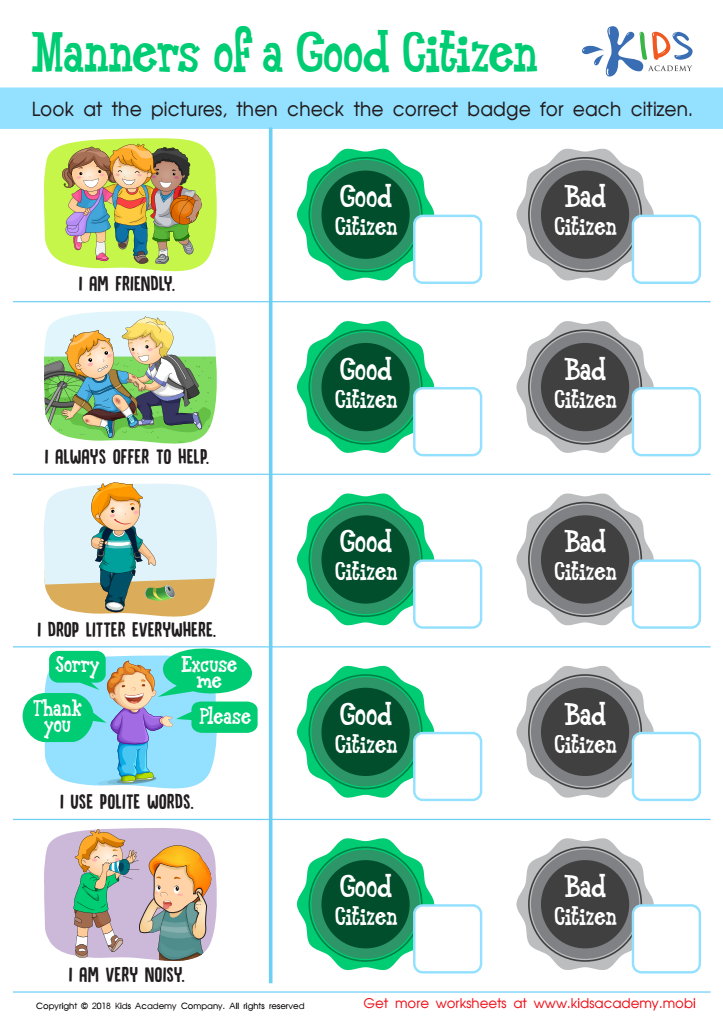
Manners of a Good Citizen Worksheet
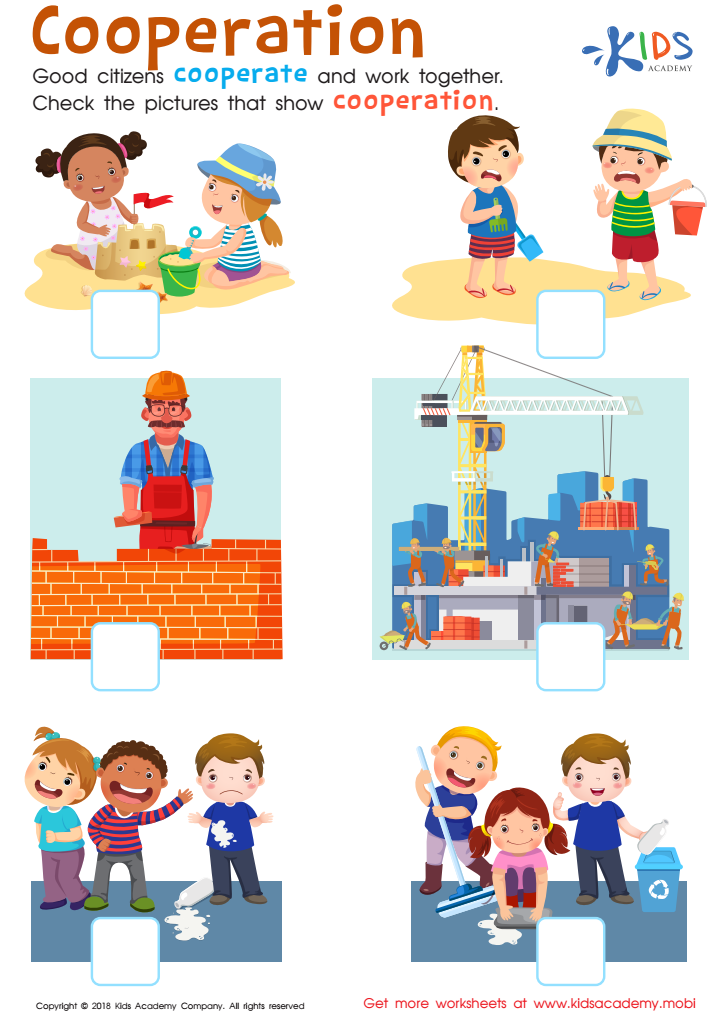
Cooperation Worksheet
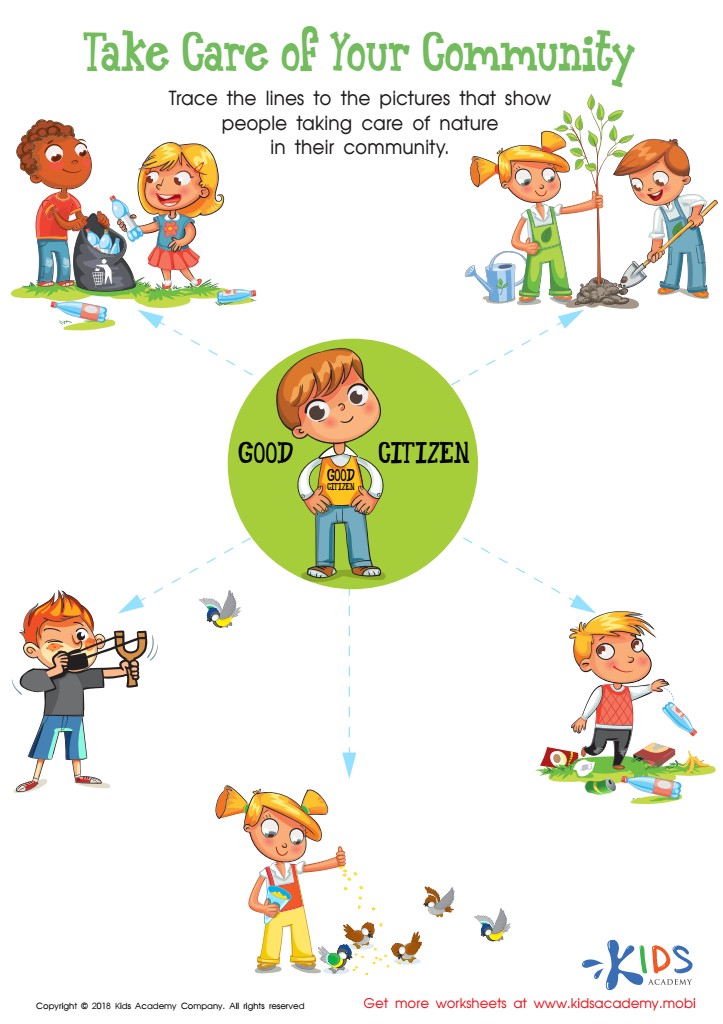
Take Care of your Community Worksheet
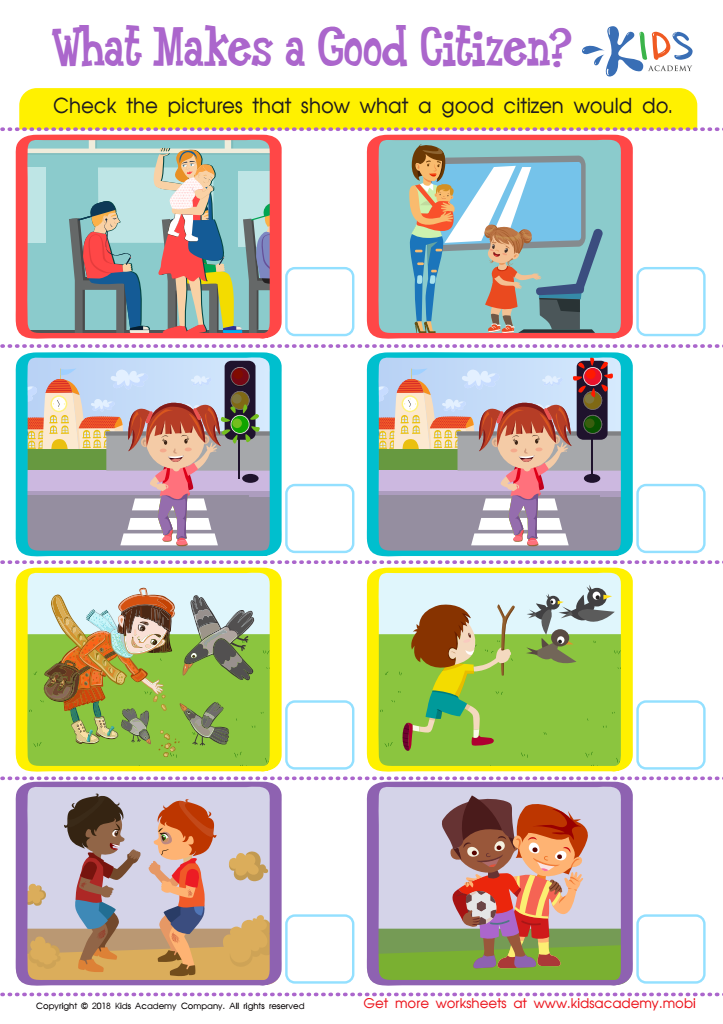
What Makes a Good Citizen? Worksheet
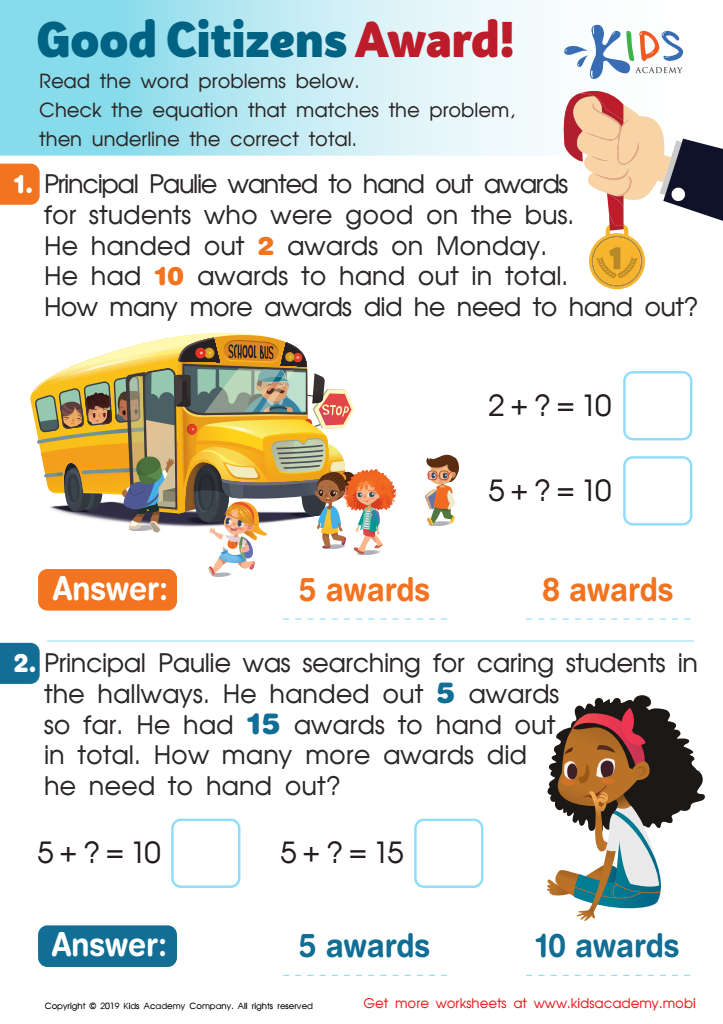
Good Citizens Award! Worksheet
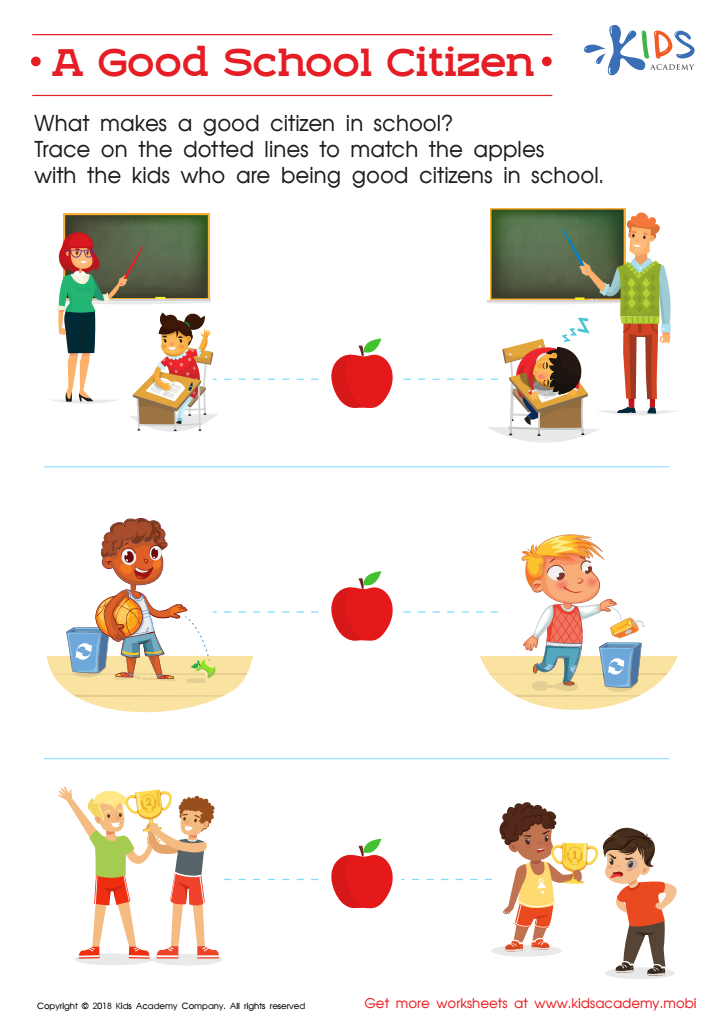
A Good School Citizen Worksheet
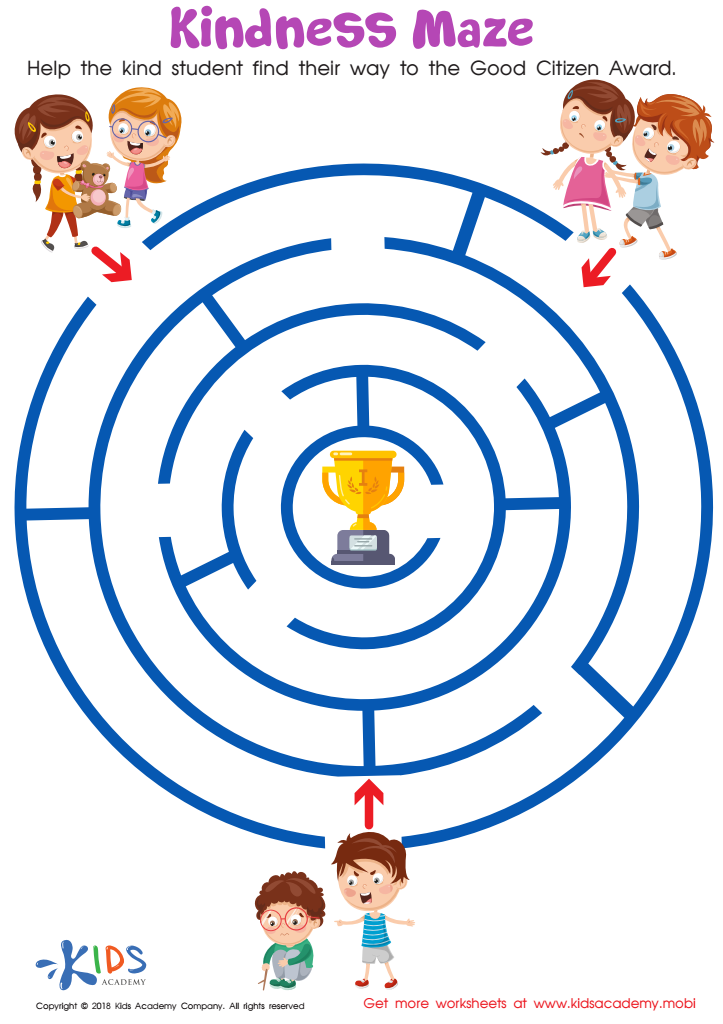
Kindness Maze Worksheet




Good citizenship is crucial for children aged 4-5 as it lays the foundation for their social, emotional, and intellectual development. At this age, children are beginning to understand their roles within a community. Teaching them about good citizenship encourages values such as respect, kindness, sharing, and responsibility. These traits not only improve their interpersonal relationships but also foster a sense of belonging and community.
Parents and teachers should care about instilling these values early on because children are impressionable and learn by observing adult behavior. By modeling good citizenship—such as volunteering, helping others, and resolving conflicts peacefully—adults can inspire children to adopt similar behaviors.
Additionally, when children engage in cooperative activities and learn to consider the feelings and perspectives of their peers, they develop empathy and social skills essential for their future success. Positive citizenship experiences also help children learn about rules and the importance of following them, reinforcing structured environments which aid in their emotional regulation. Supporting good citizenship in early childhood not only benefits the child’s current interaction but also shapes them into conscientious adults who will contribute positively to society. In essence, nurturing these values creates a foundation for a more empathetic, collaborative, and responsible future generation.