Filters

5 filtered results

Clear all filters
Favorites
With answer key
Interactive

5 filtered results

Difficulty Level

Grade


Subject

    Welcome to our engaging "Letter I Worksheets for Ages 4-7"! Designed to spark curiosity and enhance learning, these worksheets provide a fun way for young learners to explore the letter "I." Ideal for preschool and early grade students, our resources include tracing exercises, coloring pages, and interactive activities that reinforce letter recognition, as well as vocabulary building. Each worksheet aims to foster creativity and support essential literacy skills through delightful illustrations and engaging prompts. Perfect for home or classroom use, our Letter I worksheets make learning enjoyable while establishing a solid foundation in the alphabet for kids aged 4 to 7!

    Check out this FREE Trial Lesson on Letter I for age 4-7!

    I

    Favorites
    With answer key
    Interactive
    • 4-7
    • With answer key
    • Letter I
    Letter I worksheets
    Letter I worksheets

    Letter I Tracing Page

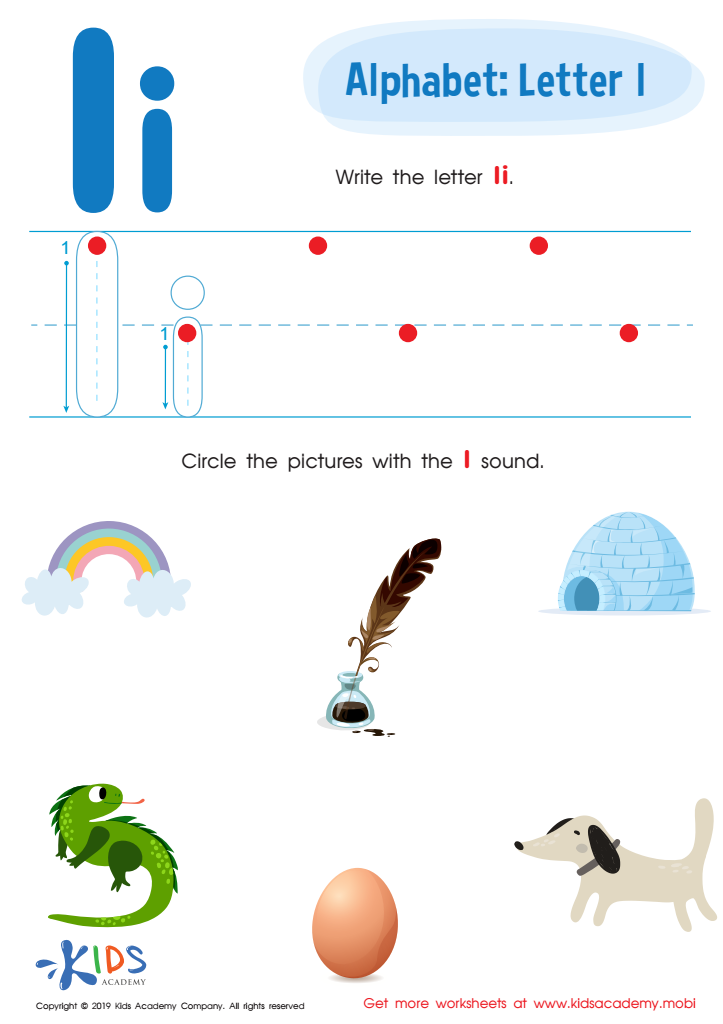
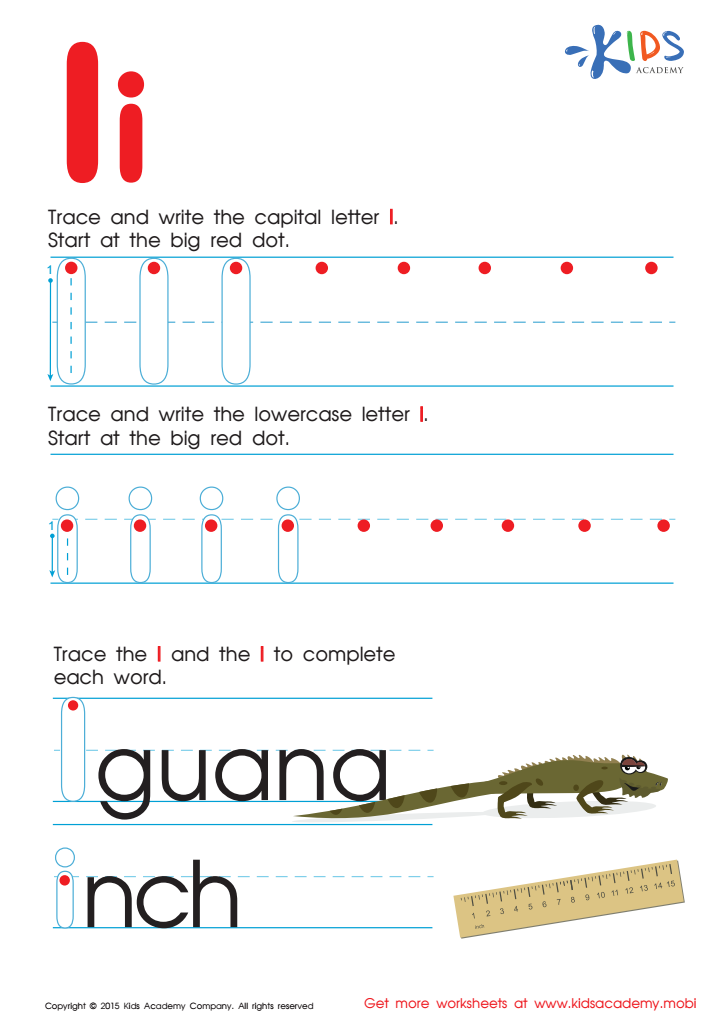
    Trace and write "I" uppercase and lowercase. An iguana's tail looks like the uppercase "I" and the lowercase "i" is as small as an inch. Make learning fun with Kids Academy worksheets.
    Letter I Tracing Page
    Worksheet
    Letter I Tracing Worksheet Preview
    Letter I Tracing Worksheet Preview

    Letter I Tracing Worksheet

    Kids can hone tracing, writing and identifying skills for the letter 'I' with this worksheet. Whether visual or reading/writing learners, every child can benefit from the tasks - tracing, writing and circling objects beginning with 'I'. This free sheet will soon get preschoolers confident with the 'I' letter!
    Letter I Tracing Worksheet
    Worksheet
    Letters G-L Worksheet Preview
    Letters G-L Worksheet Preview

    Letters G-L Worksheet

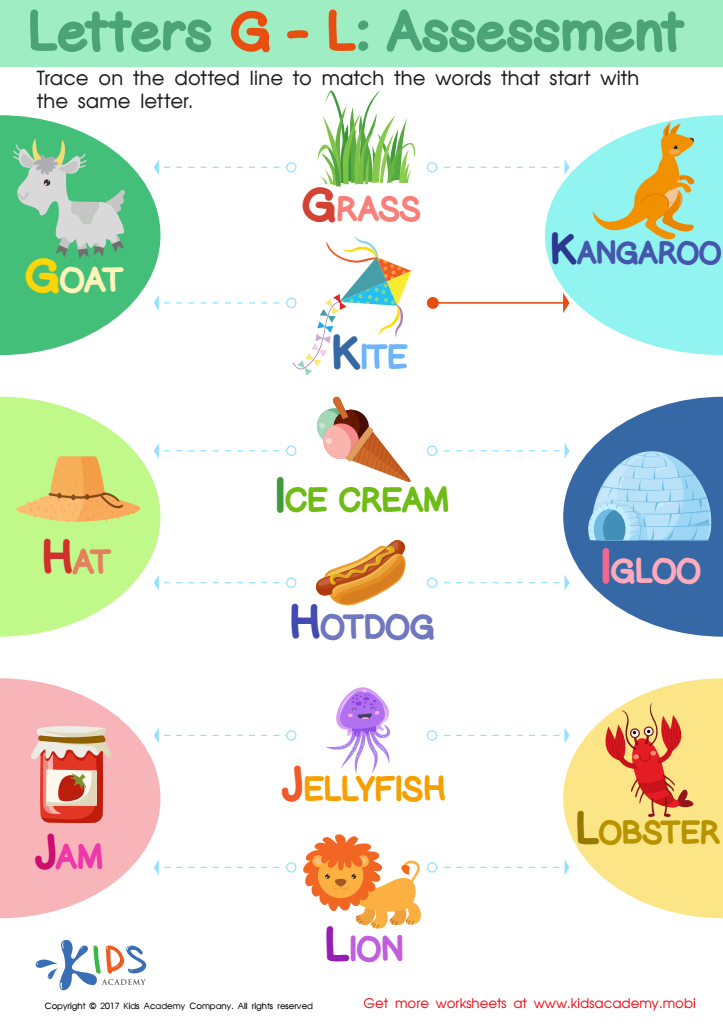
    This fun worksheet helps preschoolers develop reading and phonics skills. It gets kids to match G-L words that start with the same letter, making it engaging and educational.
    Letters G-L Worksheet
    Worksheet
    Recognize Letters l and i Worksheet
    Recognize Letters l and i Worksheet

    Recognize Letters l and i Worksheet

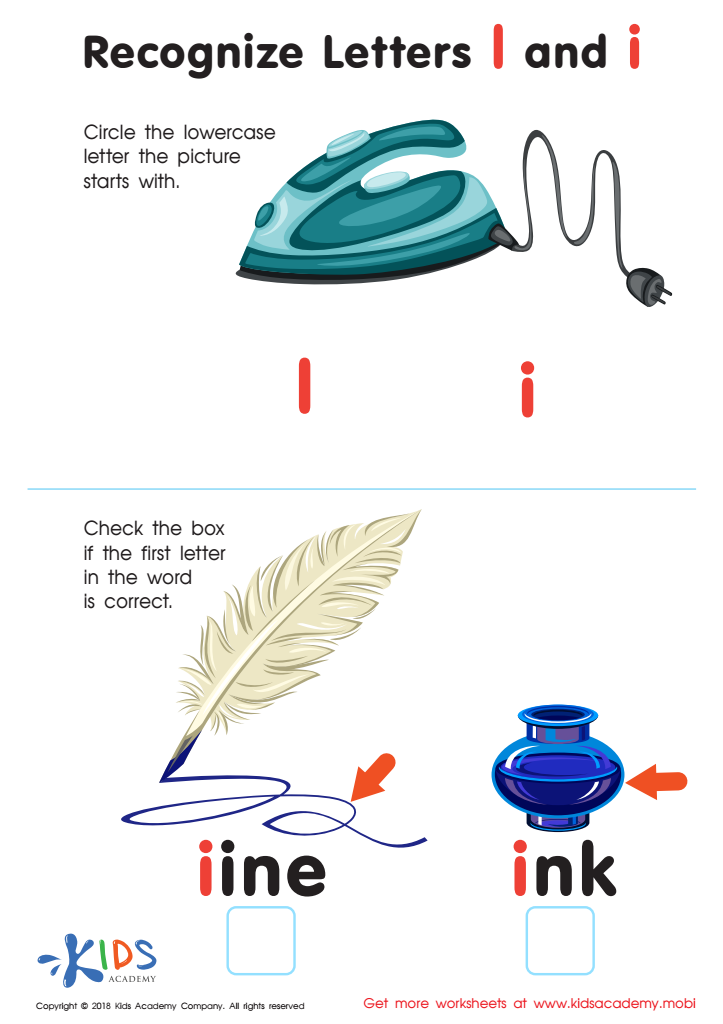
    Help your child become familiar with uppercase and lowercase letters. Have them look at the pictures in the worksheet and circle the lowercase letter the picture starts with. For example: which one is the lowercase "i", the capital "I" or the small "i"?
    Recognize Letters l and i Worksheet
    Worksheet
    Reading: Long I and Short I Sound Maze Worksheet

    Reading: Long I and Short I Sound Maze Worksheet

    Reading: Long I and Short I Sound Maze Worksheet

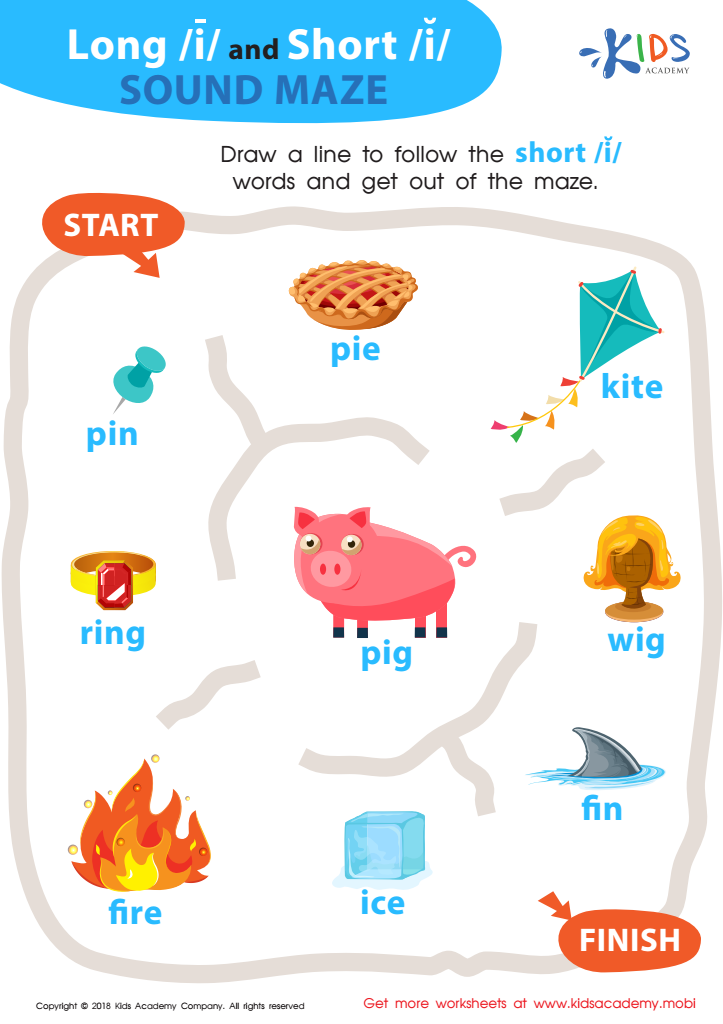
    Question your students if the worksheet is entertaining. They may respond negatively! Nonetheless, this activity will bring satisfaction while learning the distinction between a long and short I sound. Students read the words in the maze and only follow the words with the short I sound to finish the exercise. Grasping the difference between long and short vowels is demanding, but this worksheet helps students understand this reading skill.
    Reading: Long I and Short I Sound Maze Worksheet
    Worksheet


    The letter "I" holds a significant place in early literacy development for children aged 4 to 7. Understanding this letter not only introduces children to the basics of reading and writing but also fosters their cognitive skills. As one of the vowels, "I" plays a critical role in phonics; recognizing its sound helps children decode other words, enhancing their reading fluency.

    Teaching the letter "I" effectively encourages children to explore their world through language. They begin to connect the letter to common words, such as “in,” “is,” and “ice,” enriching their vocabulary. Furthermore, engaging with the letter entails various activities such as games, crafts, and storytelling, making learning enjoyable and interactive.

    In addition to literacy development, the letter "I" serves as a tool for self-expression. It helps reinforce personal identity in children as they learn to use “I” in sentences, promoting confidence in their communication skills. By focusing on the letter "I," educators and parents can create a supportive environment for language acquisition, crucial for their academic success. Overall, the importance of the letter "I" goes beyond the classroom, laying a foundation for lifelong learning and appreciation of language.