Long Vowels Worksheets for Ages 4-7 - Page 2
29 filtered results
-
From - To
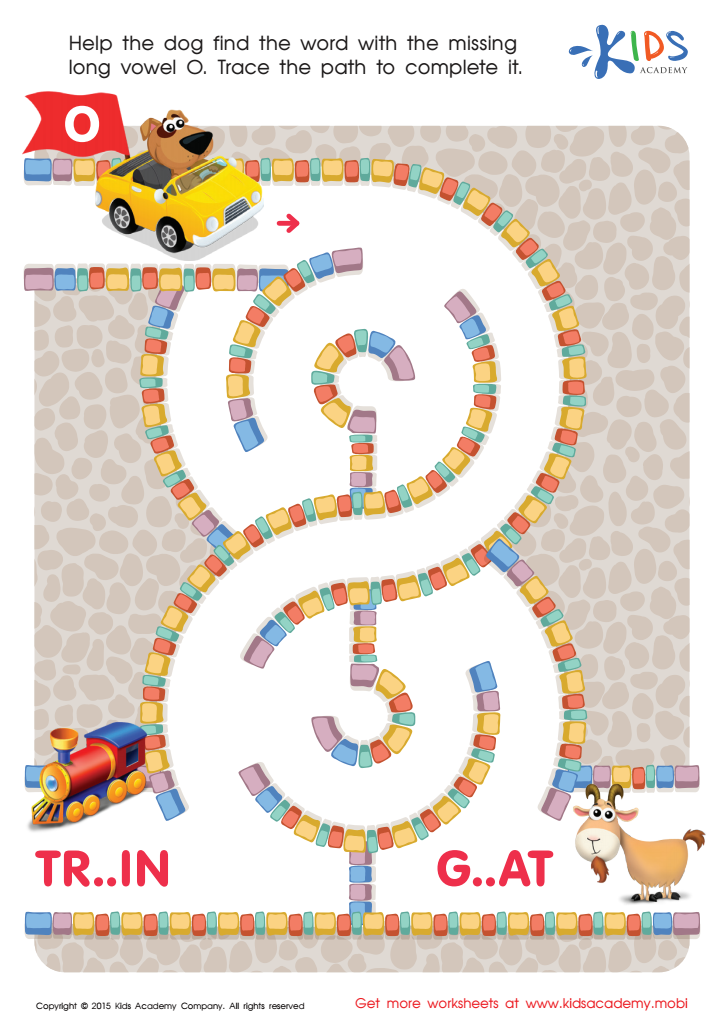
Long Vowel Sound O Worksheet
 Assign to My Students
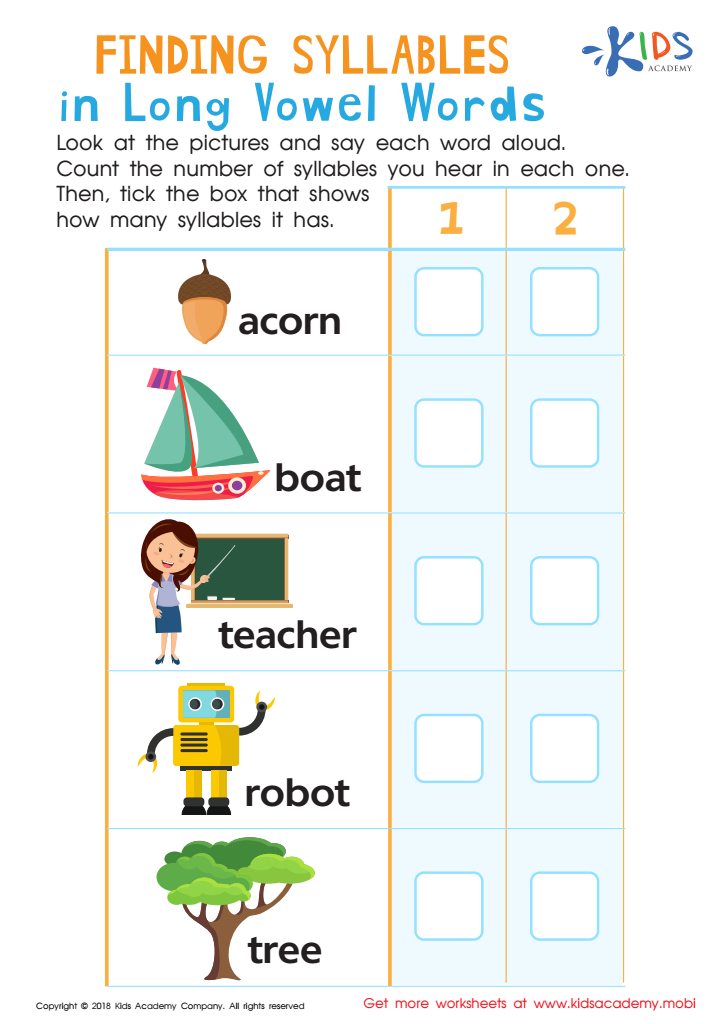
Finding Syllables in Long Vowel Words Worksheet
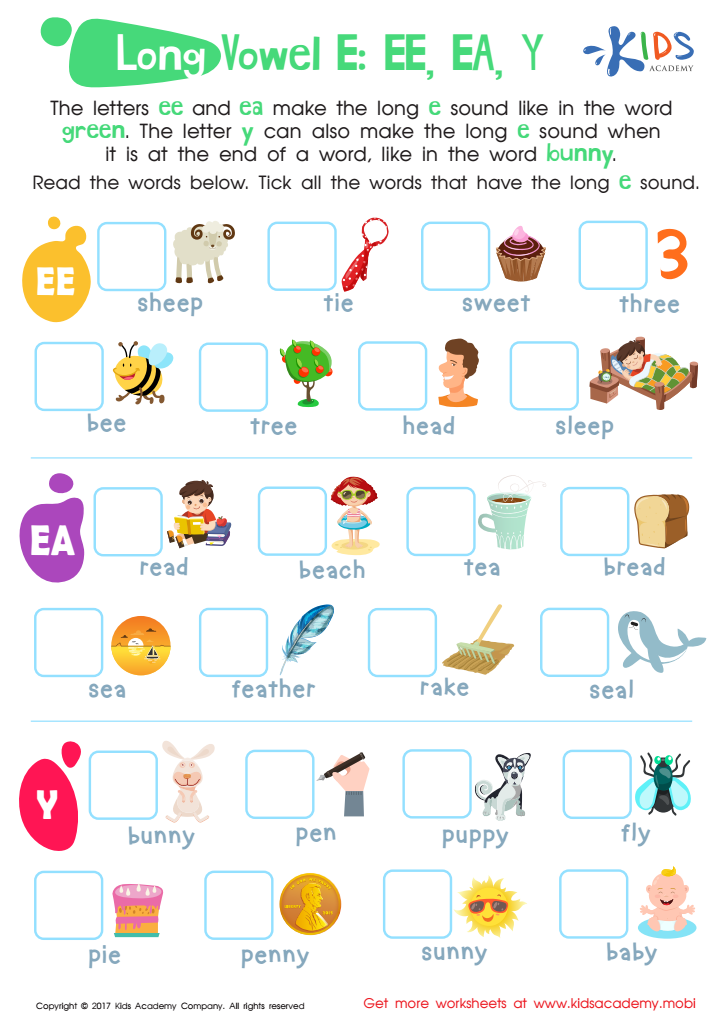
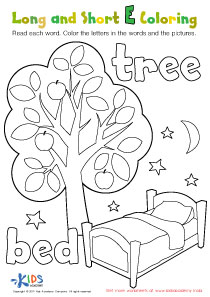
Long Vowel E Printable
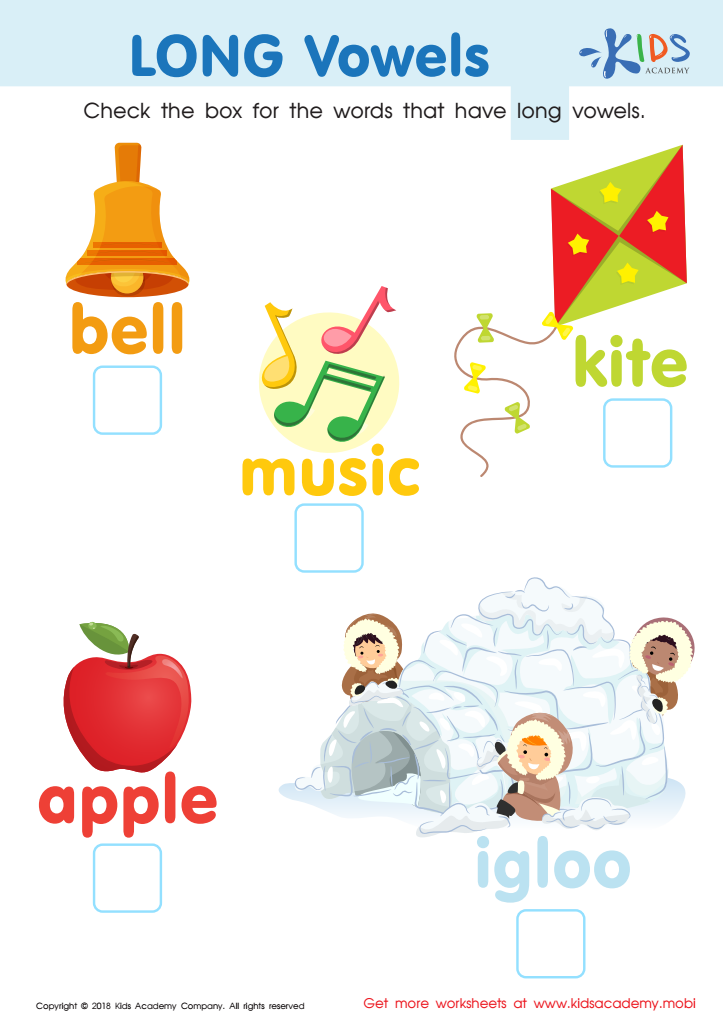
long vowels Worksheet
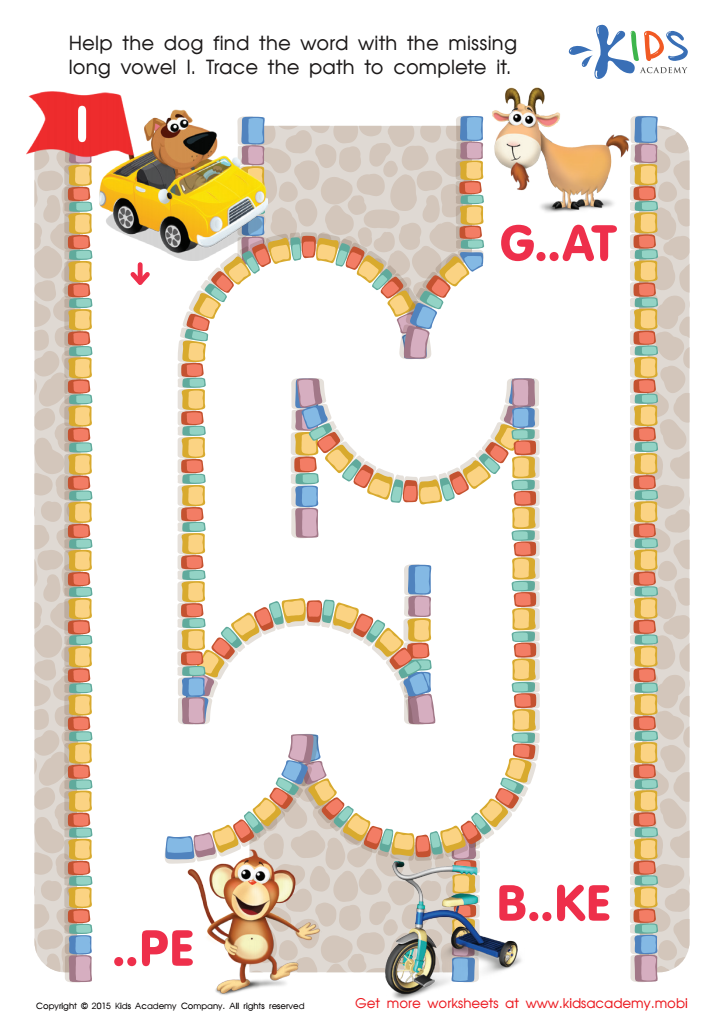
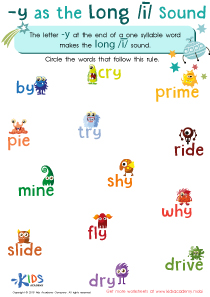
Long Vowel Sound I Worksheet



Understanding long vowels is crucial for young children, typically ages 4-7, as it lays the foundation for effective reading and writing. Long vowels are the sounds that vowels make when they "say their name," such as the 'a' in 'cake' or the 'e' in 'bee.' Recognizing these sounds helps children decode words, making reading easier and more intuitive.
When children learn the difference between long and short vowels, they develop essential phonemic awareness—an understanding of how sounds work in words. This awareness is a critical early literacy skill that research has shown significantly impacts future reading proficiency.
Moreover, knowledge of long vowels boosts spelling accuracy. As children grasp the patterns of long vowel sounds, they can better predict how words are spelled, benefiting both reading and writing tasks.
In early education, building confidence is vital. Successfully identifying and using long vowels allows young learners to tackle more complex words and sentences, fostering a sense of achievement. Additionally, when parents and teachers focus on long vowels, they ensure a comprehensive approach to literacy, catering to each child's developmental needs and promoting lifelong learning skills. In essence, attention to long vowels equips children with the tools for academic success and instills a positive attitude towards language learning.