Chess Worksheets for Ages 4-7 - Page 4
86 filtered results
-
From - To
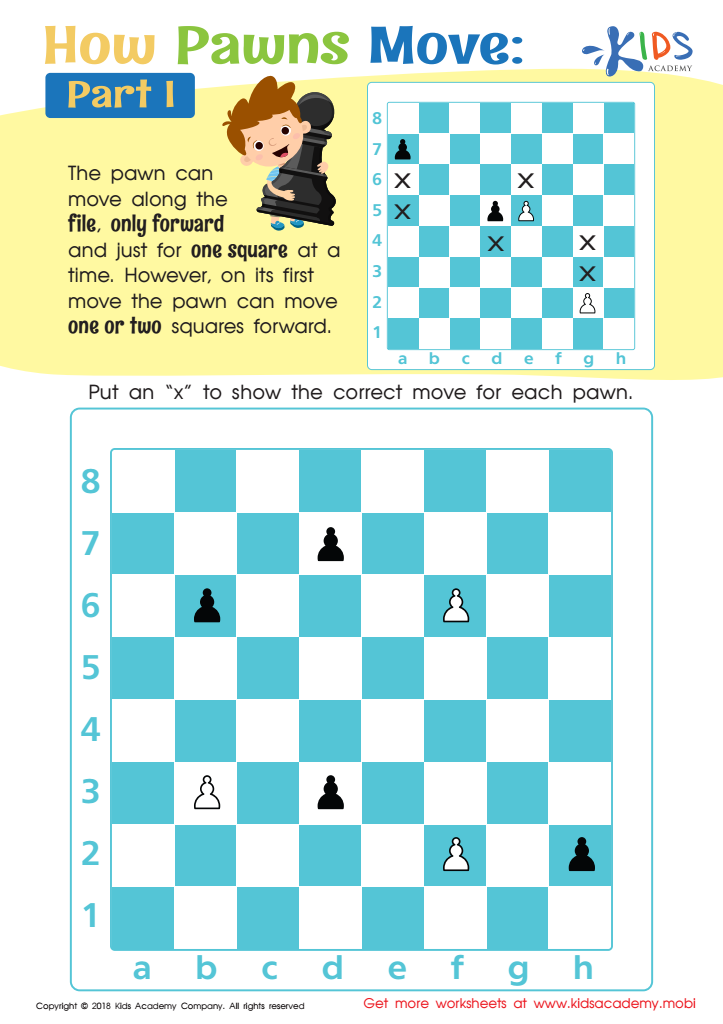
How Pawns Move: Part I Worksheet
 Assign to My Students
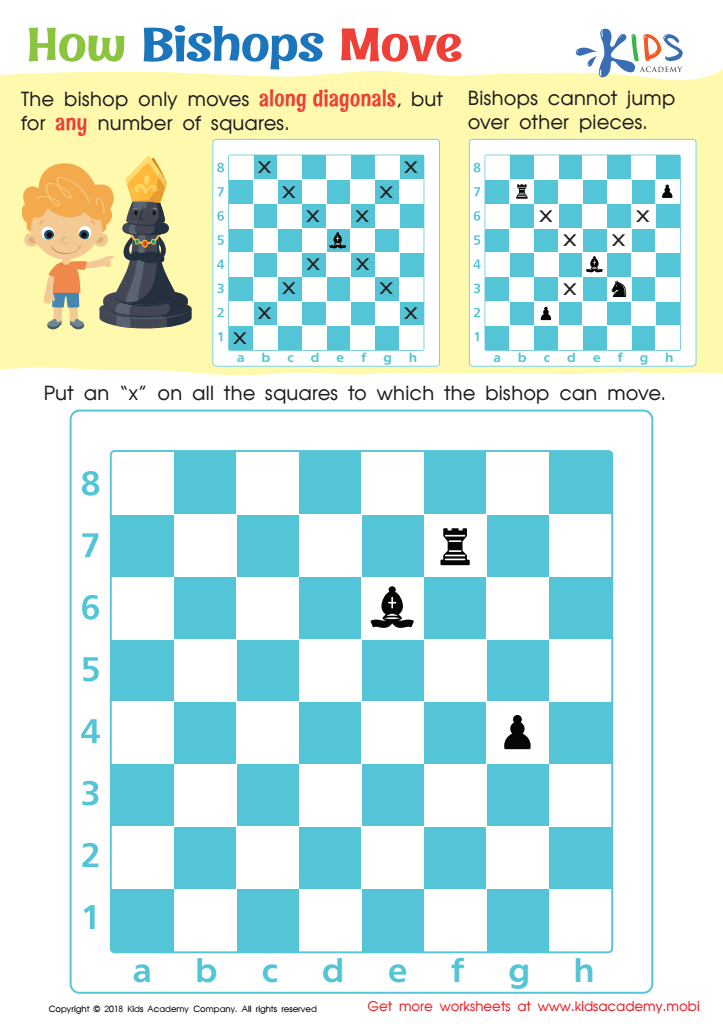
How Bishops Move Worksheet
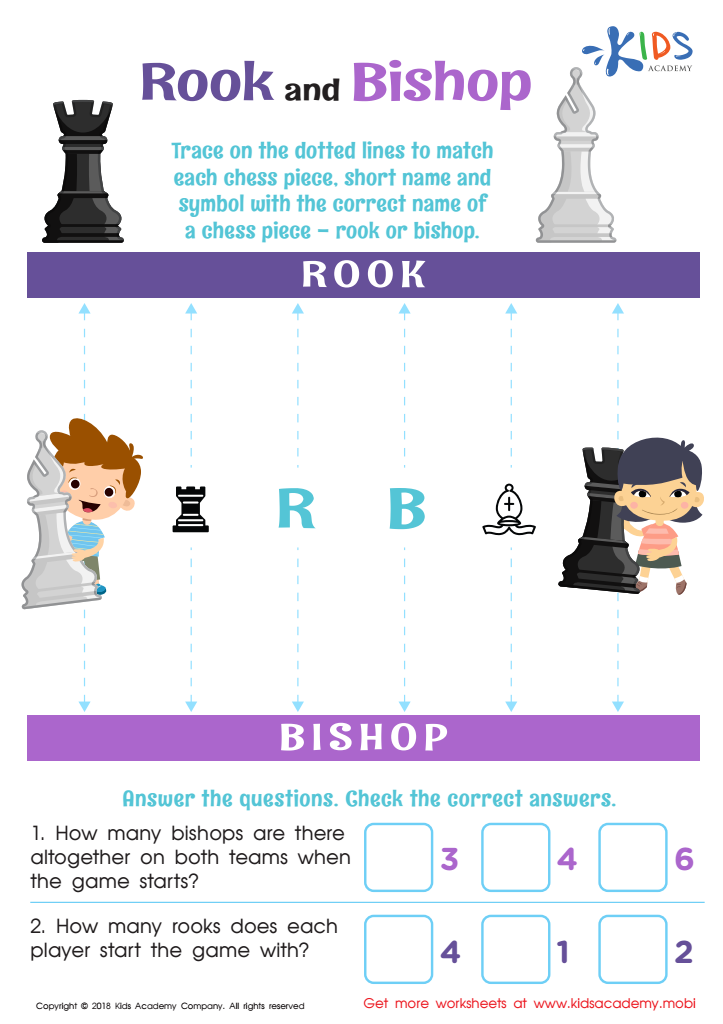
Rook and Bishop Worksheet
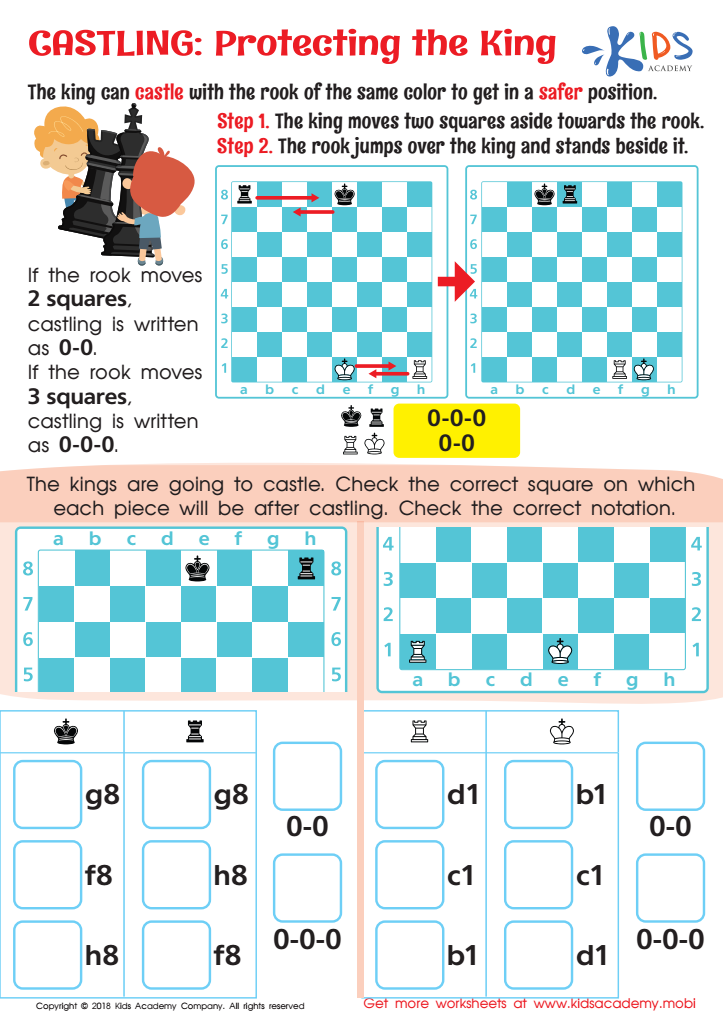
Castling: Protecting the King Worksheet
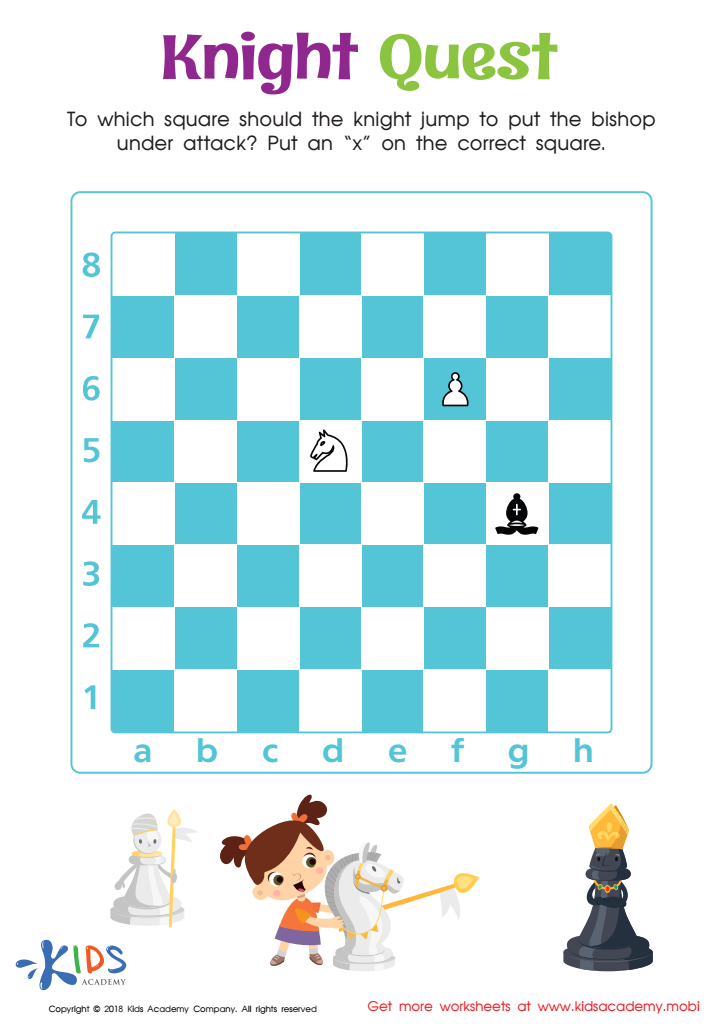
Knight Quest Worksheet
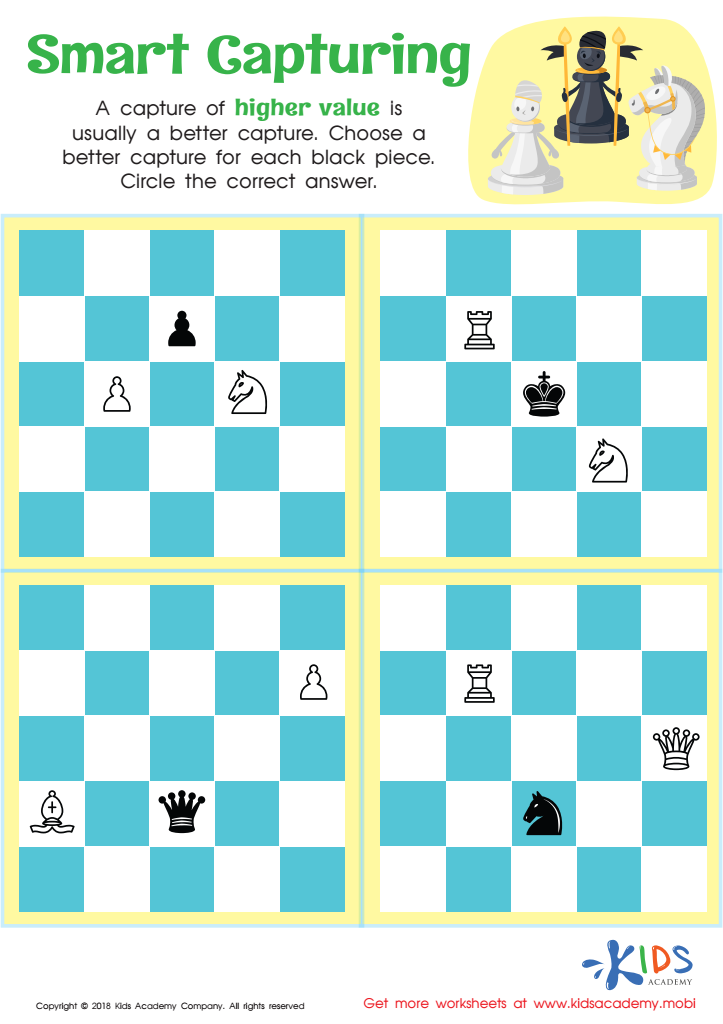
Smart Capturing Worksheet
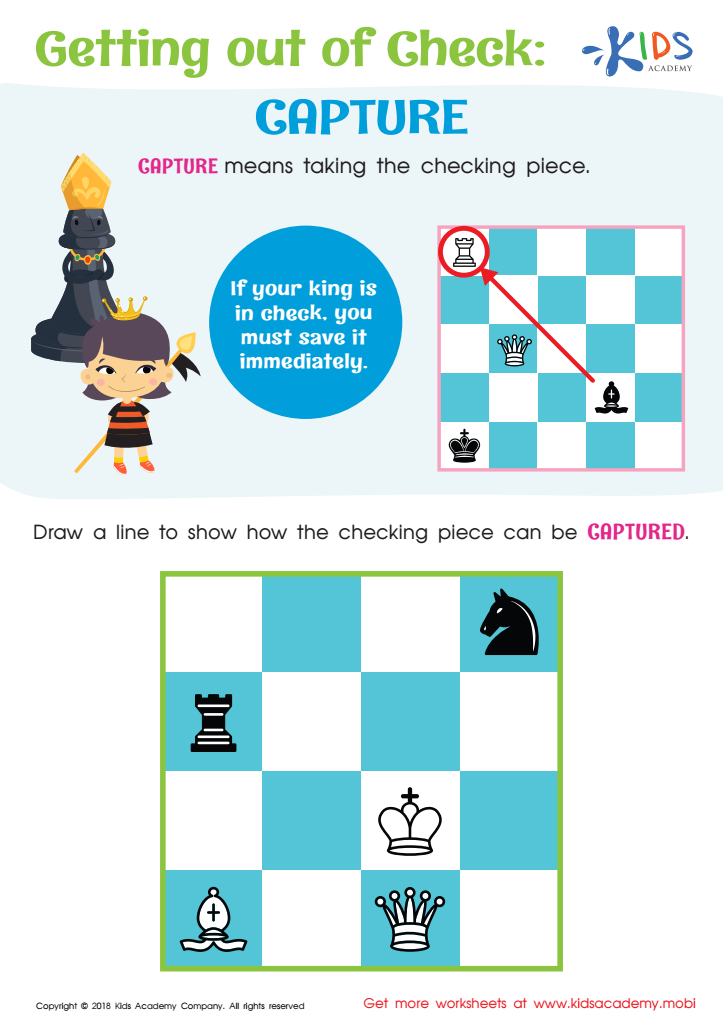
Getting out of Check: Capture
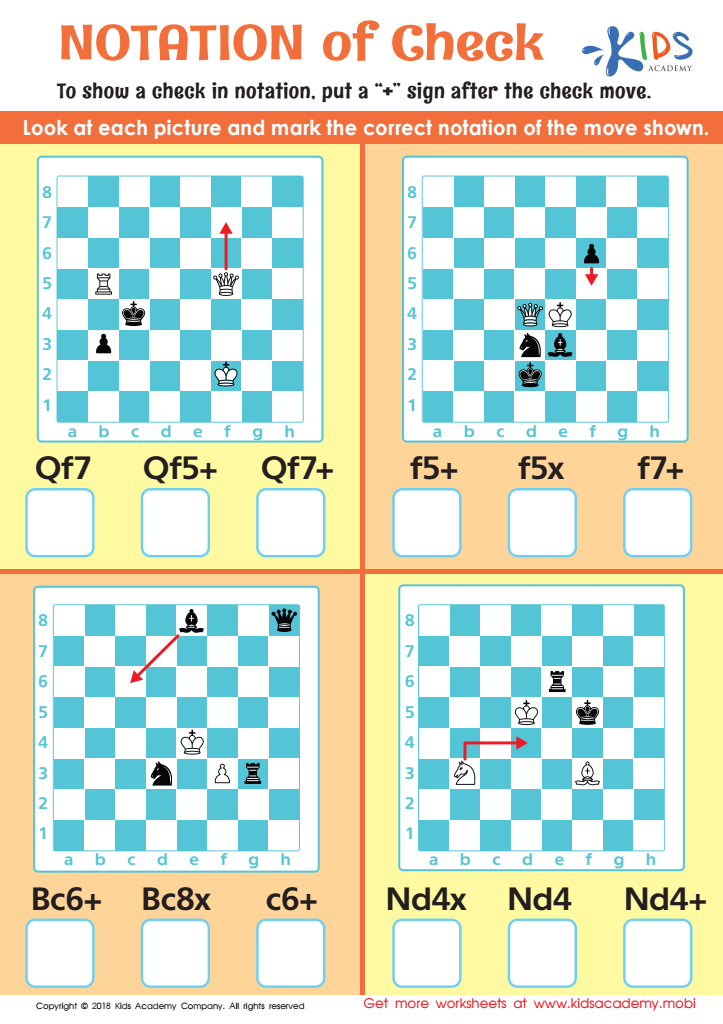
Notation of Check Worksheet
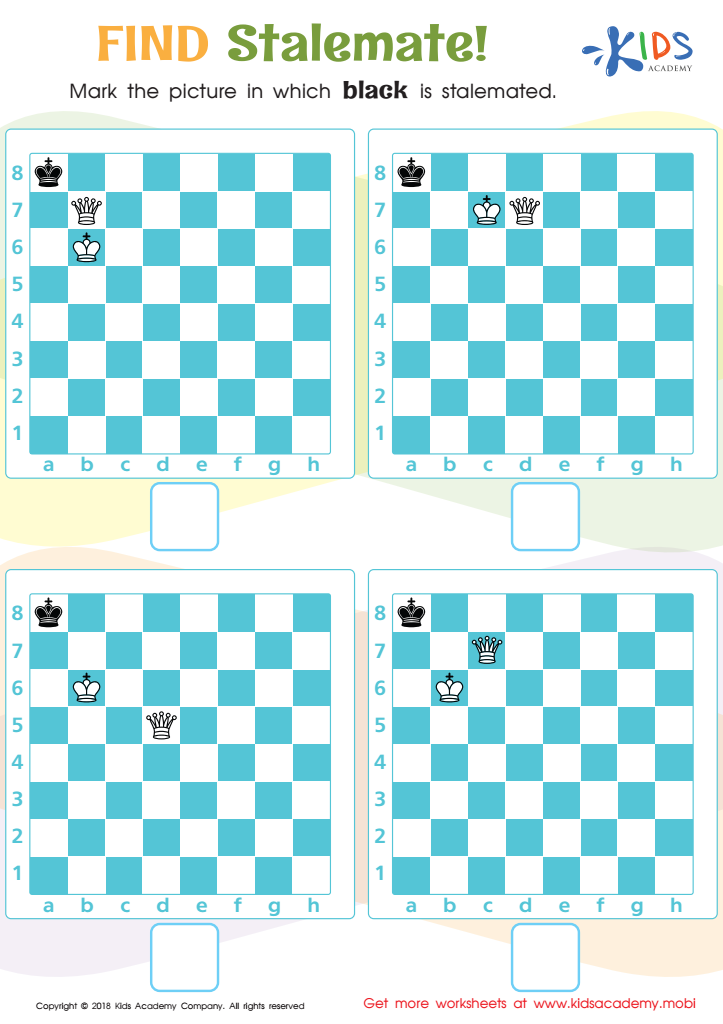
Find Stalemate! Worksheet
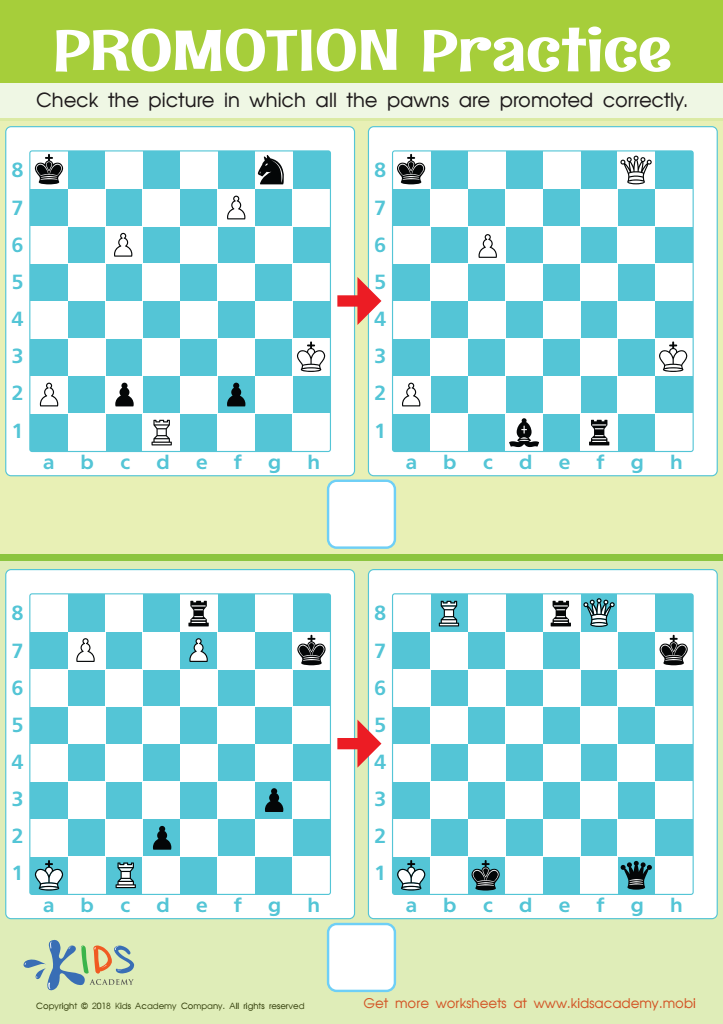
Promotion Practice Worksheet
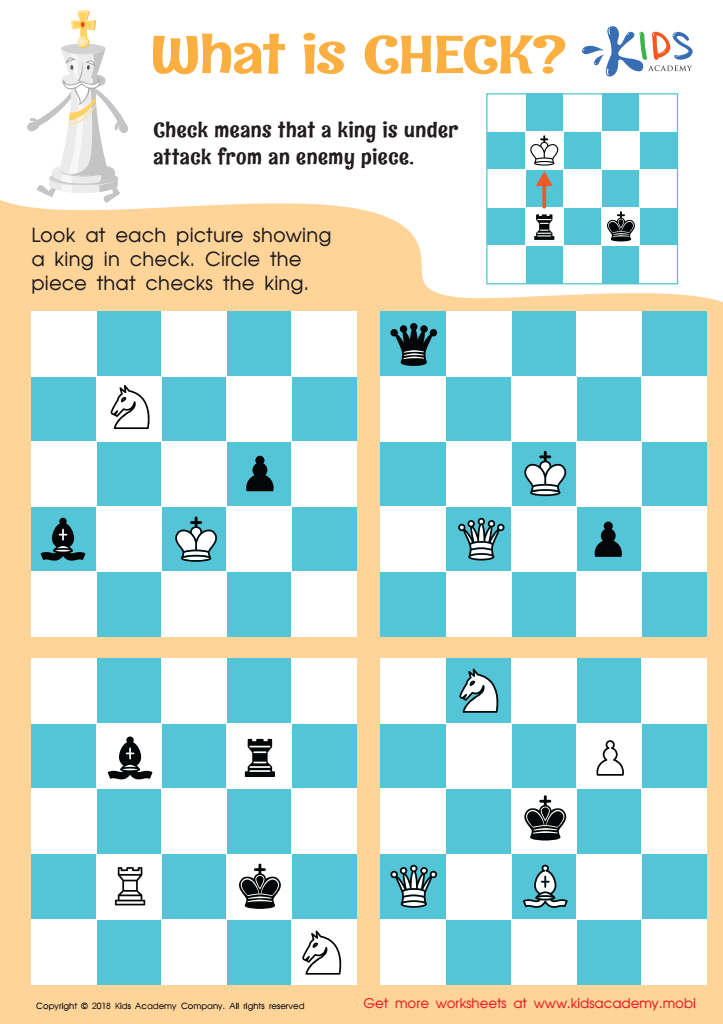
What is Check? Worksheet
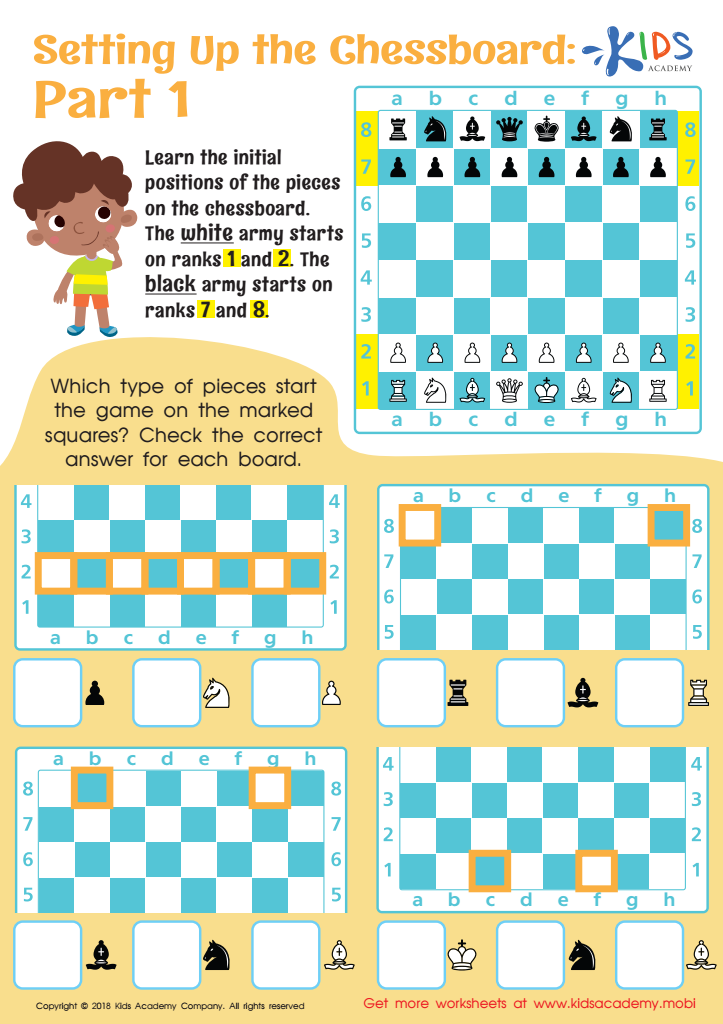
Setting up the Chessboard: Part 1 Worksheet
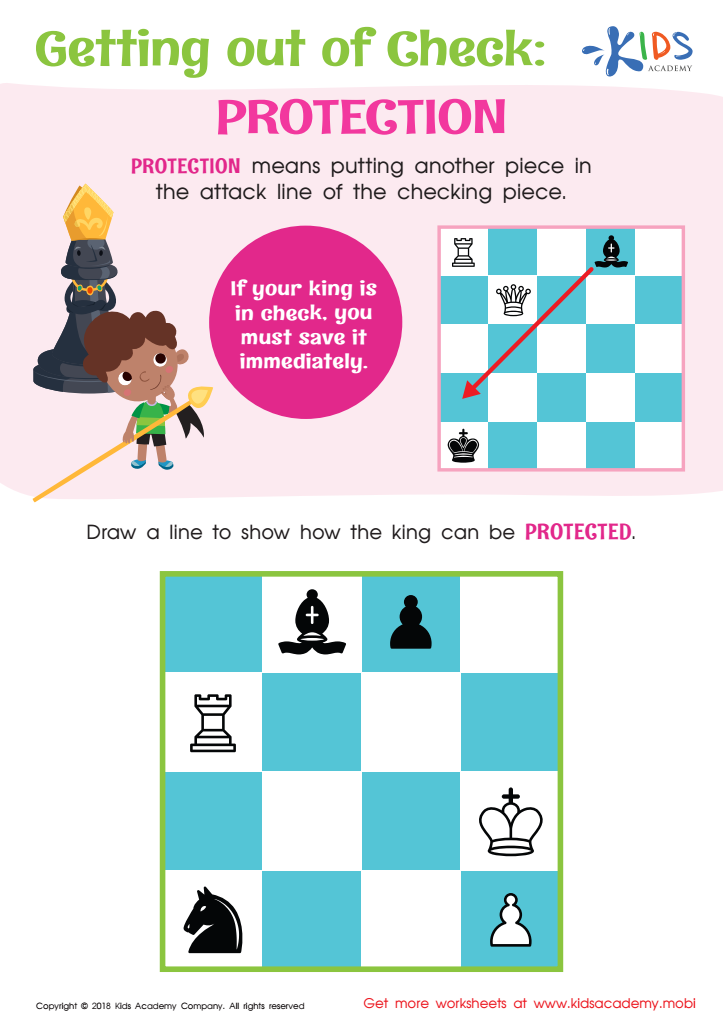
Getting out of Check: Protection
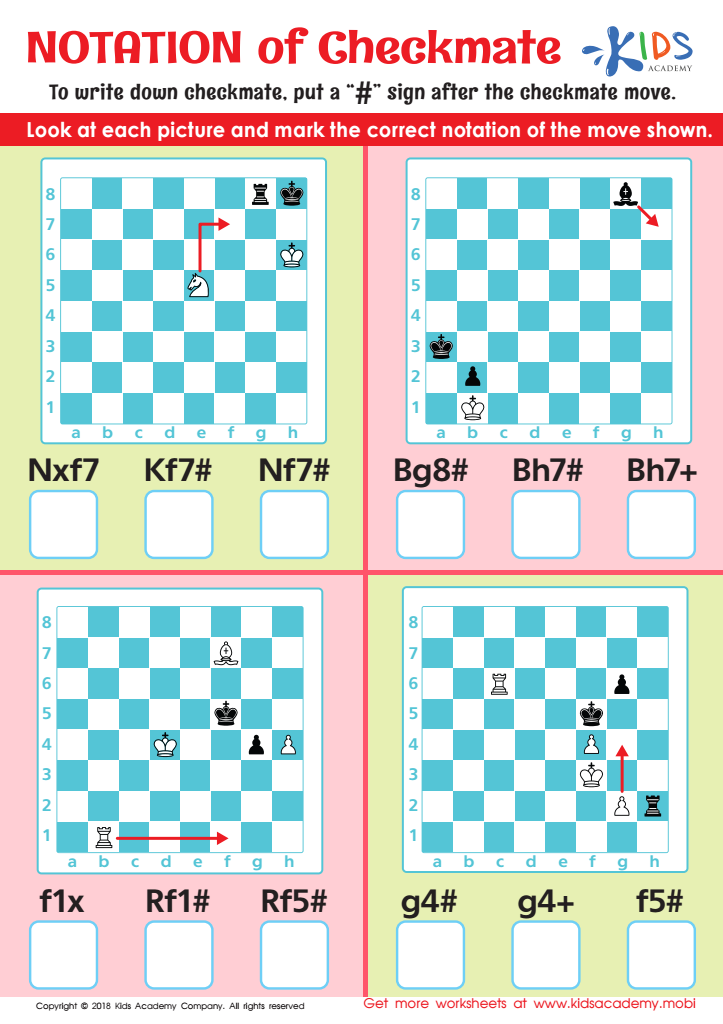
Notation of Checkmate Worksheet








Chess is a powerful educational tool for children aged 4-7, benefiting their cognitive, social, and emotional development. One of the primary advantages is that it enhances critical thinking and problem-solving skills. As children learn to evaluate positions and anticipate their opponent's moves, they develop strategic planning and analytical skills that extend to other areas of learning.
Moreover, chess promotes patience and perseverance. Young players quickly learn that not every move will yield immediate success; some outcomes come after thoughtful reflection and resilience, values that are essential for lifelong learning and growth. Additionally, playing chess fosters social interaction and communication skills, as children often play in pairs or groups, leading to teamwork, sportsmanship, and collaborative learning.
From a psychological perspective, chess can bolster self-esteem and confidence, as successfully completing a game or overcoming challenges provides a sense of accomplishment. Accessibility is also worth noting; chess can easily be integrated into classroom activities or family game nights, promoting bonding and shared experiences.
In summary, incorporating chess into the lives of young children is a meaningful way to enhance their cognitive skills while also teaching critical life values, making it an endeavor well worth the attention of parents and educators alike.